Best Filmmaking Planner Tools Every Director Should Know


By Muhammad Wisal and Muhammad Ali / 5 min read
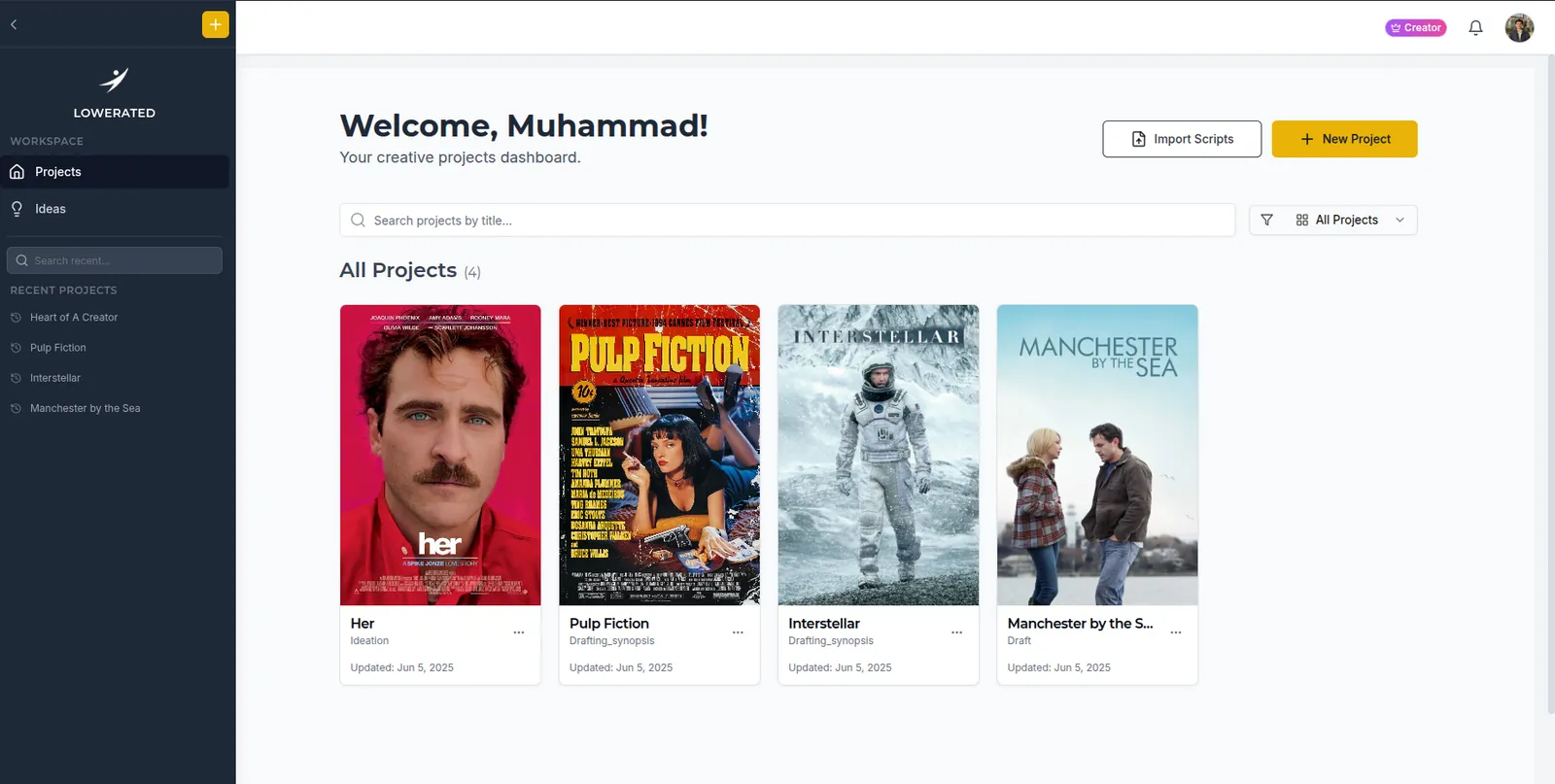
The planning tools every director should know are the script breakdown, stripboard, one-line schedule, day out of days, shot list, storyboard and call sheet. You can make all of them in dedicated software such as StudioBinder, Movie Magic Scheduling, Gorilla or Celtx, in an all-in-one platform like Lowerated, or in spreadsheets. Which one fits depends on the size of your crew and how much the documents need to stay linked.
What does a filmmaking planner tool do?
A filmmaking planner turns a screenplay into the documents a crew works from: what is in each scene, which day it shoots, who is needed, what shots to get, and when everyone arrives. The best ones link those documents, so changing a scene in one place updates the rest.
Here is what each core document is for:
| Document | What it answers | Who uses it most |
|---|---|---|
| Script breakdown | What is in each scene: cast, props, wardrobe, vehicles, effects | AD, every department |
| Stripboard | Which scenes shoot on which day, in what order | 1st AD, producer |
| One-line schedule | A short, printable summary of the stripboard | Whole crew |
| Day out of days (DOOD) | Which days each actor works, holds and travels | Producer, casting, accounting |
| Shot list | Every shot per scene with size, angle, movement and lens | Director, DP, AD |
| Storyboard | What key shots look like, frame by frame | Director, DP, art |
| Call sheet | Who arrives where and when on a given day | Everyone on set |
Script breakdown: where planning starts
A breakdown tags every element the production must supply in each scene, and everything else is built from it. Traditionally an AD marks the script with colored highlighters, one color per element type, then copies the results onto breakdown sheets.
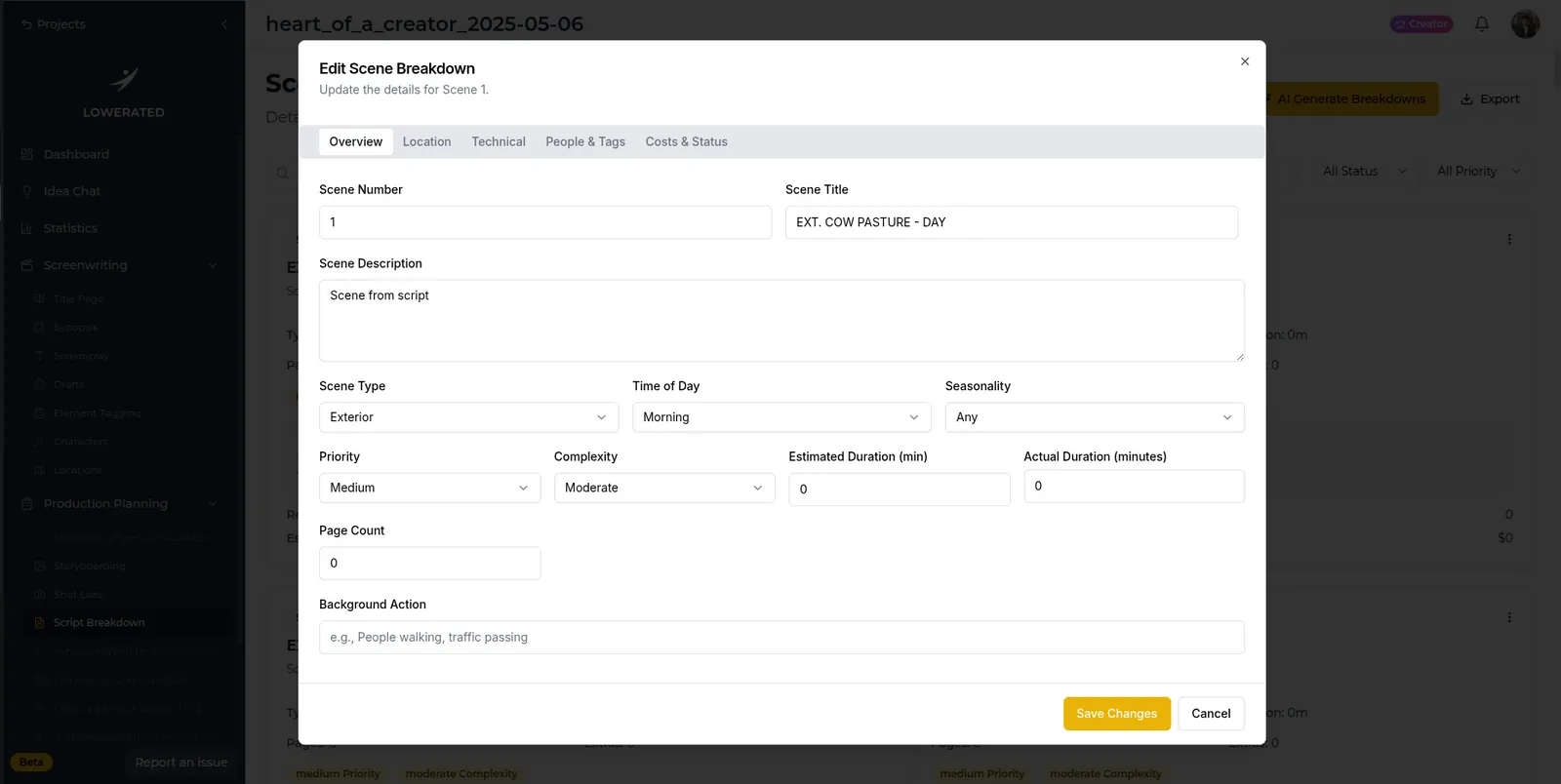
In Lowerated you tag elements directly in the script. There are 21 element types plus custom ones, you can tag every mention of an item at once, and Oli can do a first tagging pass for you to review. For more detail see script breakdowns explained.
Stripboard and one-line schedule
The stripboard is the shooting schedule: one strip per scene, arranged into shoot days. Strips are usually color coded by interior or exterior and day or night, and you move them until each day is realistic in page count and grouped by location. The one-line schedule is the same information as a short list you can print or send.
Lowerated's stripboard lets you filter scenes (for example, all night scenes) and drag them onto shoot days. It checks cast and crew availability and warns you when a move creates a clash. Our article on preventing production delays with a planner goes deeper on scheduling.
Day out of days
A day out of days report shows each actor in a row and each shoot day in a column, marking start, work, hold and finish days. Producers use it to see how many days each actor is paid for and to spot gaps that could be closed by moving scenes.
The clip shows a day out of days report generated from the schedule, with cast costs alongside.
Shot lists and storyboards
A shot list is the director's plan for coverage, and a storyboard shows the key frames. Most directors write the shot list first, then board the shots that are complex or that the team needs to see. In Lowerated, storyboards are created from shot lists, so the two stay in step. See how to make a shot list for the columns to include.
Call sheets
A call sheet is the daily instruction sheet, sent the evening before each shoot day. It pulls from the schedule (scenes and pages), the cast list (call times), locations (addresses and parking) and the crew list. When it is built from the schedule rather than typed fresh each day, it is far less likely to contain mistakes.
Which planning tool should a director use?
Each established tool is good at something specific. This is a fair summary of where each one fits:
- Movie Magic Scheduling (Entertainment Partners): the long-standing industry standard for stripboard scheduling on studio and union productions. Most professional ADs know it. It is a dedicated scheduling program, so writing, shot lists and call sheets live elsewhere.
- StudioBinder: web-based production management with breakdowns, scheduling, shot lists, storyboards and call sheets. It is widely used by commercial, music video and indie teams, and it is especially known for its call sheets.
- Gorilla (Jungle Software): desktop scheduling and budgeting software that has long been popular with independent producers who want stripboards and budgets without studio-level tools.
- Celtx: started as screenwriting software and now covers breakdowns, scheduling, shot lists and storyboards in the browser. It suits teams who want writing and planning in one product.
- Spreadsheets (Google Sheets, Excel): free and flexible, and fine for a short with a handful of locations. The cost is that nothing is linked, so a script change means updating every sheet by hand.
- Lowerated: an all-in-one platform for independent filmmakers that covers the screenplay, breakdown, stripboard, availability, one-line, day out of days, shot lists, storyboards, budgets, casting, releases and call sheets in one project. It fits small teams who want the script and the plan in the same place.
If you are crewing up with ADs who already use Movie Magic, use what they know. If you are a small indie team doing most jobs yourselves, a linked platform saves the most time. For a direct comparison, read planner tool vs spreadsheet.
Where does budgeting fit?
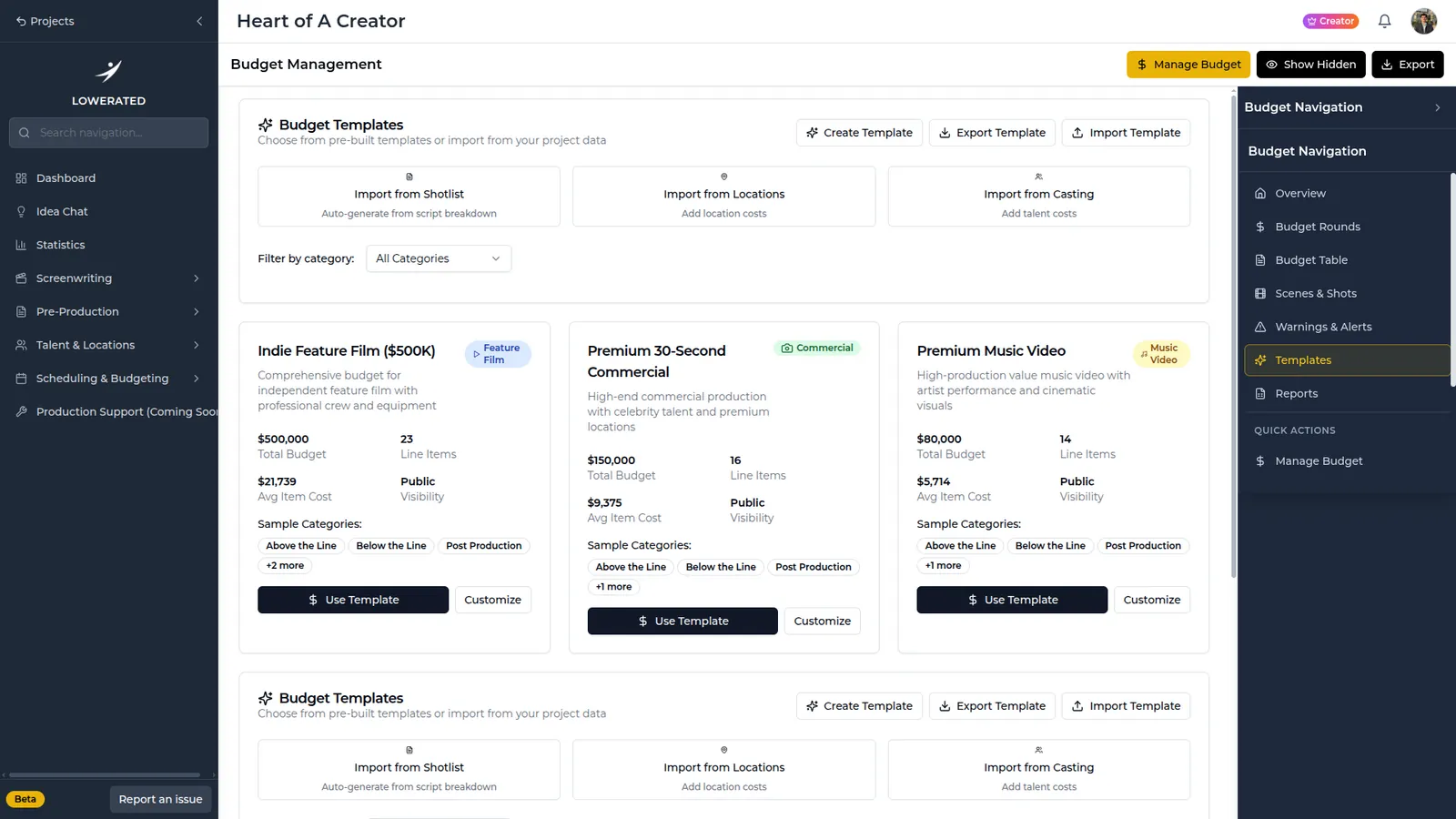
Budgeting sits beside scheduling, because shoot days drive most costs. Movie Magic Budgeting and Gorilla Budgeting are common dedicated choices. Lowerated keeps budgets with line items, estimates and actuals in the same project as the schedule.
FAQ
What software do ADs use for scheduling?
Movie Magic Scheduling is the long-standing standard on larger productions. Indie and commercial teams also use StudioBinder, Gorilla, Celtx and Lowerated.
Is there a free filmmaking planner?
Spreadsheets are free. Lowerated has a Free plan where you can try every tool with limits, and the full pre-production planner is on the Producer plan at $40 a month, Scriptwriter included (see pricing).
Do I need a stripboard for a short film?
For a one-location, one-day short, a simple list may be enough. Once you have several locations, actors with limited availability or night scenes, a stripboard saves time.
What is the difference between a one-line schedule and a stripboard?
They hold the same information. The stripboard is the working view you rearrange, and the one-line is a compact list version you share with the crew.
Key takeaways
- The core planning documents are the breakdown, stripboard, one-line, day out of days, shot list, storyboard and call sheet.
- Movie Magic Scheduling is the professional standard; StudioBinder, Gorilla and Celtx each suit different team sizes and habits.
- Spreadsheets work for small shorts but break down when the script changes often.
- Lowerated fits indie teams who want the screenplay and every planning document in one linked project.