
Film Casting: Different Ways to Cast Your Films


By Muhammad Wisal and Muhammad Ali / 5 min read
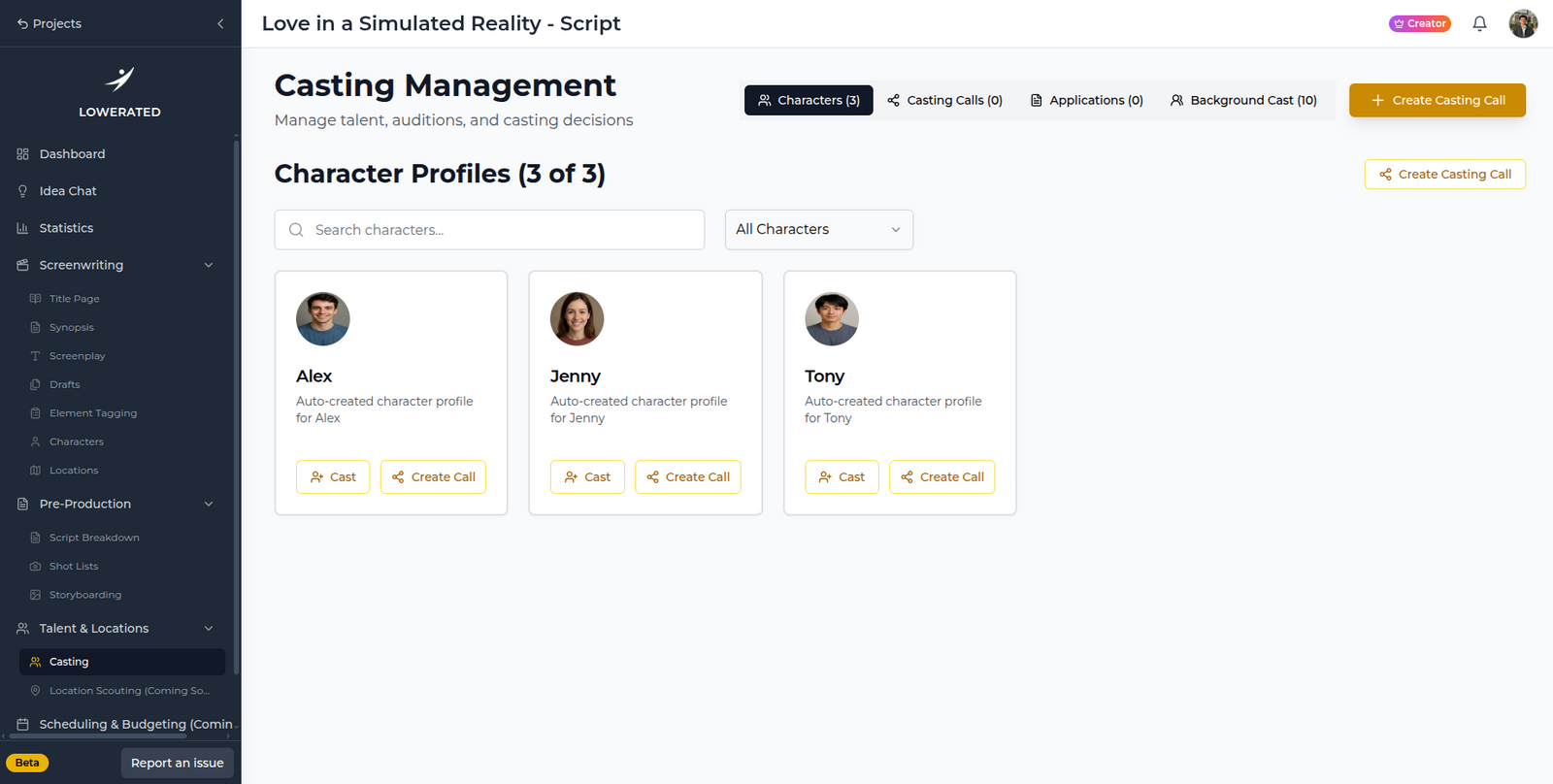
Casting is one of the most crucial steps in filmmaking. A great story can fail on screen if the wrong actors are selected, while the right cast can elevate even a simple narrative into something unforgettable. Yet many filmmakers, especially indie creators, struggle with casting because of limited budgets, poor planning, confusing workflows, or simply not knowing where to start.
Today, filmmakers need smarter and more organized solutions. This is where modern digital tools, including AI Script-Writer, AI Idea Generator, and a complete All-in-one Filmmaking Platform like Lowerated, are changing the game by reducing errors, speeding up casting workflows, and helping creators make better decisions.
In this blog, we will explore different ways to cast your film, common challenges, and how new-generation tools can streamline the entire process.
Why Film Casting Matters in Every Production | Filmmaking Planner Tool
Casting isn’t just about selecting actors; it’s about selecting the soul of your film.

Filmmakers often face the following problems:
- The script feels different when actors don’t match the character profile.
- Miscommunication between departments harms production decisions.
- Recasting delays shoot schedules, increasing costs.
- New filmmakers don’t know where to find good actors.
- Lack of proper audition management leads to confusion.
A solid casting process ensures:
- Stronger character authenticity
- Improved on-screen chemistry
- Better scheduling and production planning
- More efficient budgeting
- Higher overall film quality
With the help of a Filmmaking Planner Tool, filmmakers can organize every step, casting calls, auditions, backups, and schedules, in one place. This leads to fewer mistakes and far better casting outcomes.
Different Ways to Cast Your Film (Traditional & Modern Methods)
Below are the most effective ways filmmakers are casting their films today. Each method solves different problems that directors, producers, and casting managers face.
1. Open Casting Calls | All-in-one Filmmaking Platform Advantage

Open casting calls are one of the oldest and most commonly used casting methods. Filmmakers announce a public audition and allow anyone to show up and perform.
Benefits
- Large talent pool
- Great for discovering fresh faces
- Helps low-budget and indie films find actors quickly
Challenges
- Overcrowded auditions
- Time-consuming screening
- Difficult to organize manually
This is where an All-in-one Filmmaking Platform helps by allowing you to publish digital casting calls, sort applicants, and organize submissions without chaos.
2. Online Casting Platforms & Social Media Searches
Digital casting has become a modern trend because filmmakers no longer rely on physical locations to find talent. Instead, they use casting websites, Instagram, TikTok, and YouTube to find actors with the right look or performance style.
Benefits
- Wide reach
- Easy to shortlist
- Great for niche character needs
Challenges
- Hard to verify talent quality
- Excessive profiles to filter
- Time wasted in disorganized evaluations
Using a Filmmaking Planner Tool, you can store links, profiles, and audition clips in one structured place.
3. Talent Agencies & Casting Directors
Professionals such as casting directors or agencies provide ready-made access to trained actors. This is ideal for productions that need experienced or high-skill performers.
Benefits
- Saves time
- High-quality talent
- Expert evaluation
Challenges
- Expensive
- Not always suitable for indie budgets
Filmmakers often use hybrid methods: agency talent for main roles and open auditions for supporting characters.
4. AI-Assisted Casting Insights | AI Script-Writer
AI is transforming pre-production, especially casting. With an AI Script-Writer, filmmakers can quickly generate character breakdowns, personality traits, tone references, and emotional arcs. This helps casting teams understand exactly who they are searching for.
Example AI-Assisted Features
- Automated character profiles
- Suggested actor age, appearance, and personality
- Script analysis for casting requirements
- Emotion-based character mapping
These insights reduce miscasting and help directors match actors to characters more precisely.
5. Local Theatre & Acting Schools
Film students often overlook the power of theatre actors. Stage performers are skilled, disciplined, and often available at low cost.
Benefits
- Strong performance skills
- Great emotional range
- Budget-friendly
Challenges
- May need on-camera training
- Limited variety in some regions
Still, theatre groups are a goldmine for authentic, passionate actors.
6. Referrals from Crew Members, Friends, and Networks
Sometimes the perfect actor comes from your existing circle. Many directors cast people they trust or those recommended by a reliable connection.
Benefits
- Fast casting process
- Trust and comfort on set
- Low or no cost
Challenges
- Limited talent diversity
- Risk of unprofessionalism
Networking remains one of the strongest tools in filmmaking.
Common Problems Filmmakers Face in Casting (And How to Fix Them)
Instead of only listing casting methods, it’s important to understand the pain points filmmakers are trying to solve.
Below are the most common challenges:
1. Unclear Character Definitions
Without precise character breakdowns, filmmakers may cast the wrong actors.
Solution: Use an AI Script-Writer to generate clear character profiles before casting begins.
2. Disorganized Auditions
Filmmakers often lose track of who auditioned, who performed well, and who fit which role.
Solution: A Filmmaking Planner Tool organizes:
- audition dates
- actor profiles
- video submissions
- callback lists
- final selections
3. Limited Talent Pool
Many new filmmakers don’t know where to find actors.
Solution: Use mixed methods:
- online casting platforms
- social media searches
- theatre groups
- community talent
4. Recasting Issues
Sometimes the original actor doesn’t work out, causing delays.
Solution: Keep backup actors ready and documented in your casting directory.
5. Poor Communication Between Departments
Producers want experienced actors, directors want performers with passion, and writers want someone who fits the emotional tone.
Solution: Keep all communication inside an organized All-in-one Filmmaking Platform where everyone can collaborate.
How AI Tools Improve the Casting Workflow | AI Idea Generator for Filmmakers
Artificial intelligence is becoming a key part of modern filmmaking because it fixes the blind spots in casting.
Here’s how:
1. AI Idea Generator for Character Development
Before casting begins, filmmakers must imagine their characters in depth. The AI Idea Generator helps filmmakers brainstorm personalities, story arcs, emotional journeys, and casting requirements.
This helps filmmakers:
- Create realistic character references
- Avoid miscasting
- Match actors with roles faster
2. AI Script-Writer for Better Casting Decisions
An AI Script-Writer performs rapid script analysis to determine:
- character age ranges
- emotional tones
- physical descriptions
- scene intensity
- character relationships
This eliminates confusion and improves the accuracy of your casting choices.
3. Filmmaking Planner Tool for Organized Casting Workflow
This tool centralizes every casting-related detail:
- Casting calls
- Audition schedules
- Actor submissions
- Callback lists
- Role allocations
It ensures casting runs smoothly without losing important data.
Step-by-Step Workflow for Effective Film Casting
To help filmmakers further, here’s a simple, actionable casting workflow:
Step 1: Analyze Your Script
Use an AI Script-Writer to extract character details.
Step 2: Create Character Breakdowns
List personality traits, motivations, and essential features.
Step 3: Plan Your Casting Strategy
Choose an approach:
- Open call
- Agency
- Online platforms
- Theatre talent
Step 4: Publish a Digital Casting Call
Share it on:
- casting websites
- social media
- filmmaking groups
Step 5: Accept and Organize Submissions
Use a Filmmaking Planner Tool to collect and sort auditions.
Step 6: Hold Auditions & Callbacks
Record all auditions and review them with your team.
Step 7: Final Selection
Make sure the actor matches both the character and the production needs.
Step 8: Contract & Onboarding
Finalize agreements and prepare the actors for rehearsals.
Final Thoughts: Casting Smarter, Not Harder
Today’s filmmakers are no longer limited by traditional casting methods. With the rise of AI tools and advanced digital platforms, casting has become faster, smarter, and more efficient than ever.
A modern All-in-one Filmmaking Platform like Lowerated empowers filmmakers to solve real problems:
- Disorganization
- Miscasting
- Time-consuming auditions
- Poor coordination
- Limited talent pools
By combining AI Script-Writer, AI Idea Generator, and a robust Filmmaking Planner Tool, creators can turn casting from a stressful task into a structured, creative, and enjoyable process.


