Casting for a Film: How to Cast a Movie and How Actors Get Cast


By Muhammad Wisal and Muhammad Ali / 6 min read

Casting a film means choosing the actors who will play each role, usually through a casting call, auditions or self-tapes, callbacks, and an offer. For filmmakers, it starts with clear character descriptions and ends with signed contracts. For actors, getting cast in a movie comes down to finding the right calls, sending a strong self-tape, and being easy to work with.
A quick note on wording: the past tense of "cast" is "cast". You were cast in a movie, not "casted", though plenty of people search it that way.
Why does casting matter so much in film?
Casting matters because audiences connect with characters through the actors, and no amount of editing can fix a performance that does not fit. The right cast makes a modest script work. The wrong one weakens a strong script, and it often costs money too: reshoots, extra takes, and harder edits.
The most common casting mistakes are predictable:
- Casting on looks or fame alone. Ask whether the actor understands the role and can play its emotional range.
- Skipping chemistry reads. Romances, families, and rivals need actors who work together on screen.
- Treating small roles as an afterthought. A weak day player can break a scene.
- Casting from an unfinished script. If the character is still changing, you cannot judge fit.
- Rushing. Strong performances often show up in callbacks, not first reads.
How do you cast a film, step by step?
Most independent films are cast in seven steps, from character profiles to onboarding. On a short this can take one to three weeks, and on an indie feature one to three months (see how long casting takes for a full timeline).
1. Build character profiles from the script
Write a profile for every speaking role: age range, personality, key relationships, emotional range, and any special skills such as an accent, a sport, or an instrument. Start with the leads. A vague line like "male, 25 to 35, confident" tells an actor nothing; describe what the character wants and how they behave under pressure.
In Lowerated, the characters page is built from your screenplay, with AI-drafted profiles and portraits you can edit before you post a role.
2. Write and post a casting call
A good casting call includes a project summary, the role, shoot dates and location, pay, and exactly what to submit. Keep it short and specific:
- Title: Lead, Layla, 24 to 32, quick-witted, guarded warmth
- Project: Intimate crime drama, 18-day shoot, coastal city
- Role: One paragraph on personality, movement, accent, and any sensitive content
- Dates and pay: Approximate shoot weeks and the rate, or "unpaid, meals and credit"
- Submit: Reel link, headshot, and a self-tape of one short scene by a set deadline
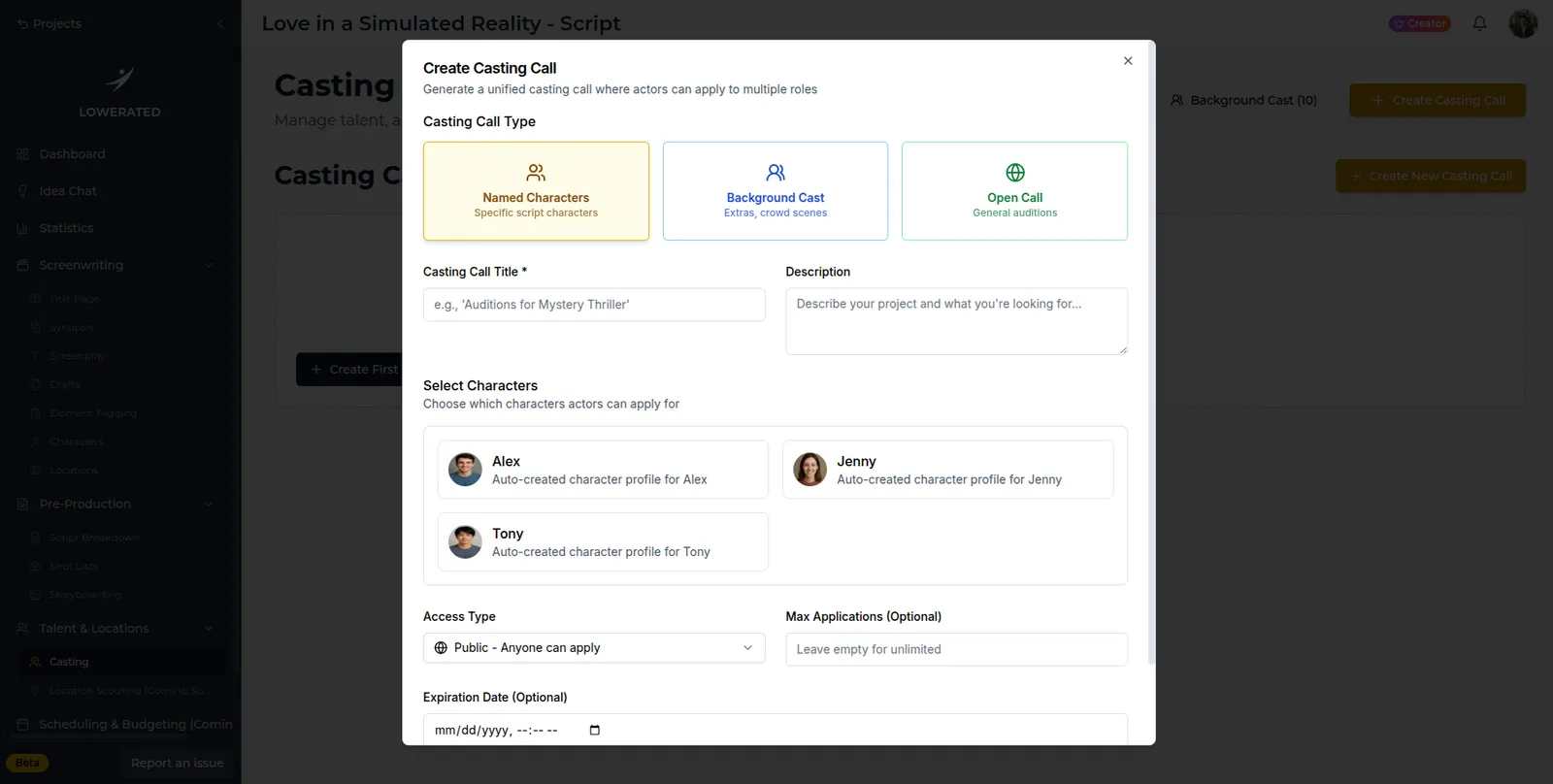
The clip shows a filmmaker creating a casting call for a role and publishing it.
3. Share the call where actors look
Post on casting sites such as Backstage, Mandy, StarNow, or Casting Networks, depending on your country, and share the link with drama schools, theater groups, local film communities, and social media groups. For more channels, see different ways to cast your films.

4. Review submissions and shortlist
Go through new applications daily and shortlist three to five actors per lead role. A simple scorecard keeps the team honest: fit for the role, emotional range, voice, ability to take direction, and availability. Write one line on why each person made the shortlist.
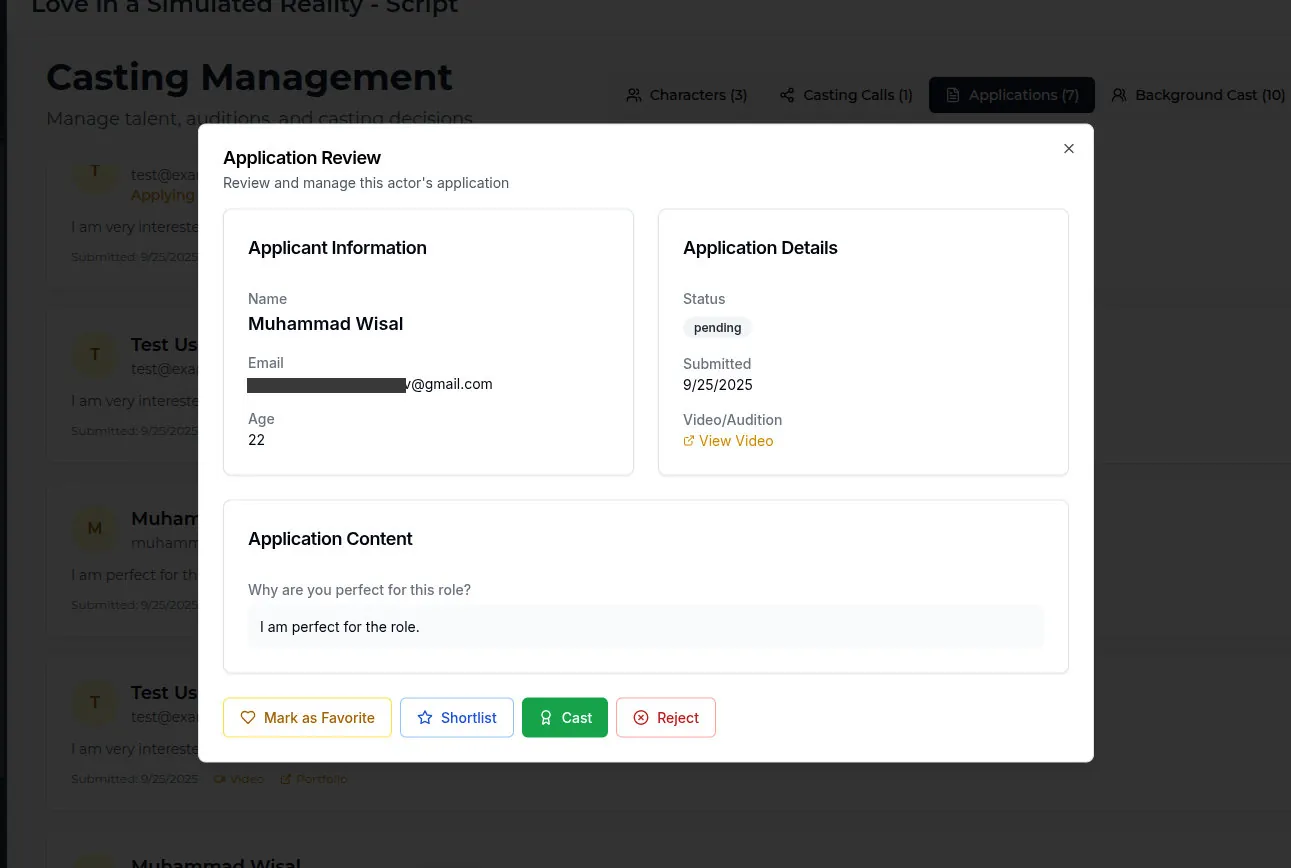
5. Hold callbacks and chemistry reads
Bring your shortlist back to read longer scenes, try different directions, and read opposite other actors. This is where you find out who can adjust on the spot.
6. Make offers and confirm availability
Confirm shoot dates, rate, and any union terms before you announce anyone. Then send contracts and talent releases. In Lowerated, releases are signed online and you mark each actor's availability per shoot day, so the schedule reflects who can actually be there.
7. Cast background roles and onboard everyone
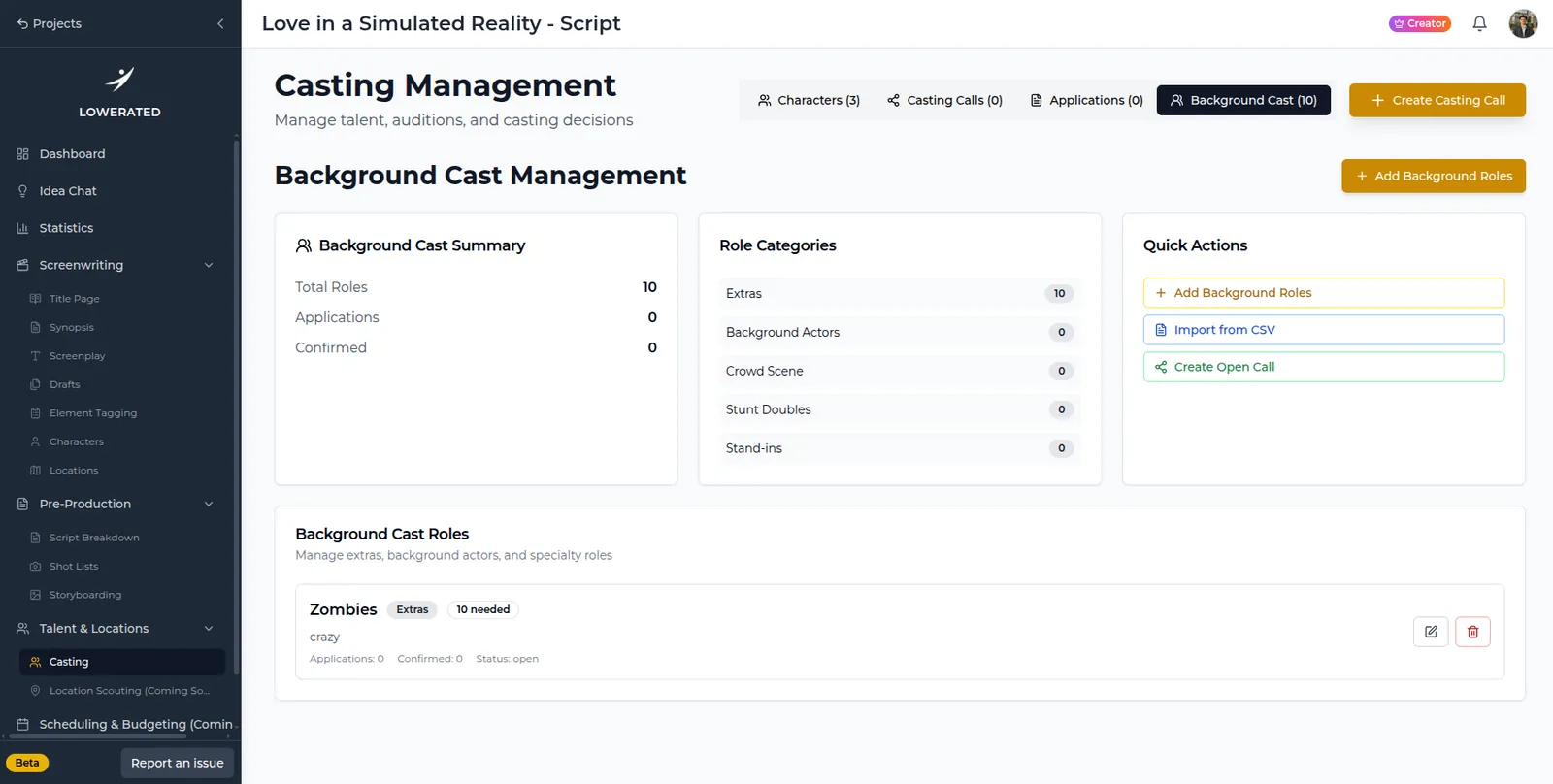
Background cast is usually handled in groups ("cafe patrons", "concert crowd") with head counts per shoot day. Once leads are confirmed, send each actor their sides, the outline schedule, and wardrobe notes.
How do you get cast in a movie as an actor?
Most actors get cast by applying to many calls with a clear profile, a short reel, and a well-made self-tape. For new actors, student and indie films are the usual way in.
- Have the basics ready: a recent headshot, a one-page acting resume, and a reel of one to two minutes. If you have no footage yet, a self-taped scene works.
- Read the call closely. Submit only for roles that fit, and send exactly what was asked for.
- Make clean self-tapes: quiet room, eye-level camera, even light, a reader off camera, and a short slate if requested. See our self-tape specs guide.
- Be honest about availability. Missing shoot days is one of the fastest ways to lose a role.
- Build relationships. Directors often recast actors they trust. Being on time and prepared on a small set leads to the next job.
Legitimate productions and casting directors do not charge actors to audition. Be wary of any call that asks for an audition fee. For more on getting noticed, read how to stand out in casting calls.
Sample messages you can reuse
Self-tape request: "Thanks for applying for Layla. Please record a 60 to 90 second self-tape of Scene 12, facing camera, in a quiet room. Upload it as an unlisted link and reply here by Friday 6 pm."
Offer: "We would like to cast you as Layla. Please confirm you are available for the shoot dates below. We will send the contract, sides, and wardrobe notes once you confirm."
Regret: "Thank you for your submission. We have gone with another actor for this role. We liked your tape and hope you apply for our future projects."
FAQ
Is it "casted" or "cast" in a movie?
"Cast" is correct. The verb does not change in the past tense: "She was cast as the lead."
Do you need experience to get cast in an indie film?
Often no. Many indie and student films welcome new actors, especially for supporting roles, if the self-tape shows the actor fits the part.
Who does the casting on a film?
On larger films, a casting director runs the process and the director and producers make final calls. On small indies, the director or producer usually does it themselves.
How many actors should you shortlist per role?
Three to five per lead role is a common range. It gives you choice at callbacks without making the final decision harder.
Key takeaways
- Casting runs from character profiles to a call, auditions, callbacks, offers, and onboarding.
- Specific casting calls with dates, pay, and clear submission rules get better applicants.
- Chemistry reads and availability checks prevent the most expensive casting mistakes.
- Actors get cast through clean self-tapes, honest availability, and repeat relationships.
- The past tense is "cast", not "casted".
To run casting alongside your script and schedule, see Lowerated's pre-production tools.