Film Casting Pricing: How Much Does Professional Casting Cost?


By Muhammad Wisal and Muhammad Ali / 5 min read
Professional casting can cost anything from close to nothing to tens of thousands of dollars. A short film cast by the director through self-tapes may cost only a casting platform subscription and some time. An independent feature that hires a casting director typically pays a flat project fee, often somewhere in the low thousands to the tens of thousands of dollars depending on the number of roles, the market, and the casting director's experience. Studio features pay more.
The figures below are typical ranges, not quotes. Rates vary by country, city, union status, and the individual, so always ask for a written estimate.
What do you actually pay for when you pay for casting?
Casting costs fall into three groups: people, tools, and logistics. Most first-time filmmakers budget only for the first and get surprised by the other two.
| Cost item | Who usually pays it | Typical range |
|---|---|---|
| Casting director fee | Production | Flat fee per project or per week; from low thousands on a small indie to much more on financed features |
| Casting associate or assistant | Production | Day or weekly rate, on larger projects |
| Casting platform or breakdown service | Production (posting) and actors (subscriptions) | Often free or low cost to post; some charge for premium features |
| Audition room or studio | Production | Hourly or daily rental, varies widely by city |
| Reader and camera operator for sessions | Production | Day rate, or volunteers on small shoots |
| Self-tapes | Actors record them; production spends review time | Little or no direct cost to the production |
| Travel for callbacks or chemistry reads | Production, if requested | Depends on distance and number of actors |
| Union paperwork and contributions | Production | Set by the union agreement you sign |
Actors' own pay is a separate line in your budget. It is not part of the casting fee, though it is often the biggest number casting decisions affect.
How much does a casting director cost?
Most casting directors on films charge a flat fee for the project, sometimes split into weekly payments across prep. The fee depends on how many roles they cast, how long the process runs, whether name actors are involved, and how established they are. A casting director who can get offers in front of agents for recognizable actors charges more than one who mostly runs open calls.
Some charge a reduced fee for casting only the leads, or for a "casting consultant" role where they advise and the production runs the sessions. Ask what is included: breakdown writing, sessions, callbacks, deal memos, and background casting are often priced separately.
Casting directors do not take a percentage of actors' pay. That model belongs to agents and managers, who are paid by the actor. Legitimate casting directors also do not charge actors to audition.
How much do casting platforms cost?
For productions, many casting sites let you post a call for free or at low cost and make their money from actor subscriptions. Paid tiers usually add features like promoted listings or larger talent searches. Check the current terms of each site, since pricing changes often. For a broader look at where to post, see how online casting calls work.
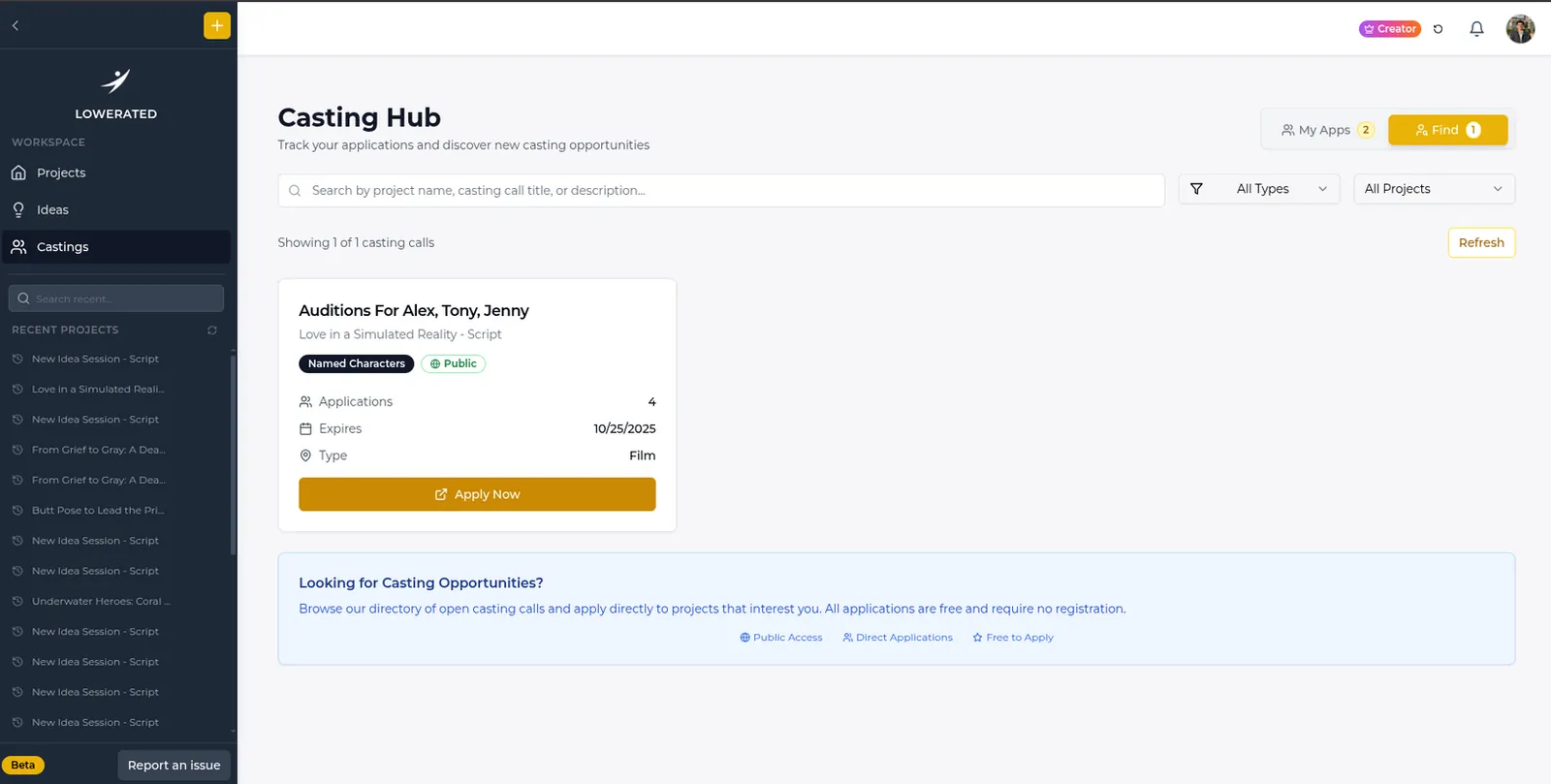
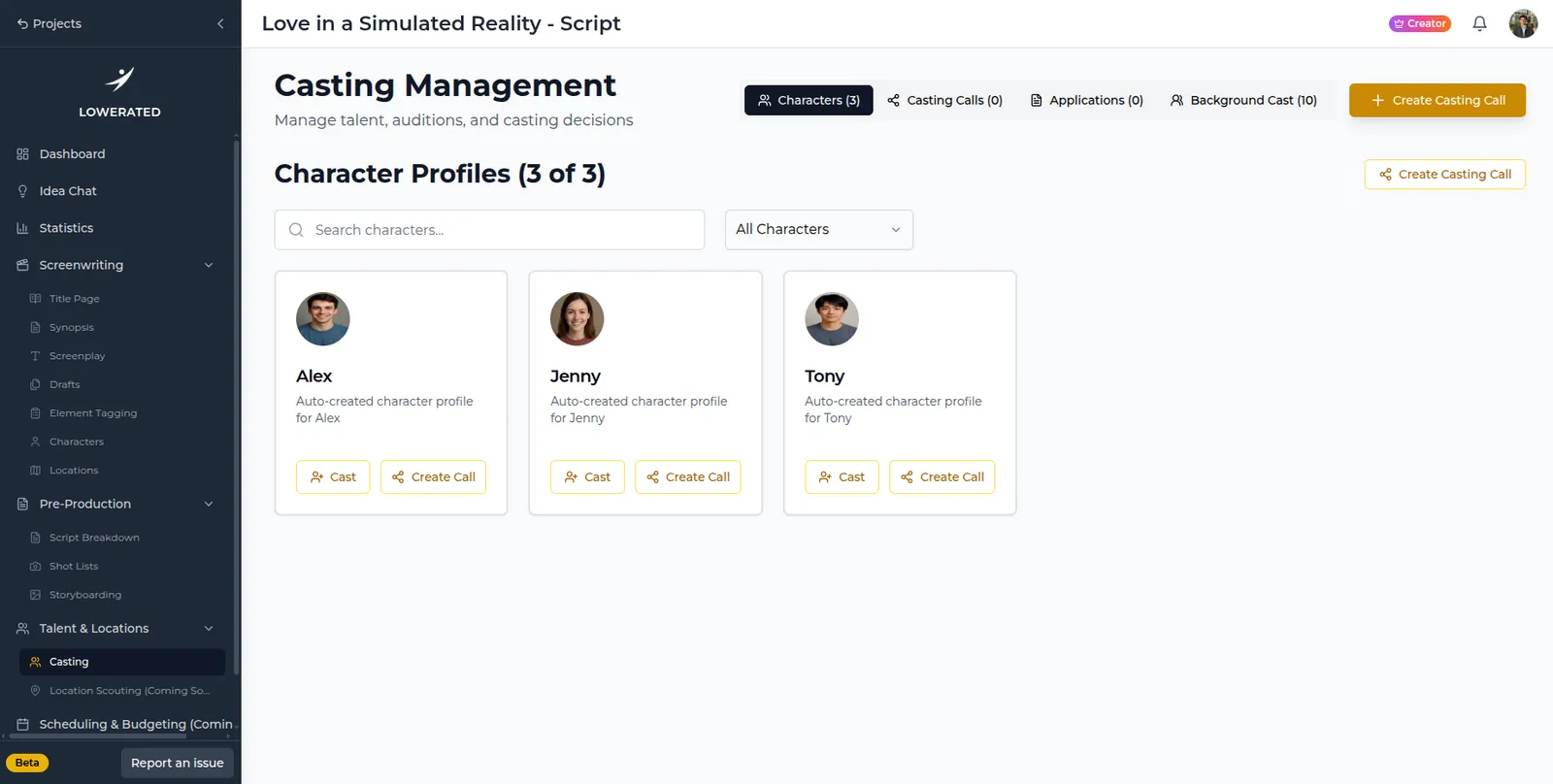
Lowerated includes casting in the Producer plan at $30 a month: you post roles, collect self-tapes, shortlist, and cast inside the same project as your script and schedule. Details are on the pricing page. Lowerated is a tool you run casting with; it does not provide casting director or agency services.
The clip shows a casting call being created for a role and published for actors to apply.
What drives casting costs up or down?
The number of roles and the length of the process drive casting costs more than anything else. The main factors:
- Type of project. Features cost more than shorts. Commercials can be expensive per role because clients want specific looks and fast turnaround.
- Number of speaking roles. Five roles and fifty roles are very different jobs.
- Background cast. Large crowd scenes add coordination, often through a separate extras casting service.
- Union status. Working under a union agreement, such as SAG-AFTRA's tiered low-budget agreements in the US, sets minimum actor rates and adds contributions and paperwork.
- Location. Casting in major hubs like Los Angeles, New York, or London usually costs more for rooms and staff.
- Timeline. Rushed casting costs more, because you pay for extra sessions and have less room to negotiate.
- Name talent. Pursuing known actors takes longer and needs someone with agent relationships.
How can an indie film keep casting costs low?
An indie film can keep casting costs low by running the first rounds through self-tapes and saving paid time for callbacks. Practical steps:
- Run the open call yourself. Post on free or low-cost sites, drama school boards, and local film groups.
- Use self-tapes for round one. No room rental, no reader fees, and you can review at any time.
- Hire a casting director for leads only. If budget allows, pay for expertise where it matters most.
- Book one callback day. Group callbacks and chemistry reads into a single rented day.
- Start early. More lead time means fewer rushed sessions and better rates.
- Put casting in the budget from day one. Include the fee, room, travel, and paperwork as line items.
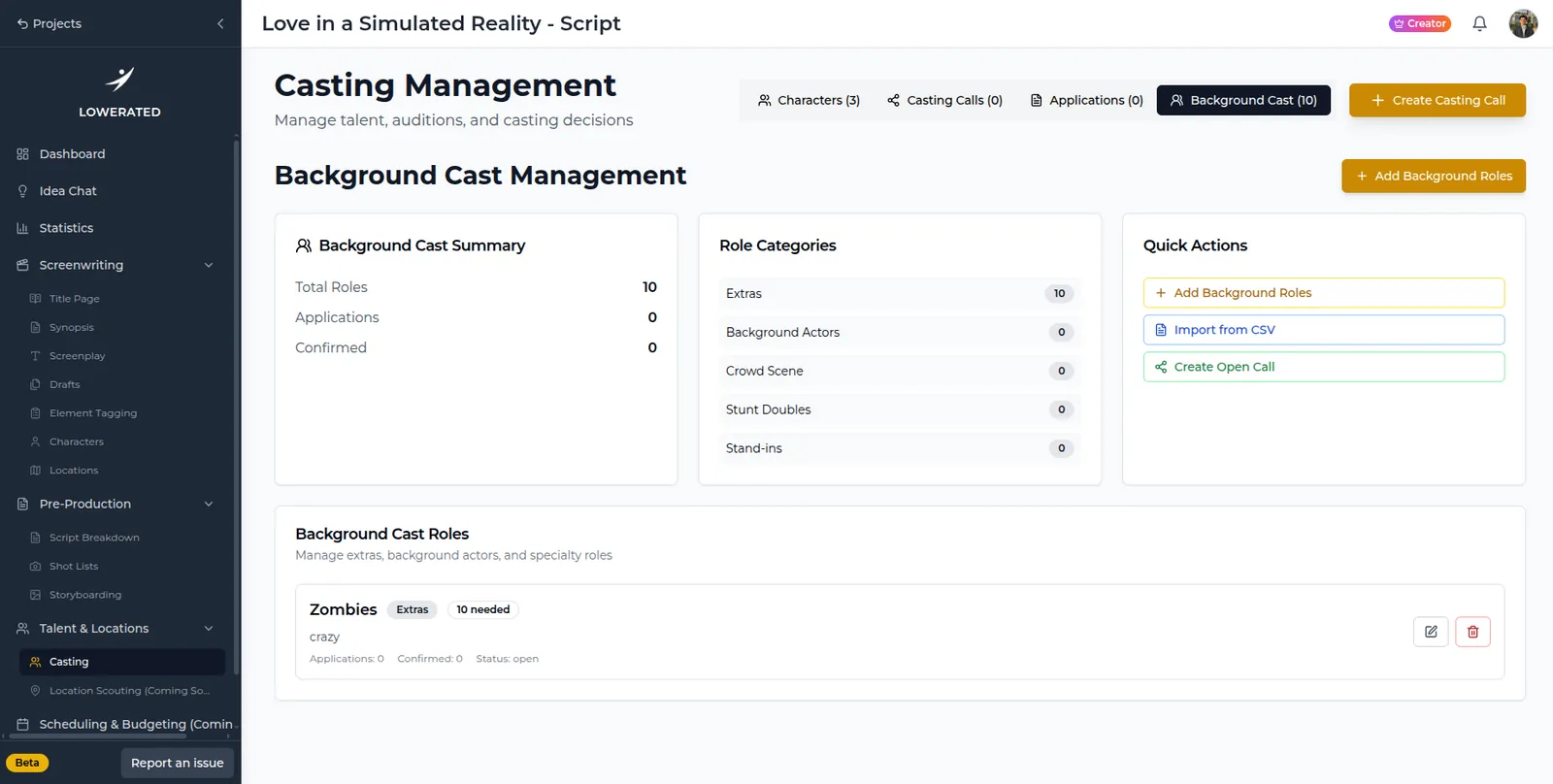
For the wider budget picture, read our guide to budgeting in pre-production. In Lowerated, the budget sits next to the schedule, so you can track casting line items with estimates and actuals alongside the shoot days they affect.
The clip shows budget line items with estimates and actuals displayed alongside the shooting schedule.
FAQ
Do actors pay casting directors?
No. Productions pay casting directors. An actor should not pay to audition; agents and managers are the ones who take a percentage of an actor's earnings.
Is it worth hiring a casting director for a short film?
Usually only if you need a specific type of actor you cannot reach yourself, or a known name. Most shorts are cast by the director or producer.
Are self-tapes free?
For the production, mostly yes. The actor covers their own setup, and you spend time reviewing tapes.
Does Lowerated charge per role or per script?
No. Casting is part of the Producer plan at a flat monthly price, with no per-role or per-script fees.
Key takeaways
- Casting costs cover people (casting director, assistants), tools (platforms), and logistics (rooms, travel, union paperwork).
- Casting directors usually charge a flat project fee that scales with roles, timeline, and name talent.
- Self-tapes and a self-run open call keep first-round costs close to zero.
- Budget for casting as its own set of line items, separate from actor pay.