How to Become an Assistant Director


By Muhammad Wisal and Muhammad Ali / 6 min read
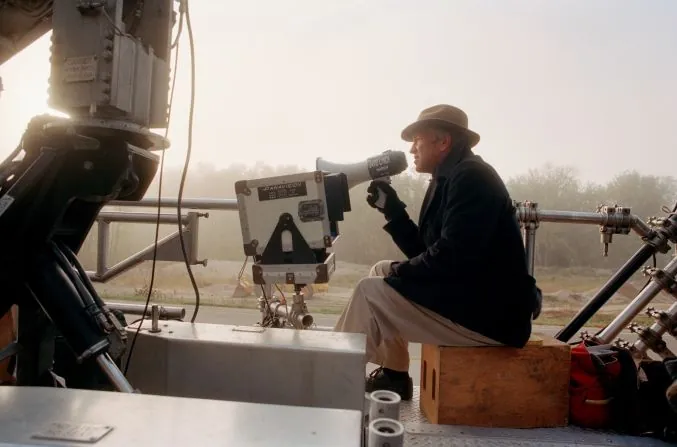
Most assistant directors start as production assistants on set, move up to 2nd 2nd AD and 2nd AD, and become a 1st AD after years of learning how shoot days are scheduled and run. You do not need a film degree. You need set experience, a strong grasp of scheduling and call sheets, calm communication, and a reputation for keeping the day on time.
What does an assistant director do?
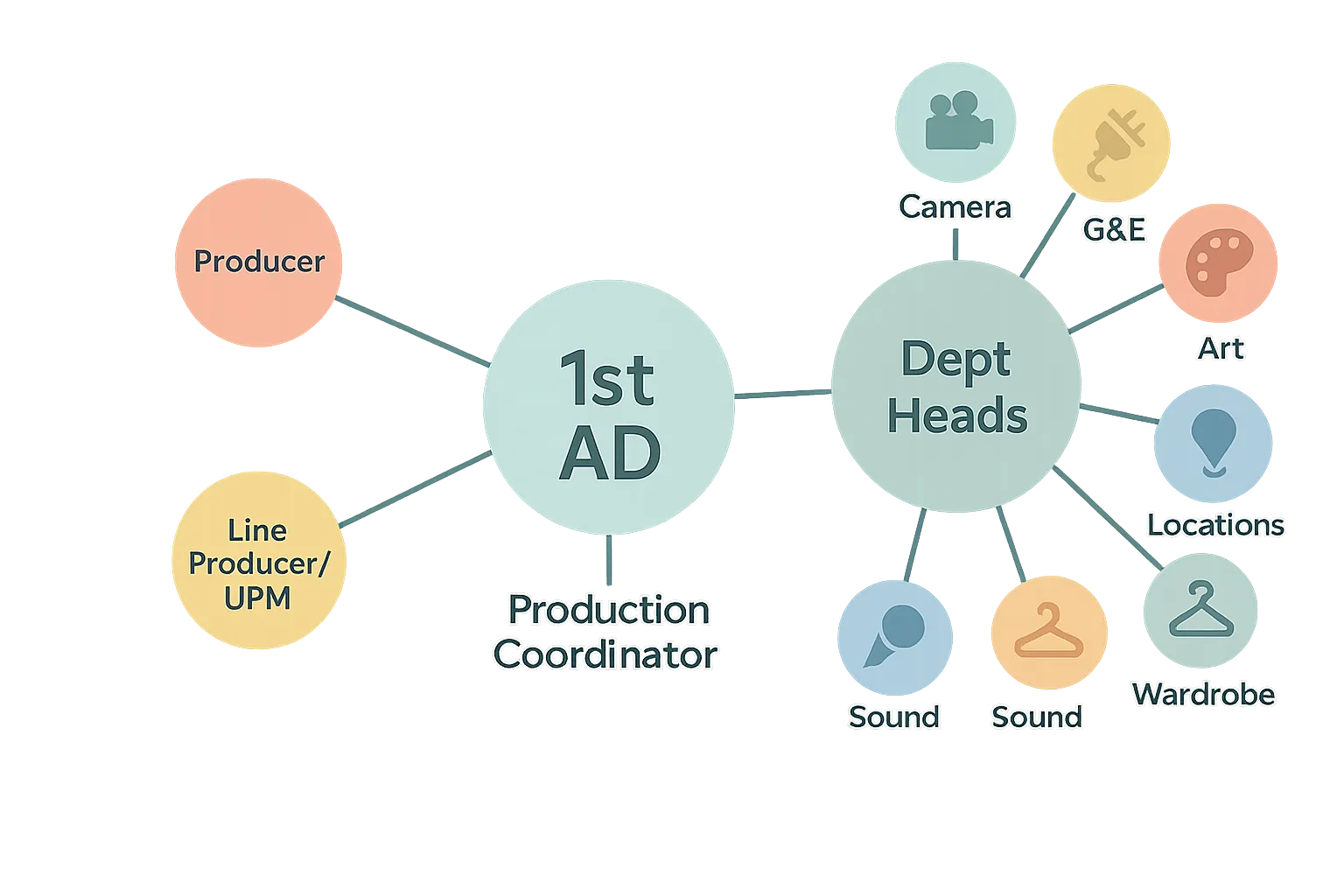
The assistant director department runs the set so the director can focus on the film. The 1st AD builds the shooting schedule in prep and, on set, runs the floor: calling for rehearsals and takes, keeping the day on schedule, and making safety calls. The 2nd AD handles the paperwork and the people behind the floor: call sheets, cast times, background and the production report. Despite the name, assistant directing is a separate career with its own skills, and many ADs stay in it for life.
What are the jobs in the AD department?
An AD department has a clear ladder, and the titles differ slightly between countries. This table shows the common US structure, with the usual UK title where it differs.
| Role | Main responsibilities | Usually comes from |
|---|---|---|
| 1st AD | Shooting schedule, running the floor, safety, keeping the day on time | 2nd AD |
| 2nd AD | Call sheets, cast call times, background, production reports, next-day prep | 2nd 2nd AD |
| 2nd 2nd AD (UK: 3rd AD on the floor) | Supports the 2nd AD and 1st AD on set, moves cast and background, checks people in | Key set PA |
| Set PA (UK: runner or floor runner) | Lockups, radios, walking actors to set, relaying calls, sign-in sheets | Entry level |
For short definitions of the two senior jobs, see 1st AD and 2nd AD.
How do you become an assistant director, step by step?
- Get on set as a PA. Student films, indie shorts, music videos and commercials all need set PAs. Say yes to work, arrive early, and ask to be placed with the AD team.
- Learn the radio and the calls. ADs communicate on walkie in a standard way. Learn the common calls: "picture's up," "rolling," "background action," "cut," "checking the gate" on film shoots, "moving on," and the call for the last shot of the day.
- Learn the paperwork. Read every call sheet, production report and one-line schedule you are given. Ask the 2nd AD to show you how they are built. Practice making a call sheet for a short you know.
- Learn to schedule. Break down a short script, measure scenes in eighths of a page, and build a stripboard. Our guide to scheduling a film shoot walks through the method.
- Take the 2nd AD or 1st AD job on small projects. Indie shorts often lack an AD. Offer to 1st AD one; it is the fastest way to learn what the job demands.
- Move up on bigger sets. Use your PA and small-project experience to get 2nd 2nd AD work on larger productions, then 2nd AD.
- Consider a formal training program. In the US, the DGA has assistant director training programs in Los Angeles and New York. Requirements and deadlines change, so check their current information. Other countries have their own guild or union routes; ask the AD guild or union where you live.
What skills does an assistant director need?
An AD needs scheduling skill, clear communication, a feel for how long things take on set, and the authority to keep a crew moving without making enemies. These are the skills to build, roughly in the order you need them.
- Set awareness: knowing where every department is and what is holding up the next shot.
- Communication: short, clear calls on the radio and on the floor, and the confidence to say them loudly.
- Paperwork accuracy: call sheets and reports with no wrong times, addresses or scene numbers.
- Scheduling: turning a breakdown into shoot days that account for actors, locations, daylight and turnaround. Many professional ADs use dedicated scheduling software such as Movie Magic Scheduling.
- Time judgment: knowing how long a lighting change, a company move or a stunt setup actually takes.
- Safety: running safety meetings before risky scenes and stopping work when something is unsafe.
A worked example: one shoot day from each AD's side
Here is how the AD team might split one day on an indie feature called "Cold Ward," shooting a hospital corridor scene and a parking lot exterior. Times are an example only.
| Time | 1st AD | 2nd AD | Set PA |
|---|---|---|---|
| 6:00 AM | Reviews the day with the director and DP | Checks in cast, sends them to hair and makeup | Sets up sign-in, hands out radios |
| 7:30 AM | Runs the blocking rehearsal for Sc. 31 | Confirms background arrivals and wardrobe | Locks up the corridor for rehearsal |
| 8:30 AM | Calls first take: "Rolling" | Updates the production report with first shot time | Holds foot traffic at the corridor doors |
| 12:30 PM | Calls lunch after the last setup of Sc. 31 | Checks the afternoon cast are on time | Walks cast to catering |
| 2:00 PM | Runs the company move to the parking lot | Starts drafting tomorrow's call sheet | Moves gear and signs to the new set |
| 6:45 PM | Calls the last shot of the day and wrap | Finalizes the production report and call sheet for approval | Collects radios, clears the set |
The pattern to notice: the 1st AD stays with the camera, the 2nd AD stays one step ahead on paperwork and people, and the PA makes both of their plans happen physically.
What mistakes do new ADs make?
- Being too quiet on the floor, so calls are missed and takes are ruined by noise.
- Scheduling by script order instead of by location, cast and daylight.
- Underestimating company moves and lighting changes.
- Sending a call sheet with an old address or the wrong date.
- Treating the job as a stepping stone to directing and not learning it properly.
- Arguing with department heads in front of the crew instead of solving it quietly.
When the day slips, the 1st AD has a set of standard moves, from combining setups to moving a scene to another day. See keeping a shoot on schedule.
Practice AD skills with a stripboard and call sheets in Lowerated
If you want to practice building schedules and call sheets for real projects, Lowerated has both. Each scene becomes a strip on the stripboard, and you plan shoot days by moving strips around. Call sheets are then built from that schedule, with call times, locations and crew filled in for you to review.
The clip shows scenes as strips, filtered to night scenes, with one dragged onto day one of the schedule.
The clip shows a call sheet built from the schedule, with call times, locations and crew filled in, then reviewed and sent the night before.
FAQ
Do assistant directors become directors?
Some do, but most ADs make a full career in the AD department. It is a distinct job, and the best 1st ADs are in steady demand.
Do you need a degree to be an assistant director?
No. Set experience matters far more. Some formal training programs have education or work requirements, so check each one.
How long does it take to become a 1st AD?
It varies by country, project size and union rules. On low-budget indies people step up quickly; on union productions the progression is usually longer and more structured.
What software do ADs use?
Many use dedicated scheduling software for the stripboard and reports, plus spreadsheets or production platforms for call sheets.
Key takeaways
- The usual route is set PA, then 2nd 2nd AD, 2nd AD and 1st AD.
- The 1st AD runs the schedule and the floor; the 2nd AD runs the paperwork and people.
- Learn the radio calls, the call sheet and the stripboard as early as you can.
- Offer to AD small indie projects to get experience faster.
- Union and guild routes differ by country, so check the rules where you work.