

Muhammad Ali
Muhammad Ali co-founded Lowerated and runs it day to day. He writes about getting films planned, funded and made.
Written by Muhammad Ali.
 November 20, 2026
Screenplay Coverage: What Readers Look For
Screenplay coverage is a reader's report with a logline, synopsis, comments, ratings and a Pass, Consider or Recommend verdict. Here is what readers judge.
 November 18, 2026
How to Storyboard if You Can't Draw
Storyboard without drawing using shapes and arrows, staged photos, 3D apps, reference frames or AI frames. Step by step method with a worked example.
 November 18, 2026
How to Outline a Screenplay
How to outline a screenplay: start with a logline and ending, mark turning points, group sequences, then list every scene with what changes. With an example.
 November 18, 2026
How to Start a Screenplay When You Only Have an Idea
How to start writing a screenplay from just an idea: build a premise and logline, choose the ending, outline the beats, then write a fast first draft.
 November 17, 2026
Showrunner: What It Means in Filmmaking
A showrunner runs a TV series day to day: head writer and executive producer in one, leading the writers' room, scripts, casting and the edit.
November 17, 2026How to Write a TV Series: Seasons, Episodes and Show Bible
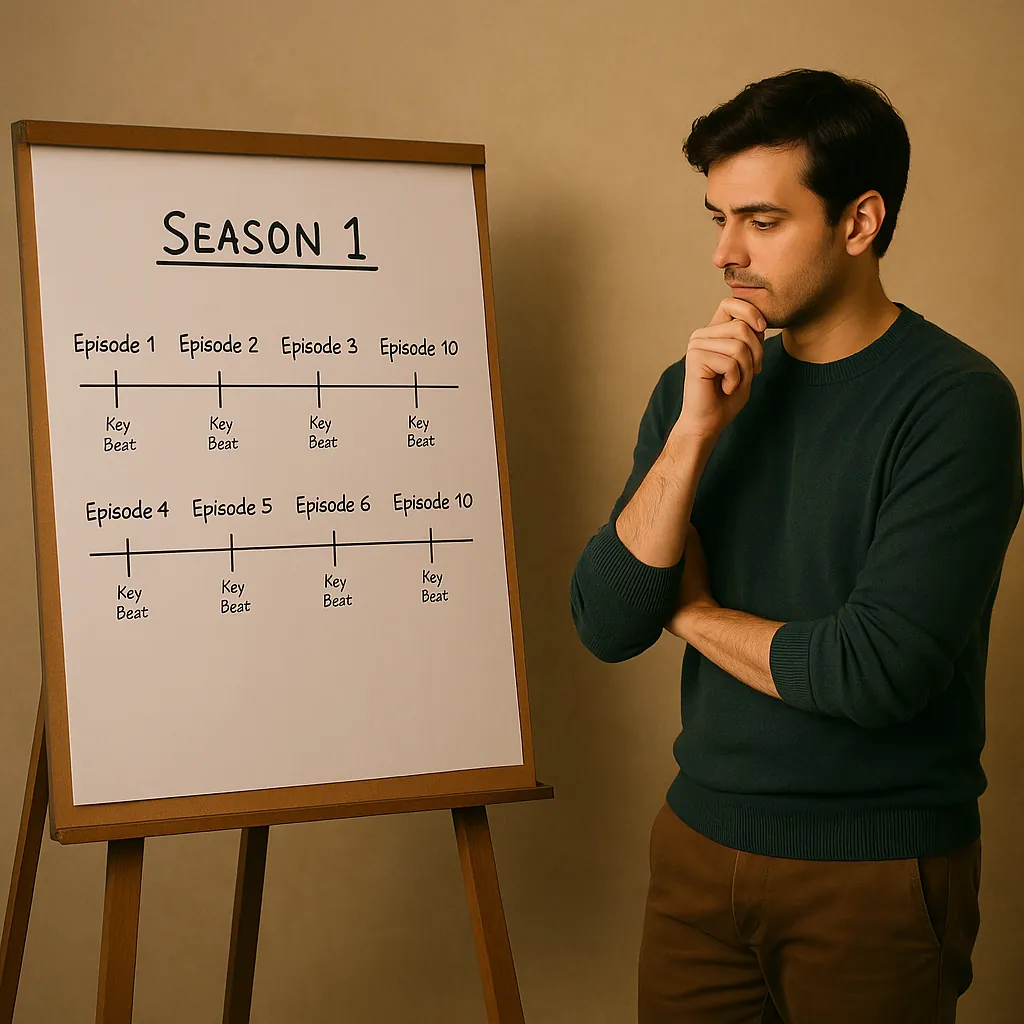
How to write a TV series: find the engine, choose the format, map the season, write the pilot and show bible. Includes a sample bible and season map.
 November 17, 2026
How to Write a Montage in a Screenplay
How to write a montage in a screenplay: three accepted formats, a worked example, step by step method, music and voiceover notes, and common mistakes.
 November 16, 2026
How to Format Phone Calls and Texts in a Script
Phone call screenplay format: when to use one side only, (V.O.) or an intercut, with script examples, plus how to write text messages and video calls.
 November 16, 2026
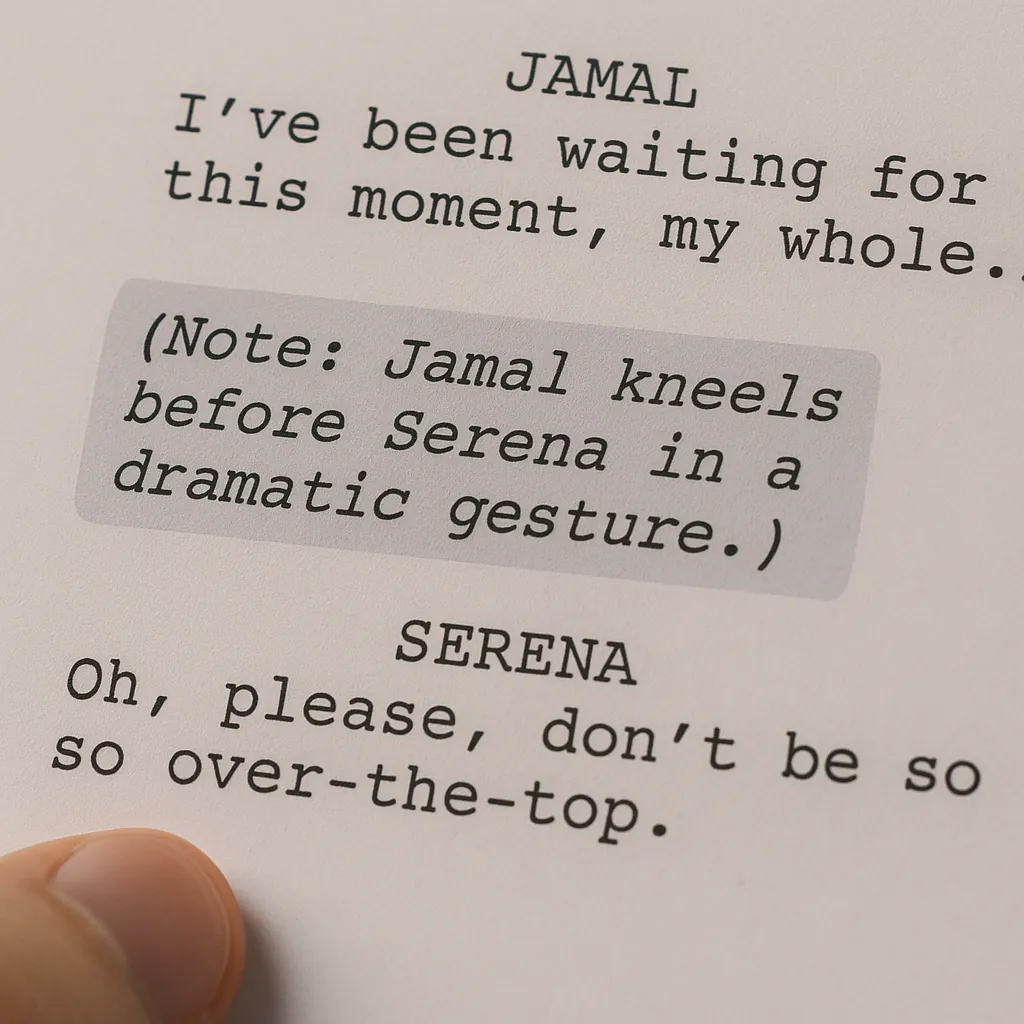
Writing Voiceover and Narration in a Screenplay
How to write voiceover in a screenplay: when to use V.O. or O.S., how to format narration and thoughts, a script example and the mistakes readers notice.
 November 16, 2026
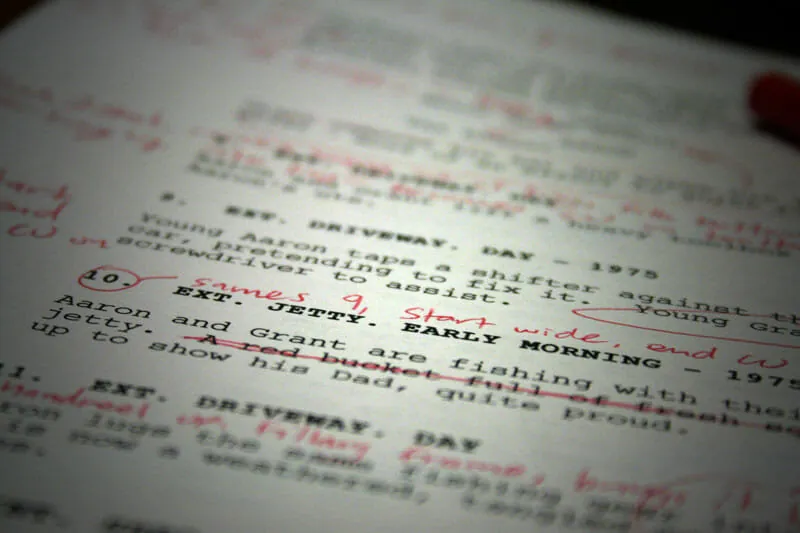
Transitions, Parentheticals and Other Screenplay Elements
The eight screenplay elements and how to use them: transitions, parentheticals, V.O. and O.S. extensions, inserts and on-screen text, with an example.
 November 15, 2026
Scene Headings (Sluglines) Explained
A screenplay scene heading names INT. or EXT., the location and the time of day. How to write one, secondary headings, flashbacks and common mistakes.
 November 15, 2026
Screenwriter's Block: Practical Ways Back In
How to beat screenwriter's block: name which kind of stuck you are, then use the matching fix, from outlining the next ten scenes to rewriting one broken scene.
November 15, 2026How to Write a Scene That Works
How to write a scene: give a character a goal, put something in the way, make the situation change, enter late and leave early. With a before and after.
 November 14, 2026
How to Write Action Lines
How to write action lines: present tense, only what we see and hear, one beat per short paragraph, strong verbs. With a before and after example.
 November 14, 2026
Screenwriting Contests Worth Entering
Screenwriting contests worth entering in 2026, how to spot a legitimate one, what entry costs, how to prepare your script and what to do once you place.
 November 14, 2026
Writing With a Screenwriting Partner: How Co-Writing Works
How co-writing with a screenwriting partner works: ways to split the writing, choosing a partner, what a co-writing agreement covers, and a sample plan.
 November 13, 2026
How to Get Feedback on Your Screenplay
How to get useful screenplay feedback: when your draft is ready, who should read it, what to ask, how to run a notes round and which notes to act on.
November 13, 2026Parenthetical: What It Means in Filmmaking
A parenthetical is a short bracketed direction under a character's name showing how a line is said or to whom. See when to use one, with a script example.
 November 13, 2026
How to Write a TV Pilot
How to write a TV pilot: premise vs non-premise pilots, page counts and act structure by format, a step-by-step method and a worked pilot outline.
 November 12, 2026
Three-Act Structure Explained With Examples
Three-act structure splits a story into setup, confrontation and resolution. See what happens in each act, where turning points land, and worked examples.
 November 12, 2026
How to Write a Short Film Script
How to write a short film: build it on one character, one want and one turn, keep locations and cast small, outline the beats and cut to 5 to 15 pages.
November 12, 2026How to Format a Screenplay (Rules, Margins and Title Page)
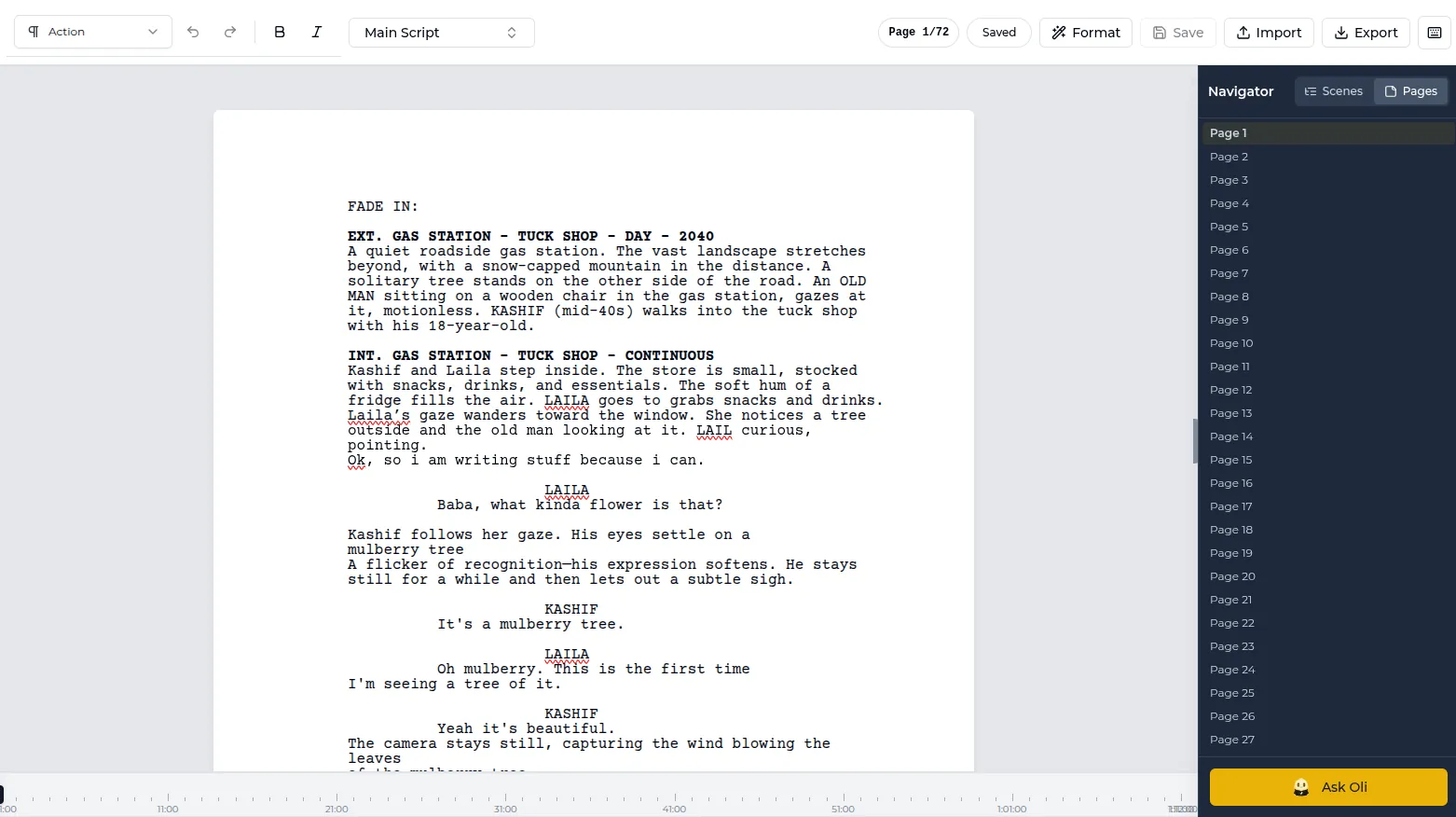
How to format a screenplay: US Letter, 12 pt Courier, 1.5 inch left margin, the indent for every element, a formatted sample scene and a plain title page.
 November 11, 2026
How Long Is a Screenplay? Page Counts by Format
A feature screenplay is usually 90 to 120 pages, about one minute per page. Typical page counts for TV, shorts and specs, plus how to cut a long draft.
November 11, 2026Script Analysis Tool: Dialogue Balance, Scene Length and Page Count
How to analyze a screenplay: page count, scene length in eighths, dialogue balance per character and day/night split, with a worked example and steps.
 November 11, 2026
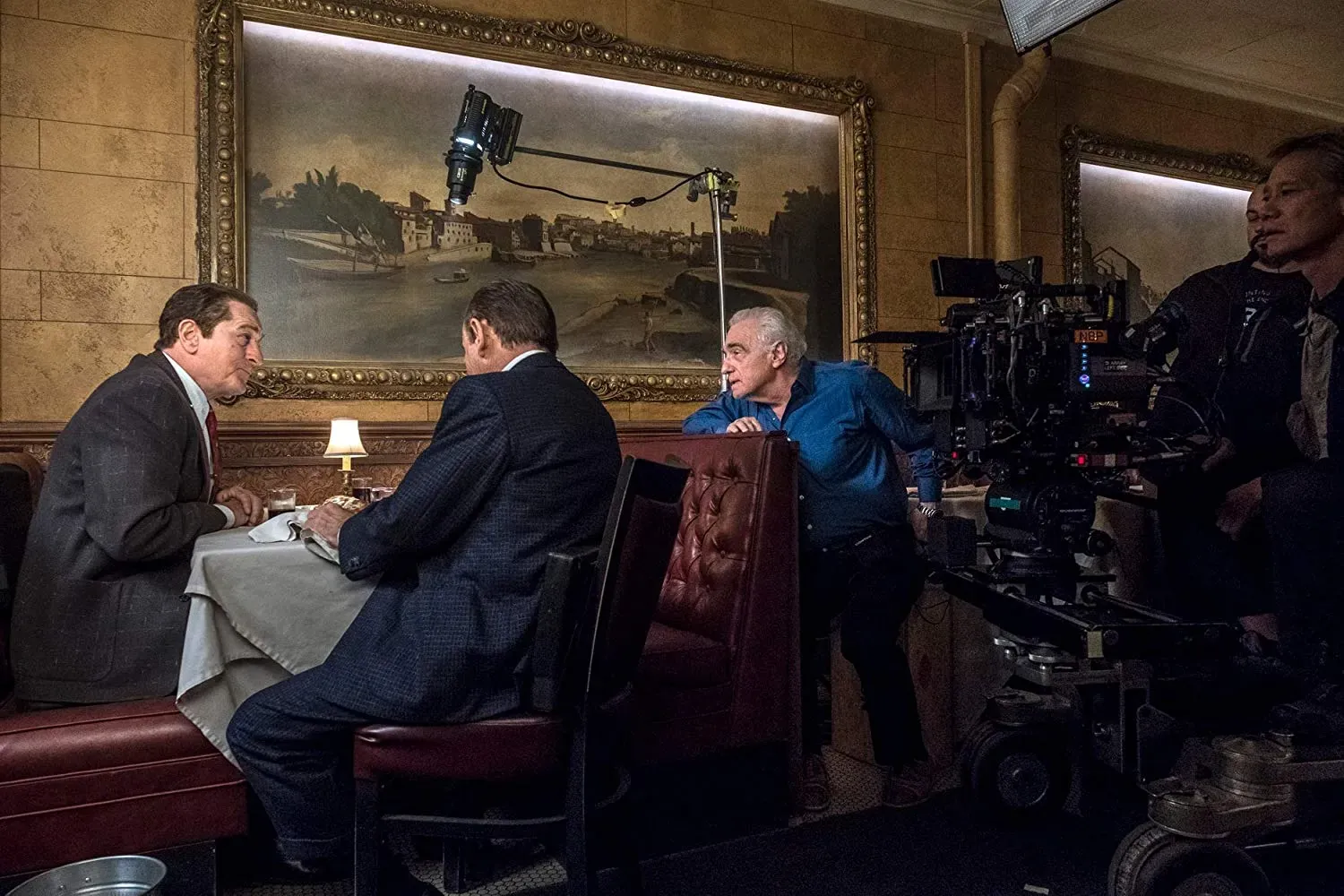
How to Plan Coverage Before the Shoot
Plan coverage by pre-cutting each scene, grouping shots into setups, ranking them A, B or C, and checking the list against your shoot day with the DP.
 November 10, 2026
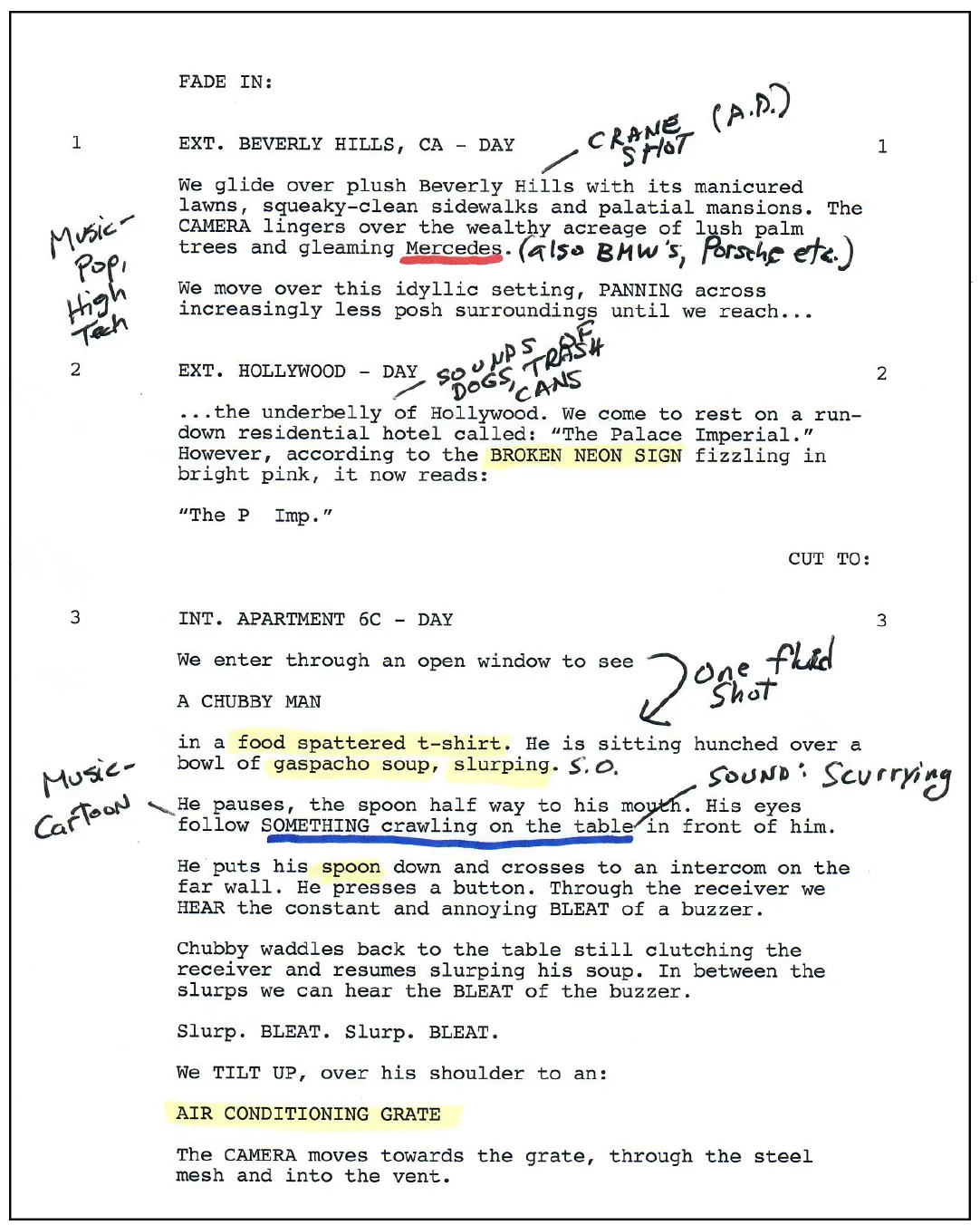
Page Count in Eighths: How to Measure a Script
How eighths page count works: split each page into eight one-inch parts, measure every scene, add totals and avoid common mistakes, with a worked example.
 November 10, 2026
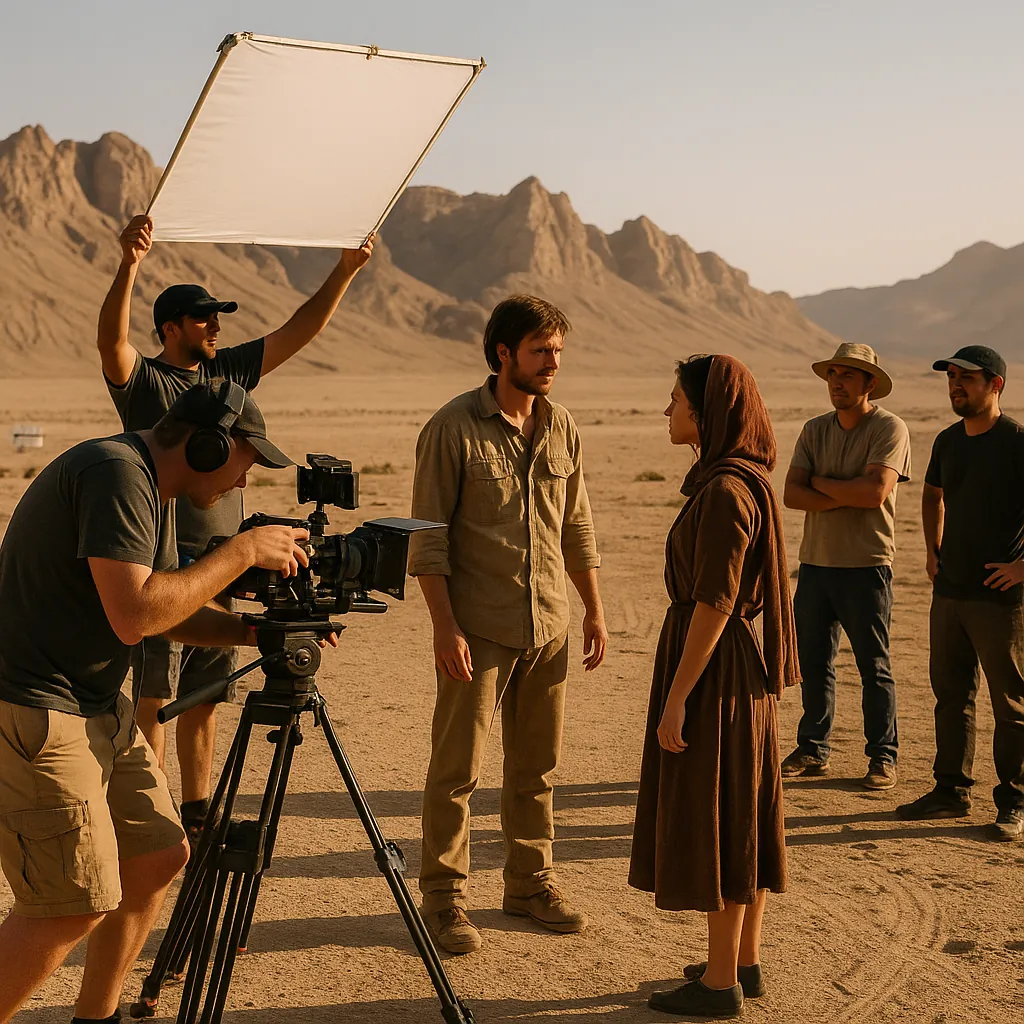
What Happens on a Film Shoot Day (Hour by Hour)
What happens on a film shoot day, hour by hour: crew call, the block, light, rehearse, shoot cycle, the calls before each take, lunch, wrap and paperwork.
 November 10, 2026
How Many Pages Can You Shoot a Day?
Pages per day in film: studio features often shoot 2 to 3 pages, indies 4 to 6. Learn how setups drive the number and how to set a target for your shoot.
 November 9, 2026
Line producer: What It Means in Filmmaking
A line producer manages a film's budget and daily logistics, mostly below-the-line costs like crew, gear and locations. See what the job involves.
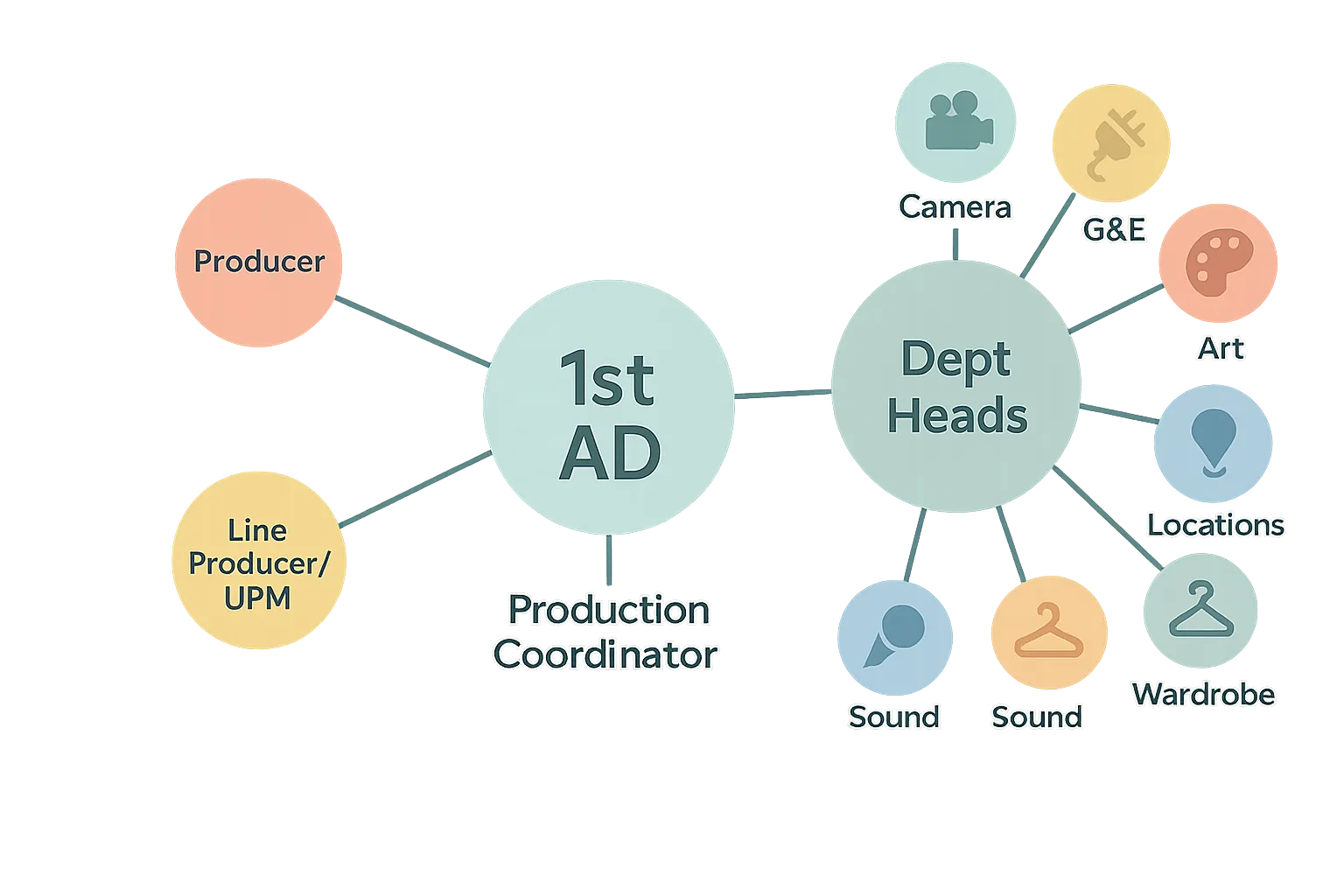
November 9, 20261st AD: What It Means in Filmmaking
A 1st AD (first assistant director) builds the shooting schedule and runs the set day to day. What the job involves, with an example of a morning on set.
 November 9, 2026
How to Become an Assistant Director
How to become an assistant director: the AD ladder from set PA to 1st AD, the skills and paperwork to learn, training programs and a sample shoot day by role.
 November 8, 2026
2nd AD: What It Means in Filmmaking
A 2nd AD (second assistant director) handles call sheets, cast flow through makeup and wardrobe, background and daily paperwork. What the job involves.
 November 8, 2026
Production Reports in Film: Daily and Wrap Reports (With a Template)
A film production report records each shoot day: times, scenes and pages shot, cast hours, media and delays. See what goes in it, a template and a wrap report.
November 8, 2026Film Shoot Behind Schedule? How to Keep a Shoot on Schedule
When a film shoot falls behind schedule, check progress at lunch, rank and combine setups, and move scenes to days with the same cast or location.
 November 7, 2026
Film Production Checklist by Department
A film production checklist by department: what production, camera, sound, art, wardrobe, locations and data teams must do before, during and after the shoot.
 November 7, 2026
Film Crew Roles Explained: Who Does What on Set
Film crew roles explained by department: what the 1st AD, DP, gaffer, key grip, sound mixer and others do on set, and which roles a small shoot needs.
 November 7, 2026
Golden hour: What It Means in Filmmaking
Golden hour is the time after sunrise and before sunset when light is soft, warm and low. Learn how long it lasts and how to plan shots around it.
 November 6, 2026
Drop and Pick Up: What It Means in Filmmaking
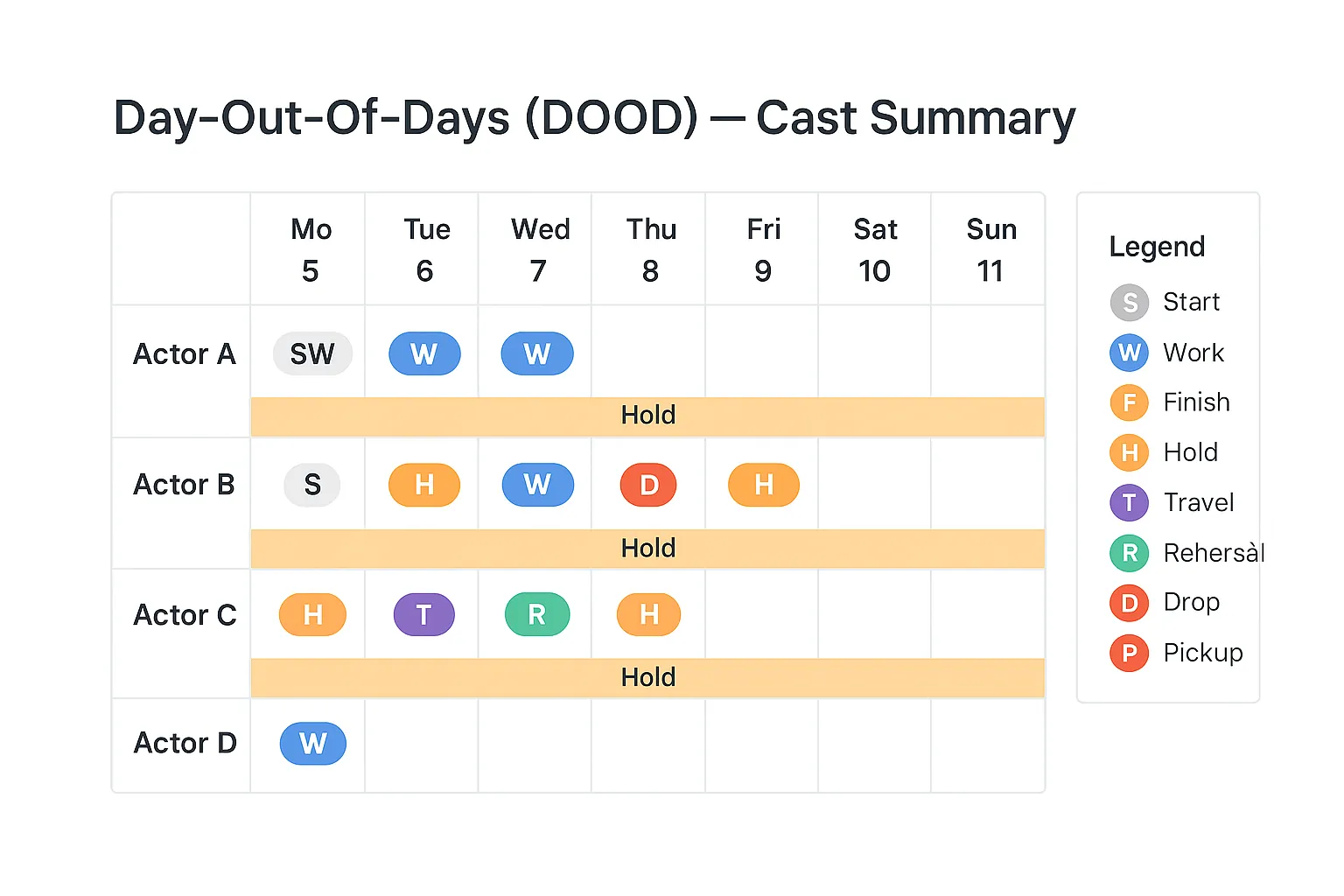
Drop and pick up means releasing an actor during a long gap in their schedule and bringing them back later, instead of paying hold days. Rules and example.
 November 6, 2026
Cover Set: What It Means in Filmmaking
A cover set is a backup location, usually indoors, kept ready to shoot when weather stops an exterior day. How it works, with a call sheet example.
November 6, 2026Weather Cover Sets: How to Plan One
A weather cover set is a backup interior scene you shoot when bad weather stops an exterior. How to choose one, hold cast, list it and decide when to switch.
 November 5, 2026
Hold Day: What It Means in Filmmaking
A hold day is a day an actor is booked but not working, between their first and last work days. Here is how hold days work, with a day out of days example.
November 5, 2026How to Manage a Film Crew: Contacts, Info Forms and Availability
Film crew management for indie shoots: keep one crew list, collect details with an info form, track who is free, out or on hold, and keep crew informed.
November 5, 2026Scheduling Around Actor Availability
Actor availability scheduling: get free, out and hold dates, schedule the most limited actor first, group scenes to avoid hold days, confirm in writing.
November 4, 2026Prop Lists and Hero Props: How to Make a Film Prop List
How to make a prop list for a film: hero props vs background props, a sample prop list, how many spares you need, continuity, prop weapons and common mistakes.
 November 4, 2026
Film Set Etiquette for First-Timers
Film set etiquette for your first day: the basic rules, walkie talk, how to behave around actors, safety, common terms and mistakes first-timers make.
 November 4, 2026
Low-Budget VFX: How to Do Visual Effects on a Small Budget
How to do low-budget VFX: plan a VFX breakdown, shoot clean plates and reference, use free tools like Resolve Fusion and Blender, and hire help for hard shots.
 November 3, 2026
Working With Animals on a Film Set
How to work with animals on a film set: break down every animal in the script, hire a trainer, plan and schedule the scenes, and keep the animals safe.
 November 3, 2026
Film Stunt Safety: Planning Stunts for Indie Shoots
Film stunt safety for indie shoots: who is responsible, how to plan a stunt step by step, a sample risk assessment and what to cover in the safety meeting.
November 3, 2026Film Production Insurance for Indie Films
Film production insurance for indie shoots: what each coverage protects, short term vs annual policies, certificates of insurance and how to get cover.
November 2, 2026Call time: What It Means in Filmmaking
A call time is when a cast or crew member must be on set and ready to work, listed on the call sheet. See how call times are set, with an example.
 November 2, 2026
Turnaround: What It Means in Filmmaking
Turnaround is the minimum rest between wrap and the next call time for cast and crew. Learn how it shapes schedules, plus its meaning in development.
 November 2, 2026
Deal Memo: What It Means in Filmmaking
A deal memo is a short signed agreement with a cast or crew member that sets out role, dates, pay and credit. What it includes, plus a sample crew memo.
 November 1, 2026
How to Become an Actor With No Experience (and Get Cast)
How to become an actor with no experience: train, get headshots, write a one-page resume, self-tape well and book student and indie films to build a reel.
 November 1, 2026
Background Actor: What It Means in Filmmaking
A background actor fills a scene without speaking scripted lines. What the term means, featured background, stand-ins, and a sample call sheet block.
November 1, 2026Day player: What It Means in Filmmaking
A day player is an actor hired by the day for a small speaking role. Learn how day players are booked, scheduled and shown on a day out of days.
October 31, 2026Deal Memos for Cast and Crew: What to Include
What a film deal memo is, who sends it and when, a checklist of terms for crew and cast deal memos, a short sample, and the mistakes that cause disputes.
October 31, 2026Talent Release Forms: What They Cover and When You Need One
A talent release form lets you use a person's name, likeness, voice and performance. What to include, when you need one, minors, and how to track them.
October 31, 2026Location Release Forms: What to Include
What a location release form is, who should sign it, and a clause-by-clause checklist of what to include, with a filled-in sample for an indie shoot.
 October 30, 2026
Company Moves in Film: How to Plan Them
A company move relocates the whole unit mid-day. Learn why moves cost so much time, how to plan one step by step, and how to cut them from your schedule.
 October 30, 2026
Film Unit Base and Parking: Transport Plans for Shoot Days
How to plan a film unit base and parking: what base needs, how to pick the space, crew parking, a sample transport plan and what to put on the call sheet.
 October 30, 2026
Film Permits: When You Need One and How to Get It
When you need a film permit, who issues it, what the application asks for, and how to get one step by step. General guidance for indie filmmakers.
 October 29, 2026
What Is a Tech Scout in Film?
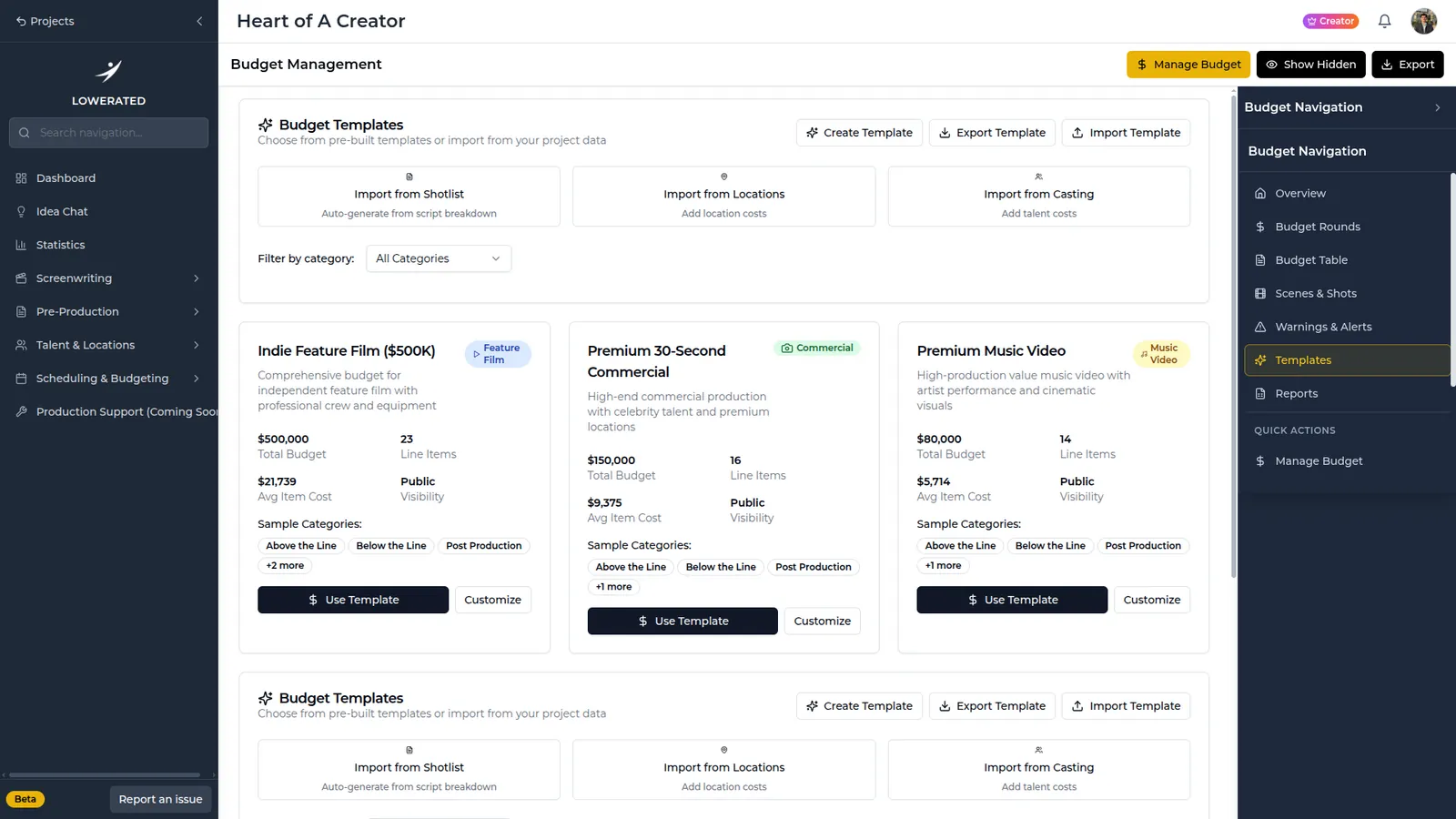
A tech scout is a visit to locked locations with department heads to plan how to shoot there. Who goes, what each department checks, and how to run one.
 October 29, 2026
How to Plan a Commercial Shoot
Commercial shoot planning step by step: who is involved, the brief, treatment, bid, PPM, schedule and deliverables, plus a sample one-day 30 second spot plan.
October 29, 2026How to Run a Production Meeting for a Film
How to run a film production meeting: who attends, what to send in advance, a sample agenda, the scene by scene walk through and how to track action items.
 October 28, 2026
Directing Actors: Practical Notes That Work
Directing actors with playable notes: objectives, action verbs and obstacles instead of result notes, plus how to prepare and how to give notes on set.
 October 28, 2026
Working With Child Actors on Set
Working with child actors: the permits, hours and supervision rules to check, how to schedule a child's day, a sample call sheet entry and common mistakes.
October 28, 2026Sides: What It Means in Filmmaking
Sides are the few script pages an actor needs: audition scenes for a read, or the day's scenes on set, handed out with the call sheet. See an example.
 October 27, 2026
Self-Tape Instructions to Send Actors (Template)
A copyable self-tape instructions template for casting: sides, slate, framing, eyeline, file naming, delivery and deadline, with a sample request to actors.
 October 27, 2026
How to Write a Casting Call (With a Template)
How to write a casting call: the fields to include, how to describe each role, a full sample casting call, where to post it and the mistakes to avoid.
 October 27, 2026
Table read: What It Means in Filmmaking
A table read is a seated reading of the full script by the cast, so the director and writer can hear the story and fix problems before the shoot.
October 26, 2026Chemistry Reads and Callbacks: How to Run Them
What a chemistry read is, how it differs from a callback, when to hold one, how to pair actors and pick scenes, a sample schedule and what to look for.
 October 26, 2026
How to Rehearse Actors Before the Shoot
How to rehearse actors for a film: which scenes to rehearse, the types of rehearsal, a step-by-step method, a sample schedule and common mistakes.
October 26, 2026How to Write Better Dialogue
How to write dialogue for a screenplay: give each character a goal, cut lines that only deliver facts, use subtext, and read it aloud. With a full rewrite.
October 25, 2026How to Run a Table Read
How to run a table read: who attends, how to prepare the script and room, a sample schedule, how to run the read without stopping, and what to do after.
 October 25, 2026
How to Rewrite a Screenplay
How to rewrite a screenplay: rest the draft, read it in one sitting, reverse outline it, then rewrite in passes from structure down to dialogue and polish.
October 25, 2026Screenplay Template for Google Docs and Word (and Why to Switch)
Set up a screenplay template in Google Docs or Word: exact margins, indents and styles for each element, a sample scene, and the limits to know.
 October 24, 2026
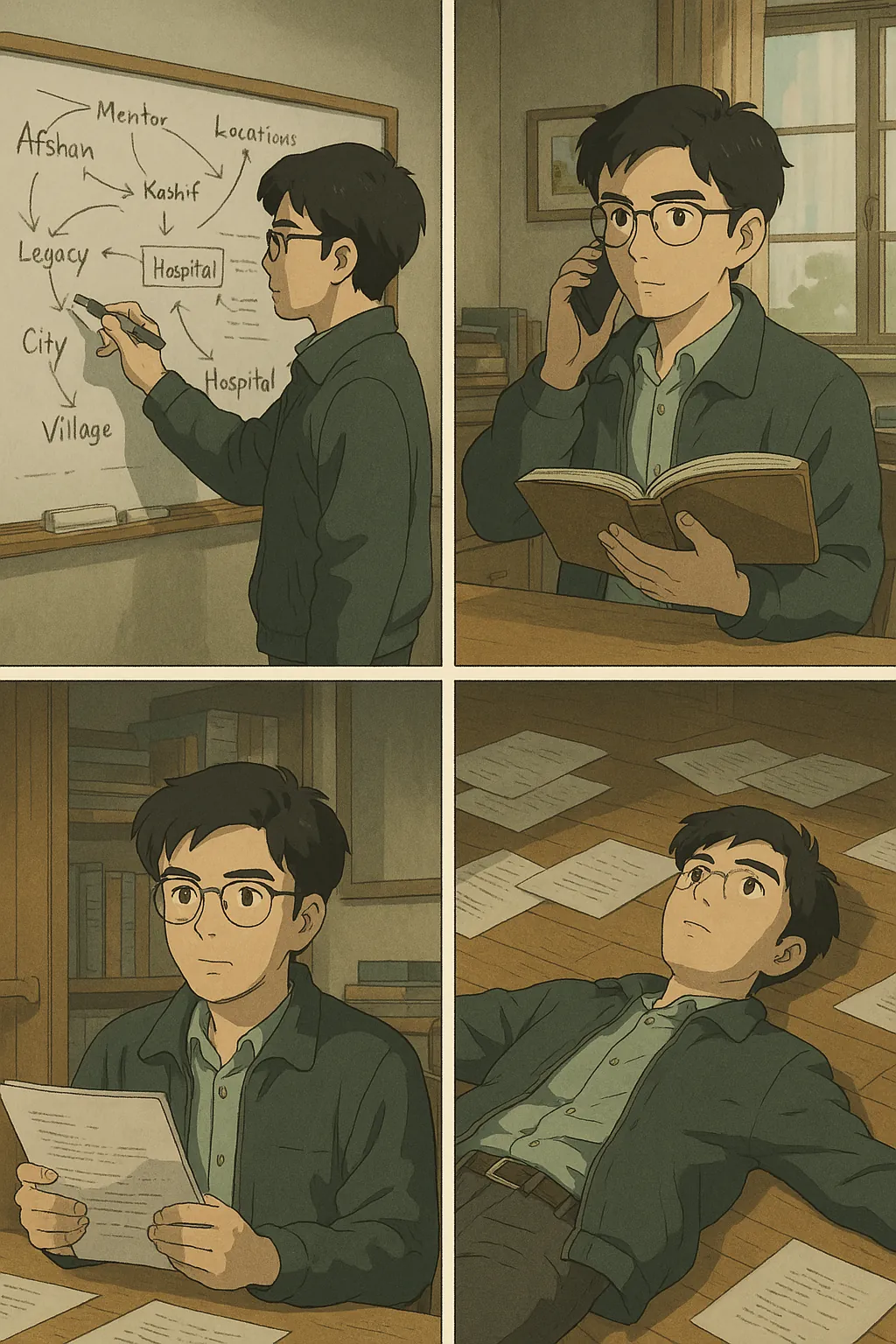
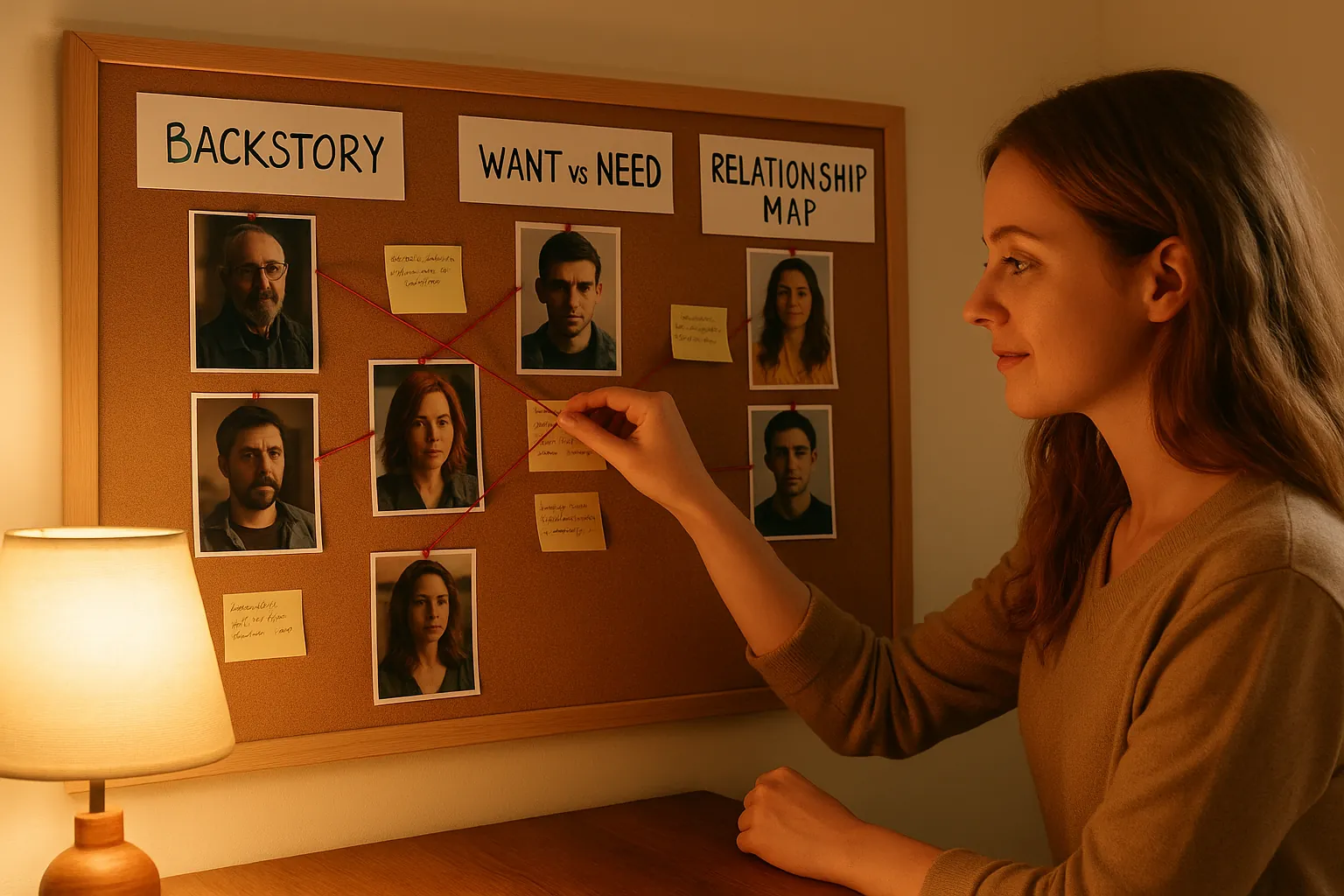
Character Relationship Maps for Screenwriters
How to make a character relationship map for a screenplay: what to label on each line, three layouts, a worked example and the story problems a map reveals.
 October 24, 2026
Free Screenwriting Software: What You Actually Get
What free screenwriting software includes in 2026: Trelby, STARC, WriterDuet, Arc Studio, Celtx and Fade In compared on project caps, watermarks and limits.
 October 24, 2026
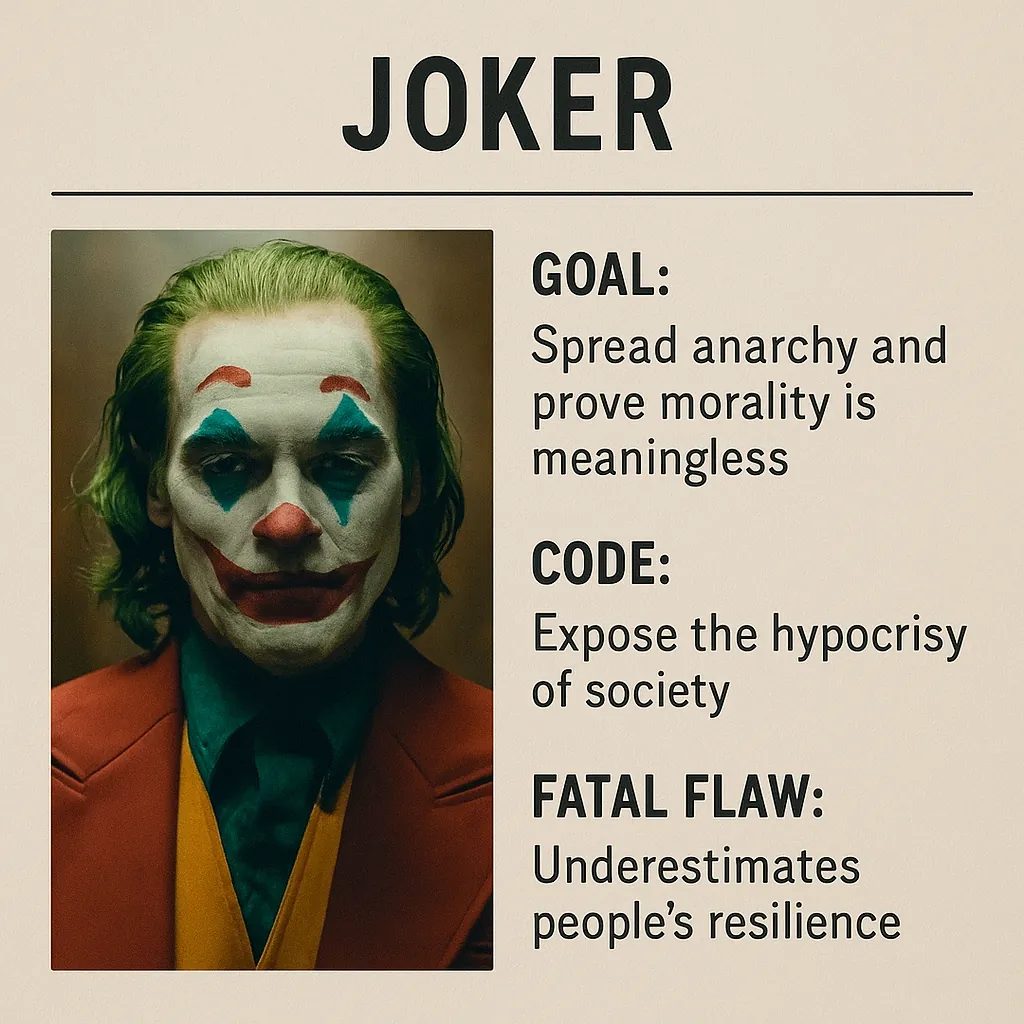
How to Write Character Profiles for a Screenplay (With a Template)
A character profile template for screenwriting: the fields to fill in, a completed example, step-by-step method and the mistakes that make profiles useless.
October 23, 2026Final Draft Alternatives for Screenwriters
Final Draft alternatives as of 2026: Fade In, WriterDuet, Arc Studio, Highland Pro, Trelby and Lowerated, with prices, platforms and .fdx support compared.
October 23, 2026Best Screenwriting Software in 2026
Compare the best screenwriting software in 2026: Final Draft, Fade In, WriterDuet, Arc Studio, Highland Pro and free tools, with prices and who each suits.
 October 23, 2026
How to Write a Villain (a Compelling Antagonist)
How to write a villain: give them a clear goal, a reason that makes sense, more power than the hero and a link to the hero's flaw. Steps and an example.
 October 22, 2026
AI Screenwriting Tools: What They Can and Can't Do in 2026
What AI screenwriting software can and can't do in 2026, a comparison of current tools and prices, and how to use AI without losing your voice.
October 22, 2026Subtext in Screenwriting: Examples and Exercises
Subtext is what characters mean but do not say. Learn seven techniques for writing it, see an on-the-nose scene rewritten, and practice with five exercises.
October 22, 2026Beat Sheets: How to Use One Without Writing by Numbers
A beat sheet lists a screenplay's key story moments in order. Get the 15-beat template, a filled-in example, and how to use it without writing by numbers.
 October 21, 2026
Theme in Screenwriting: How to Find Yours
Theme in screenwriting is the argument your story makes about a human question. Find yours from your hero's climax choice, with a worked example.
 October 21, 2026
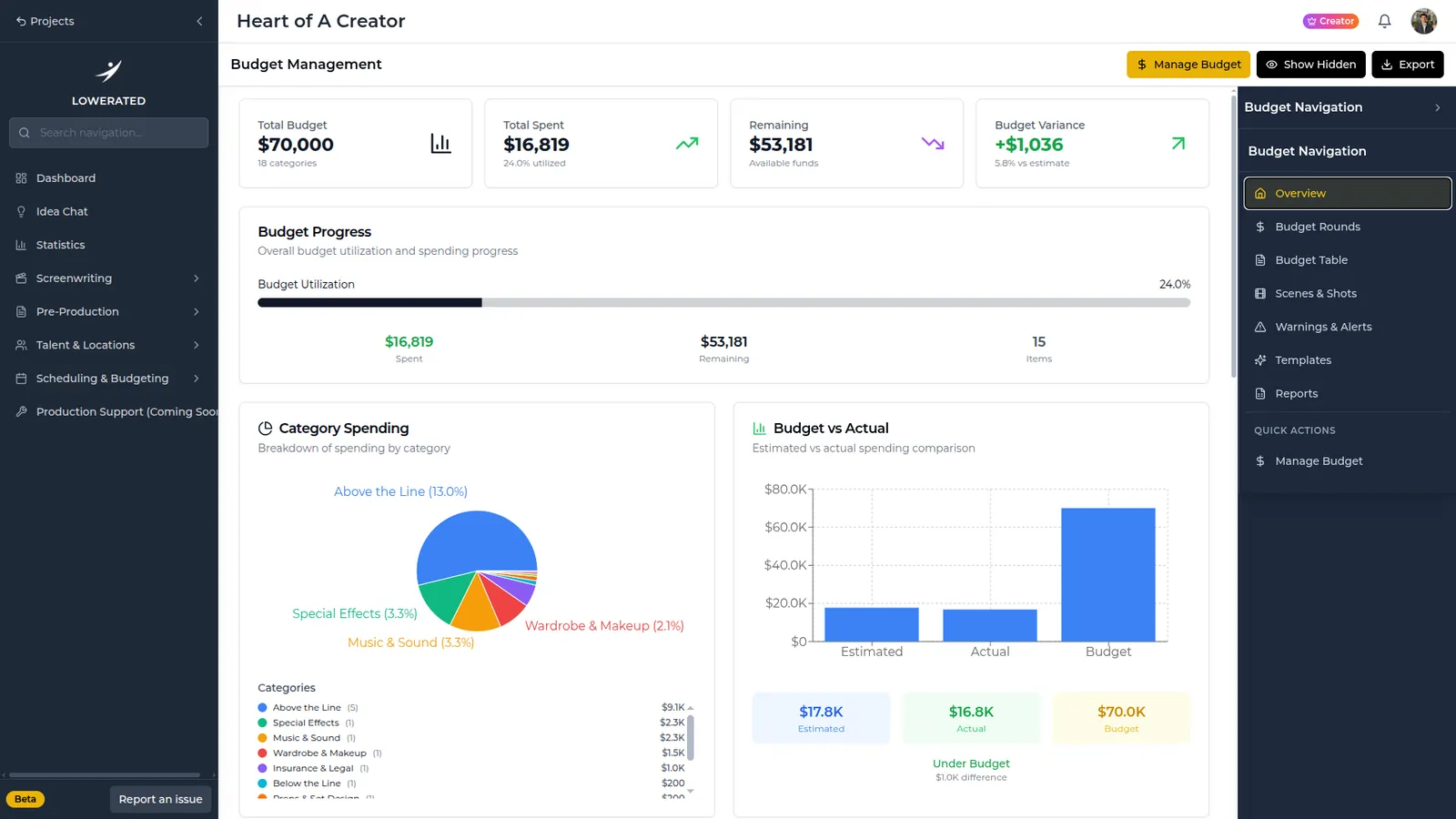
Contingency in a Film Budget
Film budget contingency is a reserve, often around 10% of the subtotal, for unplanned costs. How to size it, what it covers and how to track every draw.
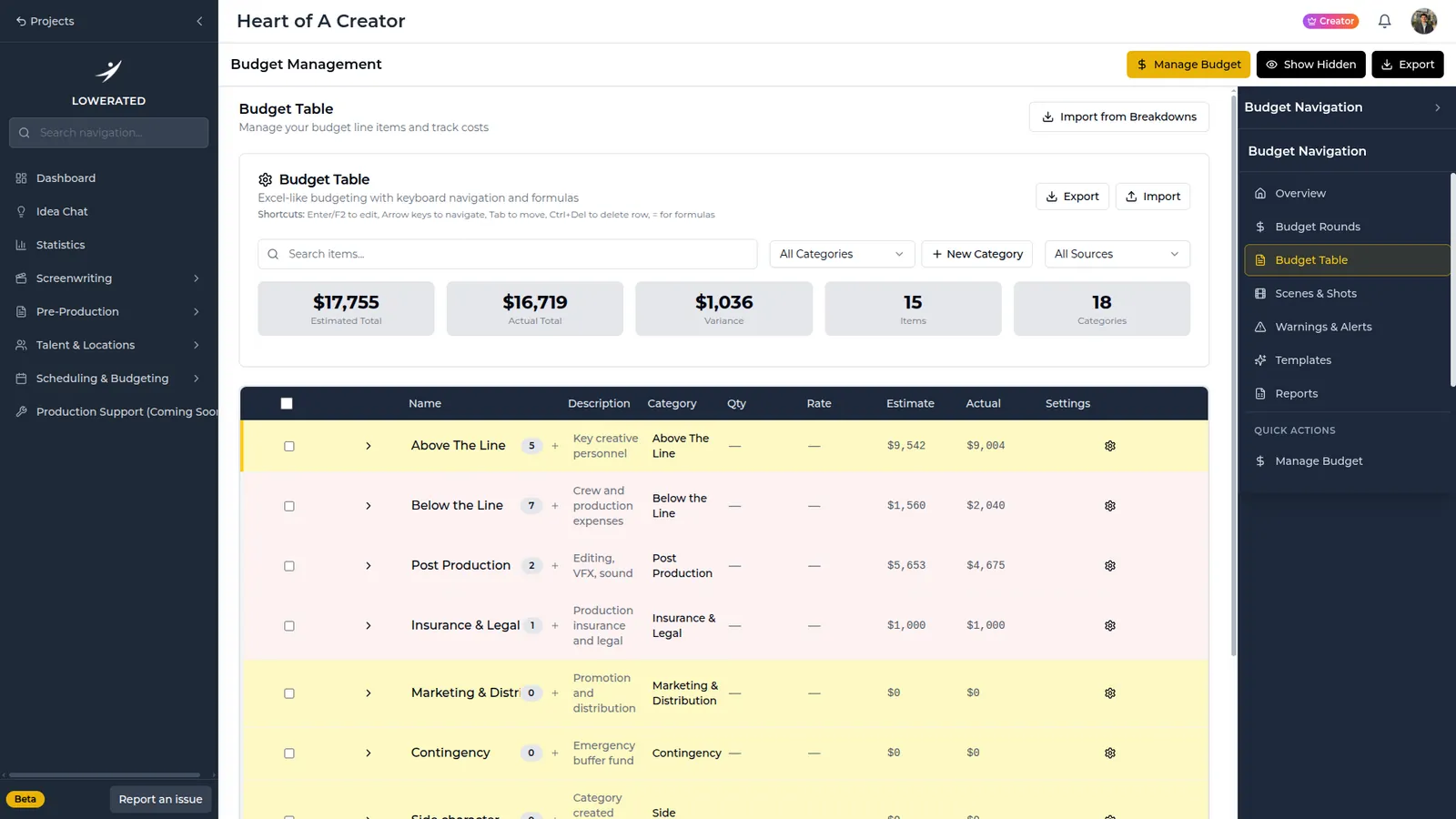 October 21, 2026
Above the Line vs Below the Line Costs
Above the line costs cover story, producers, director and lead cast. Below the line covers crew, gear, locations and post. Examples and edge cases inside.
 October 20, 2026
Production designer: What It Means in Filmmaking
A production designer heads the art department and decides how every set, location and prop looks on screen. See what the job covers, with an example.
 October 20, 2026
Costume Breakdown: Planning Costumes From Script to Fittings
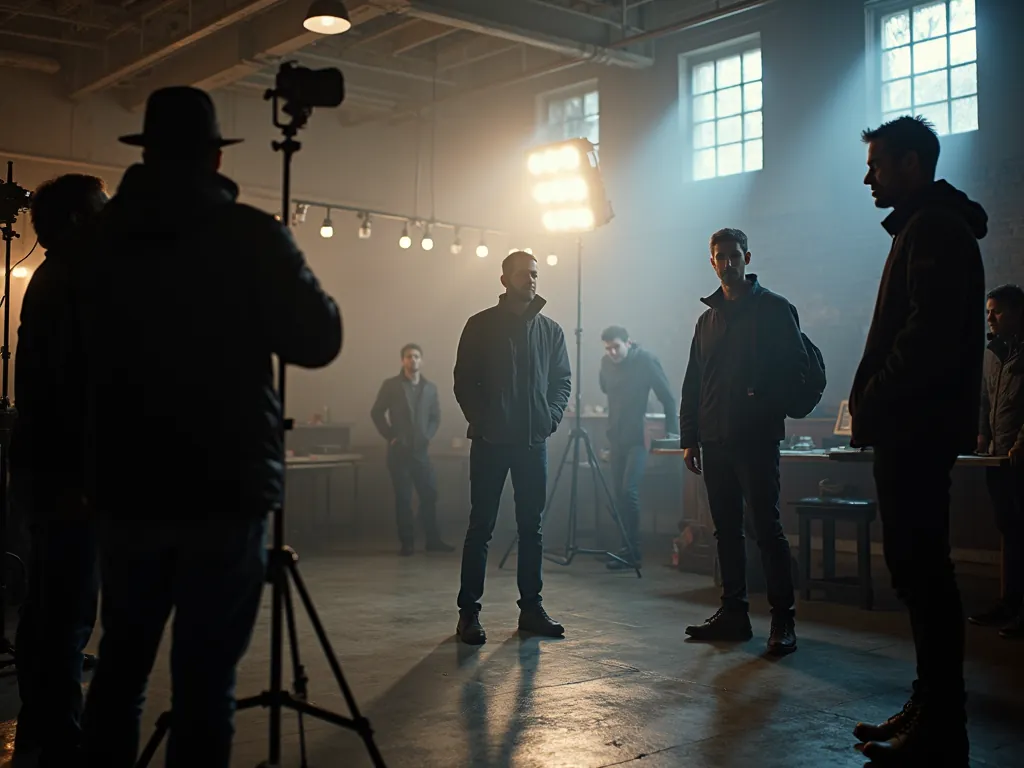
How to do a costume breakdown for a film: story days, change numbers, a sample costume plot, multiples, sizes and fittings, and the mistakes to avoid.
 October 20, 2026
How to Plan a Single-Location Film
How to plan a single location film: choosing a location you can control, keeping one space interesting, scheduling by room and light, and budgeting the hold.
October 19, 2026Writing a Low-Budget Screenplay
How to write a low-budget screenplay: the scenes that drive cost, cheaper choices for each, a step-by-step method and a worked rewrite of a short film.
October 19, 2026How to Plan a Night Shoot
Night shoot planning: choose true night or day for night, group night scenes into a block, protect turnaround, and plan power, permits, food and safety.
October 19, 2026How to Import a Final Draft, Fountain or PDF Script
How to import a Final Draft, Fountain or PDF script: which format keeps the most, how to prepare the file, and a checklist to fix errors after import.
 October 18, 2026
Character Arcs: Positive, Negative and Flat
What a character arc is, the three types (positive, negative and flat) with film examples, how arcs map onto structure, and a worked short film example.
 October 18, 2026
Lowerated Feature Tour: Every Tool From Idea to Premiere
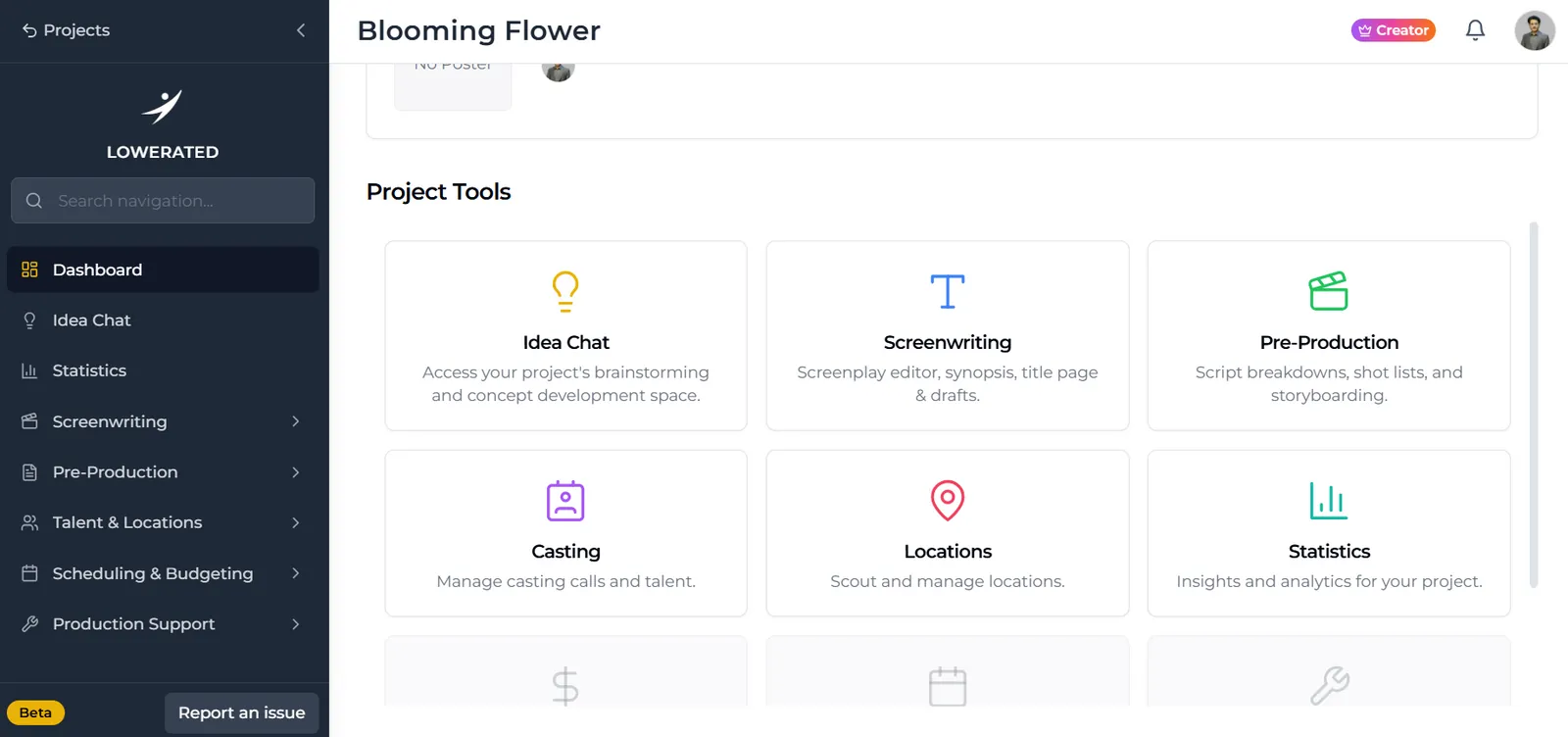
Every Lowerated feature in one place: screenwriting, Oli, breakdown, stripboard, call sheets, casting and film pages, plus plans and what it does not do.
 October 18, 2026
How to Come Up With Movie Ideas (Plus an Idea Generator Method)
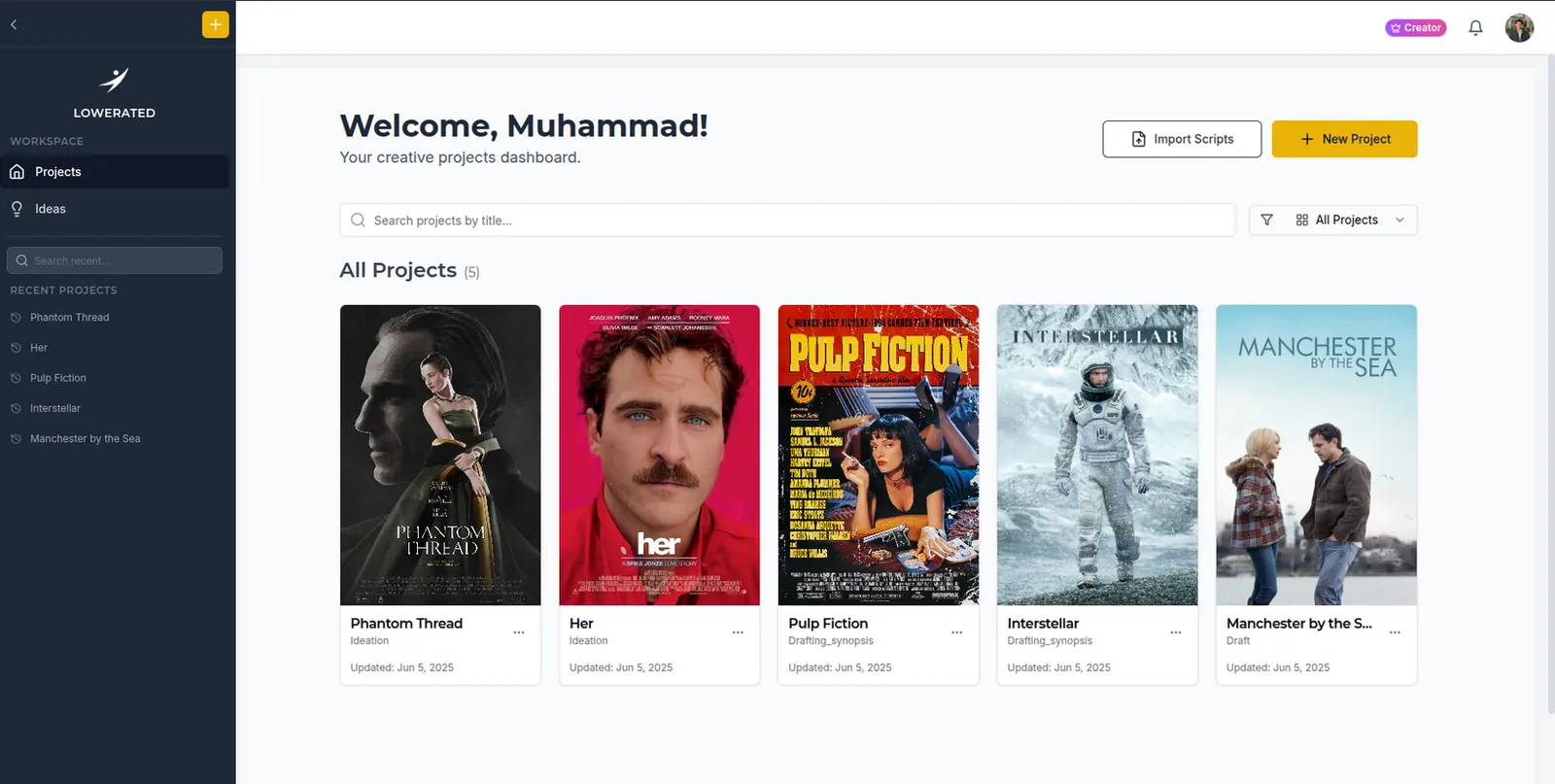
How to come up with movie ideas: where good ones come from, a dice-table movie idea generator you can copy, how to test an idea, and tools compared.
 October 17, 2026
StudioBinder Alternatives for Indie Filmmakers (2026)
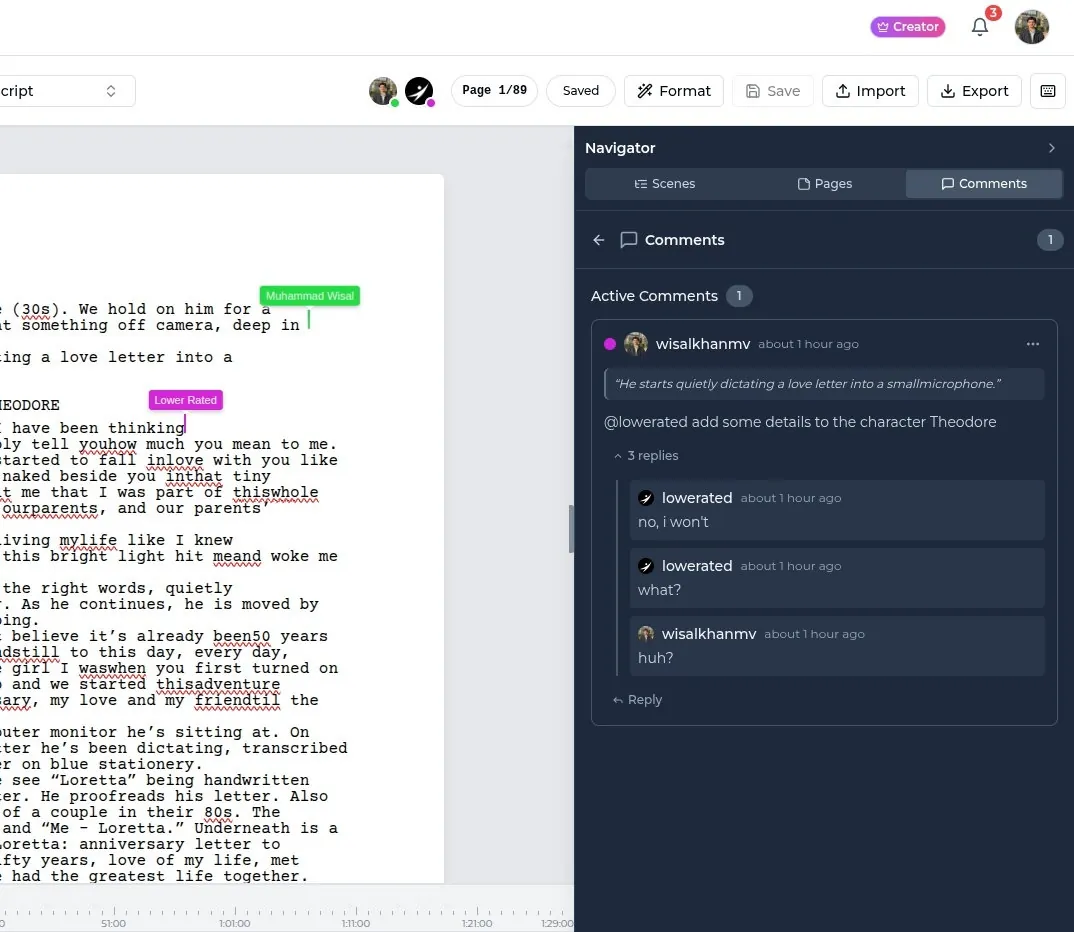
StudioBinder alternatives for 2026 compared: Celtx, Yamdu, Filmustage, Saturation, Movie Magic, Lowerated and spreadsheets, with who each tool suits.
 October 17, 2026
Celtx Alternatives for Screenwriters and Producers
The best Celtx alternative depends on whether you only write or also plan production. Compare Final Draft, Fade In, WriterDuet, Arc Studio and more.
 October 17, 2026
How to Hire a Film Crew on a Small Budget
How to hire a film crew on a small budget: which roles to hire first, where to find crew, how to set fair pay, what to check, and the paperwork you need.
 October 16, 2026
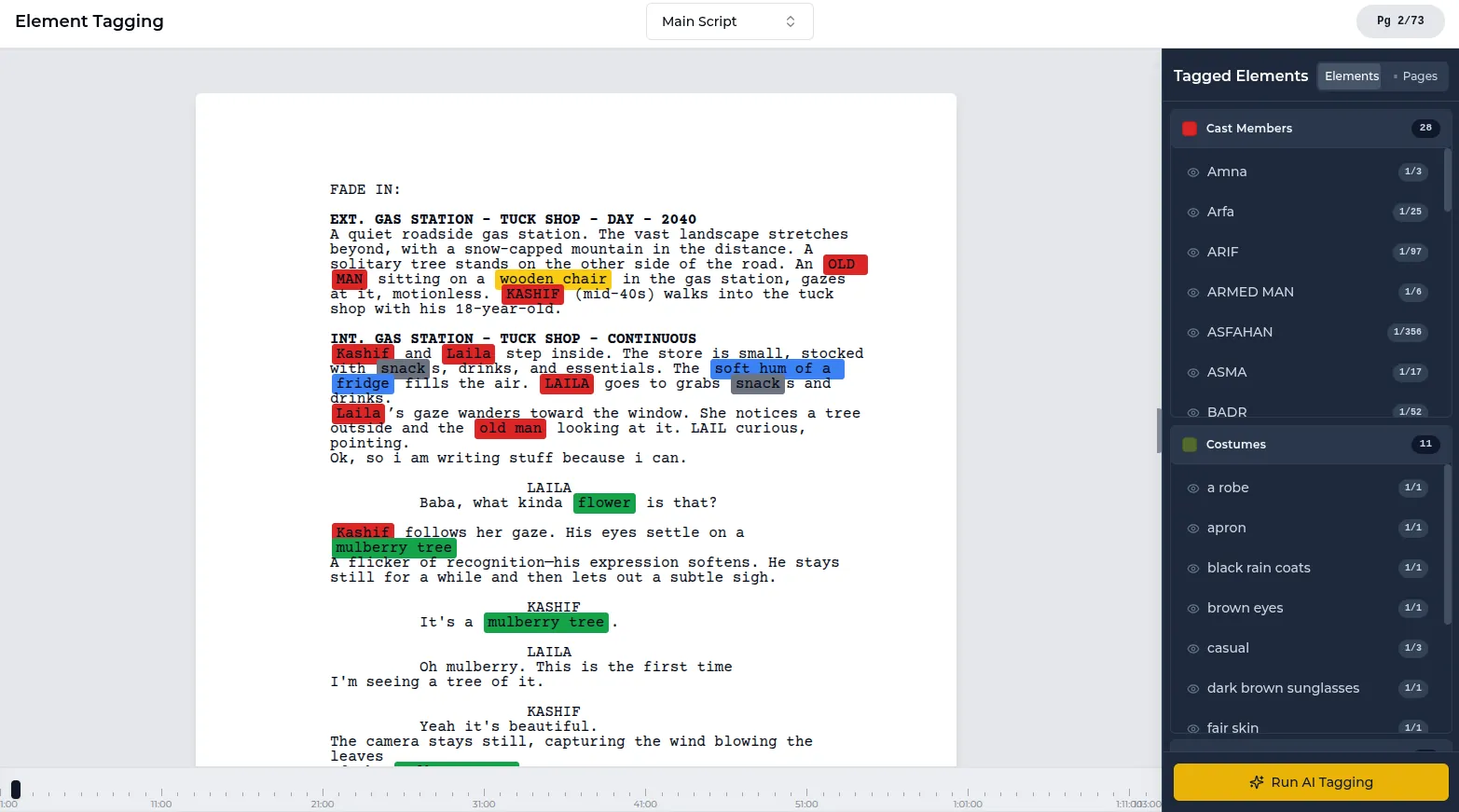
Script Tagging: How to Tag a Script for Breakdown
Script tagging marks every production element in a screenplay by category. Learn the common color codes, the steps, a tagged example and mistakes to avoid.
October 16, 2026Film Set Catering: How to Plan Meals for a Shoot
Film set catering for small shoots: how to count heads per day, when to serve meals, choosing a caterer, dietary needs, craft services and common mistakes.
October 16, 2026How to Build an Actor Profile That Gets You Cast
What to put in an actor profile: headshots, playing age, credits, skills, reel and contact details, with a worked example and the mistakes that cost calls.
October 15, 2026How Much Does a Short Film Cost?
A short film can cost a few hundred dollars or over $50,000. See what drives the cost, three budget levels and a line by line sample budget you can adapt.
 October 15, 2026
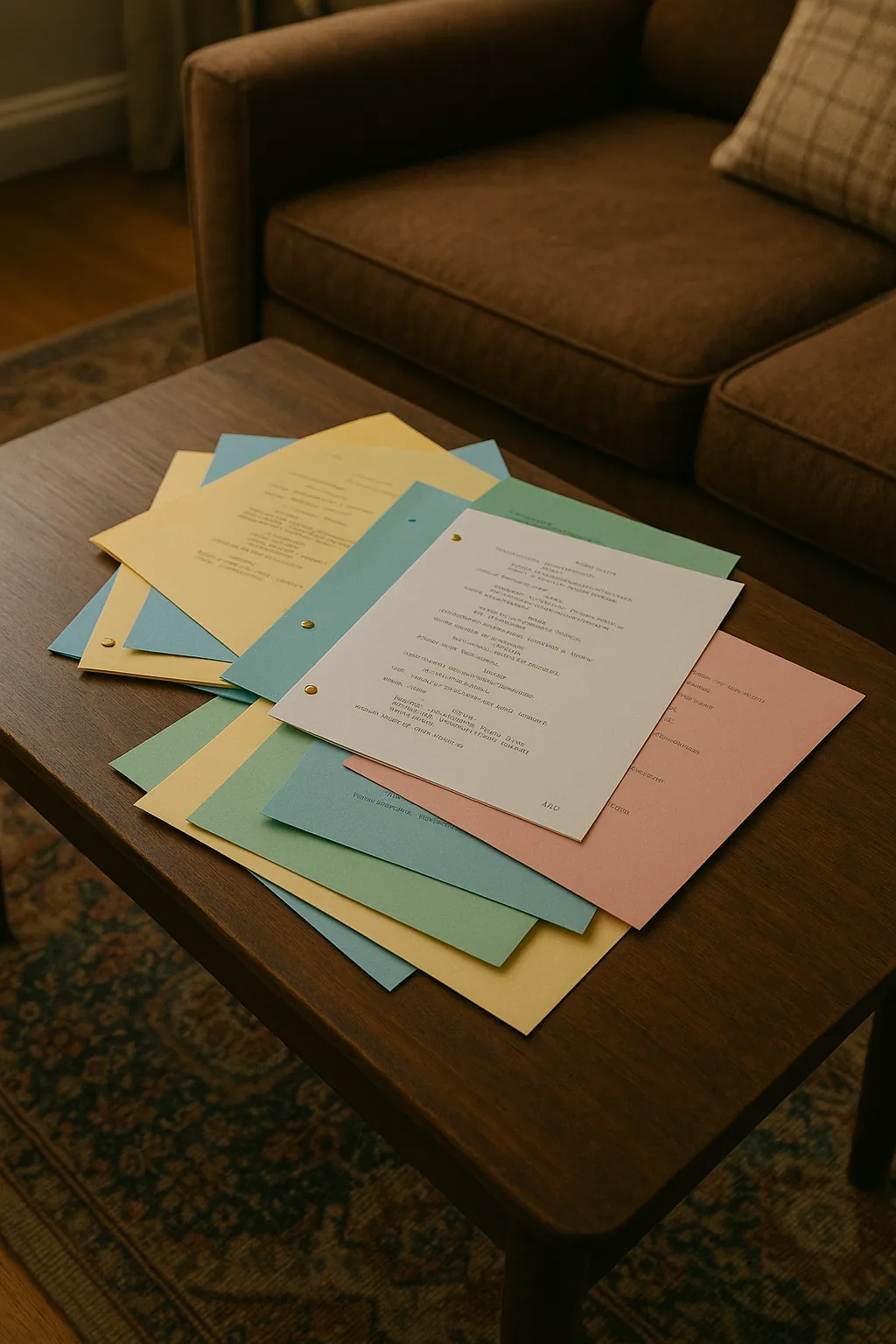
Script Revision Colors Explained
Script revision colors in order (white, blue, pink, yellow, green and on), what each marks, how to issue revised pages and the common mistakes to avoid.
October 15, 2026Breakdown Sheet Template and Color Codes
A breakdown sheet lists everything one scene needs. Copy the template, learn the sheet and element color codes, and see a filled-in example scene.
 October 14, 2026
What Is a One-Line Schedule in Film?
A one-line schedule lists every scene in shooting order, one line each, grouped by shoot day. See the columns, a sample one-liner and how to make one.
October 14, 2026Film Budget Template: Top Sheet and Line Items
A free film budget template with a top sheet and line items you can copy, a filled-in short film example, and steps to build and track your own budget.
 October 14, 2026
How to Schedule a Film Shoot With a Stripboard
Schedule a film shoot with a stripboard: what goes on each strip, the color code, how to group scenes into shoot days, and a worked 3-day example.
October 13, 2026How to Make a Call Sheet (With a Template)
How to make a film call sheet: every section to include, who prepares and approves it, a filled-in sample template, the steps and common mistakes.
October 13, 2026What Is a Day Out of Days Report (and How to Read One)
A day out of days (DOOD) report shows each actor's work, hold, travel and finish days from the schedule. Learn the codes, read a row and cut hold days.
October 13, 2026How to Make a Mood Board for a Film
How to make a film mood board: what to include, where references come from, a step-by-step method, a short film example and the mistakes to avoid.
September 2, 2026AI in Filmmaking: Benefits, Challenges, and What’s Next
Explore the benefits and challenges of AI in filmmaking, from AI script writing and pre-production to casting, collaboration, and post-production.
 July 7, 2026
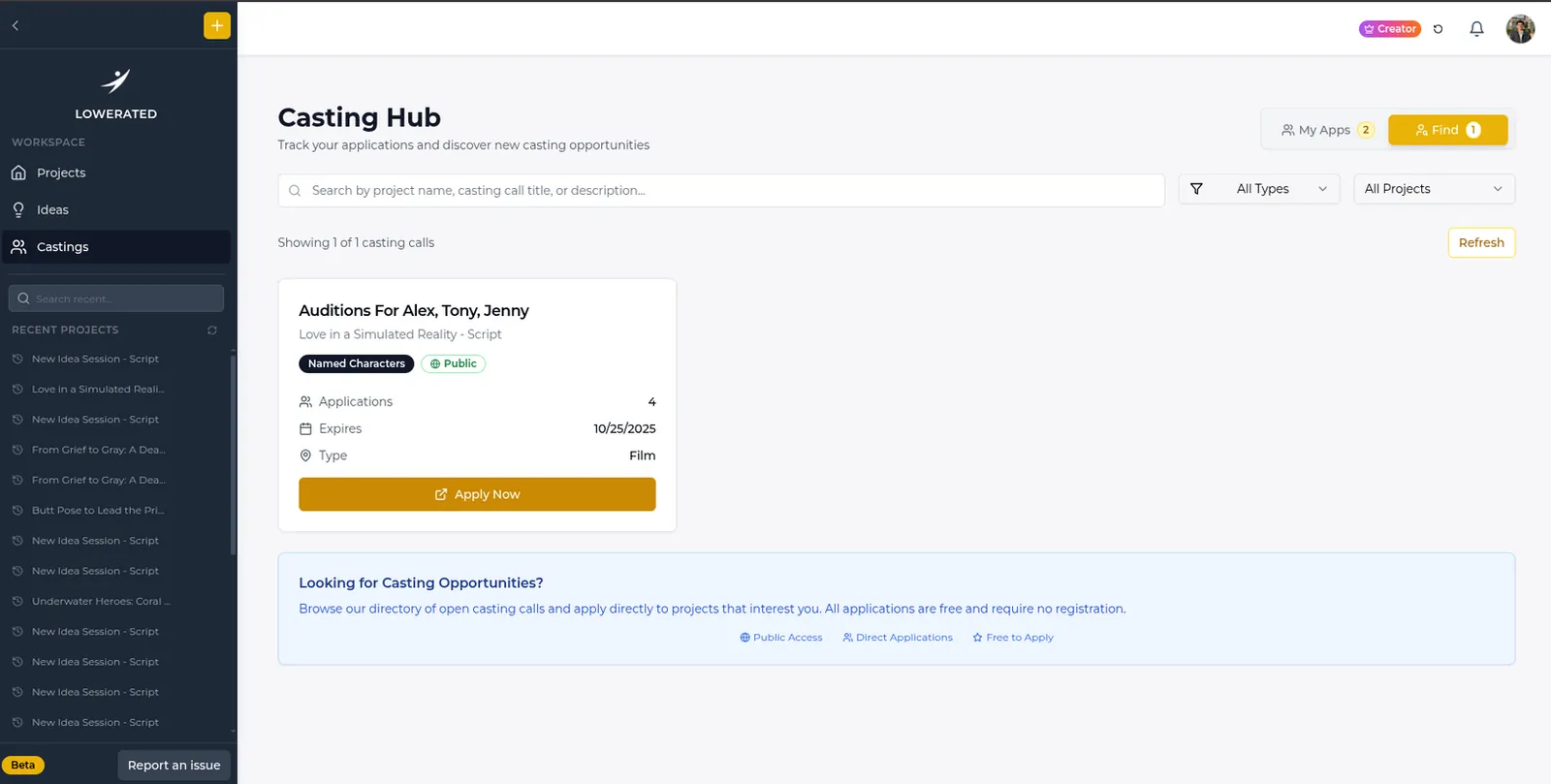
How Online Film Casting Calls Are Changing the Film Industry
Discover how online Film audition and casting calls help filmmakers find talent faster and simplify production.
June 20, 2026Pre-Production Filmmaking Checklist: Everything You Need Before Shooting
Master Pre-Production Filmmaking with this complete checklist. Learn budgeting, Film Casting, scheduling, crew planning, and everything needed before shooting.
April 28, 2026Lowerated Pricing: Plans, What's Free, and Which to Choose
Lowerated has a Free plan. Scriptwriter is $10 a month, Producer $40 with Scriptwriter included, crew seats $20. See what each includes and which plan you need.
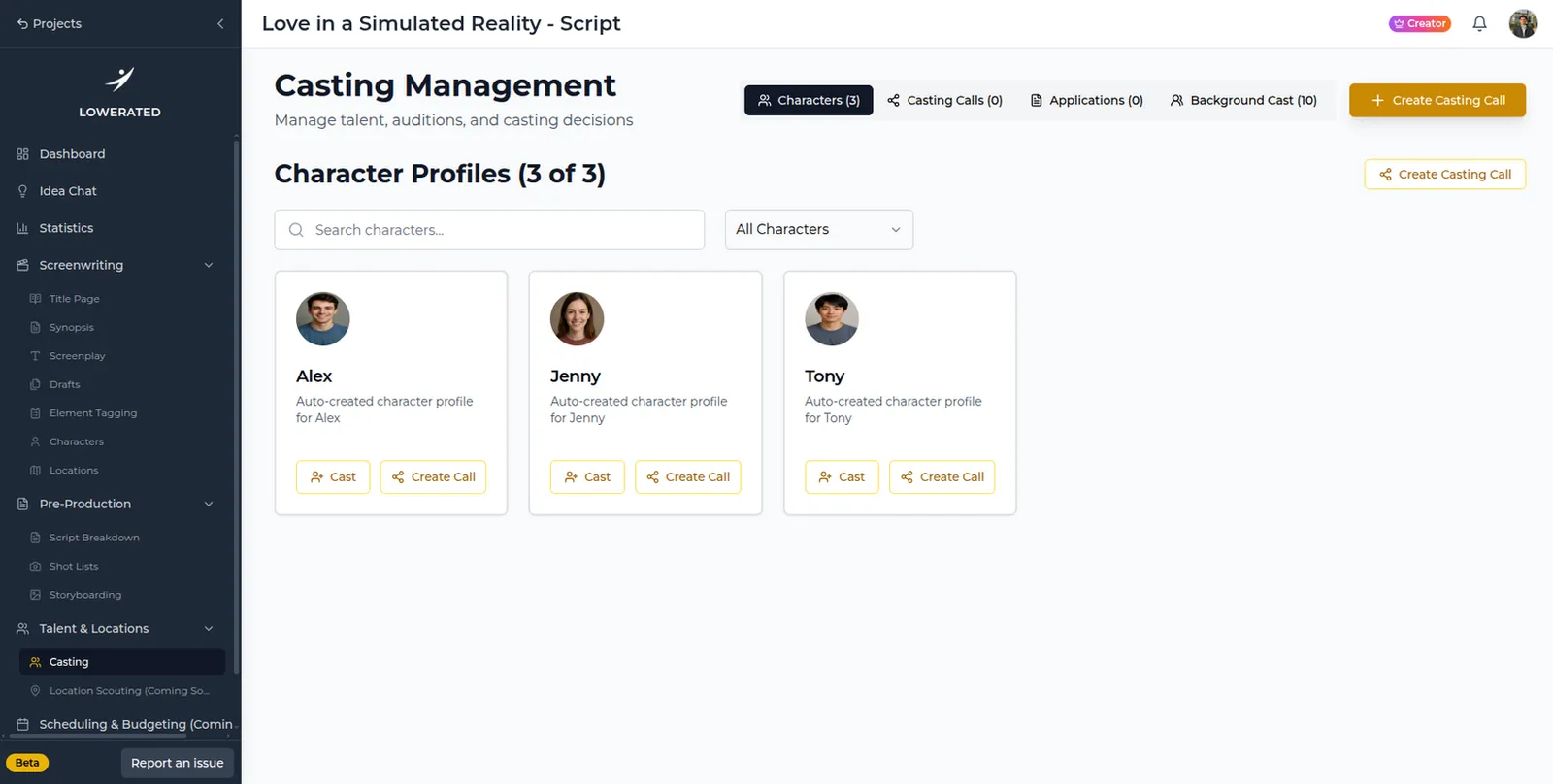
April 15, 2026How to Generate Film Ideas Using AI | Best Filmmaking Platform for Creators
Turn ideas into films using AI. Discover the Best filmmaking platform with a Filmmaking Planner too and casting tools.
 December 11, 2025
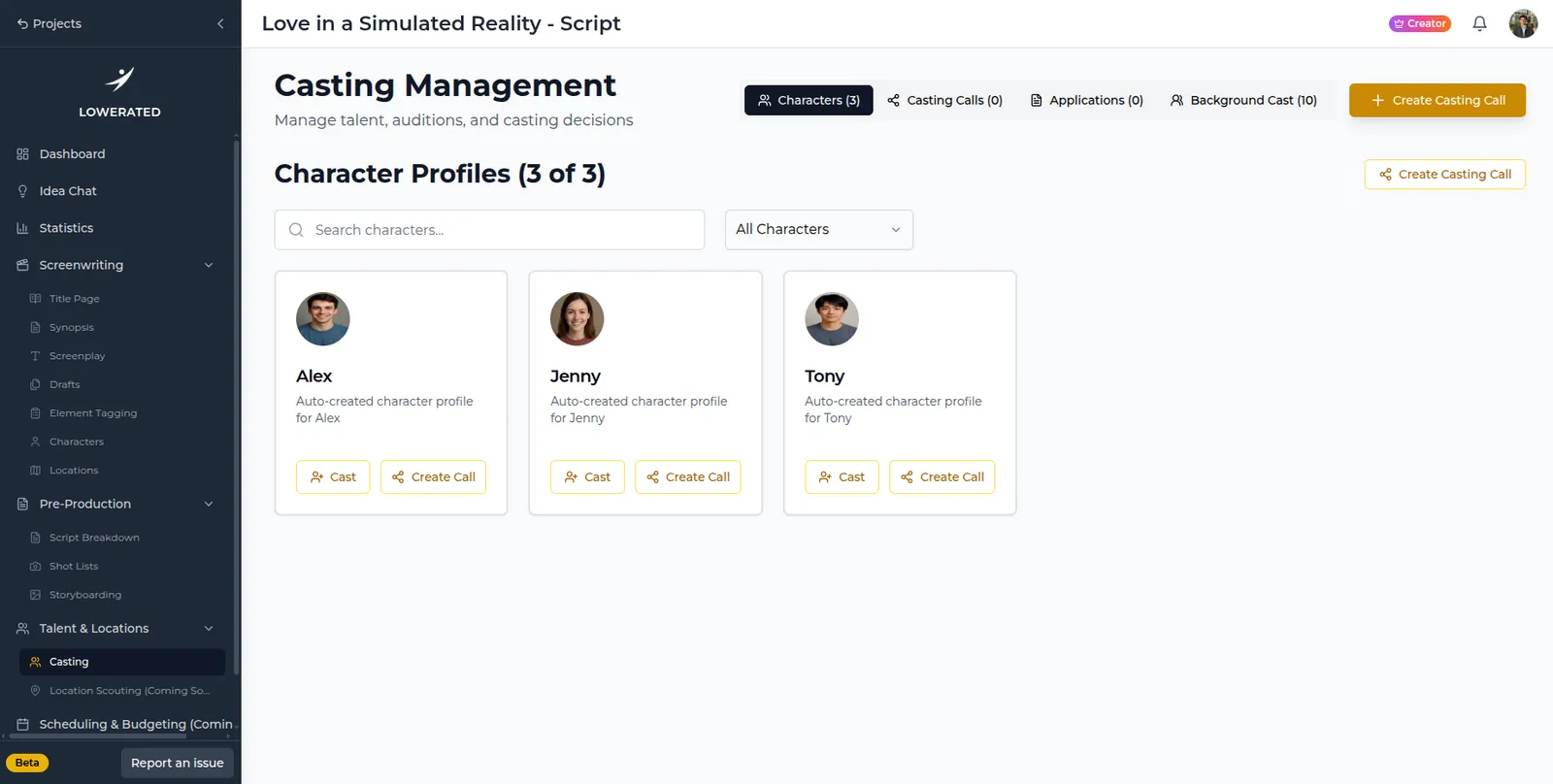
Inclusive Film Audition and Casting Calls: How to Write and Run Them
Write inclusive casting calls by describing what the role needs, stating essential traits clearly, and offering accessible self-tapes and auditions.
 December 7, 2025
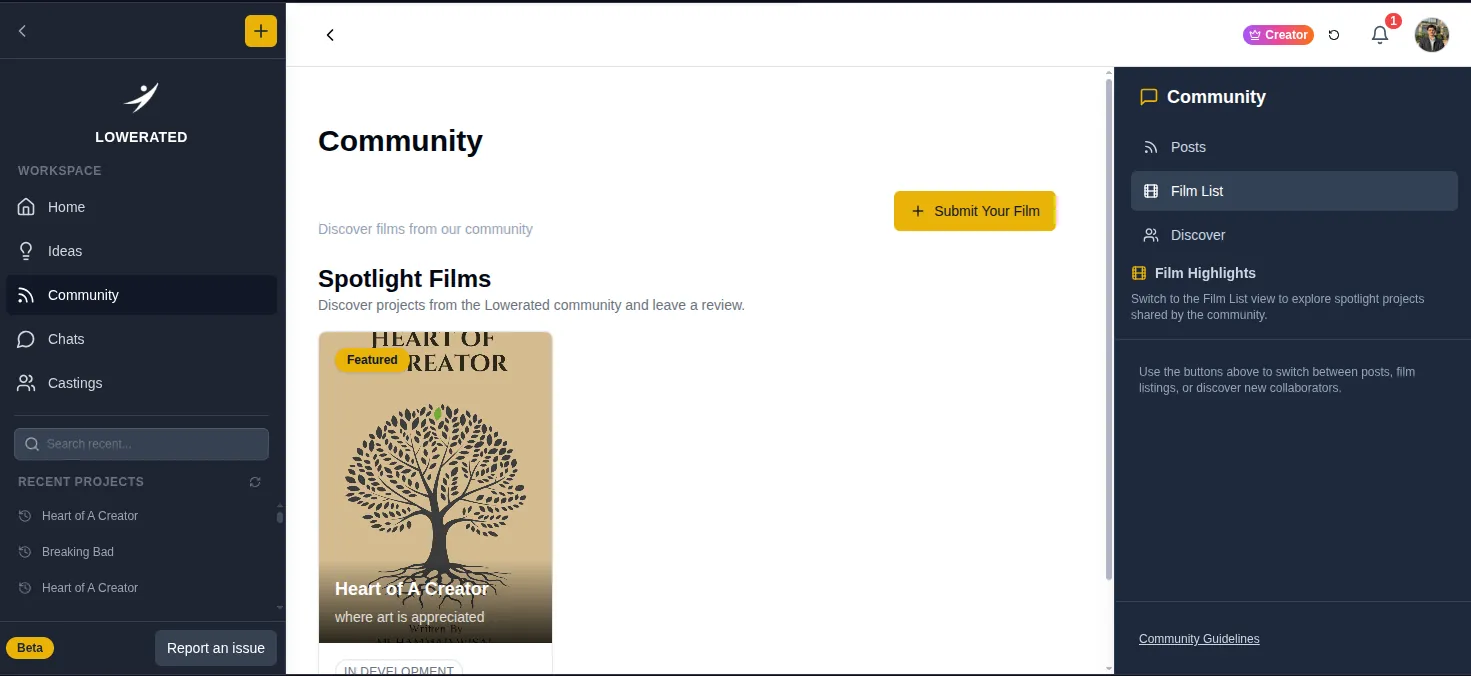
Film Casting: Different Ways to Cast Your Films
A complete guide to film casting methods, from auditions to AI-assisted insights, designed to help filmmakers make better casting decisions.
 November 24, 2025
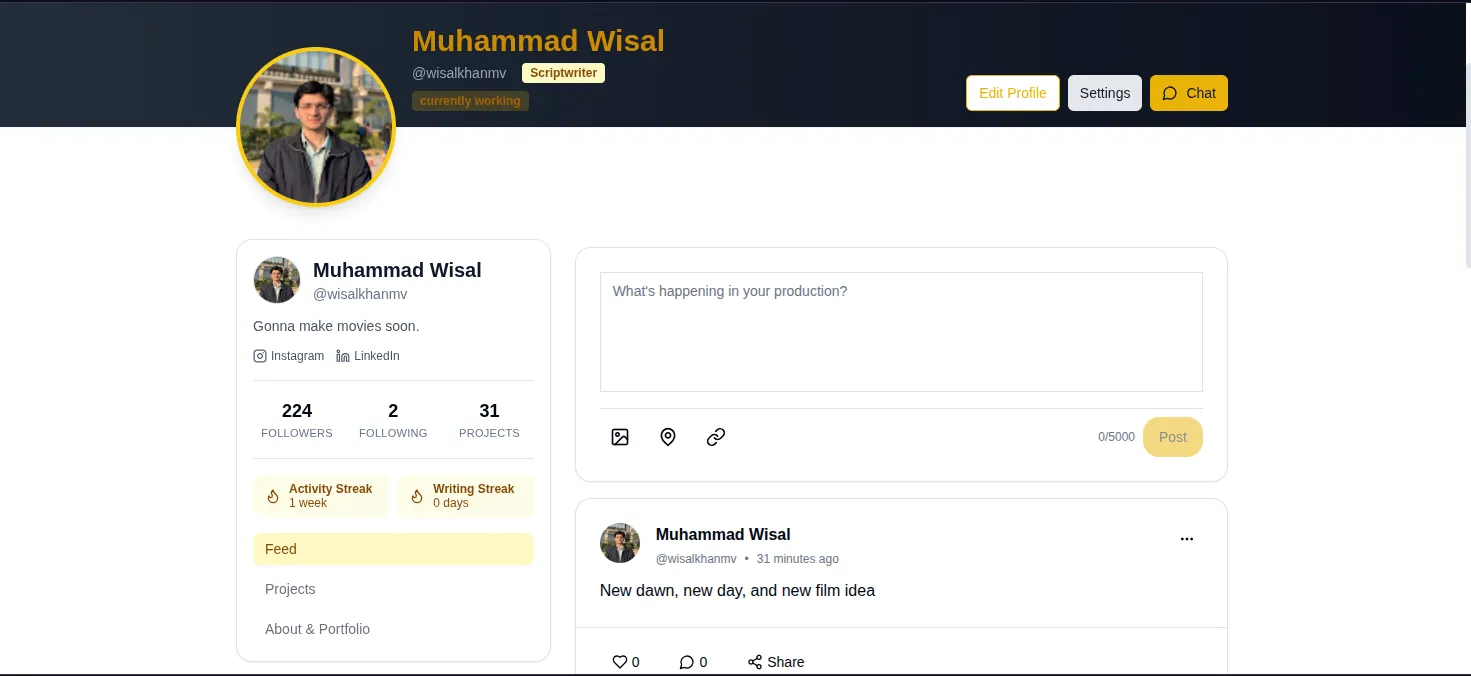
Filmmaker Collaboration Platforms: A Complete Guide for Creators
How filmmakers collaborate: co-writing scripts, sharing schedules, crew communication and review, and what a collaboration platform should include.
 November 12, 2025
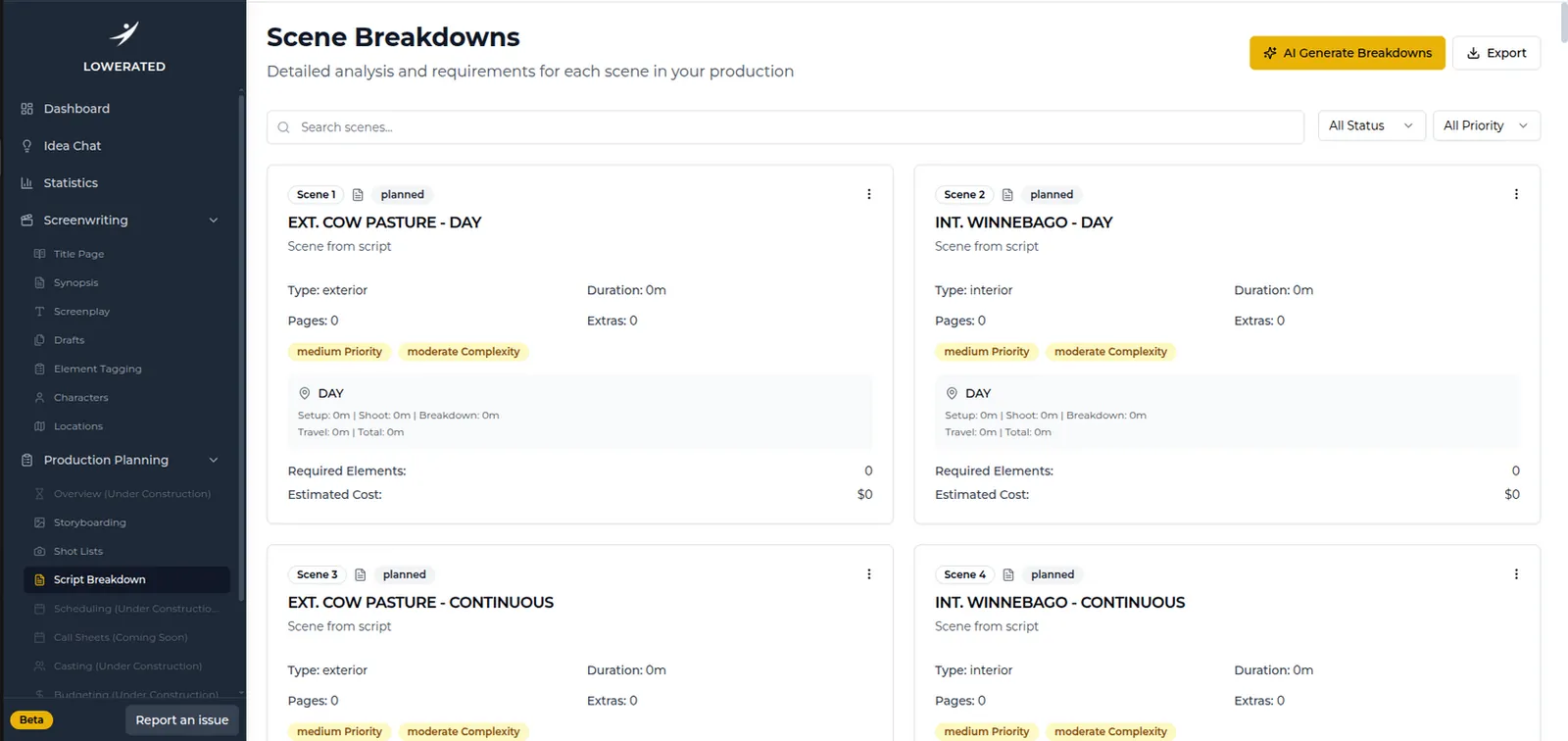
How a Filmmakers Community Platform Helps You Build the Right Film Crew
Learn how a Filmmakers Community Platform helps you find the right crew, manage collaboration, casting, and planning with an all-in-one filmmaking platform.
 October 23, 2025
AI Script Writer for Filmmakers: What It Can and Can't Do
An AI script writer formats your screenplay, rewrites lines you approve and gives notes. Here is what it can't do, how Oli works, and what is free.
 October 10, 2025
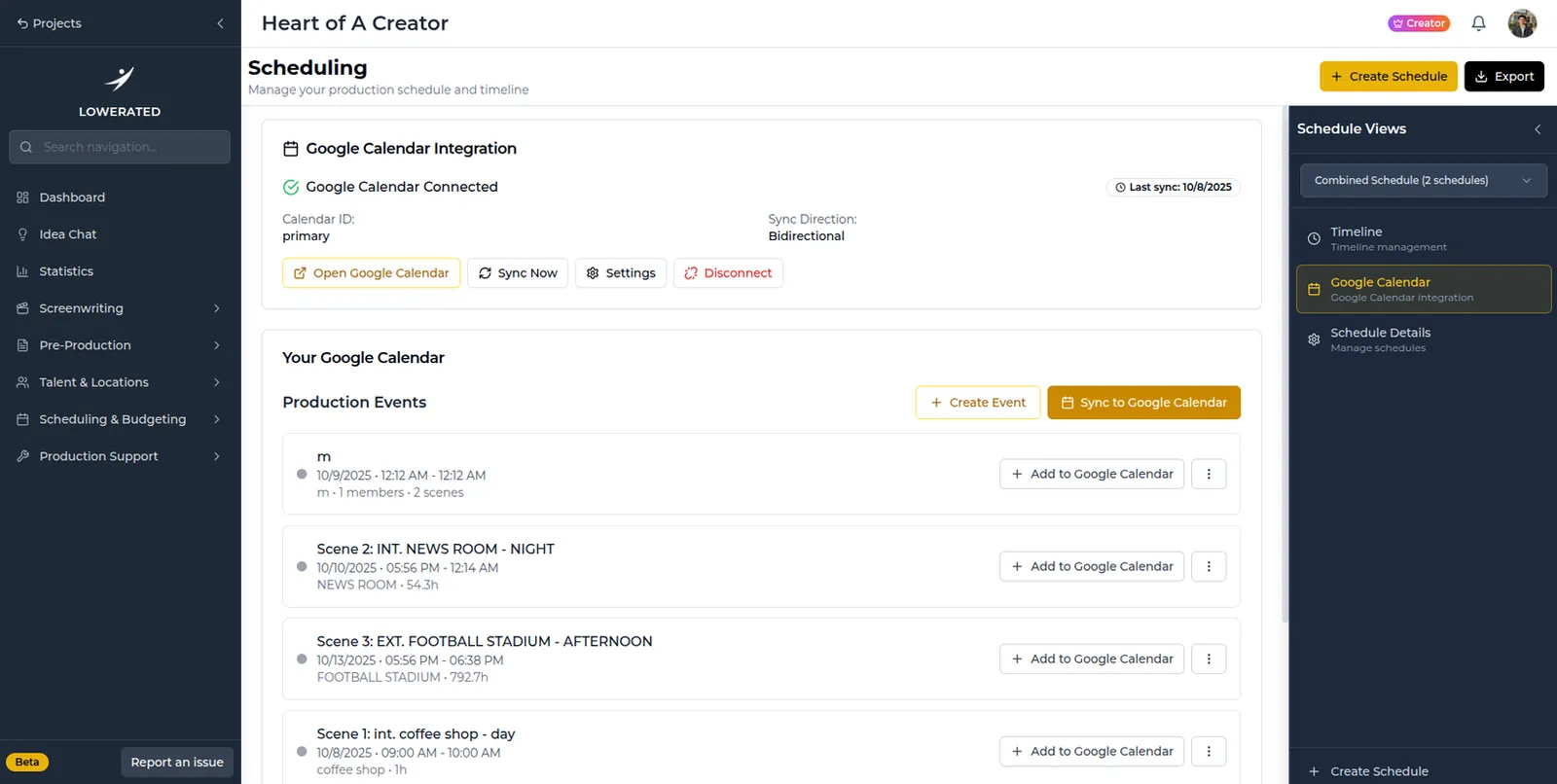
How a Filmmaking Planner Tool Helps Prevent Production Delays
Streamline film production with Lowerated’s Filmmaking Planner Tool; your All-in-one Filmmaking Platform powered by AI.
 October 8, 2025
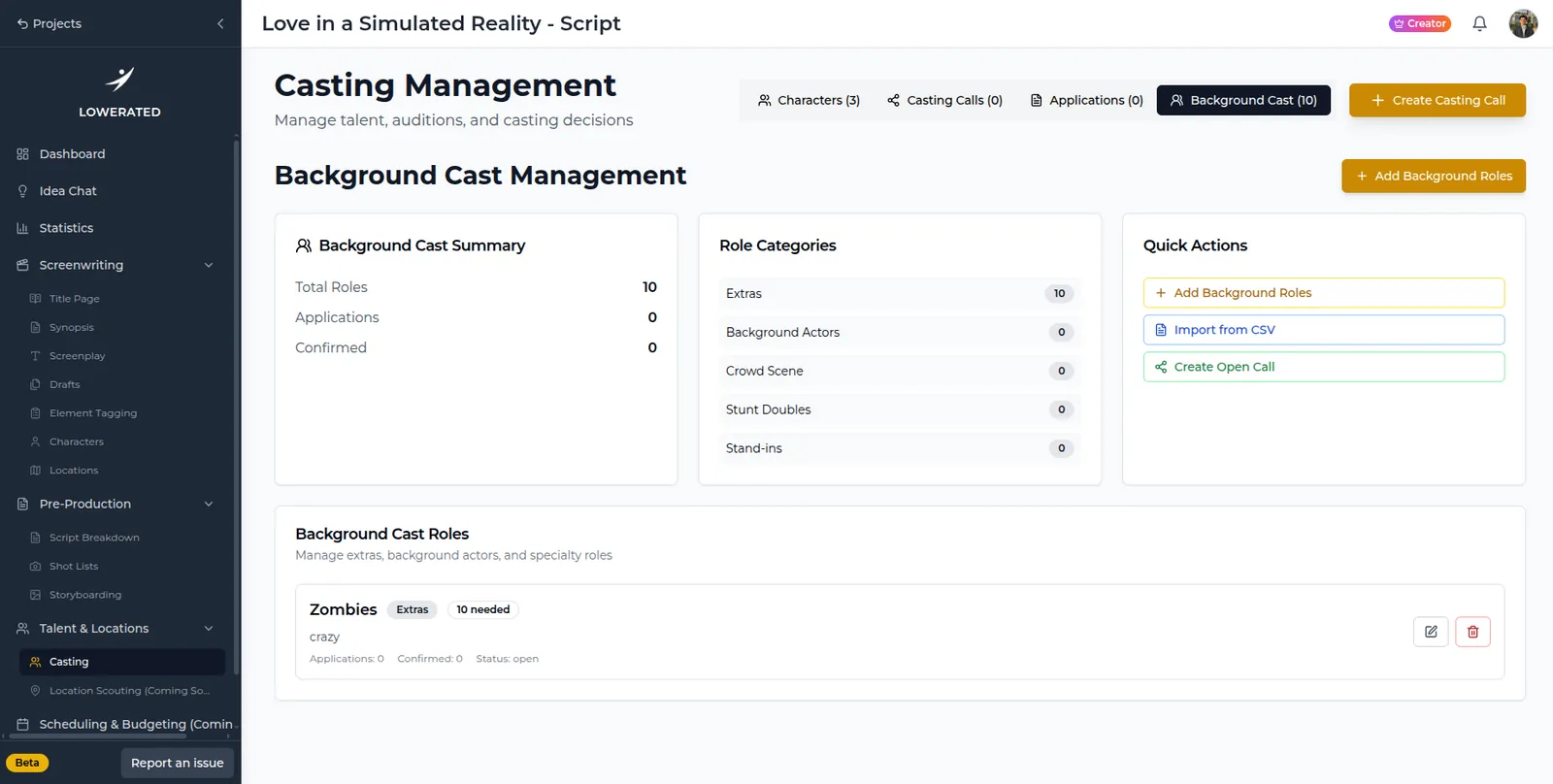
How to Stand Out in Film Audition and Casting Calls
All-in-one Filmmaking Platform, AI Script-Writer, AI Idea Generator, filmmaking, film audition and casting calls, AI filmmaking tools, creative technology.
 October 4, 2025
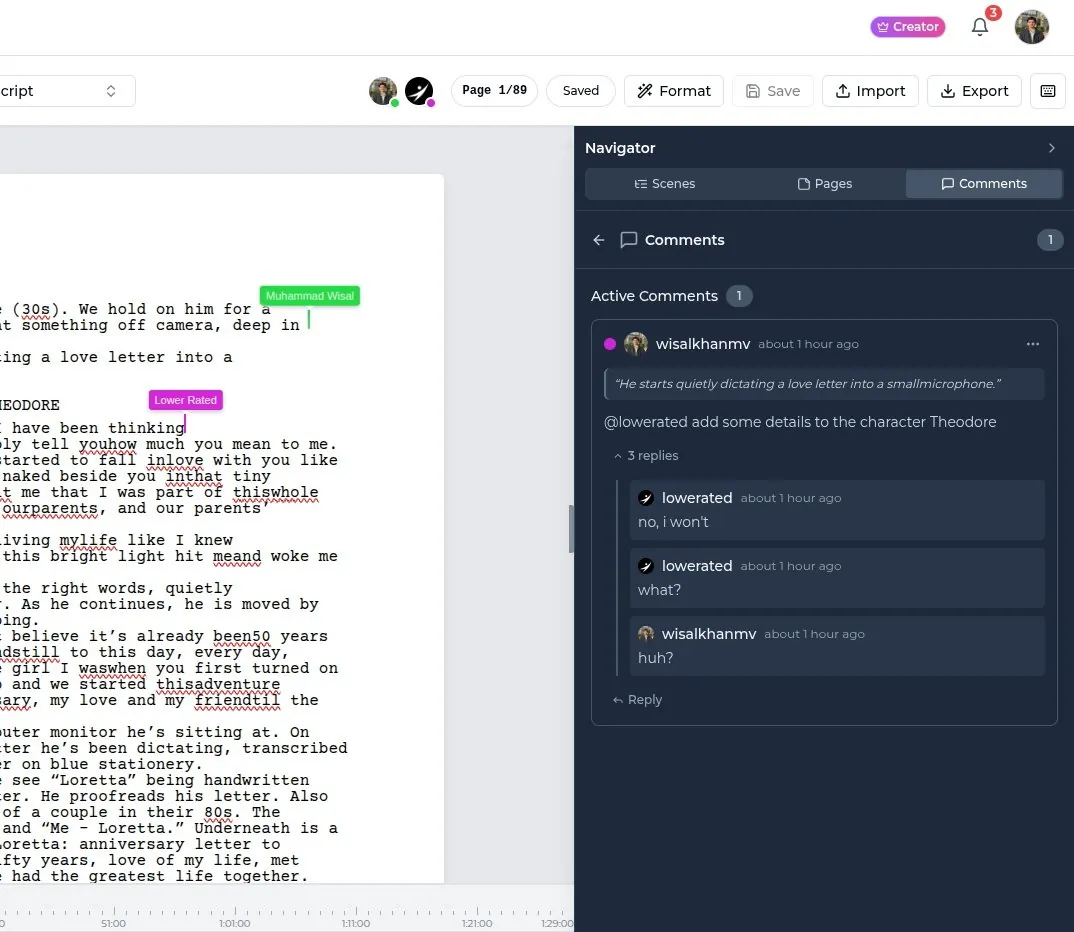
Can I Submit Self-Tapes for Film Audition and Casting Calls? Specs Explained
Submit self-tapes smartly! Learn the specs, tips & tools for Film audition and casting calls with Lowerated’s AI Filmmaking Platform.
 October 2, 2025
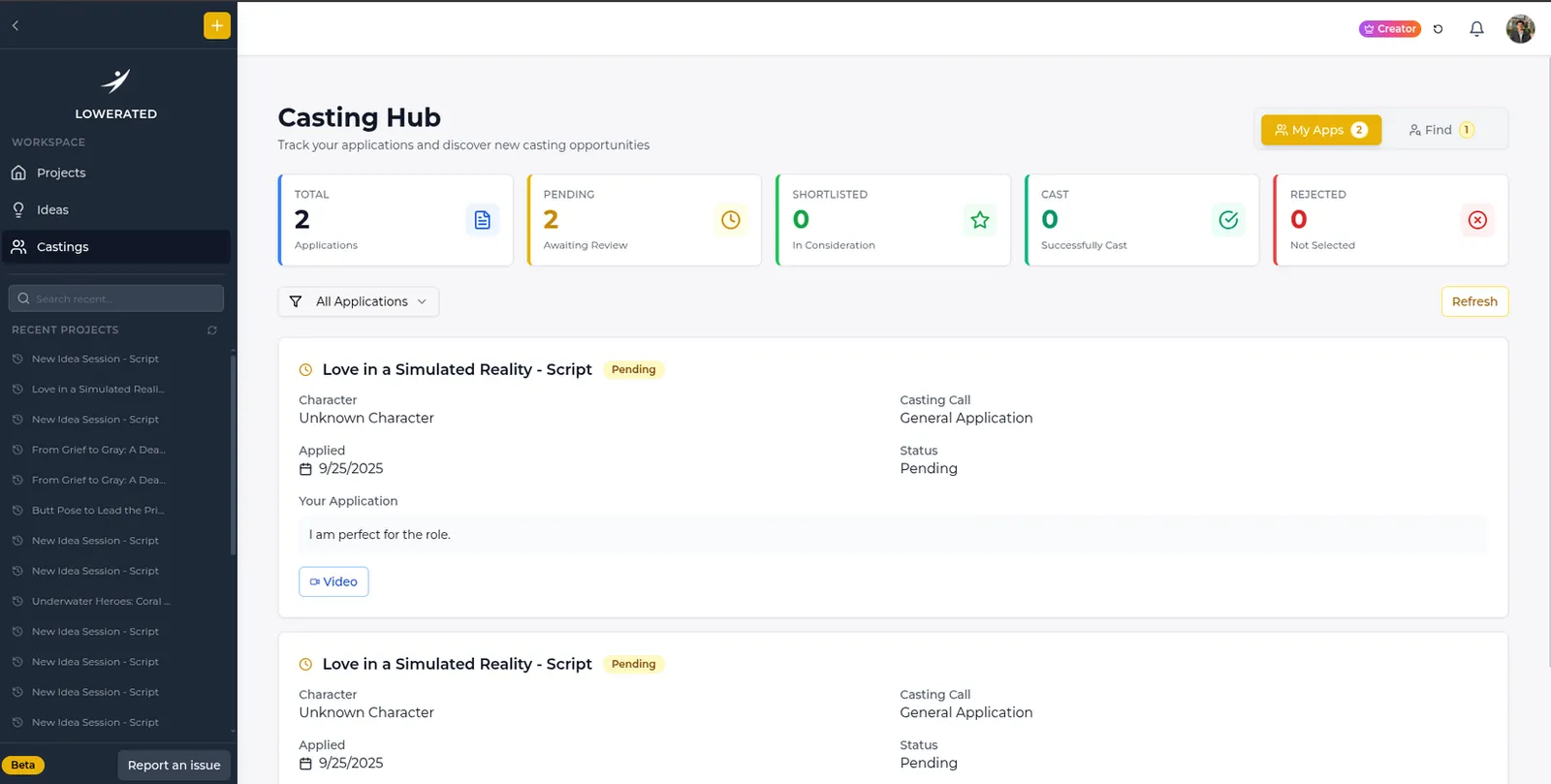
How Long Does the Film Casting Process Take?
Casting a short film usually takes 1 to 3 weeks, an indie feature 1 to 3 months, and a studio feature 3 to 6 months. See timelines by project type.
October 1, 2025Film Casting Pricing: How Much Does Professional Casting Cost?
Film casting costs range from a platform subscription to a casting director's flat fee. See typical costs for directors, platforms, rooms and self-tapes.
 September 29, 2025
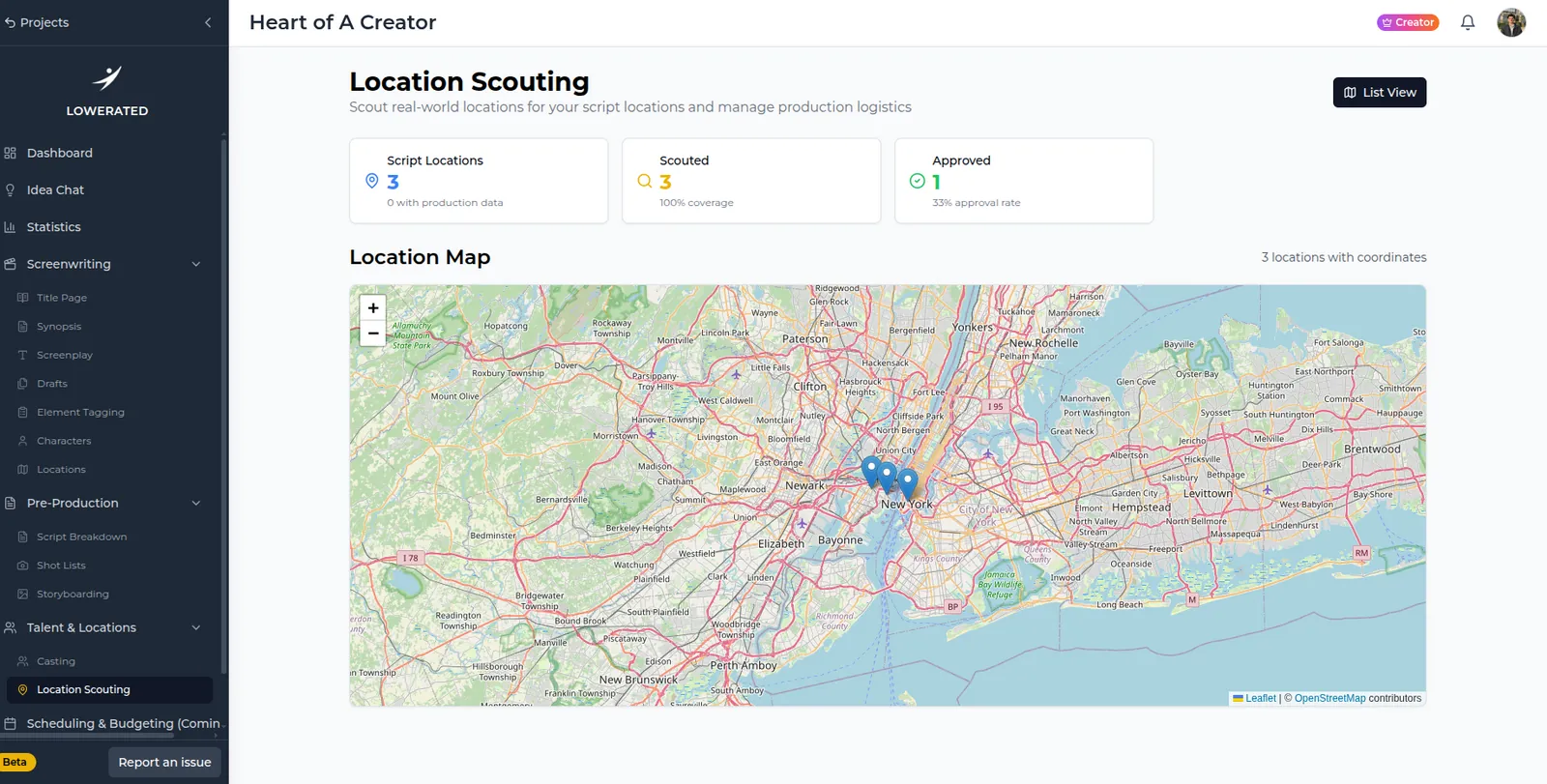
Location Scouting - Find a Place to Shoot Your Movie
Scout locations based on your film script and use lowerated to help you manage your location scouting.
September 26, 2025Casting for a Film: How to Cast a Movie and How Actors Get Cast
How film casting works for filmmakers and actors: character profiles, casting calls, self-tapes, callbacks and offers, plus how actors get cast in a movie.
September 25, 2025What Is an All-in-One Filmmaking Platform and How Does It Work?
An all-in-one filmmaking platform keeps your script, schedule, budget, casting and call sheets in one project. What it covers, its limits, how it works.
September 23, 2025Filmmaking Planner Tool vs Spreadsheet: Which Is Better?
Filmmaking Planner tool vs spreadsheet; see why Lowerated’s all-in-one platform is the smarter choice for filmmakers.
September 9, 2025Can AI Write a Movie Script for You?
AI can draft a full movie script in minutes, but the result is usually generic. Here is how to use AI well, how fast it is, and who owns the script.
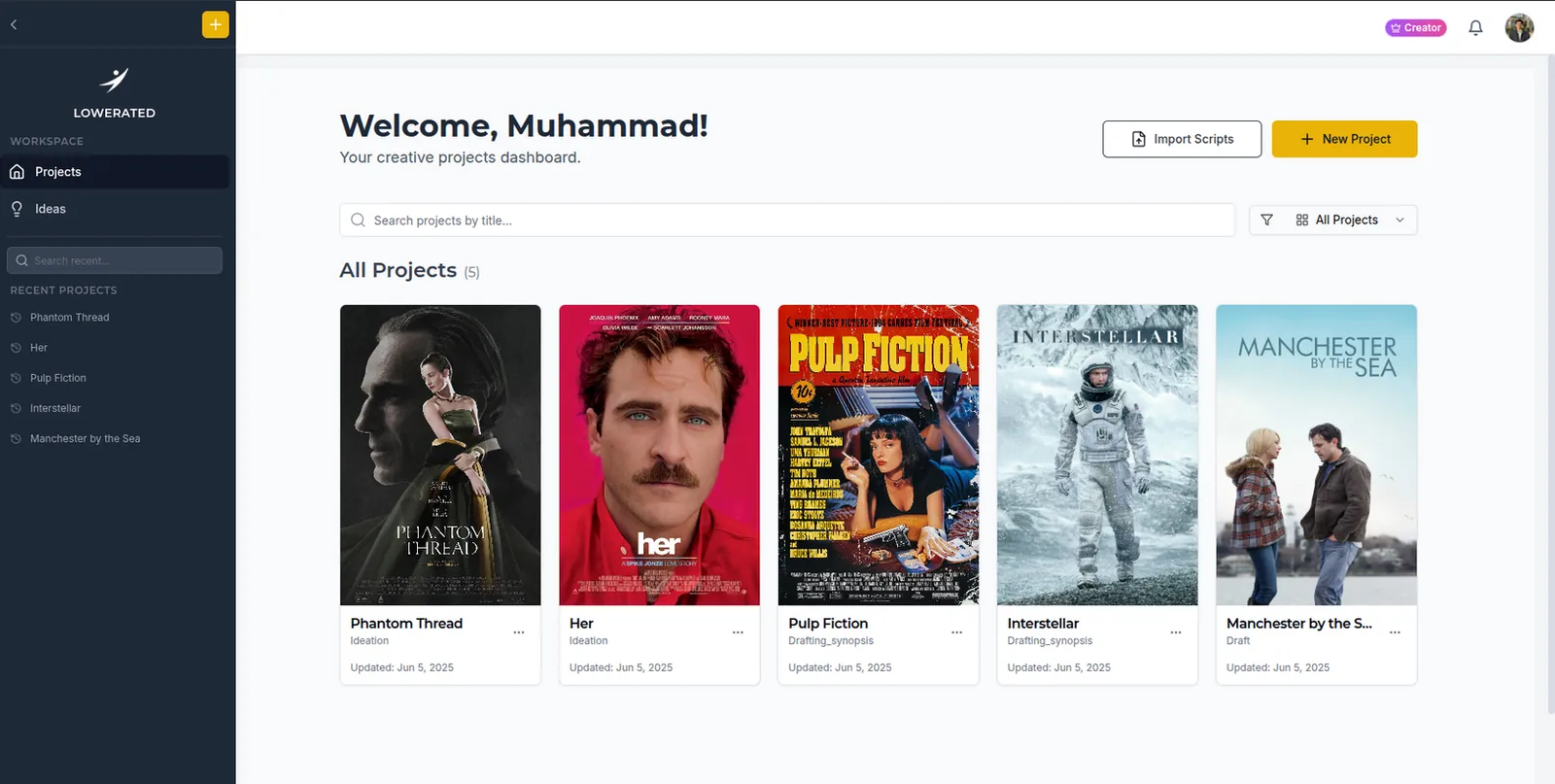
 September 9, 2025
Script Breakdowns: Turning a Script Into an Executable Plan
A script breakdown is where you turn words into logistics. Lowerated is an all in one filmmaking platform that allows you to breakdown scenes with ease.
September 4, 2025From Storyboarding to Shot Lists: How to Make a Shot List
How to make a shot list: the columns to include, how to order shots by setup, and how to go from storyboard to shot list and back, with common mistakes.
 September 1, 2025
How to Create Custom Scripts with an AI Script Writer Without Losing Your Voice
Lowerated’s all-in-one filmmaking platform uses AI Script-Writer tools to help you create scripts that define your unique identity.
 August 30, 2025
Best Filmmaking Planner Tools Every Director Should Know
The planning tools directors use, from breakdowns and stripboards to shot lists and call sheets, and how StudioBinder, Movie Magic, Celtx and more compare.
 August 28, 2025
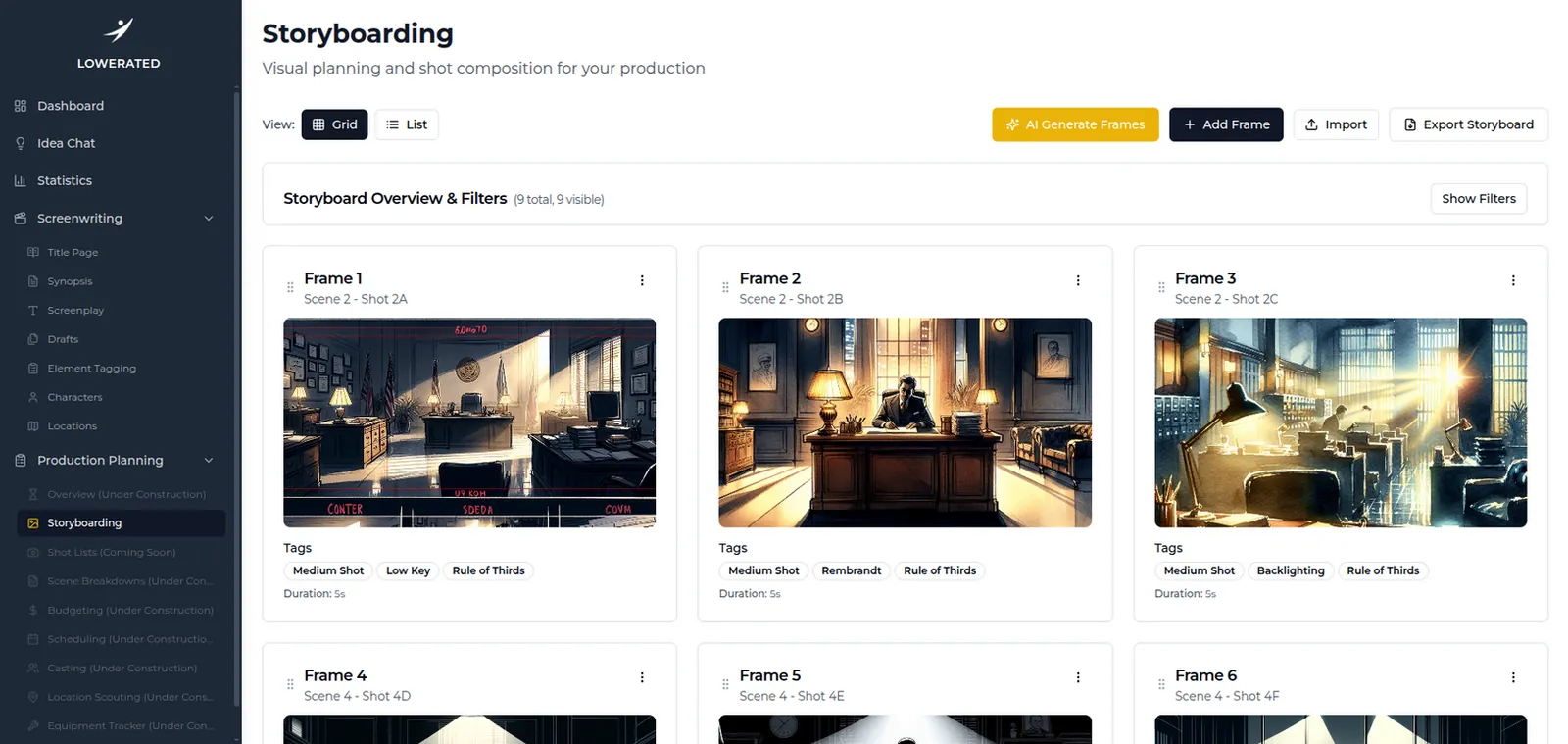
Storyboarding - Why is it important?
Learn why storyboarding matters and how LOWERATED, the All-in-one Filmmaking Platform, turns scripts into boards, schedules & more.
 August 27, 2025
Scriptwriting in Pre-Production: A Filmmaker's Essential Guide
In pre-production the locked script drives everything: breakdown, tagging, schedule, budget and call sheets. Here is how to lock, break down and revise.
August 27, 2025Pre-Production for Short Films: A Complete Guide for Filmmakers
Streamline pre-production for short films with Lowerated’s all-in-one filmmaking platform powered by AI tools for scripts and ideas.
August 27, 2025Budgeting in Pre-Production: How to Build a Film Budget
How to build a film budget: break down and schedule the script, split above and below the line, add contingency, make a top sheet and track actuals.
August 22, 2025How AI is Transforming Post-Production Filmmaking
Discover how AI is revolutionizing Post-Production Filmmaking, editing, sound, VFX, and more, with tools like AI Script-Writer and Lowerated’s all-in-one platform.
 August 22, 2025
Everything You Need to Know About Post-Production
Explore Post-Production in filmmaking and how AI tools like Lowerated’s all-in-one platform make the process faster and more creative.
August 21, 2025Will AI Replace the Film Industry? A Filmmaking Perspective
Will AI replace filmmaking? Explore how AI tools like AI Script-Writer & AI Idea Generator empower creators on Lowerated’s All-in-one Filmmaking Platform.
August 21, 202510 Essential Filmmaking Techniques and Tips to Succeed
Master 10 essential filmmaking tips and techniques with AI tools like an All-in-one Filmmaking Platform and AI Script-Writer.
August 19, 2025How to Become a Script Writer: 10 Practical Steps
To become a script writer, learn structure and format, finish scripts, get feedback, and build a portfolio. Here are 10 practical steps to get started.
August 18, 202510 Problems Filmmakers Face (and How to Overcome Them)
The 10 problems indie filmmakers face most, from budget and scheduling to cast availability, releases and distribution, with a concrete fix for each one.
August 17, 2025Top Software for Post-Production Filmmaking in 2026
The main post-production software in 2026: Resolve, Premiere Pro, Avid and Final Cut for editing, Pro Tools for sound, Nuke, Frame.io, and who each suits.
August 16, 2025What Tools Do Filmmakers Use for Pre-Production?
The tools filmmakers use for breakdowns, scheduling, budgets, shot lists, casting and call sheets, from Movie Magic to StudioBinder, and where AI helps.
August 16, 2025Why Is Pre Production the Most Important Step in Filmmaking?
Pre production is the key to successful filmmaking. Explore how AI and all-in-one platforms like Lowerated simplify scripts, ideas, and planning.
August 14, 2025The Best Software Tools for Filmmakers in 2026
The best filmmaking software in 2026 by stage: Final Draft and WriterDuet for writing, StudioBinder and Movie Magic for planning, Resolve for post.
August 11, 2025How to Start Filmmaking: Free Filmmaking Tool
Learn how to start filmmaking step-by-step with AI tools that simplify idea generation, scriptwriting, and production.
 July 29, 2025
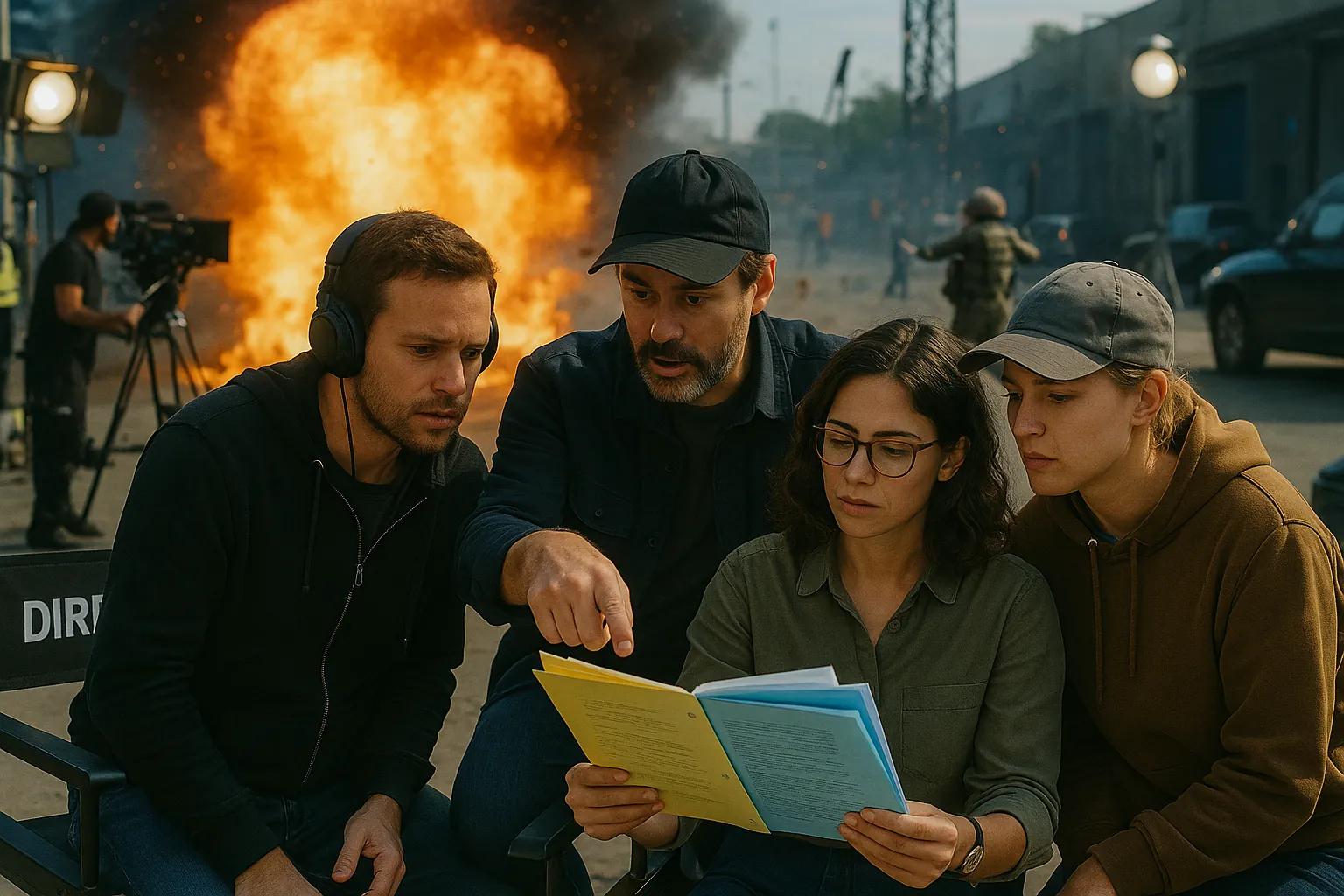
Understanding Script Revisions: How Scriptwriters Manage Drafts
In this post, I’m going to break down how this system works, what the colors mean, and how you can manage revisions properly (especially with tools like Lowerated Scriptwriter, which handles most of the chaos for you).
 June 30, 2025
How to Write Brilliant Characters - Lowerated
This guide will walk through everything that goes into creating a character for film or television and how Lowerated Script Writer can help.
 June 24, 2025
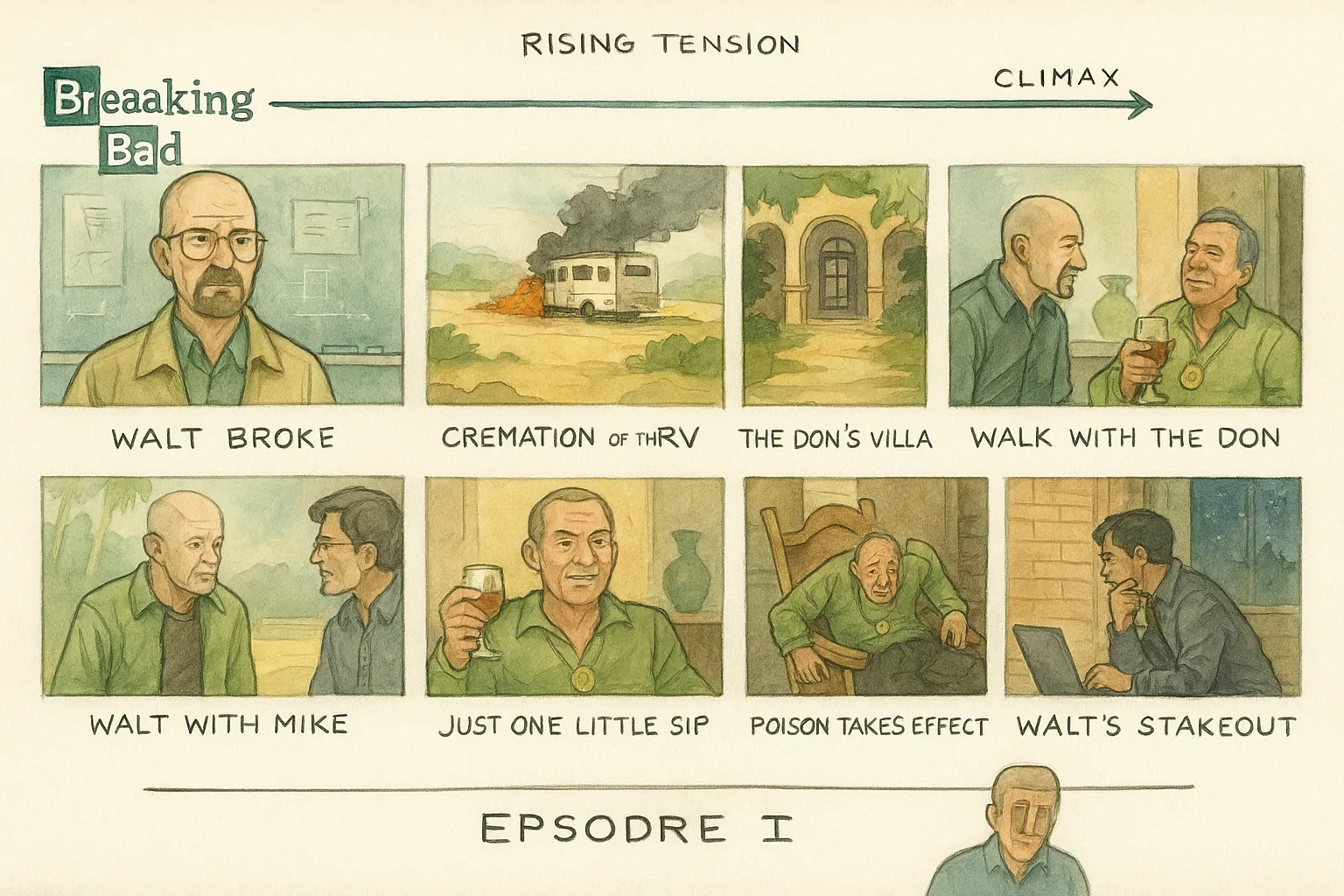
How to Write the Next Breaking Bad - Lowerated
Lowerated gives writers a platform to manage the complexity of outlining ideas and structuring episodes, drafting, collaborating, and organizing revisions, the tools are built for series-scale storytelling.
June 19, 2025How Screenwriters Collaborate on a Script - Lowerated
How are script writing tools used to collaborate when there are multiple writers working on a script. Lowerated Script Writer.
June 6, 2025Lowerated's Launch: What It Took to Get Here
I’m not going to turn this into one of those dramatic “against-all-odds” stories. This post is about what really happened, what went wrong, what worked, and how Lowerated reached its first beta launch.
 June 6, 2025
Elements of a Screenplay - Lowerated
Learn about elements of a screenplay, how are they recognized and tagged, and how Lowerated makes it easy.
June 6, 2025How to Write a Screenplay - Lowerated
Learn how to write a professional screenplay and discover how lowerated script writer makes it easy.
 April 28, 2025
Who is OLI? - Lowerated
Oli is a little yellow ball of energy who absolutely loves filmmaking. He’s the kind of character who gets excited about everything — how cameras work, how scripts are written, how sets are built, and even the tiny details most people miss. If it has to do with storytelling, movies, or creativity, Oli’s all in.
 March 30, 2025
How I Ended Up Writing a Movie
A story of the what it took to write "Heart of A Creator". A movie written by Muhammad Wisal by the people of Lowerated.
 December 18, 2024
WHY LM6 - MOVIE RATING WITH AI
LM6 Algorithm, how it came to be? why did we make it? what does it represent? why 50 videos about it? Movie rating with AI.
 September 27, 2024
Why Lowerated? - June 2022
Lowerated began in 2023 as a mission to fix biased movie ratings. Founded by two brothers, Muhammad Wisal, an AI engineer, and Muhammad Ali, a marketer, they created LM-6, a data-driven, open-source rating system. But what started as a rating reform turned into something bigger: an AI-powered filmmaking platform. Today, Lowerated helps storytellers write, plan, and share films all from one place,
 July 28, 2024
L-M-6: A Democratic Approach to Movie Rating with AI
New Movie rating with AI algorithm that sees beyond the star based ratings and takes 7 aspects of film into consideration.
 April 13, 2023
The Rating Game: How Rating of a Movie can Fail to Reflect Reality
Read to understand how movie rating systems can fail to give accurate rating of a movie. How to solve this problem?