How to Make a Call Sheet (With a Template)


By Muhammad Wisal and Muhammad Ali / 8 min read
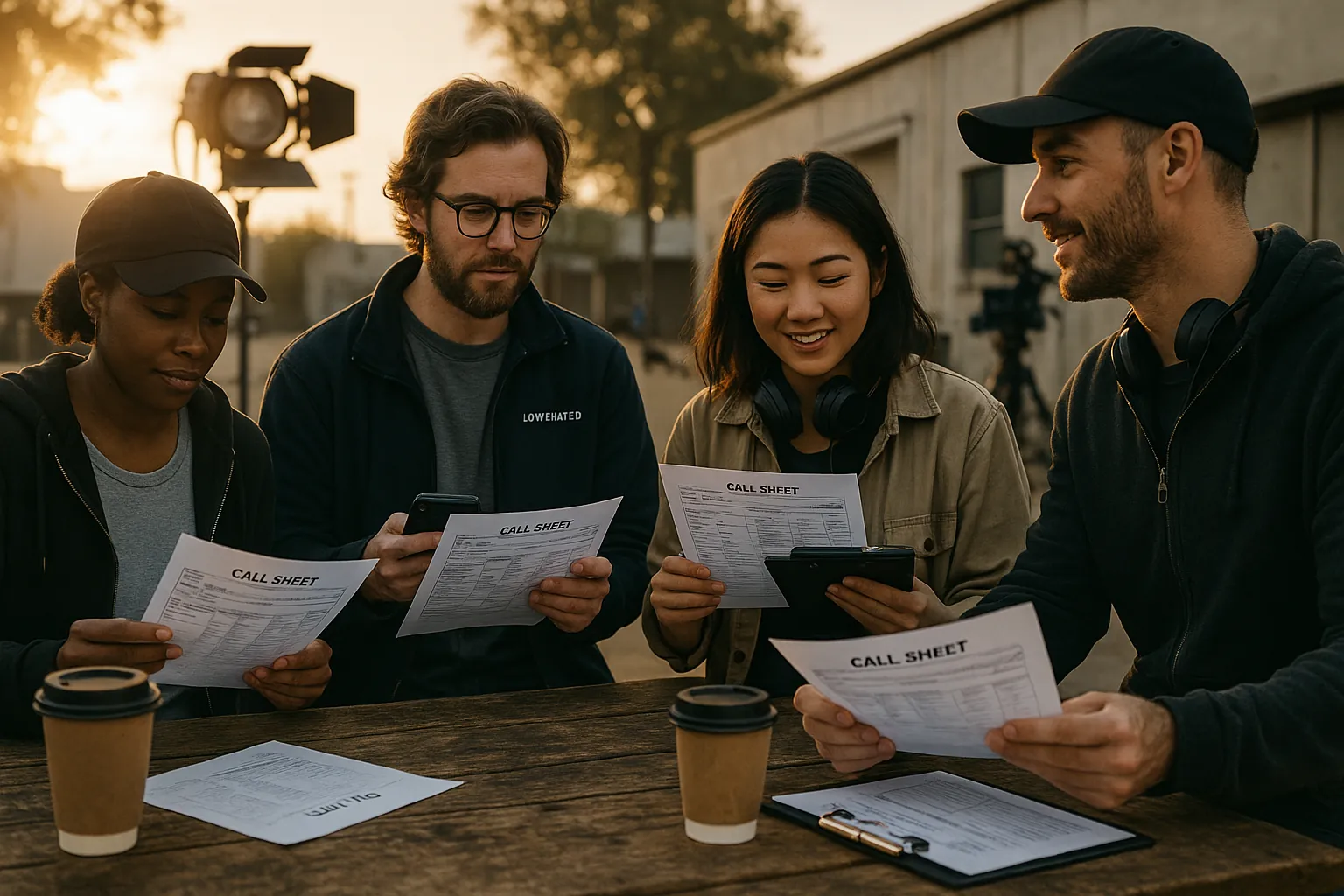
A call sheet is a one or two page document that tells every cast and crew member where to be, at what time, and what is being shot on a given day. To make one, take the next shoot day from your schedule, fill in the call times, location, scenes, cast and safety information, get it approved by the 1st AD and producer, and send it out the evening before.
What is a call sheet in film?
A call sheet is the daily plan for a shoot day, built from the shooting schedule. It answers the questions everyone has the night before: when do I need to be there, where do I park, what scenes are we doing, and who else will be on set. Each shoot day gets its own numbered call sheet (for example "Day 3 of 12"), and the whole unit reads it, so it has to be accurate and easy to scan.
Who makes the call sheet, and when does it go out?
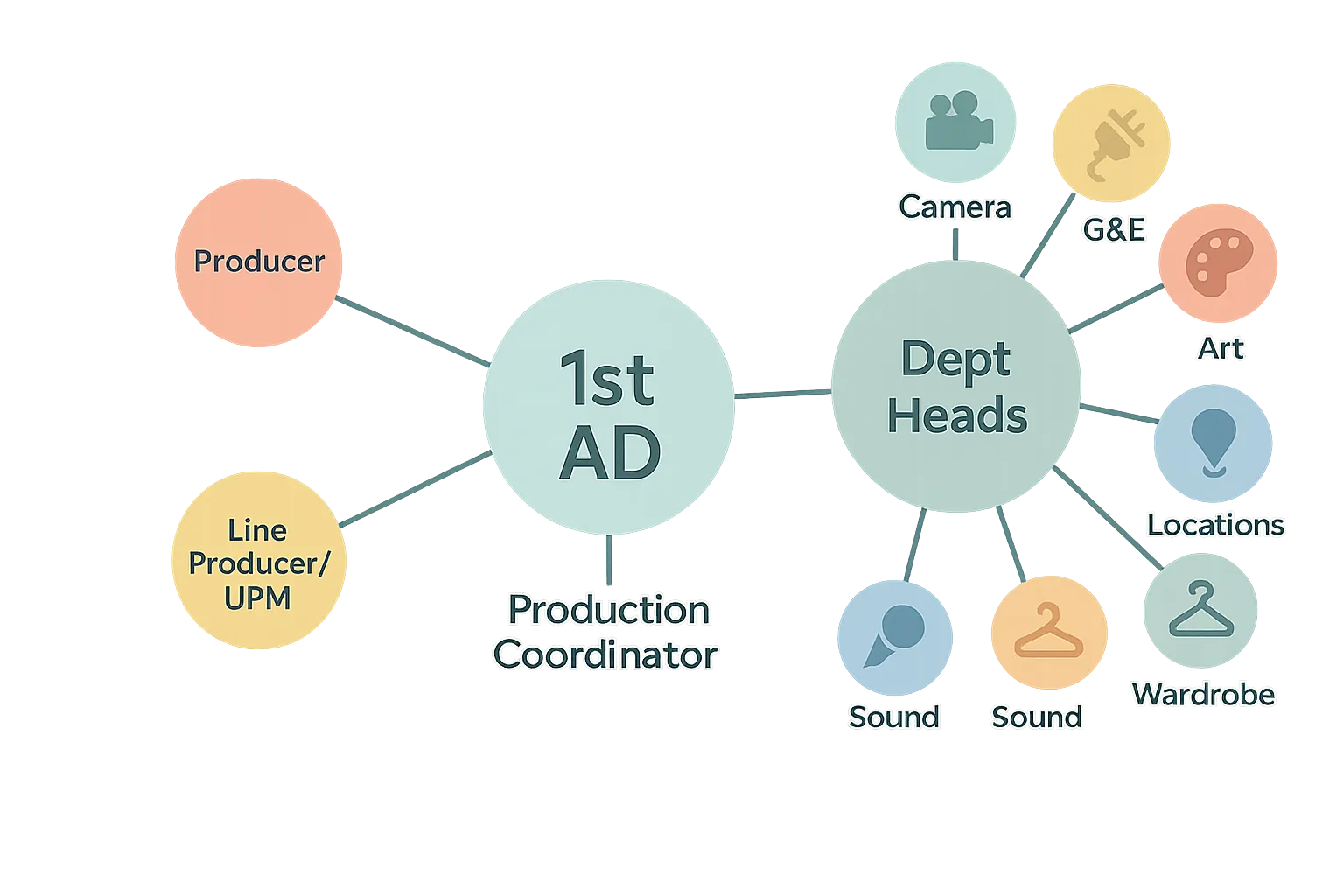
The 2nd AD usually prepares the call sheet, working with the rest of the AD department. The 1st AD checks it against the day's plan, and the producer or unit production manager approves it before it is sent. On small shoots one person may do all three jobs, but the order stays the same: draft, check, approve, send.
Call sheets usually go out the evening before the shoot day, once the current day has wrapped and the 1st AD knows what was finished and what moves to tomorrow. Ask everyone to confirm they received it.
What goes on a call sheet?
A standard call sheet has a header with the day's key information, a scene section, a cast section, background, department notes and an advanced schedule for the next day. Here is each section and what goes in it.
| Section | What it contains | Example |
|---|---|---|
| Header | Production title, company, shoot day number, date, key contacts | "Night Shift", Day 3 of 12, Thursday, May 14 |
| General crew call | The time most of the crew is due on set | 7:00 AM |
| Shooting call | The time the camera is expected to roll on the first shot | 8:30 AM |
| Weather and light | Forecast, temperature, sunrise and sunset times | Cloudy, 57 to 66°F, sunrise 5:52 AM, sunset 8:14 PM |
| Nearest hospital | Name, address, phone number and distance from set | St. Mary's ER, 4.2 miles, 12 minutes by car |
| Locations and parking | Set address, crew parking, unit base, where to report | Rosa's Diner, 211 Elm St. Crew parking in lot behind building |
| Scenes | Scene numbers, set and day/night, synopsis, cast numbers, page count | Sc. 12, INT. DINER - NIGHT, Maya confronts Joe, cast 1 and 2, 3/8 page |
| Cast | Cast number, actor, character, pickup, hair and makeup, on set | 1. Ana Ruiz as Maya, pickup 6:15, makeup 6:45, on set 8:15 |
| Background | Number of extras, their call time, wardrobe notes | 6 diner customers, call 7:30 AM, own clothes, no logos |
| Department notes | Special needs per department for the day | Props: hero envelope and 2 spares. Camera: Steadicam for Sc. 14 |
| Advanced schedule | The next shoot day's scenes, so departments can prepare | Day 4: Sc. 20, 21, EXT. PARKING LOT - NIGHT |
Page counts use eighths of a page, the same way the stripboard does. A scene of 1 3/8 pages is one full page plus three eighths.
What does a sample call sheet look like?
Here is a sample call sheet for one day of a low-budget feature. On paper the header sits across the top, the scenes and cast sit in the middle, and notes and the advanced schedule sit at the bottom.
| Field | Entry |
|---|---|
| Production | "Night Shift", Day 3 of 12 |
| Date | Thursday, May 14 |
| Director / Producer / 1st AD | Names and mobile numbers |
| General crew call | 7:00 AM |
| Shooting call | 8:30 AM |
| Breakfast | 6:30 AM at unit base. Lunch 1:30 PM |
| Weather | Cloudy, 57 to 66°F, 20% chance of rain. Sunrise 5:52 AM, sunset 8:14 PM |
| Location | Rosa's Diner, 211 Elm St. Unit base and parking in rear lot |
| Nearest hospital | St. Mary's ER, 90 Park Ave, (555) 010 2233, 12 minutes |
| Scene 12 | INT. DINER - NIGHT. Maya confronts Joe. Cast 1, 2. 3/8 pages |
| Scene 13 | INT. DINER - NIGHT. Joe leaves, Maya alone. Cast 1, 2. 1 2/8 pages |
| Scene 14 | INT. DINER KITCHEN - NIGHT. Cook warns Maya. Cast 1, 4. 6/8 pages |
| Total pages | 2 3/8 |
| Cast 1: Ana Ruiz (Maya) | Pickup 6:15, hair and makeup 6:45, on set 8:15 |
| Cast 2: Leo Park (Joe) | Pickup 6:45, hair and makeup 7:15, on set 8:15 |
| Cast 4: Sam Okafor (Cook) | Report 11:00, hair and makeup 11:30, on set 12:15 |
| Background | 6 diner customers, call 7:30 AM |
| Notes | Windows blacked out for night interior. Practical coffee on set. Closed set for Sc. 13 |
| Advanced schedule, Day 4 | Sc. 20, 21, EXT. PARKING LOT - NIGHT. Cast 1, 2, 5. Night call 5:00 PM |
Each actor's times work backward from their first scene. Cast 4 is not needed until Sc. 14, the last scene of the day, so they are called later.
How do you make a call sheet step by step?
- Start from the schedule. Open the stripboard or one-line schedule and copy the scenes planned for the day, in shooting order, with set, day or night, cast numbers and page counts.
- Set the crew call and shooting call. Work back from when the camera needs to roll. Leave enough time for lighting the first setup and for hair, makeup and wardrobe on the first actors.
- Work out each actor's times. For every cast member, set pickup, hair and makeup, and on-set times from their first scene of the day. Check the day out of days so you know who is working, starting or finishing.
- Add location and logistics. Set address, parking, unit base, meal times and where to report.
- Add safety information. Nearest hospital with address, phone and travel time, plus any notes on stunts, weapons, water or heights.
- Check weather and light. Add the forecast and sunrise and sunset times. Exterior days with a rain risk need a cover set noted.
- Collect department notes. Ask each head of department what they need flagged: special props, vehicles, animals, extra crew, equipment.
- Add the advanced schedule. List the next day's scenes so departments can prep.
- Get it approved and send it. The 1st AD checks it, the producer approves it, then it goes out the evening before. Track who has confirmed.
What are common call sheet mistakes?
- Copying yesterday's sheet and missing a field that changed, such as the date or the location address.
- Calling every actor at the general crew call, so cast wait for hours and costs go up.
- Leaving out the nearest hospital, or listing a clinic that is closed at night.
- Scenes listed out of shooting order, so departments prep the wrong setup first.
- Forgetting the advanced schedule, so the art and wardrobe teams find out about tomorrow too late.
- Sending the sheet without approval, then sending a correction that half the crew never sees.
How does the call sheet connect to other documents?
The call sheet is the last document in the planning chain. The script breakdown lists the cast, props and locations for each scene. The schedule orders those scenes into shoot days. The day out of days shows who works on which day. The shot list tells the AD how many setups each scene needs. The call sheet pulls all of this into one page for one day. If something changes upstream, such as an actor's availability, the call sheet has to change too. Read more on how a planner tool helps prevent production delays.
How to make a call sheet in Lowerated
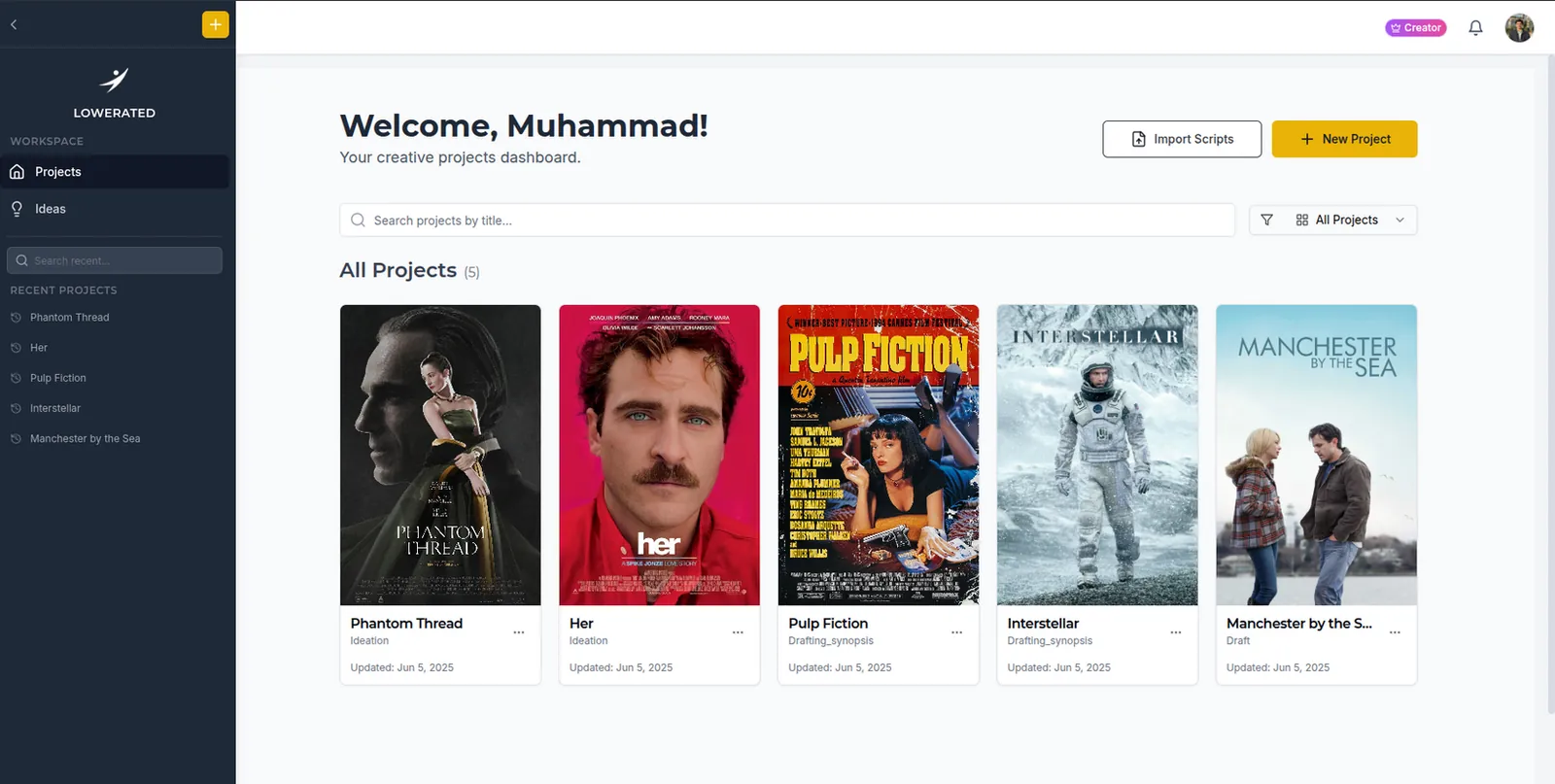
In Lowerated, call sheets are built from your schedule, so the scenes, call times, locations and crew come from the work you have already done.
- Build your schedule first. Lay out scenes as strips on the stripboard and arrange them into shoot days.
- Open the call sheet for a shoot day. Call times, locations and crew are already filled in from the schedule.
- Review it. Check times, add notes for the day, and correct anything that changed after wrap.
- Send it the night before. Everyone on the day gets the same version.
The clip shows a call sheet built from the schedule, with call times, locations and crew filled in, reviewed and sent the night before.
The schedule itself comes from the stripboard.
The clip shows scenes as strips, filtered to night scenes, with one dragged onto day one of the schedule.
Call sheets sit with the other pre-production tools. You can sign up and try them on your next shoot.
FAQ
How far in advance should a call sheet be sent?
Usually the evening before the shoot day, after the current day wraps. That way it reflects what was actually finished today.
What is the difference between crew call and shooting call?
Crew call is when the crew arrives to start setting up. Shooting call is when the camera is expected to roll on the first shot, usually an hour or more later.
Do short films need a call sheet?
Yes. Even a two day short with a small crew benefits from one page that lists times, address, scenes and the nearest hospital.
Can I make a call sheet in a spreadsheet?
Yes. Use the sections in the table above. A tool tied to your schedule saves retyping and reduces errors when the plan changes.
Key takeaways
- A call sheet is the plan for one shoot day: times, place, scenes, cast and safety.
- The 2nd AD drafts it, the 1st AD checks it, the producer approves it, and it goes out the evening before.
- Stagger cast call times from their first scene instead of calling everyone at crew call.
- Always include the nearest hospital, weather, sunrise and sunset, and the next day's schedule.
- Build it from the schedule so the two never disagree.