How to Write a Villain (a Compelling Antagonist)


By Muhammad Wisal and Muhammad Ali / 5 min read
To write a compelling villain, give them a clear goal that directly blocks the hero, a reason for it that makes sense from their side, and enough power to win. Then show what they are willing to do through specific actions on screen, and make them test exactly the weakness the hero most needs to overcome.
What is the difference between a villain and an antagonist?
An antagonist is whoever or whatever stands in the protagonist's way. A villain is an antagonist who is morally in the wrong. Every villain is an antagonist, but not every antagonist is a villain. A rival runner, a strict parent or a storm can all be antagonists without being evil.
This matters because the craft is mostly the same. Whether your opposition is a killer or a disapproving father, it needs a goal, a reason and the power to make life hard. The rest of this guide uses "villain", but the steps apply to any antagonist.
What makes a villain compelling?
A compelling villain is one the audience understands, fears and cannot stop watching. In practice that comes from six things.
| Quality | What it means | Example |
|---|---|---|
| A clear goal | They want something concrete, and it collides with what the hero wants | Hans Gruber in "Die Hard" wants the money in the vault |
| A reason | From their side, the goal makes sense | Killmonger in "Black Panther" has a grievance the film takes seriously |
| Power | They are stronger than the hero for most of the story | Gruber controls the building, the hostages and the plan |
| A method | A specific, recognizable way of operating | Anton Chigurh in "No Country for Old Men" and his coin toss |
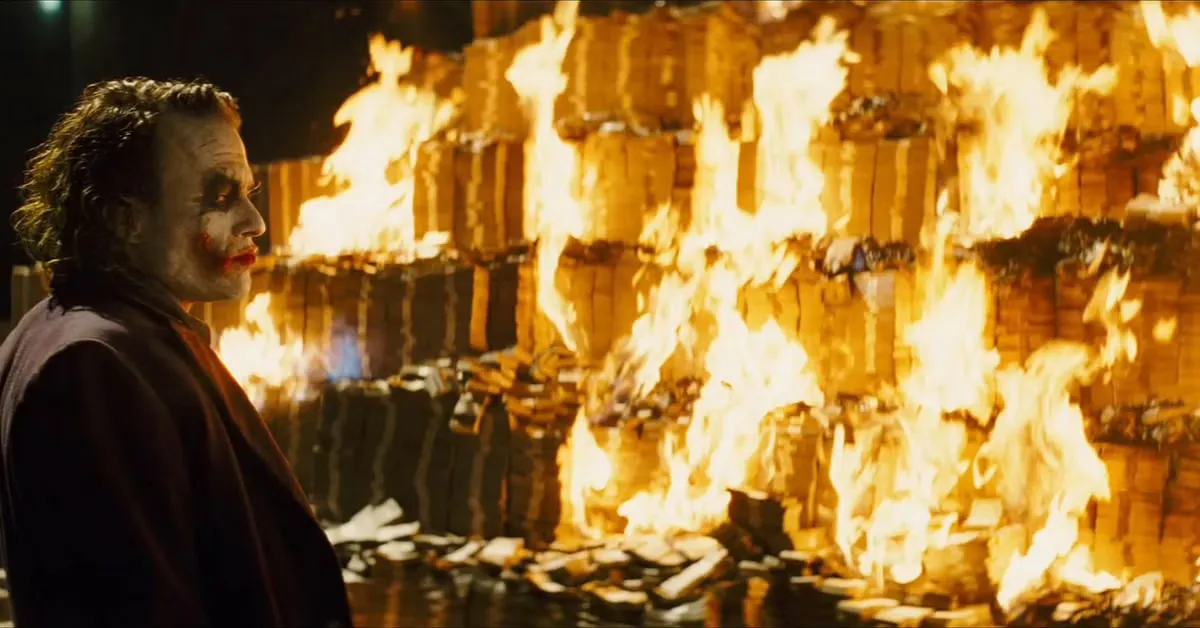
| A link to the hero | They press on the hero's flaw or mirror it | The Joker in "The Dark Knight" tries to make Batman break his one rule |
| Presence | Their threat is felt even in scenes they are not in | Characters talk about Chigurh, and we dread his return |
How do you write a villain step by step?
- Start from the hero's flaw. Decide what your protagonist most needs to learn. The best villain is the person who makes that lesson unavoidable. If the hero's problem is trusting no one, the villain might be someone the hero has to trust.
- Give the villain a goal. Make it concrete and visible: a deal, a property, a person, a secret kept. It should be impossible for both the villain and the hero to get what they want.
- Write their reason in their own words. One sentence, as the villain would say it. "This town would have died without me." If you cannot write it without sneering, you do not understand them yet.
- Make them stronger. List what the villain has that the hero lacks: money, information, allies, authority, nothing to lose. The hero should be losing for most of act two.
- Decide their limits. What will they not do? A line they will not cross makes them a person, and a moment where they cross it raises the stakes.
- Design their first appearance. Introduce them through an action that shows their method and power, not through a description of how dangerous they are.
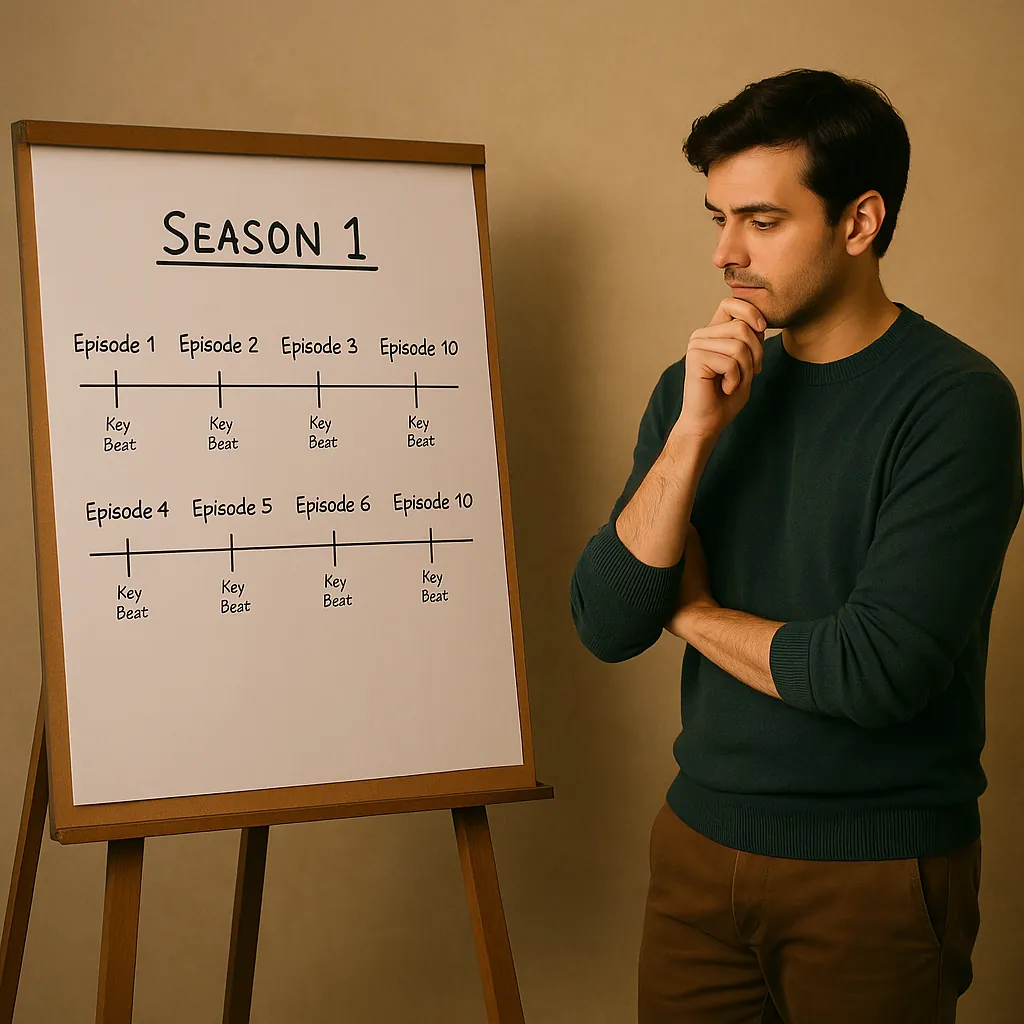
- Plan their escalation. Each confrontation should cost the hero more than the last. Map these against your act structure.
- Write the final confrontation from their side. They should be trying to win, with a real plan, right to the end.
What does a worked villain look like?
Here is an example for a feature called "Harvest Moon Motel".
- Hero: Ines, 34, who inherits her late father's roadside motel and plans to sell it.
- Hero's flaw: she runs from anything that ties her down.
- Villain: Gordon Brenner, 60s, the town's land developer and her father's oldest friend.
- Goal: buy the motel cheaply, because the highway expansion he has secretly arranged will make the land worth far more.
- Reason, in his words: "I kept this town alive for thirty years. Your father never thanked me once."
- Power: he knows the council, the bank and every family in town, and Ines knows nobody.
- Limit: he will not hurt anyone physically. Until act three, when the deal is about to fall through.
- Method: kindness as leverage. He fixes problems for people, then collects.
- Link to the hero: he offers Ines an easy way out, which is exactly what she always takes. To beat him, she has to stay.
- First appearance: at the funeral, he quietly pays the caterer before Ines can, then mentions it later.
Gordon is dangerous because his offer is tempting. Every time Ines says no, she is fighting her own flaw as much as him.
What are common mistakes when writing a villain?
- Evil for its own sake. No goal, no reason, only menace. The audience stops believing in them.
- Too weak. If the hero is never really in danger of losing, there is no tension.
- Disconnected from the hero. The villain could be swapped for any other villain and the hero's journey would not change.
- Explaining instead of acting. Long monologues about their plan, delivered while the hero escapes.
- A sudden stupid mistake. The villain loses because the plot needs them to, not because the hero beat them.
- A tragic backstory as a shortcut. Backstory explains a villain; it does not replace a clear goal in the present.
The villain's dialogue often works best with subtext: what they say is polite, and what they mean is a threat. For broader character work, see how to write brilliant characters and character arcs, since some villains change over a story and many do not.
Mapping your villain's connections in Lowerated
A villain's power usually runs through other people: who owes them, who fears them, who is lying for them. In Lowerated you can map your characters' relationships on one graph, so those connections stay clear while you write.
The clip shows characters' relationships mapped on one graph: who loves whom, who owes whom and who is lying.
FAQ
Does a villain need a backstory?
You should know it, but the audience may need very little of it. A clear goal and reason in the present matter more than history.
Should the villain believe they are the hero?
Often, yes. A villain who thinks they are right behaves more consistently and is harder to dismiss.
Can the antagonist be a group or a force of nature?
Yes. A storm, a company or an illness can be the antagonist. It helps to give it a human face, such as one executive or one doctor.
How much screen time should a villain get?
It varies widely. Some films barely show the villain. What matters is that their threat is felt in every act.
Key takeaways
- Give the villain a concrete goal that makes the hero's goal impossible.
- Write their reason in their own words, and make it make sense.
- Make them stronger than the hero for most of the story.
- Design them to press on the hero's flaw.
- Show their method through action, starting with their first appearance.