AI in Filmmaking: Benefits, Challenges, and What’s Next


By Muhammad Wisal and Muhammad Ali / 11 min read
For years, filmmakers have adopted new technology one step at a time. Digital cameras changed production. Non-linear editing changed post-production. Streaming changed distribution.
Artificial intelligence is different because it can influence almost every stage of filmmaking.
A filmmaker can now use AI to brainstorm a story, develop characters, work on a screenplay, organize production information, analyze material, and support parts of the workflow that once required more manual effort.
But there is an important question behind all of this progress:
Does AI actually make filmmaking better, or does it simply make filmmaking faster?
For independent filmmakers, the distinction matters. Saving time is valuable, but not if the result is a generic script, an impersonal creative process, or a production workflow that becomes harder to control.
The most useful way to think about AI in filmmaking is not as a replacement for filmmakers. It is as a layer of assistance that can remove repetitive work while leaving creative judgment with the people making the film.
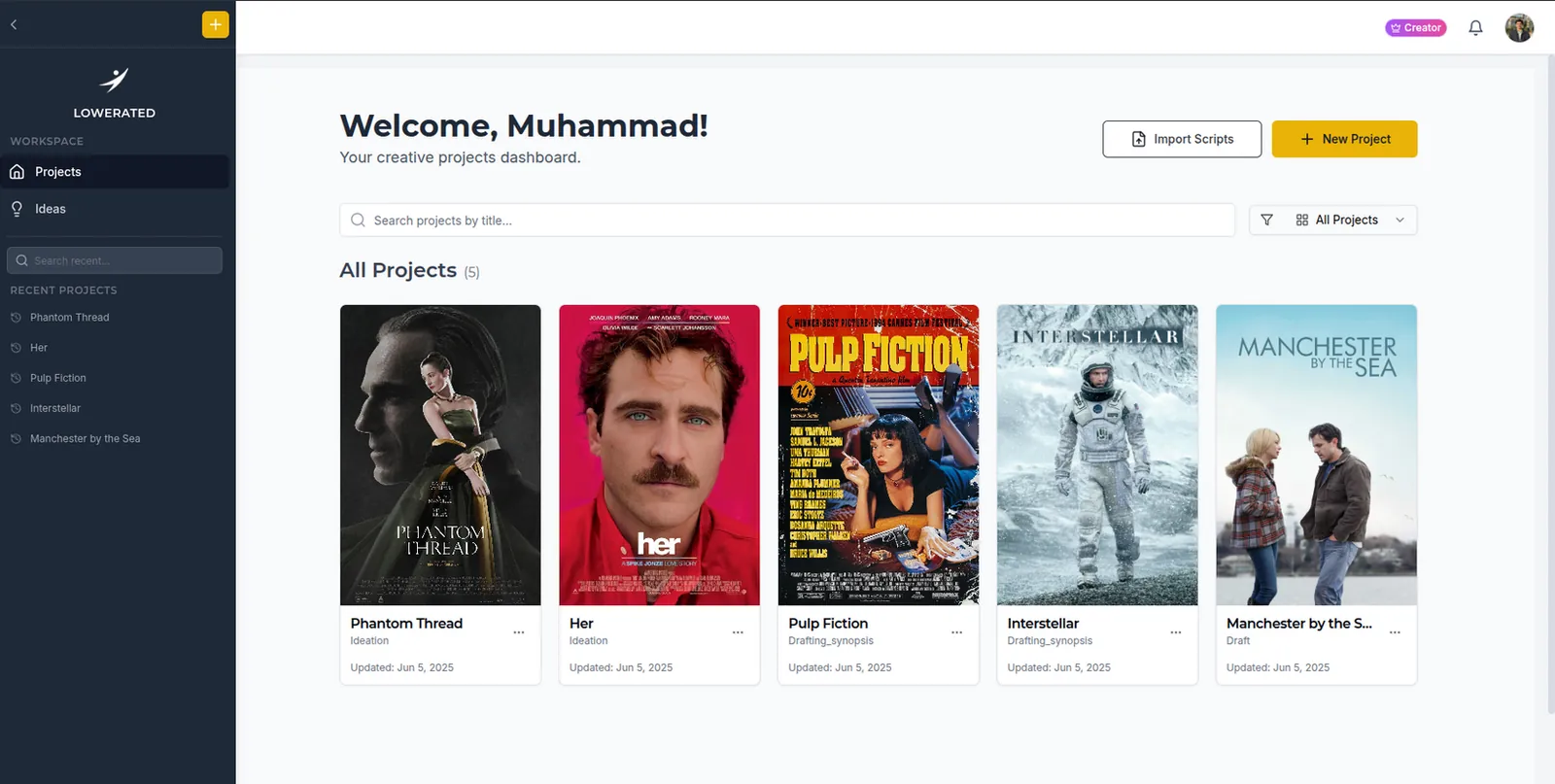
That is also the philosophy behind Lowerated, an All-in-one filmmaking platform built around AI-assisted tools for idea generation, scriptwriting, production planning, collaboration, and the broader journey from concept toward distribution.
Where AI Is Actually Helping Filmmakers
The biggest benefit of AI is not that it can create something from nothing.
Its practical value is that it can help filmmakers move through difficult parts of the process more efficiently.
A filmmaker dealing with a limited budget, a small crew, and a tight deadline may benefit considerably from assistance with repetitive or exploratory work.
AI can help with:
- Developing early story ideas
- Exploring character directions
- Breaking through writer's block
- Generating alternative scene approaches
- Organizing production information
- Supporting scheduling and planning
- Identifying repetitive tasks
- Assisting with some post-production workflows
- Creating a more connected workflow between creative and production stages
The important word is assistance.
A filmmaker still needs to decide whether an idea is interesting, whether a scene works, whether an actor fits a role, whether the pacing feels right, and whether the final film communicates what the creator intended.
AI Script Writer for Filmmakers: Faster Development, Better Exploration
One of the most visible uses of AI in filmmaking is screenwriting.
An AI Script Writer for Filmmakers can be particularly useful when a creator knows the story they want to tell but is struggling to turn it into scenes.
Instead of staring at a blank page, the filmmaker can use AI to explore possibilities.
For example, a writer could develop several versions of a character motivation, test alternative endings, or ask for different approaches to the same dramatic scene.
That does not mean the AI-generated version becomes the finished screenplay.
The filmmaker still needs to ask:
Does this sound like my character?
Does this fit the story?
Does this feel believable?
Does it reflect the world of the film?
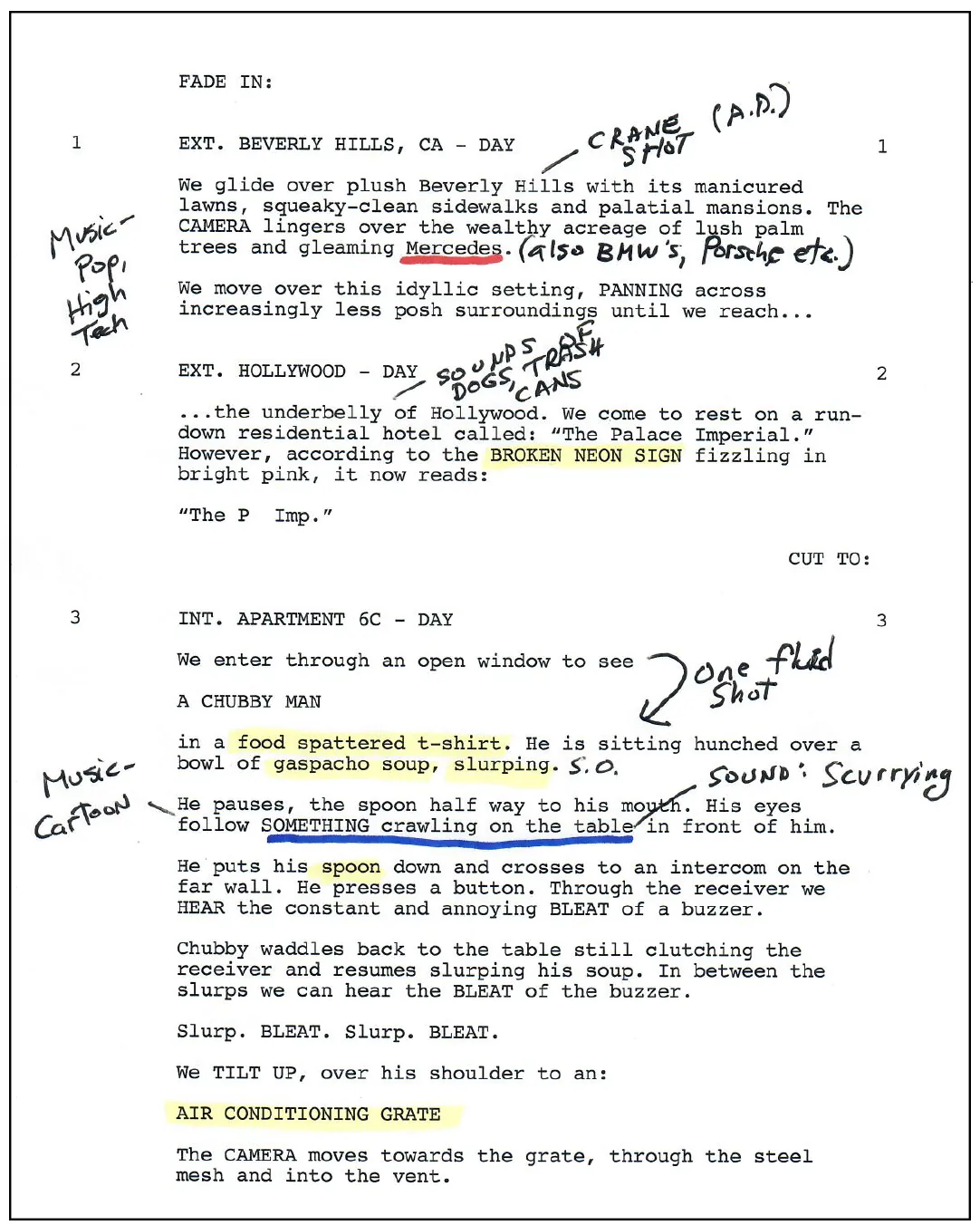
Lowerated's Script Writer is positioned around this kind of AI-assisted development, with screenplay formatting, character profiling, element tagging, collaboration, revisions, and AI assistance built into the writing workflow.
This is where AI can be genuinely useful: not by deciding what the filmmaker should say, but by giving the filmmaker more material to evaluate.
The Biggest Benefit May Be in Pre-production Filmmaking
Many filmmakers think of AI first as a writing or visual-generation technology.
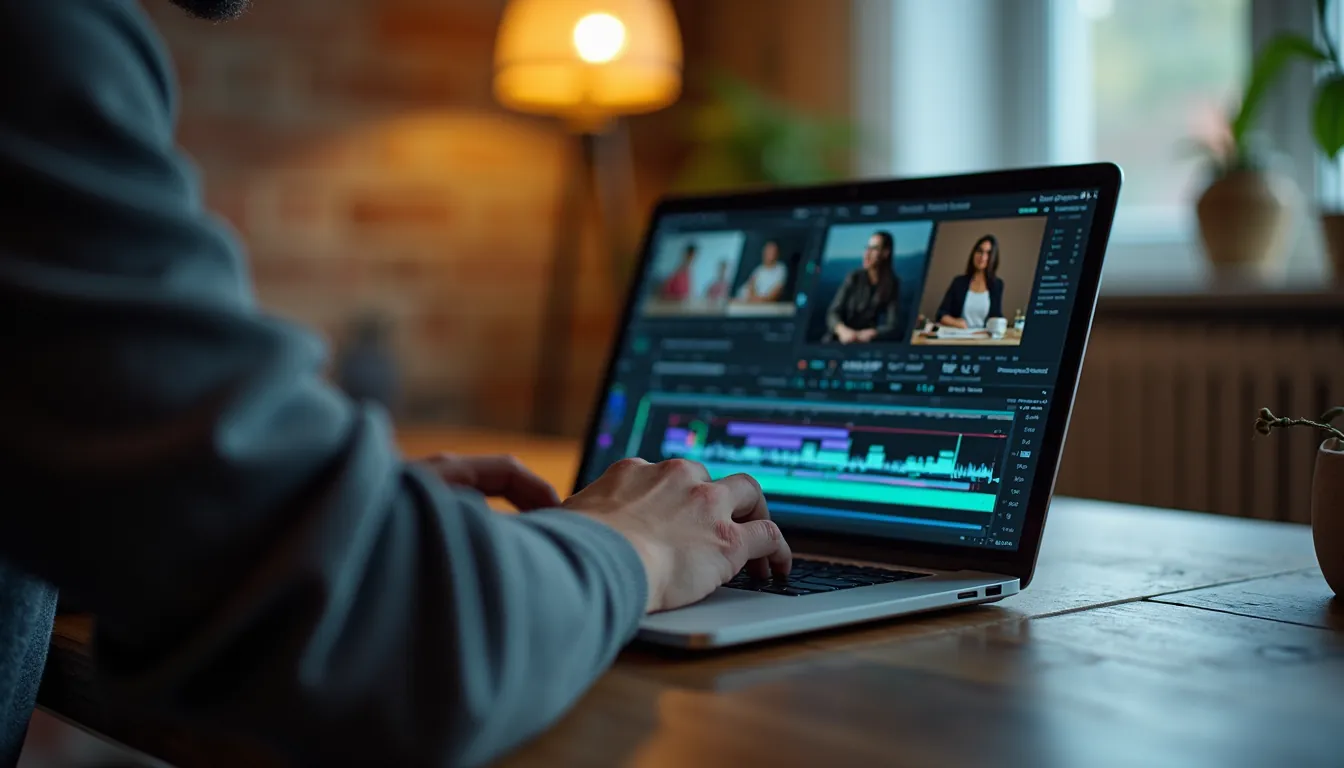
But one of its most practical applications may be organization.
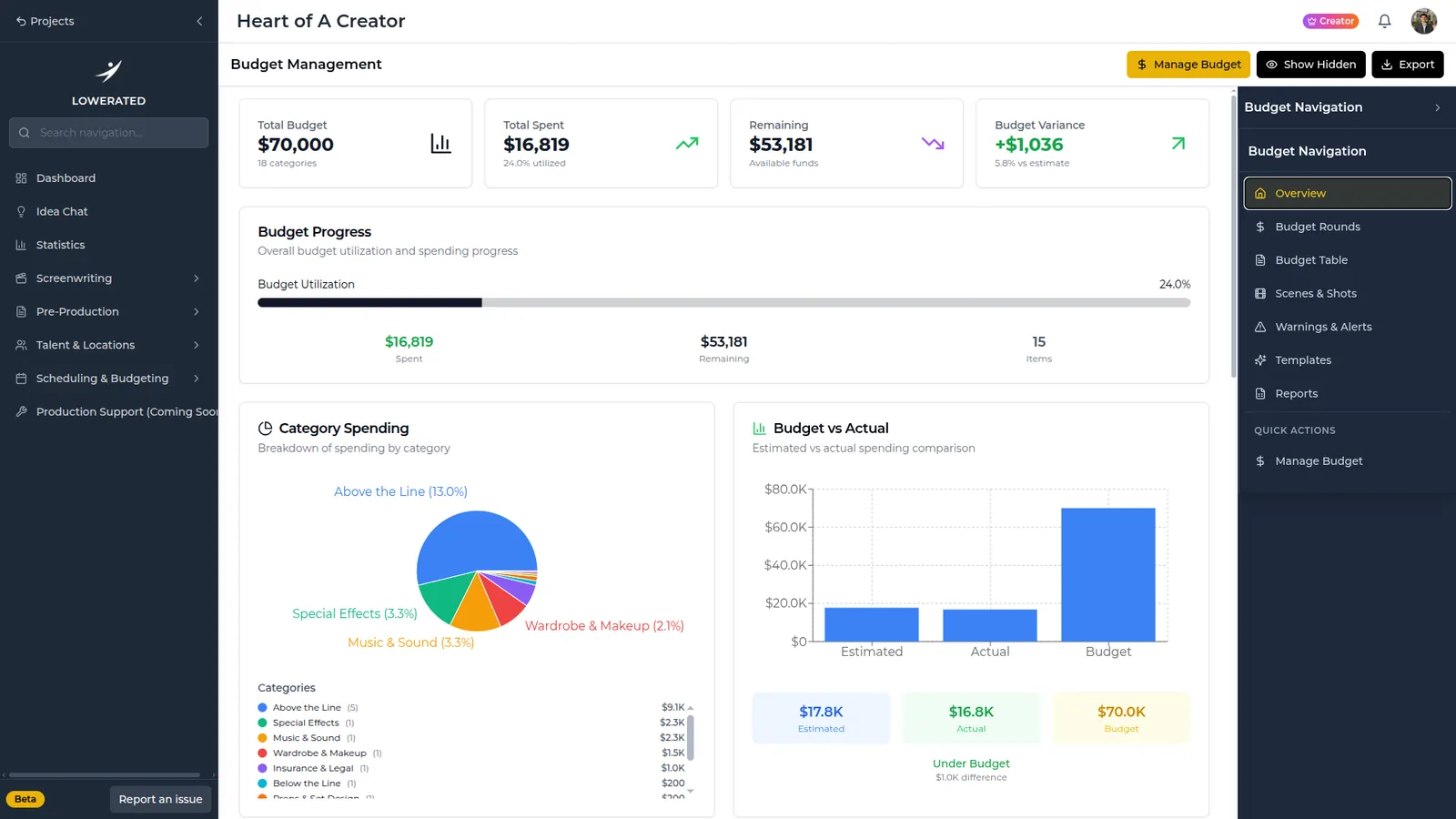
Pre-production Filmmaking involves a huge number of connected decisions. A screenplay needs to become a production plan, and that plan has to account for scenes, characters, locations, props, costumes, schedules, shots, crew requirements, and budget.
For a small team, keeping all of this synchronized can be difficult.
A single script change may affect several other parts of the production.
That is why the value of AI-assisted planning is not simply "automation." It is reducing the amount of manual coordination required to keep information connected.
What a Filmmaking Planner tool should actually solve
A useful Filmmaking Planner tool should help a filmmaker answer practical questions:
- What needs to be shot?
- Where should it be shot?
- Who needs to be there?
- What equipment or props are required?
- Which scenes can be grouped together?
- How should shooting days be organized?
- What could create a scheduling problem?
Lowerated's platform describes pre-production workflows involving elements such as casting, location scouting, budgeting, scheduling, shot lists, and storyboards.
The important principle is simple:
AI is most useful when it reduces coordination without removing control.
AI Can Reduce the Friction Between Creative and Production Teams
A film can have an excellent screenplay and still experience production problems.
Why?
Because filmmaking is collaborative.

The writer thinks about the story. The director thinks about execution. The producer thinks about resources. The cinematographer thinks about visuals. The casting team thinks about performers. Editors later think about how everything fits together.
When these decisions live in disconnected systems, information gets lost.
A Filmmaker Collaboration Platform can help keep the team aligned around the same project.
Lowerated's Script Writer currently supports collaborative writing, comments, and version control, which are particularly useful when a screenplay moves through multiple revisions.
The real benefit of collaboration technology is not simply faster messaging.
It is reducing questions such as:
Which draft are we using?
Who changed this scene?
Was this revision approved?
Did the production team see the update?
Good technology removes those small uncertainties before they become production problems.
Film Casting Is Becoming More Data-Rich, Not Less Human
AI may also change Film Casting, but this is an area where human judgment remains especially important.
Casting is not a mathematical matching exercise.
A good casting decision depends on performance, emotional range, chemistry, interpretation, presence, and how an actor fits the filmmaker's vision.
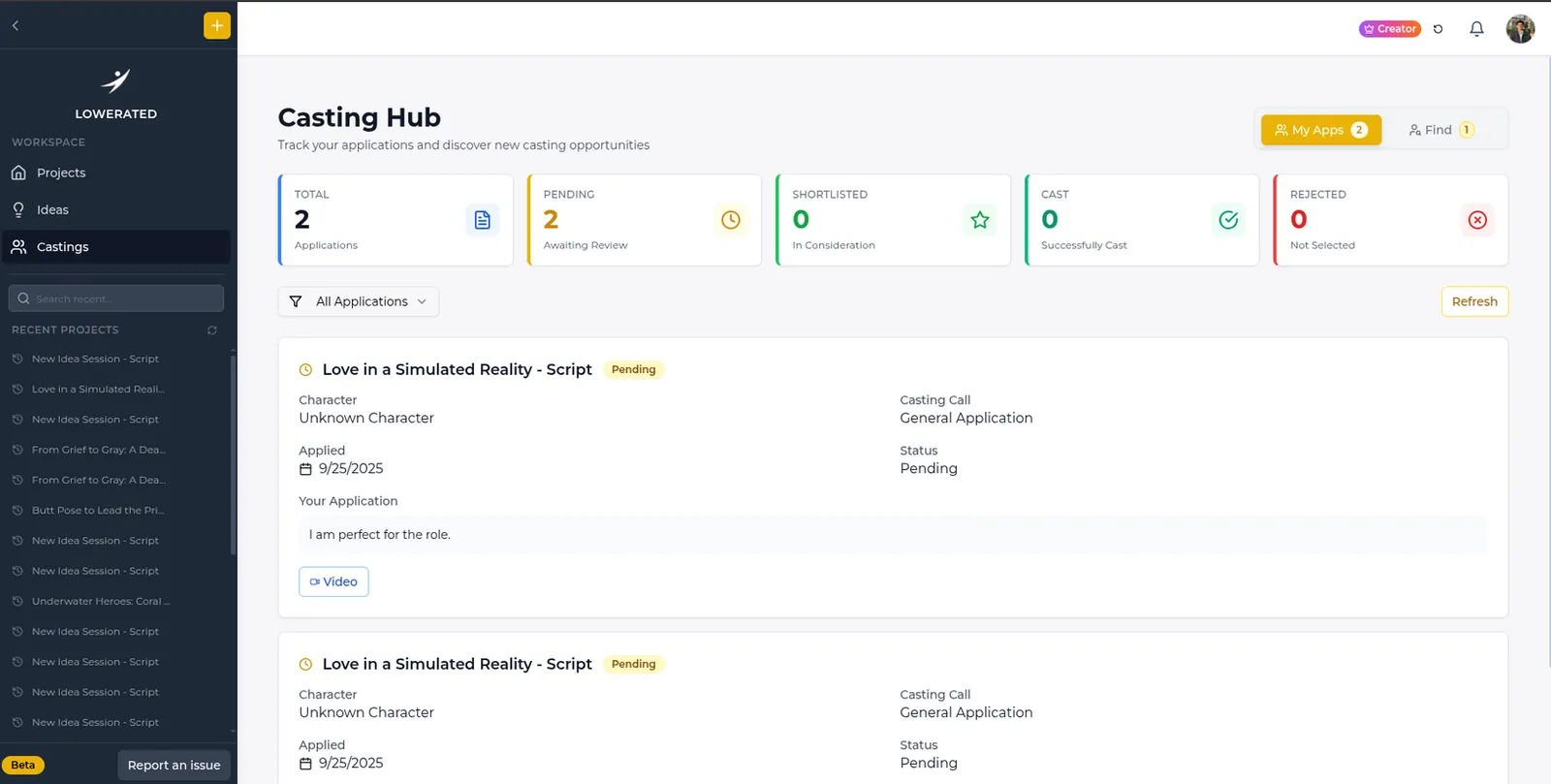
AI can potentially assist with organizing submissions, categorizing information, or reducing administrative work around Film audition and casting calls .
But filmmakers still need to watch performances and make creative decisions.
That distinction is important because efficiency should never become the same thing as objectivity.
A system can help you organize 200 submissions.
It cannot automatically tell you which actor will transform a character in a way you did not expect.
That is still part of filmmaking.
The Challenges of AI in Filmmaking
The benefits are real, but so are the problems.
The first challenge is creative sameness.
If thousands of filmmakers use AI to produce ideas and scripts without adding enough personal judgment, more films may begin to feel structurally similar.
This is why filmmakers should use AI as a starting point rather than a substitute for perspective.
The second challenge is accuracy.
AI systems can produce plausible information that is wrong, incomplete, or unsuitable for a specific project. A filmmaker still needs to verify research, production details, legal requirements, and other important information.
The third challenge is authorship and rights.
The U.S. Copyright Office's January 2025 report stated that generative AI output may be protected where a human author determines sufficient expressive elements, while merely providing prompts is not enough on its own. The Office also confirmed that using AI to assist in creating a larger human-authored work does not automatically prevent copyright protection.
That does not mean every AI-assisted film has the same legal status. Copyright questions depend on the specific work and the applicable law.
Filmmakers should therefore keep meaningful creative involvement throughout development, writing, editing, and final decision-making.
AI Also Raises Important Questions About Performers
The impact of AI is not limited to scripts.
Actors and other performers are increasingly concerned about synthetic versions of their likeness, voices, and performances.
In June 2026, SAG-AFTRA members ratified a new TV/Theatrical Agreement that built on earlier AI protections and added further restrictions concerning synthetic performances and AI replacing members' work.
That development highlights an important point for filmmakers:
Technological capability is not the same as permission.
Just because a tool can create or modify a digital performance does not mean filmmakers should use it without considering consent, contracts, rights, and applicable laws.
For independent productions, basic documentation becomes even more important.
When AI touches a person's voice, face, performance, or identity, filmmakers should understand exactly what they have permission to do.
Post-production Filmmaking Is Another Area Where AI Can Save Time
Post-production Filmmaking contains many repetitive activities.
Editors may spend considerable time organizing footage, searching for material, creating versions, handling transcripts, preparing captions, or making routine adjustments.
AI can assist with some of these tasks.
That does not mean the editor becomes unnecessary.
In fact, it may make the editor more valuable by shifting more attention toward decisions that require taste and storytelling judgment.
The same principle applies to earlier Lowerated discussions of AI-assisted post-production: the technology is most useful when it reduces technical friction while allowing creative teams to focus on the final storytelling result.
A practical AI workflow should therefore ask:
What repetitive work can the machine handle so the human can spend more time on the film?
That is a better question than:
What parts of the film can we completely automate?
Why an All-in-one Filmmaking Platform Could Matter More as AI Expands
AI creates another problem when every stage uses a different tool.
A filmmaker could use one application for brainstorming, another for scriptwriting, another for production management, another for collaboration, and additional software for post-production.
At some point, the workflow becomes fragmented again.
That is why the idea of an All-in-one filmmaking platform becomes increasingly relevant.
The benefit is not having one application that magically does everything.
It is having a central workflow where information and decisions can move more naturally from one stage to another.
Lowerated's platform is designed around this broader approach, connecting idea development, AI-assisted scriptwriting, pre-production workflows, collaboration, and other stages of filmmaking in one environment.
For an independent filmmaker, continuity can be more valuable than another standalone feature.
Filmmakers Community Platform: AI Cannot Replace People
There is another side to the AI conversation that often gets overlooked.
Filmmaking is social.
Creators need people who can challenge an idea, improve a scene, perform a role, operate a camera, solve a production problem, or simply tell them when something is not working.
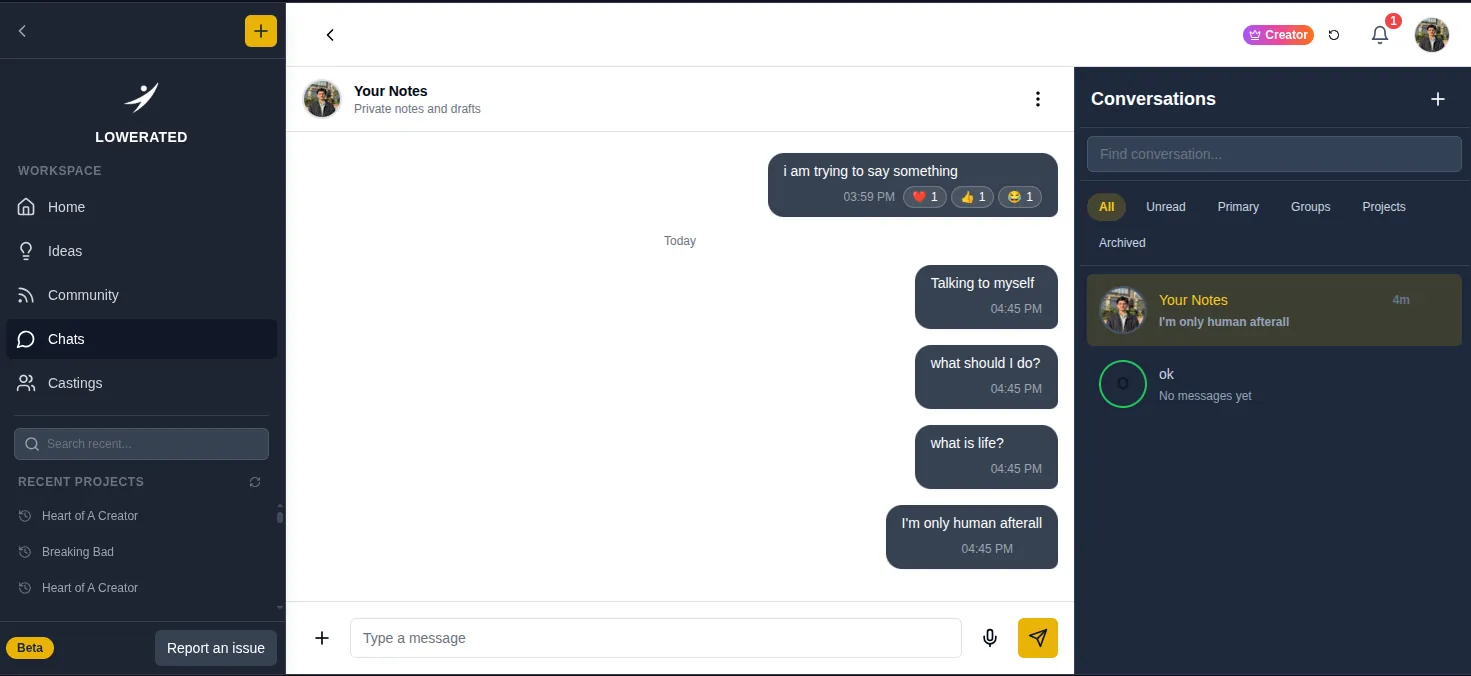
That is why a Filmmakers Community Platform remains valuable even as AI becomes more capable.
Technology can generate options.
People create relationships.
A filmmaker community can help creators find collaborators, share ideas, learn from other filmmakers, discover opportunities, and develop projects together.
For independent creators, that human network may ultimately matter more than any individual AI feature.
What Could Happen Next?
The next stage of AI in filmmaking is unlikely to be one dramatic invention that changes everything overnight.
More likely, AI will become less visible and more integrated into ordinary workflows.
Instead of filmmakers specifically "using AI," they may simply use filmmaking software where AI assistance is already built into the process.
We can expect more attention around areas such as:
More contextual AI assistance
Tools will increasingly understand the project they are helping with rather than responding to isolated prompts.
Connected production workflows
Creative decisions made during script development can increasingly flow into planning, casting, scheduling, and production.
More responsible AI controls
As AI touches voices, faces, performances, and copyrighted material, consent, transparency, and rights management will become increasingly important.
Human-AI collaboration
The strongest workflows will likely combine machine speed with human judgment instead of treating one as a replacement for the other.
Greater accessibility for independent filmmakers
AI may lower some of the cost and time barriers that traditionally made professional-looking production difficult for smaller teams.
But cheaper production does not automatically mean better filmmaking.
It simply gives more people the opportunity to try.
What Independent Filmmakers Should Do Now
The smartest approach is not to adopt every new AI tool.
It is to identify where your current workflow wastes the most time.
Start there.
If you constantly struggle with ideas, use AI for brainstorming.
If the blank page is slowing you down, experiment with an AI Script Writer for Filmmakers.
If your screenplay is difficult to translate into a practical shooting plan, look at a Filmmaking Planner tool.
If revisions are getting lost, improve your collaboration workflow.
If Film Casting and Film audition and casting calls are difficult to manage, organize those processes around the project rather than disconnected messages.
And if your team keeps switching between separate systems, consider whether an integrated platform would remove some of that friction.
The goal is not to become an "AI filmmaker."
The goal is to become a more effective filmmaker who knows where technology genuinely helps.
Choosing the Best Filmmaking Platform for an AI-Driven Workflow There is no universal Best filmmaking platform .
The right choice depends on the size of your project, your team, your budget, and how much of your workflow you want in one place.
But independent filmmakers can ask a more useful set of questions:
Does this platform save me real time?
Does it preserve my creative control?
Can my team work from the same project information?
Does the workflow extend beyond writing?
Can it help with Pre-production Filmmaking?
Can information from the script support casting and planning?
Will it still be useful after the first draft?
Those questions are more meaningful than counting how many AI features a platform has.
The Future of Filmmaking Is Not AI Alone
AI will change filmmaking. The bigger question is how filmmakers choose to use it.
The technology can help generate possibilities, reduce repetitive work, organize complex information, and make some stages of production more accessible.
But a film still needs something technology cannot simply automate into existence: a reason to exist.
Someone has to decide what the film is about.
Someone has to care about the character.
Someone has to choose the performance.
Someone has to know when a scene is emotionally right.
Someone has to say, "This is the story we want to tell."
That is why the future is unlikely to be AI versus filmmakers.
A more useful future is AI working for filmmakers.
Lowerated's approach reflects that idea. Rather than treating AI as a replacement for creative people, its platform is designed to combine AI-assisted tools with a connected filmmaking workflow, from idea generation and scriptwriting through production planning and the wider path toward distribution.
The technology will keep changing.
The fundamentals of storytelling will not.
AI can help you make the process faster. Your creative vision is still what makes the film yours.