How to Run a Table Read


By Muhammad Wisal and Muhammad Ali / 6 min read
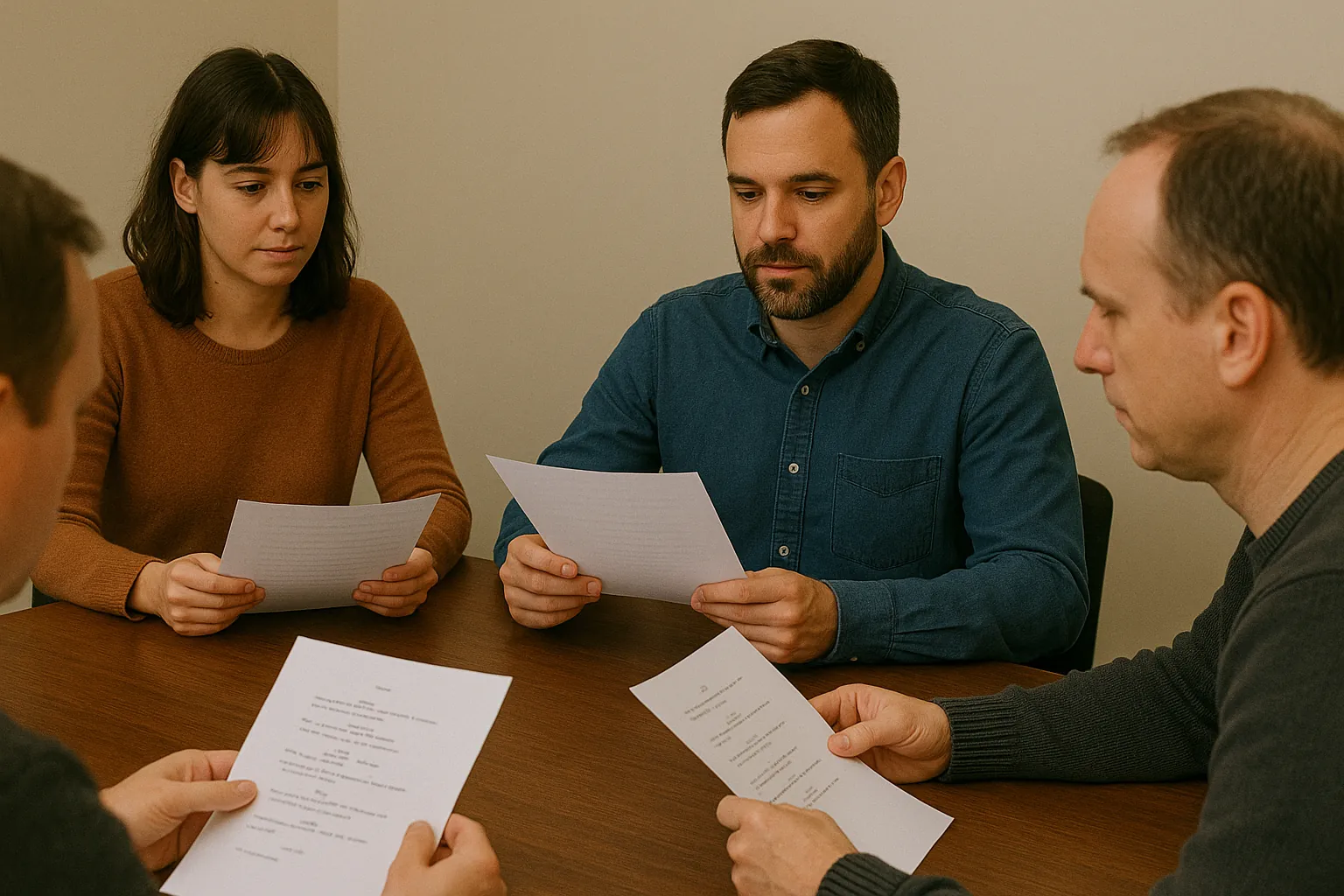
To run a table read, seat the cast around a table with the latest script, have one person read the scene headings and action aloud, and let the actors read their dialogue straight through without stopping. The writer and director listen and take notes on what plays, what drags and what confuses. Afterward, thank the cast, hold a short debrief, and turn the notes into revisions.
What is a table read?
A table read is a sit-down reading of the whole script by the cast, usually the first time everyone hears it together. Nobody blocks or moves; the actors read from their seats. Writers also hold informal table reads during development with actor friends, just to hear a draft. For a short definition, see table read: what it means in filmmaking.
A table read does three jobs: it shows the writer and director how the script sounds out loud, it gives a rough running time, and it lets the cast meet and hear the whole story before rehearsals.
When should you hold a table read?
Hold the production table read after casting is complete and before rehearsals start, with enough time left to revise the script. On a feature that is often a few weeks before the shoot. On a short, a week or two before is common. A development read for the writer can happen at any stage, as soon as there is a full draft worth hearing.
Who attends a table read?
At minimum: the director, the writer, the cast and a reader for stage directions. Producers usually attend. On larger productions, heads of department often sit in to hear the script before their prep gets deep. Keep the room small enough that actors feel comfortable; a crowd of observers can make people perform instead of read.
| Person | Role at the read |
|---|---|
| Director | Welcomes the room, sets the tone, listens |
| Writer | Listens and notes lines that land, fall flat or confuse |
| Cast | Read their characters' dialogue |
| Stage directions reader | Reads scene headings, action and key transitions |
| Producer | Notes running time, cost concerns and story problems |
| Timekeeper or AD | Times each scene or each act |
| Fill-in readers | Cover small or uncast roles |
How do you prepare for a table read?
- Lock a version of the script. Pick the draft everyone will read and put the date on the cover. Do not send a revision the night before.
- Send scripts in advance. Give actors time to read the full script, ideally a few days ahead, and say clearly that you do not expect lines learned.
- Assign every role. Make a list of every speaking part, including one-line roles, and assign each to an actor or a fill-in reader. One reader can cover several small roles if they never share a scene.
- Choose the stage directions reader. Pick someone with a clear, neutral voice who is not playing a major role. Ask them to read action briefly, without acting it.
- Prepare the room. One table where everyone can see each other, name cards with actor and character names, water, printed scripts with scene numbers, and pencils.
- Plan the time. A read often runs close to a minute per page, plus breaks, introductions and debrief. Book the room for longer than you think.
- Set up notes. Decide who writes notes and how: a copy of the script to mark, or a shared document.
What does a table read schedule look like?
Here is a run of show for a table read of "Kestrel Road", a 24-page short about a trainee bus driver on her first night route.
| Time | What happens |
|---|---|
| 6:00 PM | Arrivals, coffee, name cards |
| 6:15 PM | Director welcomes everyone. Round of introductions: name and character |
| 6:25 PM | Director gives one or two lines on tone ("quiet, late-night, a little funny"). No notes on performance |
| 6:30 PM | Read pages 1 to 12, straight through |
| 6:45 PM | Five minute break |
| 6:50 PM | Read pages 13 to 24 |
| 7:05 PM | Thank the cast. Short open questions for actors, if the director wants them |
| 7:15 PM | Cast leaves. Director, writer and producer debrief |
For a feature, the same shape works with a longer break between halves and a debrief on a separate day if people are tired.
How do you run the read itself?
Keep the read moving and do not stop it to give notes. Stopping turns a table read into a rehearsal and breaks the sense of how the whole story flows, which is the main thing you are there to learn.
- The stage directions reader reads scene headings and enough action for the room to follow. Long action passages can be summarized.
- Actors read at a natural level. Tell them they do not need to give a full performance.
- The writer marks the script as they listen: a tick for a line that lands, a question mark for confusion, a line through anything that drags.
- Note where the room laughs, where it goes quiet, and where people look lost.
- The timekeeper notes the clock at each act break or every ten pages.
What should you do after a table read?
Hold a short debrief between the director, writer and producer while it is fresh, then turn notes into revisions. Sort notes into three groups: story problems (a character's motive is unclear), scene problems (scene 9 repeats scene 6), and line problems (a joke that did not land). Fix story problems first, since they may remove scenes and lines anyway. If actors offered comments, weigh them, but the writer and director decide. See how to rewrite a screenplay for a method, and how to rehearse actors before the shoot for the next step with the cast.
If the read ran long, use the timings to see where. A 24-page short that reads at 40 minutes probably has long dialogue scenes worth trimming before you schedule the shoot.
What are common table read mistakes?
- Sending a new draft the night before, so actors read pages they have never seen.
- Stopping to give performance notes in the middle of the read.
- Letting the stage directions reader act out every line of action, which slows the read.
- Leaving small roles unassigned, so people scramble to cover lines mid-scene.
- Inviting too many observers.
- Defending the script out loud during the debrief instead of listening.
- Taking notes, then never turning them into a revision before the shoot.
Turning table read notes into revisions in Lowerated
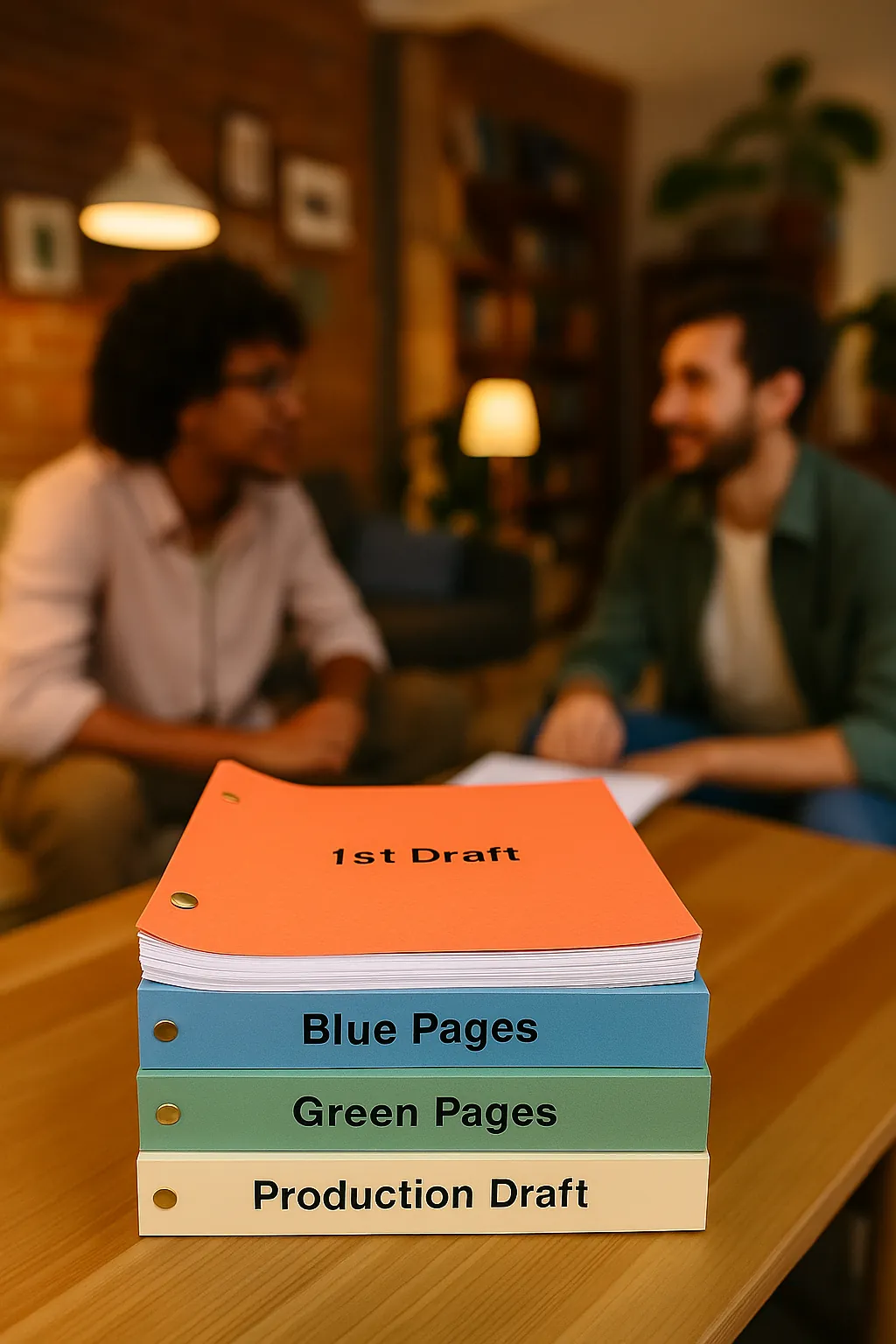
If your script is in Lowerated, the writer and director can go through the table read notes together in the script itself. Co-writing is live, so both can work on the same pages and leave comments on the lines that need work. Each pass can be saved as a new draft with revision colors, so the cast knows which pages changed.
The clip shows two people co-writing the same screenplay in real time.
FAQ
How long does a table read take?
Roughly a minute per page for the reading itself, plus introductions, a break and a debrief. A 100-page feature usually needs a half day booked.
Who reads the stage directions at a table read?
Usually a dedicated reader who is not playing a major role, such as the writer, an AD or an actor friend with a clear voice.
Should actors be off book for a table read?
No. Actors read from the script. The point is to hear the material, not to test memorization.
Can I do a table read over video call?
Yes. Ask everyone to mute when not speaking, keep the stage directions reader's camera visible, and record only with everyone's permission.
Key takeaways
- Hold the read after casting and before rehearsals, with time left to revise.
- Lock and send the script in advance, assign every role, and pick a clear stage directions reader.
- Read straight through without stopping for notes.
- Time the read and mark what lands, drags and confuses.
- Debrief right away and turn notes into a revision before the shoot.