How to Watch Movies Like a Filmmaker (and Why I Built Lowerated)

By Muhammad Wisal / 5 min read
how do you watch movies like a filmmaker, and see what they see in a scene?
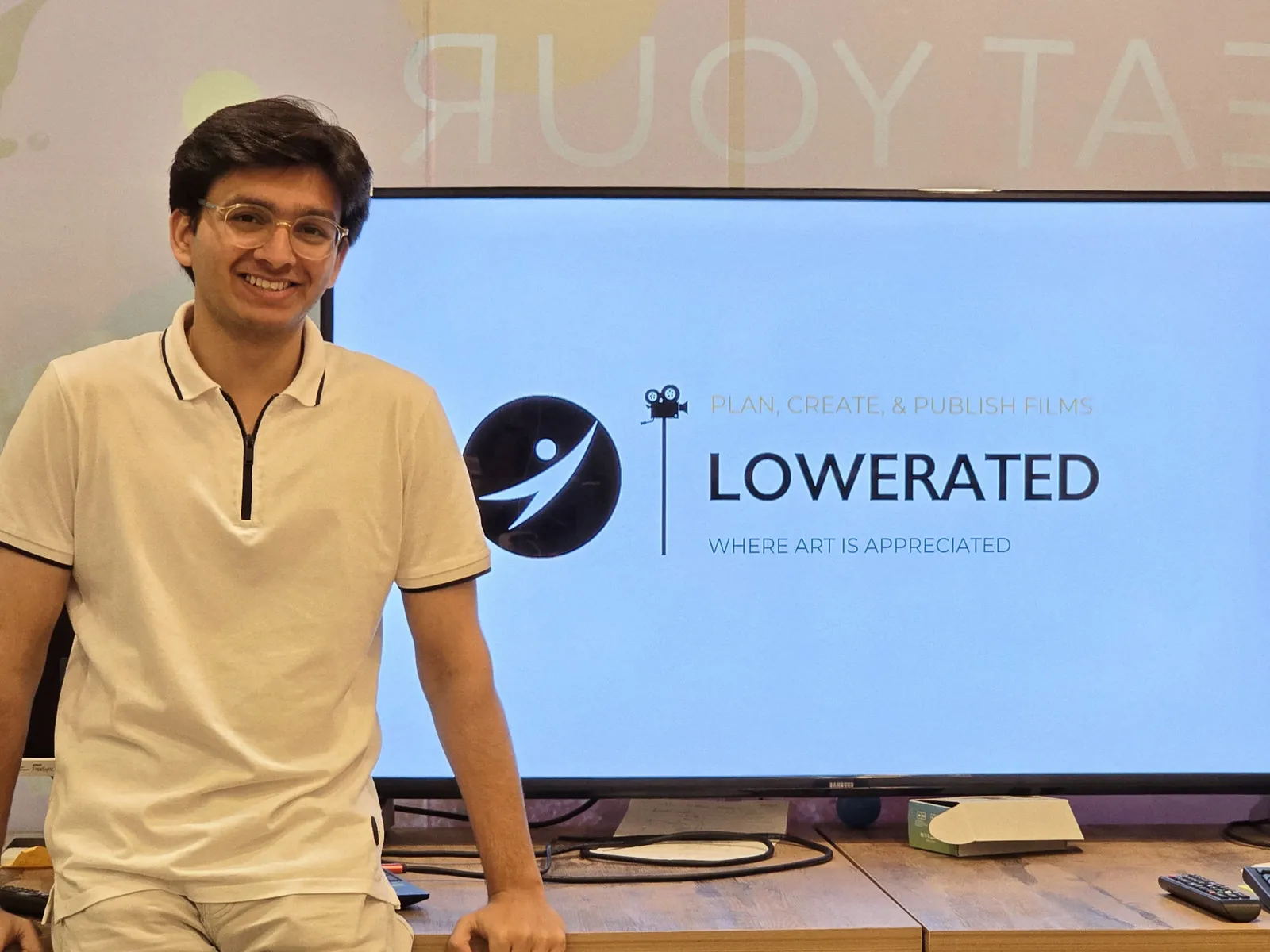
hi, i'm Wisal. i run Lowerated.
i wrote a post a while back called Why Lowerated? - June 2022. this is the part i left out.
which is mostly about how i see things. films included.
i was never the one in the room
for most of my life the world felt bigger than me.
everything around me mattered more than i did. my job, i thought, was to watch it. analyze it. stay out of it.
that sounds like a filmmaker's eye, right?
well, half of one.
a filmmaker observes, yes. but then they have to feel what the person on screen feels, closely enough to make a stranger in a dark room feel it too.
that second half, empathy, was the hard part for me. i was too far inside my own head.
films are how i've been learning it.
it started with an auto-tune app
i was 12. i found an app with auto-tune on it, recorded my voice, and it came back sounding like an actual song.
so i thought, maybe i can sing?
turns out there are exercises for that. i did them every day for about two years.
i only had a phone. barely any Wi-Fi, no laptop. so i recorded on the phone, edited on the phone, posted covers to YouTube from the phone.
people trolled me. some said i sounded like a woman.
i kept posting.
in between i built a room cooler out of a little plastic candy box, and tried to collect elements from the periodic table in one place just to see what would happen.
none of it made sense as a business. i made things because they were cool.
later i moved to a bigger city, spent my pocket money on a mic, earned my first $100 working for a friend, and bought a guitar with it.
and i think that's why i ended up in art.
it's the one place where you can make whatever comes to your mind and it still means something. nobody's building falls down because your chord was wrong.
people judge it, sure. but you can call it anything, and it's yours.
how i watch movies now
i watched about a hundred films before i felt like i had any taste.
i'm past a thousand now, i think. i stopped counting properly.
somewhere in there i stopped watching for the story alone. now i watch a film four times at once:
the characters. what do they want, and what do they hide?
the writing. what does a scene leave unsaid?
the acting. what's the face doing when nobody's talking?
the direction. why is the camera here, and why does the shot end now?
you don't need film school for this. just ask those four questions on the next film you watch, and pause it when something hits you.
a lot of films have made me cry. working out why is the homework.
the directors who changed how i see
Terrence Malick first. then Paul Thomas Anderson.
i saw cinema one way before them, and differently ever since.
i love PTA's films. Phantom Thread. There Will Be Blood.
watch the opening of There Will Be Blood.
a man alone in a silver mine. he falls, breaks his leg, drags himself out.
the first word comes about five minutes in. the next one, around fifteen.
and by then you already know exactly who Daniel Plainview is.
PTA has said he always dreamed of making a film with no dialogue, just music and pictures. that opening is the closest he got.
i like Tarantino films too. they're exciting and full of emotion.
and they're hard for a new viewer, because a new viewer tries to make logic out of everything. his films don't need to make sense that way. that's just how they are.
and that's the lesson, really. every director has their own style, and you have to watch it on its own terms.
then there's Christopher Nolan, and the way he bends time in Interstellar and Tenet.
that's something every filmmaker should study.
on Miller's planet in Interstellar, one hour down there is seven years back on Earth.
they're on the surface for about three hours.
then Cooper sits down and watches 23 years of messages from his kids, in one scene.
the physics is the setup. what you feel is a father who missed his children growing up.
that's what bending time is for.
from rating films to writing one
at university i studied data science, and Lowerated started there as a software engineering project: a site to list movies, music and books.
i spent weeks on the login page alone.
then i wrote a movie rating algorithm, LM6, and pitched it to a professor. he said there was no business in it.
i kind of despised him for that. i kept going anyway.
every month we posted five movies, five songs and one book. then we started posting movie clips, and the views went to around 100 million.
eventually i closed that chapter properly. rated 50 movies, made 50 videos, went out and asked people on the street what their favorite films were.
and then i wanted to know what it takes to actually make one.
so i wrote one. Heart of a Creator took me three months to get to a first draft, on free screenwriting software.
that's when i understood how much of filmmaking is paperwork wrapped around the art.
why i built Lowerated
i talked to more than 700 investors with no product to show them. it went about how you'd expect.
so i built the thing. first with AI help once it got good enough to write code, then with my brother Ali, on top of a full-time job.
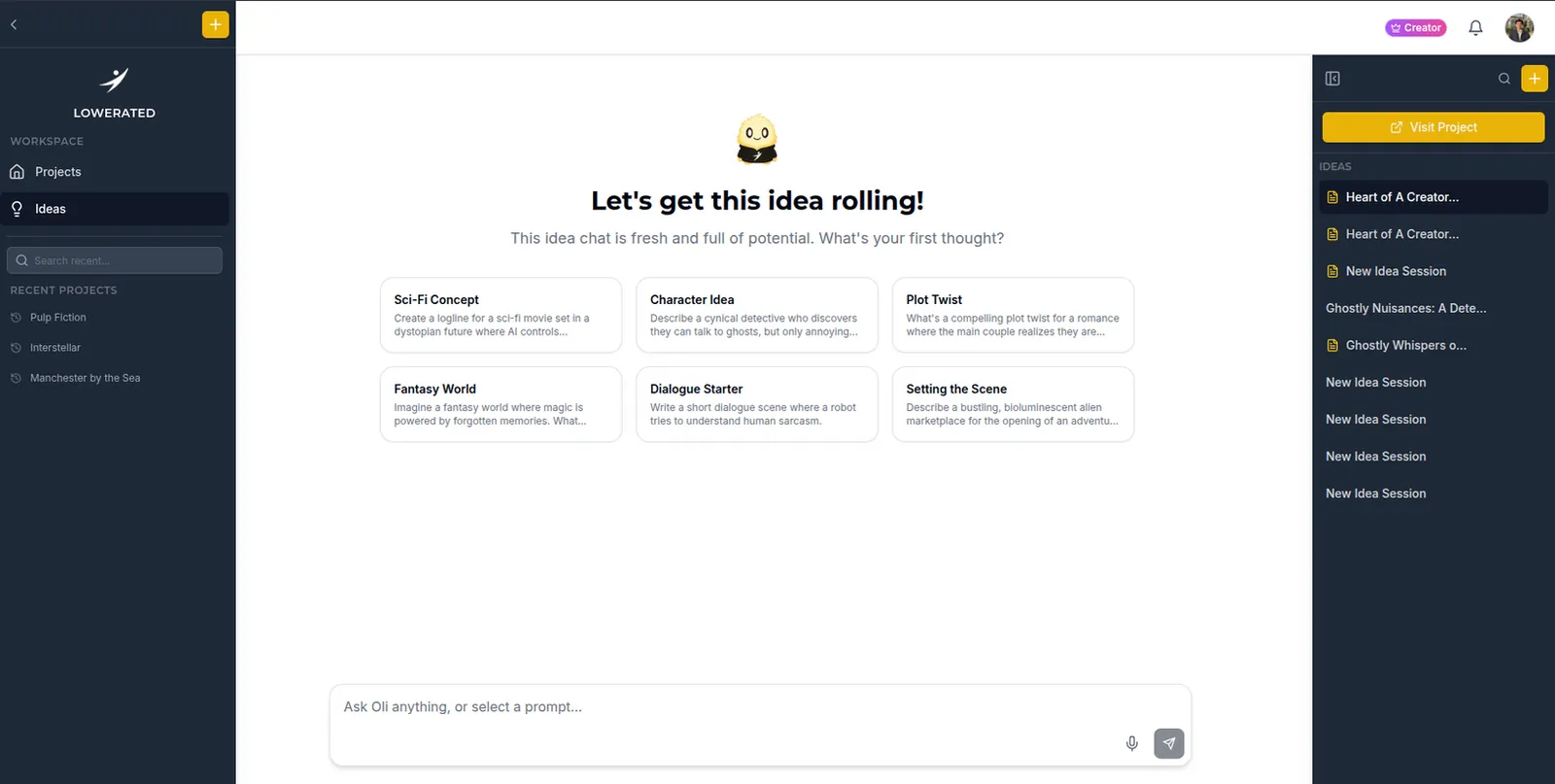
Lowerated is the planning side of a film in one place: the script, the breakdown, the schedule, the call sheets.
it's one gift i can give the film industry.
and honestly, it's also for me. i still want to make Heart of a Creator.
so, how do you watch movies like a filmmaker?
watch more than you think you need to. ask the four questions. notice when you cry, and figure out why.
idk if that makes you a filmmaker.
it made me want to be one.
see you in the next one.