How to Start a Screenplay When You Only Have an Idea


By Muhammad Wisal and Muhammad Ali / 6 min read
To start a screenplay when all you have is an idea, turn the idea into a one-sentence premise, find your main character and what they want, decide how the story ends, and outline the main beats before you write scene one. Then write a fast first draft from that outline. Each step takes a vague idea and makes it specific enough to put on the page.
What should you do first with a movie idea?
Write the idea down as a single "what if" sentence before you do anything else. An idea is usually a situation or an image ("a woman who repossesses cars"). A screenplay needs a character with a problem, so the first job is to find the person the situation happens to and what it costs them.
Ask three questions of the idea:
- Who is it about? One main character whose choices drive the story.
- What do they want? A concrete goal you could film: get the truck back, win the race, find the letter.
- What stands in the way? A person, a rule, a deadline or a flaw in the character.
If you cannot answer all three yet, keep collecting notes. Voice memos, fragments of dialogue and photos all count at this stage. If you are short on ideas to begin with, see how to come up with movie ideas.
How do you turn an idea into a premise and logline?
A premise is the idea plus a character and a conflict. A logline is that premise written as one clear sentence for someone else to read. Writing the logline early shows you whether the story has a protagonist, a goal and stakes.
| Stage | What it contains | Example |
|---|---|---|
| Idea | A situation or image | A repo agent has to take back a car from someone she knows |
| Premise | Character, situation and conflict | Corinne, a repo agent behind on rent, is assigned her brother's truck |
| Logline | One sentence with protagonist, goal, obstacle, stakes | A broke repo agent must seize her brother's truck before midnight, or lose the job that keeps her apartment |
| Ending | Where the main character lands | She takes the truck, then drives it back and leaves the keys in his mailbox |
For more on the format and dozens of examples, read how to write a logline.
Should you know the ending before you start?
Yes, at least roughly. Knowing the ending tells you what the opening has to set up. If Corinne ends by giving the truck back, the first scenes need to show how badly she needs the money, so the final choice costs her something. The ending can change in later drafts, but writing toward a known point keeps a first draft from stalling in the middle.
How do you outline before writing scenes?
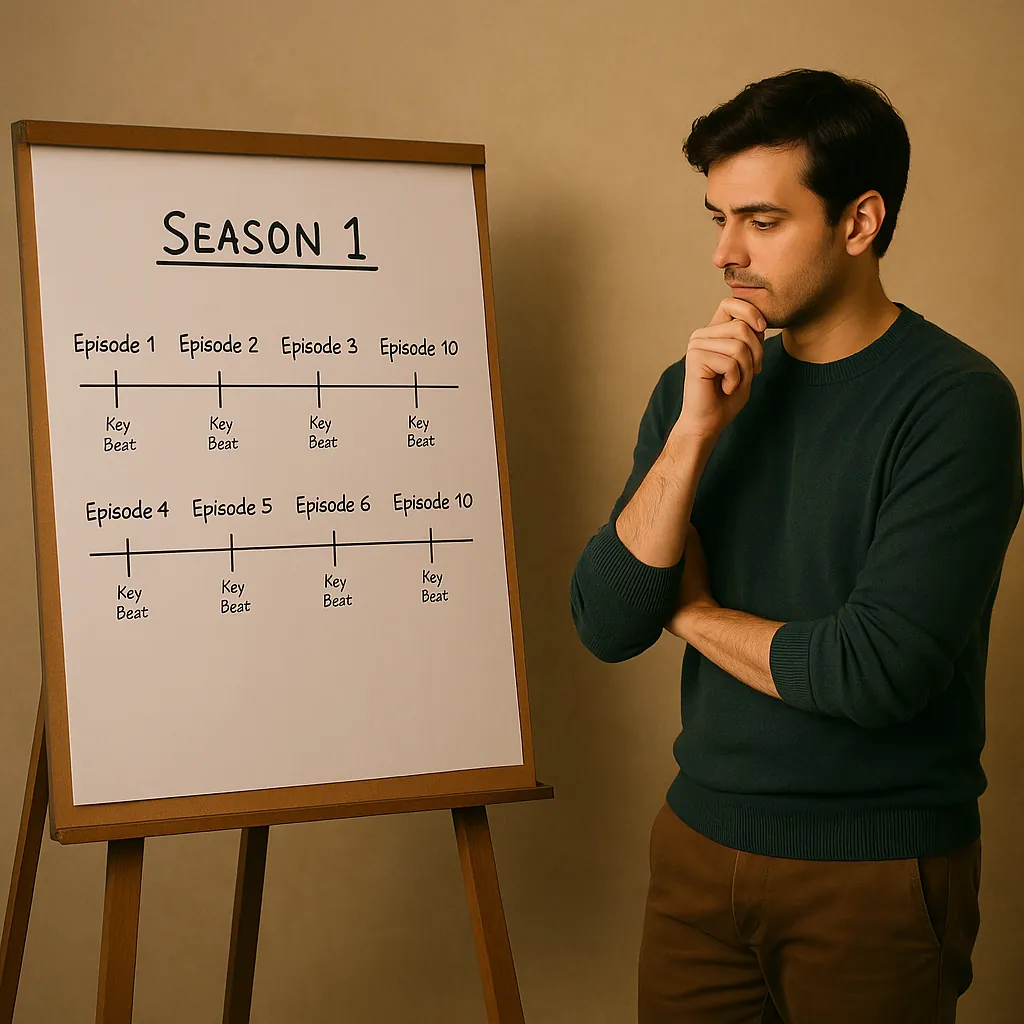
Outline by listing the key turning points first, then filling in the scenes between them. A simple outline for a feature might have eight to twelve beats. A short film might have four or five. Write each beat as one line saying what happens and what changes.
Here is a beat outline for the repo short:
- Corinne repossesses a stranger's car at dawn. She is good at the job and does not look back.
- Her landlord tapes a final notice to her door. She needs this week's bonus.
- Her boss hands her the next order: her brother Teodor's truck.
- She tries to warn Teodor. He does not pick up.
- She finds the truck outside his night job and takes it.
- Teodor runs out and sees her behind the wheel.
- She drives off, pulls over, and sits with the decision.
- She returns the truck and leaves the keys in his mailbox. Morning, she packs her apartment.
Once each beat is clear, break it into scenes. Most beats become one to three scenes. For a deeper method, see how to outline a screenplay.
How do you write the first page?
Start the first page with your main character doing something that shows who they are. Open on action, keep the description short, and get to the first line of dialogue or the first choice quickly. Do not explain backstory on page one; let the reader work it out from what the character does.
EXT. MOTEL PARKING LOT - DAWN
Frost on every windshield. CORINNE VOS (30s, work jacket, no gloves) walks the row, checking plates against her phone.
She stops at a red sedan. Slides a thin steel bar into the door. Pop.
A motel door opens. A MAN in a towel stares at her.
MAN
That's my car.CORINNE
It's the bank's car. Your stuff's in a bag by the office.
Screenplay format puts scene headings, action, character names and dialogue in fixed positions. Writing software applies it for you, but it helps to know the rules. See how to format a screenplay for margins and the title page.
How fast should you write the first draft?
Write the first draft as fast as you can without stopping to fix it. Many writers set a daily target, such as two or three pages, and only reread at the end of the week. A first draft is for finding out whether the outline works as scenes. Polishing dialogue in scene 3 before scene 30 exists usually means the draft never gets finished.
When you get stuck, go back to the outline and ask what the character wants in the scene and what stops them. If neither is clear, the beat needs work, not the sentences.
What are common mistakes when starting a screenplay?
- Starting to write scenes from the idea alone, with no main character or goal, then stalling around page 20.
- Spending weeks on world-building and backstory that never reaches the page.
- Opening with a dream, an alarm clock or a long voiceover explaining the premise.
- Rewriting the first ten pages over and over instead of reaching the end.
- Choosing a story the writer cannot afford to make, when the plan is to shoot it yourself. Keep cast, locations and night scenes in mind early.
- Losing ideas because notes live in five different apps and notebooks.
How to start a screenplay in Lowerated
Lowerated keeps the early notes and the script in the same project, so the idea stage and the writing stage stay connected.
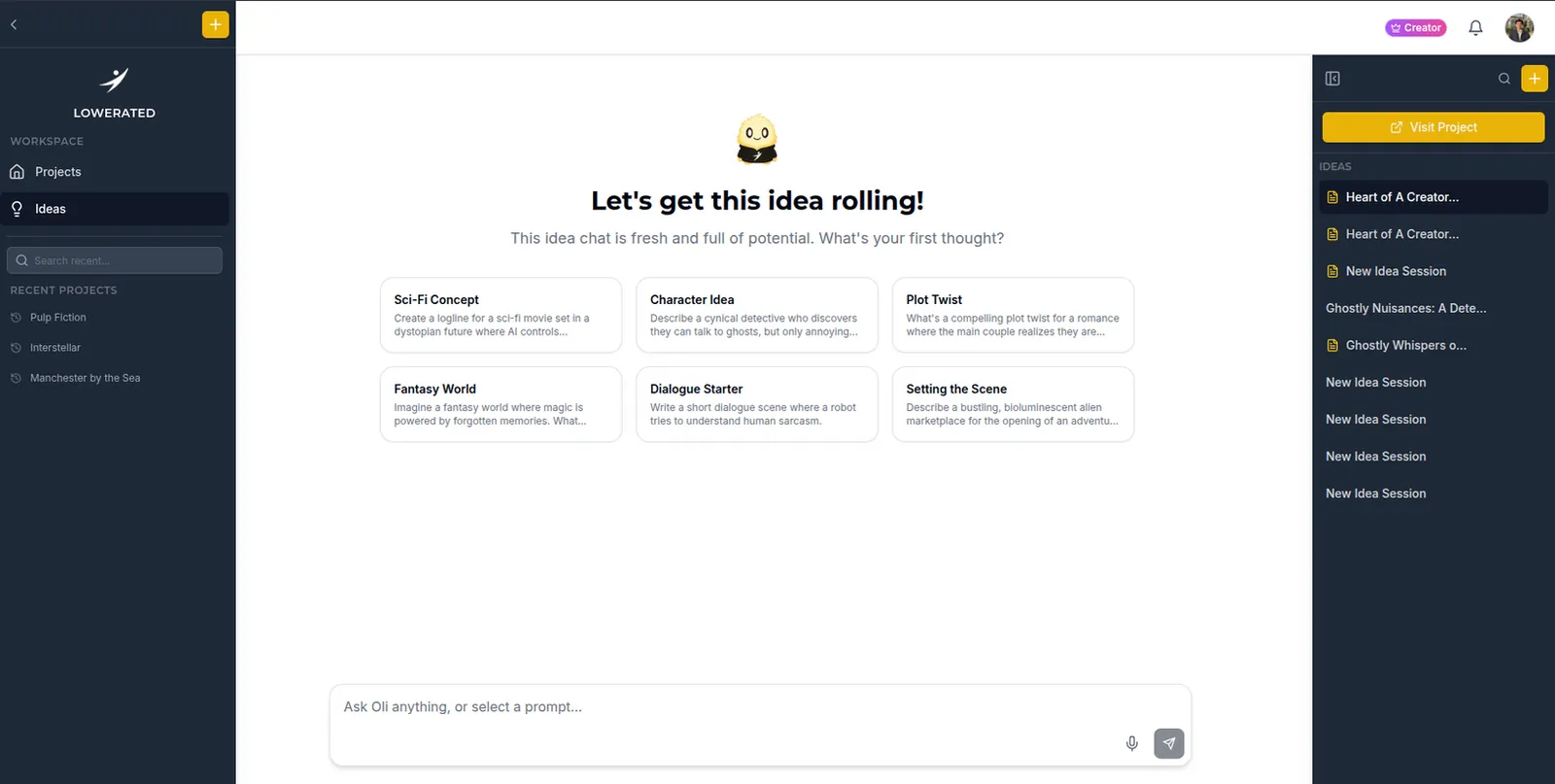
- Capture the idea in Idea Chat. Record a voice note when the idea comes to you. It is transcribed into Idea Chat, where you can keep adding notes, lines and questions.
- Shape the premise and beats. Use the chat notes to write your premise, logline, ending and beat list.
- Open the Scriptwriter and write. Formatting is applied as you type, so scene headings, action and dialogue land in the right place.
- Ask Oli when a line is not working. Select the line, ask Oli for a rewrite, and keep it only if you accept it.
The recording shows a voice note being sent to Idea Chat and turned into text.
The clip shows Oli working inside the screenplay editor while you write.
You can read more on the Scriptwriter page.
FAQ
How long does it take to start a screenplay from an idea?
It varies by writer. Getting from idea to logline, ending and beat outline often takes a few days to a few weeks. The draft comes after that.
Do I need to outline, or can I just write?
Some writers discover the story as they draft. Even then, a short list of beats and a known ending help most people finish a first draft.
Should I write a short film or a feature first?
A short film of 5 to 15 pages lets you finish a full story quickly and learn format. Many writers start there before a feature.
What if my idea is similar to an existing film?
Most ideas resemble something. Make it yours through the specific character, setting and ending you choose.
Key takeaways
- Turn the idea into a premise: one character, one goal, one obstacle.
- Write a logline and decide the ending before you write scenes.
- Outline the beats, then break each beat into scenes.
- Open page one on action that shows who your main character is.
- Write the first draft fast and fix it in rewrites.