How to Outline a Screenplay


By Muhammad Wisal and Muhammad Ali / 6 min read
To outline a screenplay, start with a logline, decide your ending and main turning points, group the story into sequences, then list every scene in order with one or two lines on what happens and what changes. Test the outline by reading it straight through before you write any pages. A feature outline usually ends up as a list of 40 to 70 scenes.
What is a screenplay outline?
A screenplay outline is a scene-by-scene plan of your story, written in plain sentences instead of script format. It shows what happens, in what order, and why each scene is there. Writers use it to fix structure problems while they are still cheap, since moving a line in an outline takes seconds and moving a scene in a draft can take days.
Outlines come in a few forms, and many writers move through them in order:
| Type | What it looks like | When to use it |
|---|---|---|
| Beat outline | 10 to 20 major story moments, one line each | First, to lock the shape of the story |
| Index cards | One card per scene, pinned or laid out so you can move them | When you are still testing scene order |
| Step outline | A numbered list of every scene with a short paragraph each | Right before drafting |
| Treatment | The story told in prose, present tense, often 3 to 15 pages | When a producer or funder needs to read the story |
A treatment is written for other readers. An outline is mostly for you. For the prose version, see how to write a film treatment.
Should you outline a screenplay at all?
Most professional screenwriters outline, partly because producers and studios often ask to see one before a draft. Some writers prefer to discover the story by drafting. Even they usually outline afterward, to see what they wrote and fix it in the rewrite. If you are writing a feature for the first time, outlining saves the most time, because the usual first-draft problem (a story that stalls in the middle) shows up clearly in a list of scenes.
How do you outline a screenplay step by step?
- Write the logline. One sentence with the main character, the goal, the obstacle and the stakes. If you cannot write it, the story is not clear yet. See how to write a logline.
- Decide the ending. Know the final image and how the central question is answered. Every earlier scene can then set it up.
- Mark the big turning points. Inciting incident, first act break, midpoint, second act break and climax. These are the load-bearing walls. The guide to three-act structure explains where they usually fall.
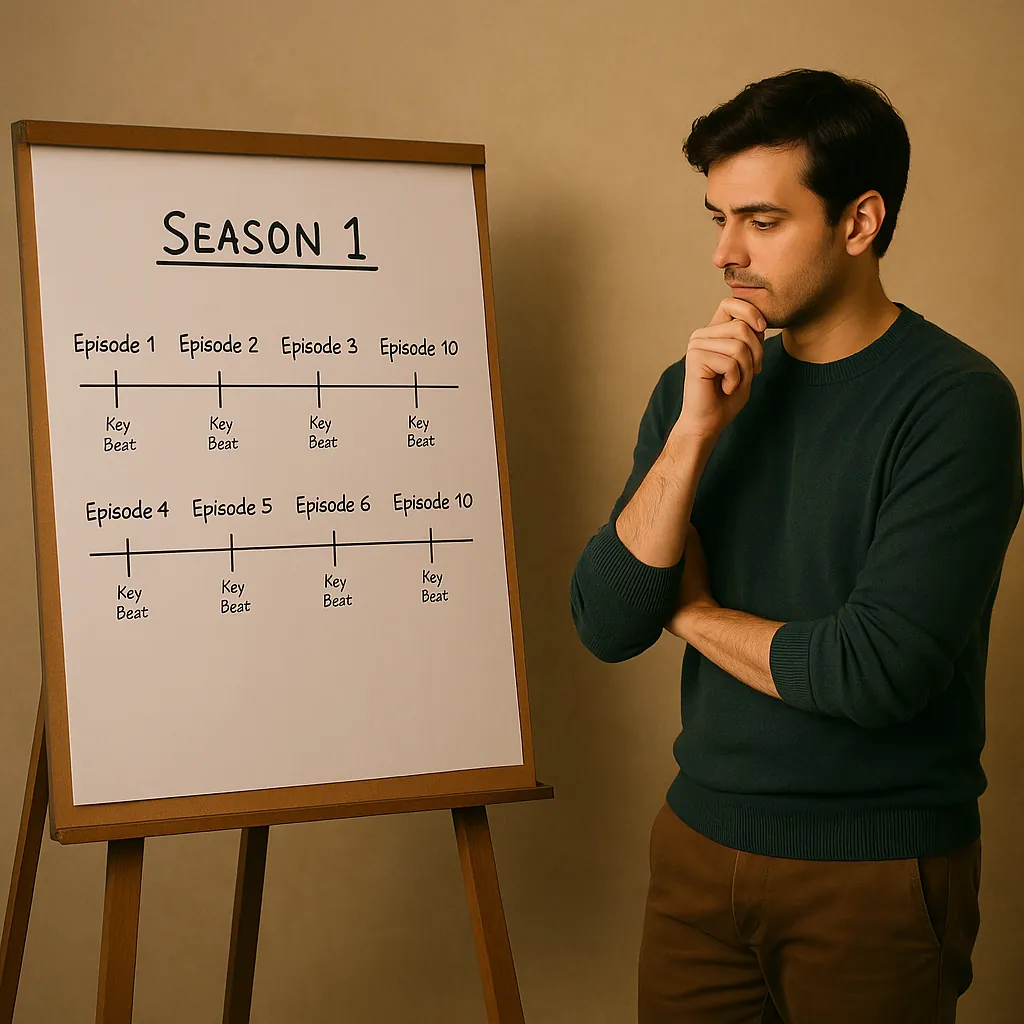
- Break the story into sequences. A sequence is a group of scenes with one mini-goal, often 10 to 15 pages. Many features have about eight. Sequences make Act Two easier to manage than one 55 page block.
- List the scenes inside each sequence. One line per scene: where it is, who is there, what happens. Do not worry about dialogue.
- Add the turn to each scene. Write what changes by the end of the scene. If nothing changes, cut or merge it.
- Track subplots. Color or label scenes by storyline (main plot, relationship, antagonist) and check each one is set up, developed and paid off.
- Read it straight through. Read the outline in one sitting, or out loud to someone. Gaps in logic, repeated beats and a slow middle are easy to spot at this stage.
- Write the first draft from the outline. Treat it as a map. If a better idea appears while drafting, update the outline so it stays useful for the rewrite.
What does a screenplay outline look like?
Here is part of a step outline for an invented thriller, "Room 1208". Odile works the night desk at an airport hotel. A guest checks in, leaves his passport at the desk and is never seen again.
| # | Scene | What happens | What changes |
|---|---|---|---|
| 1 | INT. HOTEL LOBBY - NIGHT | Odile handles three difficult guests on autopilot. A quiet man in a wet coat checks in to 1208 and pays cash. | We see her routine and how invisible she is. |
| 2 | INT. BACK OFFICE - NIGHT | Odile's manager, Brandt, tells her the night desk is being cut to one person. She will be alone from next week. | Her job is at risk. She needs to look reliable. |
| 3 | INT. HOTEL LOBBY - LATER | The man returns, slides his passport across the desk and asks her to keep it "until someone asks for it". He leaves through the side door. | Inciting incident. She now holds something she should report. |
| 4 | INT. ROOM 1208 - NIGHT | A noise complaint. Odile finds the room empty, bed untouched, the window unlatched. | The guest is gone. Reporting it means admitting she took the passport. |
| 5 | INT. HOTEL LOBBY - DAWN | Two men in suits ask for the guest in 1208 by a different name. Odile says she has never seen him. | First lie. She is now inside the story. |
Each row has a turn, and each turn pushes the next scene. That chain of cause and effect is what you are checking for.
How long should a screenplay outline be?
As long as it needs to be for you to start writing with confidence. A beat outline can fit on one page. A step outline for a feature often runs 5 to 20 pages. Some writers outline in great detail, with lines of dialogue, so drafting goes fast. Others keep it to one line per scene. If a producer asks for an outline, ask how long they want it, since expectations vary.
What are common outlining mistakes?
- Outlining only Act One in detail. The setup gets ten scenes and the second half gets three vague lines. The middle is where you need the most planning.
- Scenes with no turn. "They talk about the plan" is a topic. Write what changes.
- Connecting scenes with "and then". Scenes should link by "but" or "so", meaning conflict or consequence.
- Polishing the outline forever. An outline is a working document. When the turning points hold up, start drafting.
- Ignoring it once drafting begins. If the draft changes the story, update the outline so you can see the new shape.
How does an outline connect to the rest of the process?
The outline sits between the idea and the first draft. The logline and a beat sheet come before it, and the draft comes after. Later, the scene list in your outline becomes the scene list a producer uses for the breakdown and schedule, so clear scene headings now save work in pre-production.
Outlining a screenplay with Lowerated
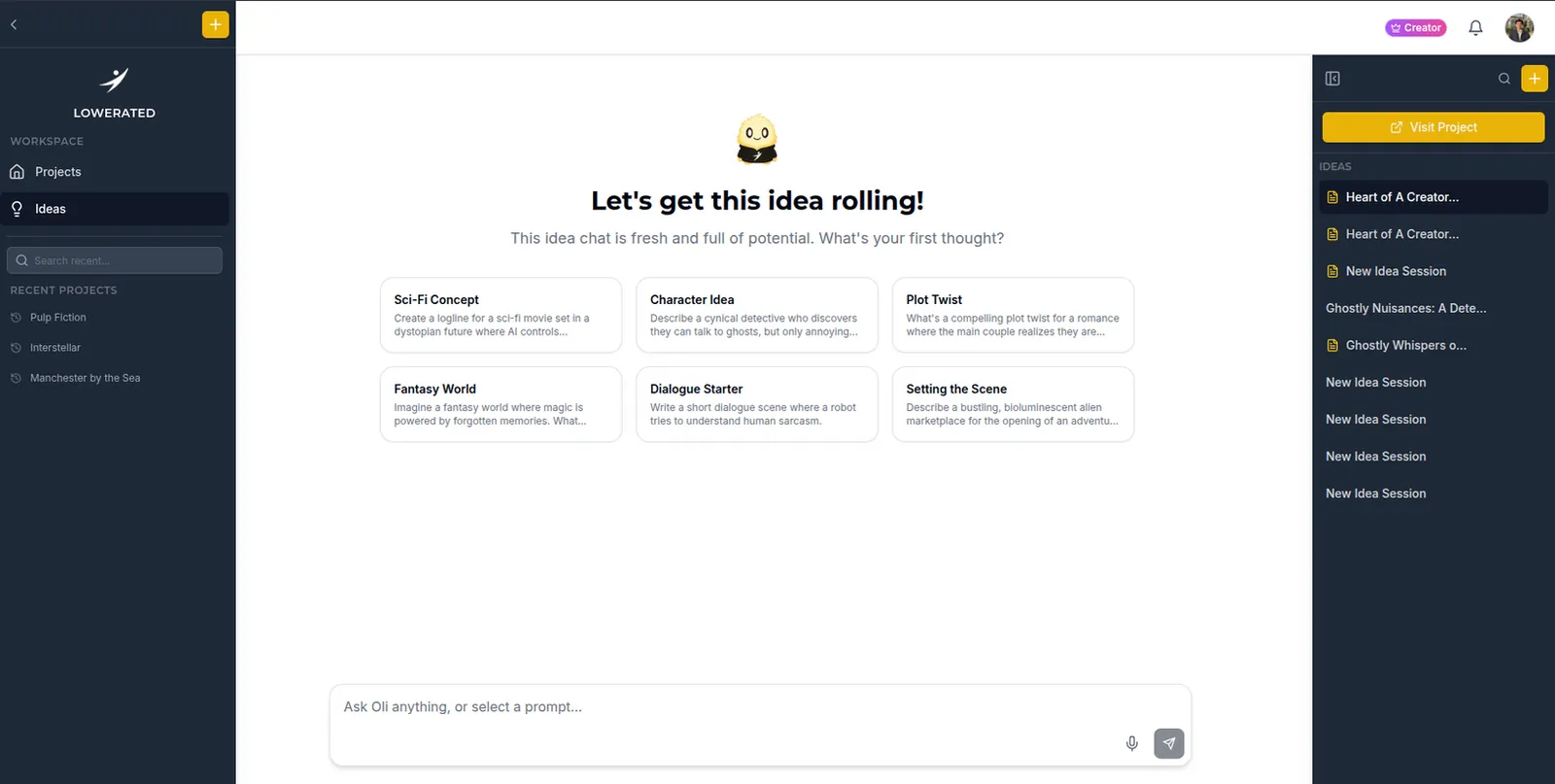
Outlines often start as loose thoughts: a scene idea on a walk, a twist that arrives in the car. In Lowerated you can record a voice note and it is transcribed into Idea Chat, so those ideas land in the same project as your script.
The recording shows a voice note sent to Idea Chat and transcribed into the project.
When the outline is ready, you draft in the Scriptwriter in the same project. If you are still at the idea stage, read how to start a screenplay when you only have an idea.
FAQ
What is the difference between an outline and a treatment?
An outline is a scene-by-scene plan, usually in short lines. A treatment tells the story in readable prose for producers or funders.
How many scenes are in a feature screenplay?
It varies widely, but many features land between 40 and 70 scenes. Dialogue-heavy dramas tend to have fewer, longer scenes than action films.
Should I write dialogue in my outline?
Only a line you do not want to lose. Outlines work best when they focus on what happens and what changes.
Can I outline a short film?
Yes. A short might need only five to ten lines. The test is the same: every scene should move the story.
Key takeaways
- An outline is a scene-by-scene plan in plain sentences, made before the draft.
- Start with the logline, the ending and the turning points, then fill in sequences and scenes.
- Write what changes in every scene, and link scenes by "but" and "so".
- Give the second act the most planning, since that is where drafts stall.
- Keep the outline updated as the draft changes it.