How to Write Better Dialogue


By Muhammad Wisal and Muhammad Ali / 6 min read
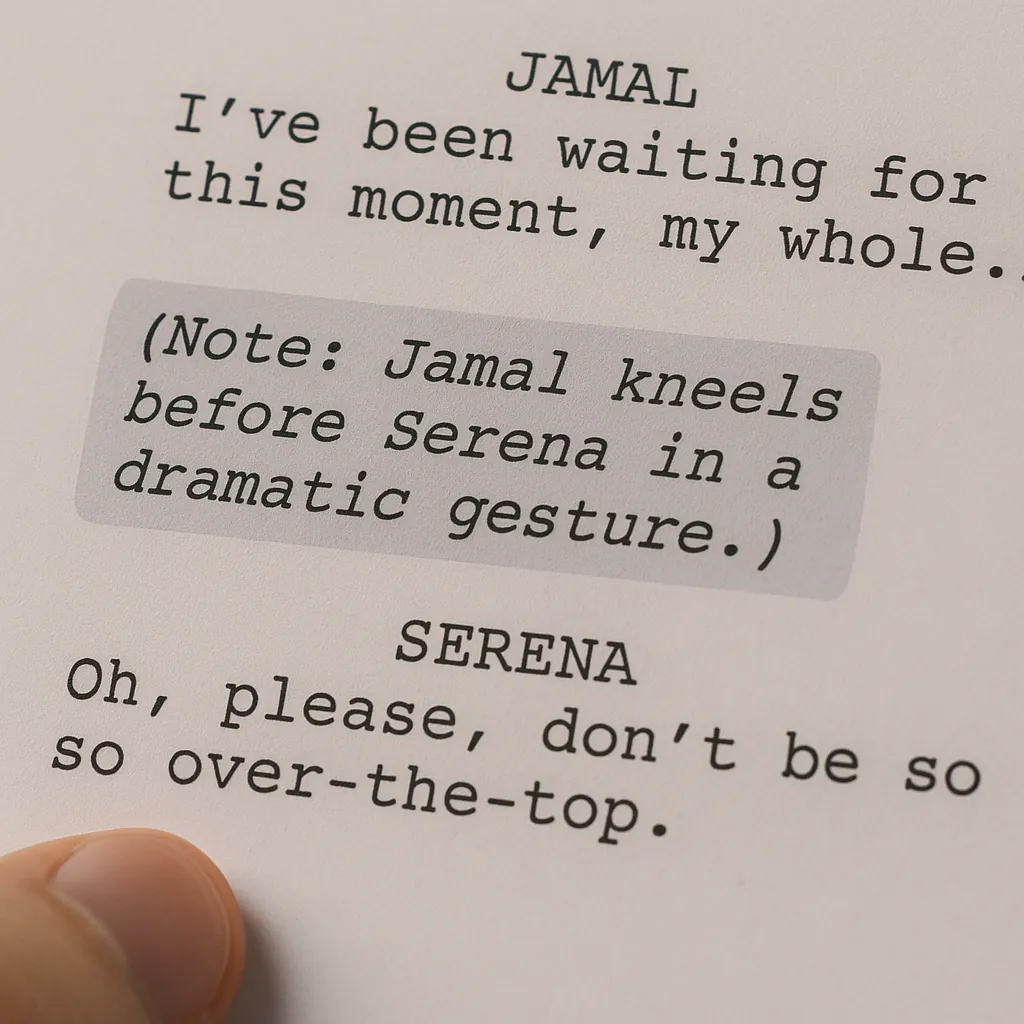
To write better dialogue, give every character a goal in the conversation, let them pursue it indirectly, and cut any line that only delivers information. Good dialogue sounds like speech but is tighter than real speech: no greetings, few complete explanations, and lots of things left unsaid. Then read it aloud, because your ear will catch what your eye misses.
What makes good dialogue in a screenplay?
Good dialogue does at least two jobs at once: it moves the scene forward and shows who the characters are. A line that only gives the audience a fact is doing one job, and it usually sounds like it. The best lines also carry conflict, because each character wants something from the other.
Screen dialogue is also short. Actors, the camera and the edit do much of the work, so a look can replace a sentence. Many screenwriters aim to keep most speeches to a few lines and save long speeches for moments that have earned them.
What are the most common dialogue problems, and how do you fix them?
Most weak dialogue falls into a few patterns. Here they are with examples and fixes.
| Problem | Weak line | Fix |
|---|---|---|
| On the nose: the character says exactly what they feel | "I'm jealous that you got the promotion instead of me." | "Congratulations. They must really like you upstairs." |
| As-you-know exposition: telling someone what they already know | "As you know, we've been married for ten years." | Show it in behavior, or let it slip in an argument: "Ten years and you still buy me lilies." |
| Greetings and small talk | "Hi." "Hi, how are you?" "Good, you?" | Start after the hellos, mid-conversation. |
| Everyone sounds the same | Two characters with the same vocabulary and rhythm | Change word choice, sentence length and what each one avoids saying. |
| Characters answer every question | "Where were you?" "At the bar with Theo." | "Where were you?" "Did you feed the dog?" |
| Speeches that repeat the point | A paragraph that says the same thing three ways | Keep the strongest sentence and cut the rest. |
| Name-checking | "Listen, Harold. I know, Harold." | People rarely use names in conversation. Cut most of them. |
How do you write dialogue step by step?
- Know what each character wants in the scene. Write it down before the first line. Dialogue is people using words to get something. See how to write a scene for setting the goal.
- Decide what they will not say. The thing a character avoids is often more important than what they say. This is subtext. Read subtext in screenwriting for exercises.
- Draft fast. Write the conversation without stopping to polish. Getting the shape down matters more than perfect lines.
- Cut the top and bottom. Remove greetings, goodbyes and lines that summarize what just happened.
- Turn statements into tactics. Replace explanations with what the character does to get their way: a joke, a deflection, a threat, a favor.
- Give each voice a fingerprint. One character uses short sentences, another hedges, another asks questions. Cover the names and check whether you can tell who is speaking.
- Trim every line. Cut filler words, then see if the line still works without its first or last few words.
- Read it aloud, or have actors read it. Stumbles, repeated rhythms and lines no one would say jump out when heard.
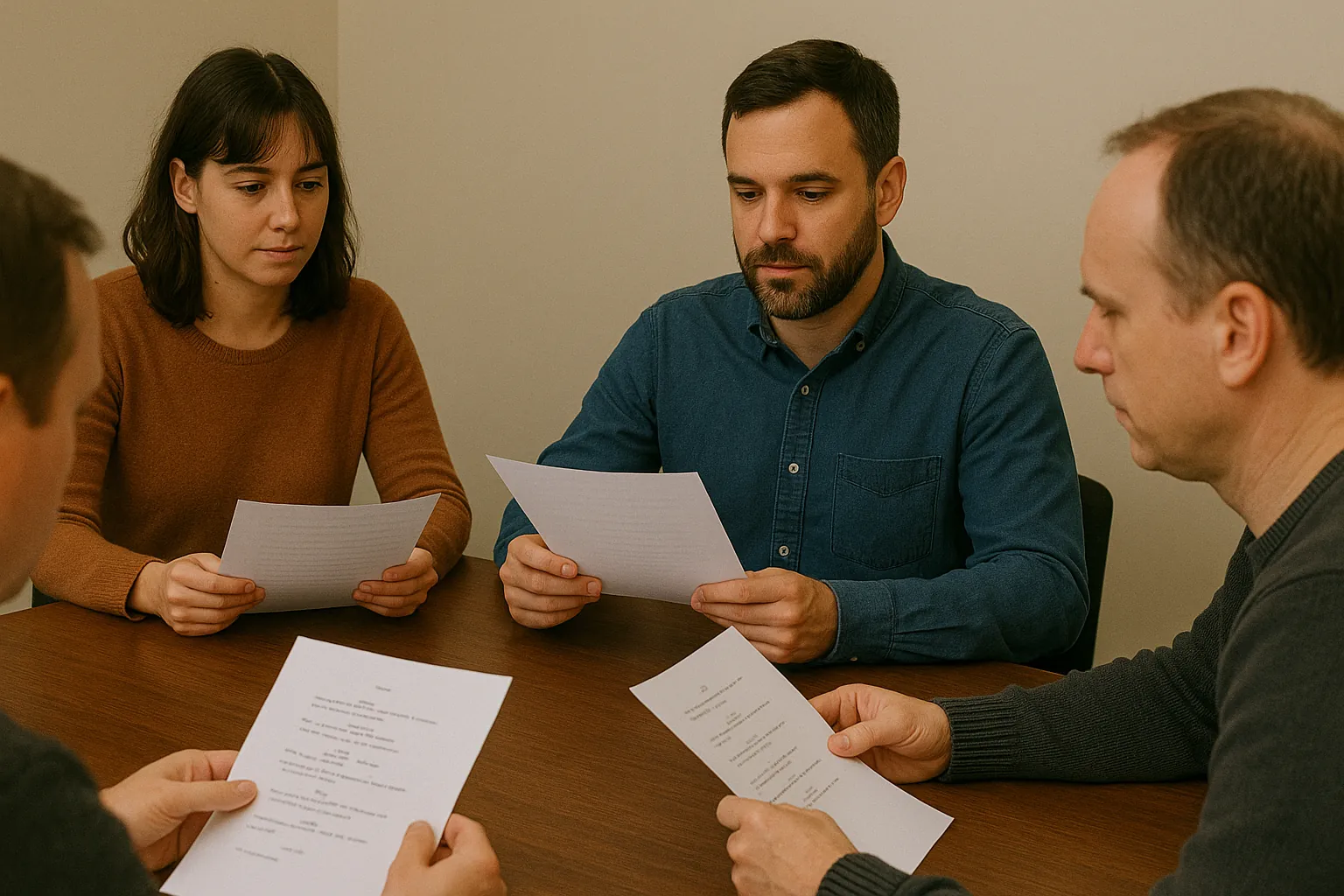
A table read is the formal version of reading aloud. The guide on how to run a table read covers how to set one up.
What does a dialogue rewrite look like?
Here is a first draft from an invented drama. Pell, a night-shift nurse, comes home at 7 AM. Her son Kip, 17, needs the car for a job interview, and she needs it to get back to work tonight.
KIP: Hi, Mom. How was work?
PELL: Tiring. I worked a twelve-hour shift.
KIP: I have a job interview today at 10 and I need to borrow the car. I know you need it tonight for your shift, but I really want this job because we need the money.
PELL: I'm worried you won't get it back in time, and I feel like you don't respect how hard I work.
Every line is clear, and none of it sounds human. Kip explains his whole case and Pell names her feelings. Here is the rewrite:
Pell drops her keys in the bowl. Kip is at the table in a shirt that still has the fold marks in it.
PELL: Who died?
KIP: Interview. Ten o'clock. Harmon's Hardware.
PELL: Bus goes right past Harmon's.
KIP: Bus gets there at ten fifteen.
She looks at the shirt. Then at the keys.
PELL: Tank's on empty.
KIP: I've got twelve dollars.
PELL: (picks up the keys, holds them out, does not let go) Back by five.
Pell never says she is tired or proud, and Kip never says why he wants the job. The joke, the bus, the gas and the grip on the keys carry all of it. The parenthetical is used once, for an action the line depends on. For when to use them, see the entry on parentheticals.
(In a real script, character names sit centered above their lines and parentheticals sit on their own line. They are shown inline here to save space.)
How do you write exposition in dialogue?
Give the information to a character who needs it, or let it come out under pressure. A detective asking questions, a new employee being trained, or two people arguing about the past all have a reason to state facts. Release only what the audience needs for the next scene, and hold the rest back. Information people have to wait for is more interesting than information handed over.
What are common dialogue mistakes?
- Writing dialogue that reads well on the page but is hard to say out loud.
- Heavy phonetic spelling of accents, which is hard to read. Note the accent once and let the actor handle it.
- Too many parentheticals telling the actor how to read every line.
- Every character being witty in the same way, which usually sounds like the writer.
- Characters who explain the theme of the film out loud.
- Using dialogue to describe what the audience can already see.
Rewriting dialogue line by line in Lowerated
When one line is stuck, select it in Lowerated's Scriptwriter and ask Oli, the AI writing partner, to rewrite it. Oli rewrites only the line you select, and nothing changes in your script until you accept. If you do not accept, your original line stays, and a rewrite you reject can still give you a starting point for your own version.
The recording shows Oli rewriting a single selected line, with the change applied only after it is accepted.
The clip shows line-by-line rewrites inside the script editor.
FAQ
Should screenplay dialogue sound like real speech?
It should feel real, but real speech is full of filler and repetition. Keep the rhythm of speech and cut the padding.
How long should a line of dialogue be?
Most lines work best at one to three sentences. Longer speeches need a strong reason, such as a confession or a turning point.
How do I give characters distinct voices?
Vary vocabulary, sentence length, what each character jokes about and what they avoid. Their background and what they want shape all of these.
Is it okay to use slang and swearing?
Yes, if it fits the character. Use it as part of the voice, and avoid slang that will date the script quickly unless that is the point.
Key takeaways
- Give each character a goal in the conversation and let them pursue it indirectly.
- Cut greetings, summaries and lines that only deliver facts.
- Let characters deflect, dodge and leave things unsaid.
- Give each character a distinct way of speaking.
- Read your dialogue aloud before you call it done.