Location Release Forms: What to Include


By Muhammad Wisal and Muhammad Ali / 6 min read
A location release form is a written agreement in which a property owner gives a production permission to film on their property and to use that footage in the finished film. It should name the property and the owner, list the dates and hours, describe which areas you can use, state any fee, and set out who is responsible for damage, insurance and restoring the property afterward. Have the person with legal authority over the property sign it before you shoot.
This page is general information. It is not legal advice. Release wording and requirements vary by country and by production, so have a lawyer review your form, especially if you plan to sell or distribute the film.
What is a location release form?
A location release form (also called a location agreement or location contract) is the document that turns "sure, you can shoot at my place" into permission you can rely on. It covers two things. First, access: when you can be there, which rooms or areas you can use and what you can do to them. Second, rights: permission to show the property in the film and in its marketing, without the owner later asking you to remove it.
A location release is a private agreement with an owner. It does not replace a public film permit, which you may still need if your shoot uses streets, sidewalks or other public space around the property.
When do you need a location release?
You need a location release any time you film on property you do not own and the footage will be used in a film you plan to show. That includes a friend's apartment, a cafe, a shop, a farm or an office. Productions get them even for small shorts, because festivals, distributors and insurers may ask whether your locations were cleared.
Get one even when you have permission in a message. A text saying "fine by me" rarely covers the dates, the areas, damage or the right to use the footage.
Who should sign a location release?
The person with legal authority to grant access to the property should sign. For a house, that is usually the owner. For a rented apartment, the tenant may need the landlord's consent too, depending on the lease. For a business, it is the owner or a manager authorized to sign for the company, not a staff member on shift. If you are unsure who has authority, ask, and get it confirmed in writing.
What should a location release form include?
Use this as a checklist. Each row is a clause most location releases cover, with a plain example of what it says.
| Clause | What it covers | Example |
|---|---|---|
| Parties | Production company and property owner, with contact details | Quill Lane Films and Harriet Osei, owner |
| Property | Full address and a description of the property | 14 Birch Road, single-family house and back garden |
| Dates and hours | Prep, shoot and wrap days, with start and end times | Prep 2 May, shoot 3 to 4 May, 7:00 AM to 9:00 PM |
| Areas permitted | Which rooms or areas you may use, and any that are off limits | Kitchen, living room, garden. Bedrooms off limits |
| Changes to the property | Whether you may move furniture, repaint or dress the set | Furniture may be moved and must be returned |
| Fee | Amount, what it covers and when it is paid | Flat fee for all days, paid on the first shoot day |
| Rights granted | Permission to film the property and use the footage in the film and its promotion | Footage may be used in the film, trailers and stills in any media |
| Name and address | Whether the real name or address may appear on screen | House number will not be shown |
| Damage and restoration | Who pays for damage and the condition the property must be returned in | Property returned in original condition. Damage repaired at production's cost |
| Insurance | Production insurance covering the location | Certificate of insurance provided before the shoot |
| Utilities and parking | Use of power, water, bathrooms and parking | Use of kitchen power and one bathroom. Crew parks on street |
| Rescheduling | What happens if dates move because of weather or illness | Up to two rain days by mutual agreement |
| No obligation to use | The production does not have to include the footage | Production may cut the location from the film |
| Signatures | Signed and dated by both sides | Owner and producer, with printed names and date |
For insurance requirements, see production insurance for indie films.
A sample location release, filled in
Here is how the key details might read for a two-day shoot on a short called "Salt Hour," set in a seaside guesthouse.
Location: The Gull Guesthouse, 3 Harbor Row (ground floor lounge, breakfast room and front porch only).
Owner: Bram Kestel, who confirms he owns the property and has authority to sign.
Production: Tidewater Pictures, producer contact on file.
Dates: 10 and 11 June, 8:00 AM to 8:00 PM, with load-in from 7:00 AM.
Use: The production may film the listed areas and use the footage in the film "Salt Hour" and its promotion. The guesthouse name will be covered or changed on screen.
Fee: Agreed flat fee, paid on 10 June.
Care of property: Furniture moved for filming will be returned. Any damage will be repaired at the production's cost. A certificate of insurance will be provided by 3 June.
Before and after the shoot, take dated photos of every area you use. They settle most arguments about damage.
How do you get a location release signed?
- Scout and agree the basics. Visit the location, agree dates, areas and fee in conversation. See location scouting.
- Confirm who has authority. Check the signer is the owner or someone authorized to sign.
- Send the form early. Give the owner time to read it. Explain any clause they ask about in plain words.
- Attach insurance. Provide the certificate if your agreement requires it.
- Get it signed before the shoot. Keep a copy with the producer and the location manager.
- Update it if anything changes. New dates or extra rooms should be added in writing.
Common location release mistakes
- Getting a signature from someone without authority, such as a tenant or an employee.
- Leaving out prep and wrap days, so the crew has no right to be there during load-in.
- Forgetting the rights clause, so permission to be there does not clearly include using the footage.
- Not mentioning signage, artwork or logos on the property, which may need separate clearance.
- Skipping before and after photos.
- Mixing up location releases with talent releases. People who appear on camera need their own talent release.
Handling releases and locations in Lowerated
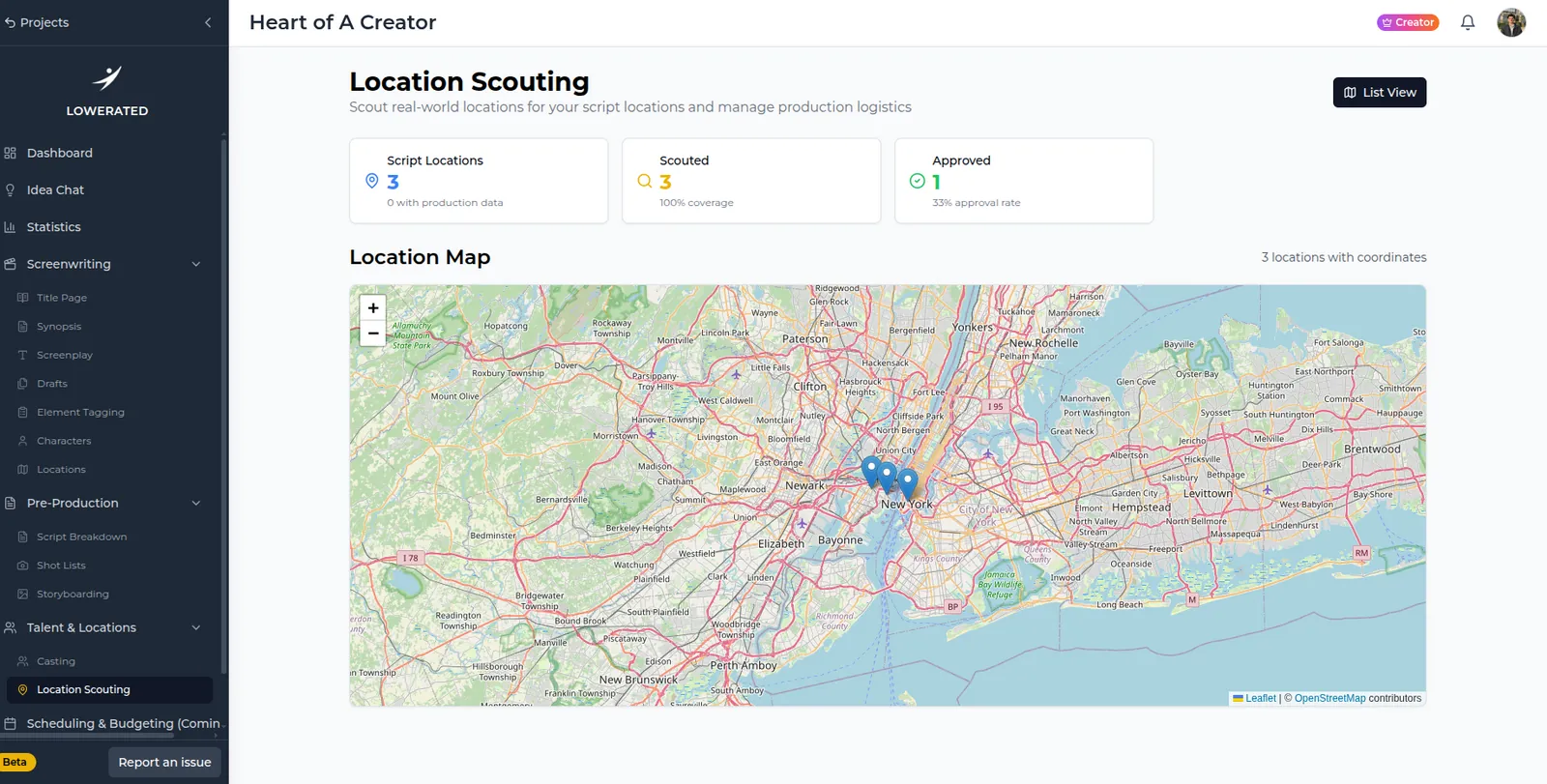
In Lowerated, releases are signed online, so you are not chasing paper on the shoot day, and each location is stored with its photos and the scenes that happen there. Keep each location's details together with the agreement terms you settled on, so the producer and the 1st AD work from the same information.
The clip shows release forms signed online in Lowerated, using a talent release as the example.
FAQ
Is a verbal agreement enough to film at a location?
It is risky. A signed release records the dates, areas, fee and rights, and gives you something to show festivals, distributors or insurers if they ask.
Do I need a location release for a public street?
Public streets usually fall under film permits from the local authority instead. If you film a private building from the street and it is clearly identifiable, some productions also get a release from the owner. Ask a lawyer if you are unsure.
Do I have to pay for a location?
Not always. Some owners agree for free or for a credit, but the release should still state that no fee is due.
Can I use a free template?
A template is a good starting point. Adapt it to your shoot, and have a lawyer review it if the film will be sold or distributed.
Key takeaways
- A location release gives you permission to film on a property and to use the footage.
- The signer must have legal authority over the property.
- Include dates and hours, areas, fee, rights, damage, insurance and restoration terms.
- Photograph the location before and after the shoot.
- A location release does not replace a film permit or a talent release.