
How a Filmmakers Community Platform Helps You Build the Right Film Crew


By Muhammad Wisal and Muhammad Ali / 8 min read

Having a great film idea is exciting. Building the team needed to turn that idea into a finished film is where things become difficult.
A filmmaker may know exactly what story they want to tell but still struggle to find a cinematographer who understands the visual style, an editor who fits the project's rhythm, actors who suit the characters, or a producer who can help manage the practical side of production.
This is especially challenging for independent filmmakers and first-time creators who do not already have a large professional network.
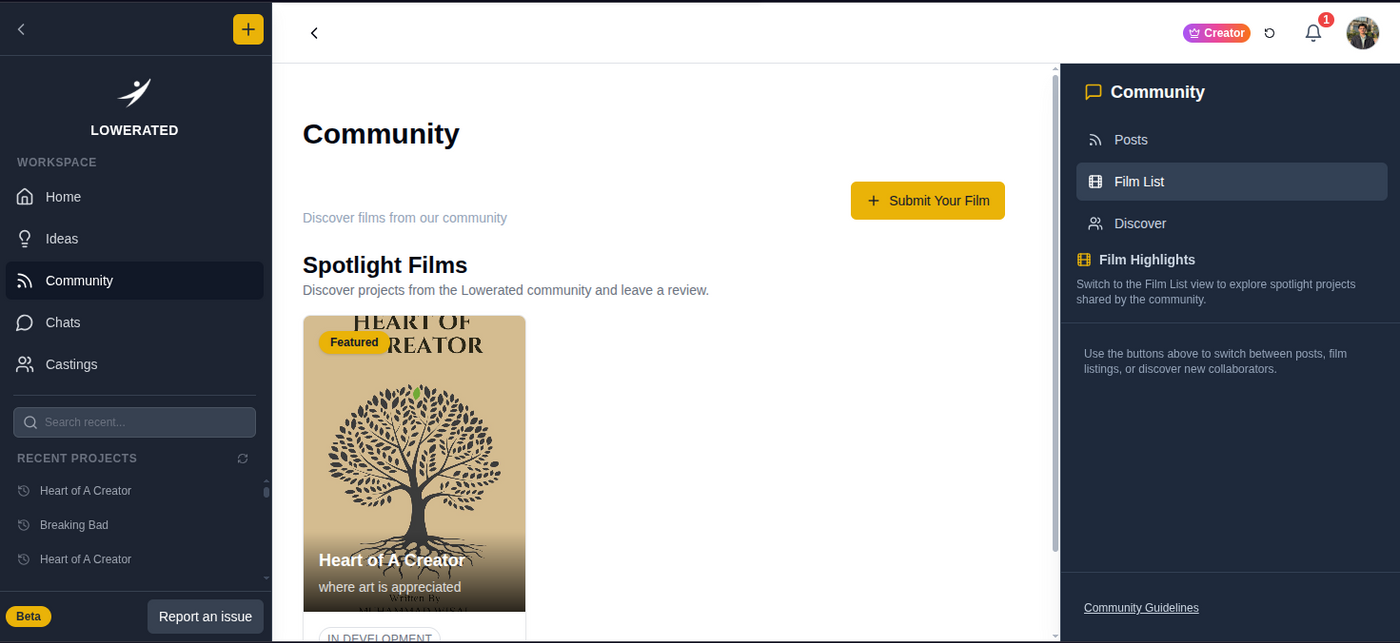
A Filmmakers Community Platform can help solve that problem by making it easier to discover people with complementary skills, communicate around projects, and develop creative relationships. But finding people is only the beginning. The real goal is finding the right people for the specific film.
That requires a better approach to collaboration, casting, planning, and communication.
Why Building a Film Crew Is Harder Than It Looks
A film crew is not simply a list of people who know how to make movies. Every project has different creative and practical requirements.
A small documentary may need a director, producer, camera operator, sound recordist, and editor. A narrative short may require actors, a cinematographer, production designer, makeup artist, assistant director, sound team, and post-production specialists.
The challenge becomes greater when filmmakers are working remotely or starting without industry connections.
Common problems include:
- Not knowing where to find reliable collaborators
- Choosing people based only on availability
- Difficulty comparing portfolios
- Unclear communication about responsibilities
- Scheduling conflicts
- Limited budgets
- Finding actors who fit the characters
- Losing important project information across different apps
- Bringing people onto a project before the story and requirements are clear
The solution is not simply to find more people.
The solution is to build a crew based on what the film actually needs.
Start With the Film, Not the Crew
Before searching for collaborators, understand the project.
This is one of the most overlooked parts of Pre-production Filmmaking. Filmmakers sometimes start contacting people before they have clearly defined the story, visual direction, shooting requirements, or budget.

That can create problems later.
For example, imagine a short film that requires extensive night shooting and complex outdoor locations. If you bring in a cinematographer without discussing those requirements, the collaboration may look promising at first but become difficult once production planning begins.
Before building your crew, define:
- The story and genre
- Expected runtime
- Visual style
- Shooting locations
- Number of characters
- Special equipment requirements
- Production timeline
- Available budget
- Post-production requirements
The clearer the project is, the easier it becomes to identify the right people.
What to Look for in the Right Film Crew
Finding a talented person does not automatically mean finding the right collaborator.
A strong crew member should fit the project, not just have an impressive résumé.
1. Relevant experience Look at previous work that resembles your project.
A cinematographer may have an excellent portfolio, but if your film depends heavily on natural-light documentary photography and their experience is primarily studio commercials, you should discuss whether their approach fits your needs.
2. Creative compatibility
Different filmmakers have different creative instincts.
Ask:
- Do they understand the project's tone?
- Do they respond well to feedback?
- Can they explain their creative decisions?
- Are they open to discussing alternatives?
- Do they understand the director's vision?
Technical ability matters, but creative communication matters just as much.
3. Availability
Someone can be perfect for your project and still be the wrong choice if their schedule does not match your production dates.
Availability should be discussed before committing to a role.
4. Communication
Film production involves constant decisions.
A reliable collaborator should communicate clearly about deadlines, problems, availability, and changes rather than disappearing when something becomes difficult.
5. Budget expectations
Be transparent about what the project can realistically offer.
A mismatch between expectations and budget can damage an otherwise strong creative relationship.
How a Filmmakers Community Platform Helps
A Filmmakers Community Platform can make the discovery stage easier because filmmakers are not searching for collaborators completely in isolation.

Instead of relying only on personal contacts, creators can interact with other people interested in filmmaking, exchange ideas, discover projects, and identify potential collaborators.
For an emerging filmmaker, this can be particularly useful.
You may be:
- A screenwriter looking for a director
- A director searching for a cinematographer
- A producer building a short-film team
- An actor looking for suitable projects
- An editor searching for independent productions
- A cinematographer looking to work with new directors
The value is not simply having more profiles to browse.
The value is having a place where creative relationships can develop around filmmaking.
Filmmaker Collaboration Platform: From Finding People to Working Together
Finding a crew member is only the first step.
Once someone joins a project, the next challenge is collaboration.
A Filmmaker Collaboration Platform should help reduce the communication problems that appear when projects grow.

Instead of keeping important information scattered across messages, spreadsheets, email threads, and different file-sharing services, teams benefit from having project information organized around the work itself.
Useful collaboration practices include:
- Keeping the latest script version accessible
- Clearly assigning responsibilities
- Recording important creative decisions
- Sharing project references
- Tracking changes
- Maintaining production information in one place
- Making feedback easier to follow
This becomes particularly important when several departments are working at the same time.
A script revision might affect casting. A casting decision can affect scheduling. A location change can affect the shooting plan. A production delay can eventually affect editing and delivery.
The crew is interconnected, so the workflow should be too.
Film Casting Requires More Than Finding Available Actors
Building a crew also means understanding the difference between general crew recruitment and Film Casting.
Casting decisions directly affect the film's story.
The right actor is not necessarily the person with the biggest following or longest résumé. They need to fit the character, understand the role, respond to direction, and work within the production's requirements.

When organizing Film audition and casting calls, filmmakers should clearly communicate:
- Character description
- Age range where relevant
- Project type
- Shooting dates
- Location
- Audition requirements
- Compensation or project terms
- Submission requirements
Current industry developments also show why responsible casting practices matter. SAG-AFTRA's 2026 TV/Theatrical agreement strengthened protections around digital replicas, synthetic performers, self-tapes, and casting practices. The agreement emphasizes human performance and includes additional rules around AI-related uses of performers.
For independent filmmakers, the broader lesson is simple: treat performers as creative collaborators, not just assets to be selected.
Your Script Should Guide Your Crew Requirements
A common mistake is building the crew before fully understanding what the script requires.
Your screenplay can tell you much more than the story.
It can reveal:
- Number of locations
- Characters
- Crowd scenes
- Props
- Special effects
- Day and night scenes
- Production design requirements
- Sound requirements
- Complex sequences
An AI Script Writer for Filmmakers can help during the early writing process by helping creators develop ideas, scenes, characters, and screenplay drafts. But AI should support the filmmaker's creative judgment rather than replace it.

The finished script still needs human decisions about story, tone, character, cultural context,
and production feasibility.
Once the script is clearer, crew requirements become easier to identify.
From Crew Building to Pre-production Filmmaking
After assembling the core team, the project needs structure.
This is where Pre-production Filmmaking becomes critical.
The team should move from creative discussion into practical preparation:
- Lock the working screenplay.
- Break down scenes and production requirements.
- Confirm cast availability.
- Confirm locations.
- Identify equipment requirements.
- Build the shooting schedule.
- Assign responsibilities.
- Review potential production risks.
- Confirm communication channels.
- Prepare for the shoot.
A Filmmaking Planner tool can make this stage easier by giving the production team a more organized way to manage planning information.
The important point is that planning should begin with the actual project requirements, not with a generic production template.
Why the Best Filmmaking Platform Should Connect People and Planning
There are plenty of tools that can solve individual filmmaking tasks.
One tool might help with writing. Another might manage schedules. Another might handle communication. Another might help with casting.
The problem is that filmmakers then become responsible for connecting everything themselves.
The Best filmmaking platform for an independent creator should therefore be judged by a practical question:
Does it reduce the number of disconnected problems I have to manage?
That is where an All-in-one filmmaking platform can provide value.
Lowerated is designed to connect AI-assisted creative development, scriptwriting, planning, collaboration, casting, and other filmmaking workflows within one broader environment.
The goal is not to automate filmmaking.
The goal is to reduce unnecessary friction so filmmakers can spend more time making creative decisions.
The Crew You Build Before Production Affects Post-production
Crew building does not stop when shooting ends.
A strong team should also think about Post-production Filmmaking before production begins.
The editor may need particular footage. The sound team may require clean production audio. The director may need organized takes and references. Visual effects requirements may influence how scenes are captured.
This is why production departments should not operate as isolated groups.
A simple conversation before shooting can prevent a major problem during editing.
For example:
Director → Cinematographer → Sound → Editor
Everyone should understand what the final film is trying to achieve.
That shared understanding makes collaboration much easier when the footage reaches post-production.
A Practical Workflow for Building Your Film Crew
If you are starting a project today, use this simple process:
Step 1: Define the film
Know what you are making before searching for people.
Step 2: Identify the essential roles
Separate the roles you genuinely need from those that can be combined or outsourced.
Step 3: Find potential collaborators
Use your existing network, professional communities, film groups, and a Filmmakers Community Platform.
Step 4: Review their work
Look beyond titles. Review actual portfolios and previous projects.
Step 5: Discuss the project
Explain the story, expectations, schedule, responsibilities, and budget.
Step 6: Test collaboration
A short creative discussion can reveal more about compatibility than a résumé.
Step 7: Build the production plan
Once the core team is confirmed, move into structured Pre-production Filmmaking.
Step 8: Keep the team connected
Use a central workflow for scripts, planning, communication, casting, and production information.
Step 9: Plan for post-production early
Think about editing, sound, color, visual effects, delivery, and distribution before shooting begins.
How Lowerated Fits Into the Process
Lowerated approaches filmmaking as a connected workflow rather than a collection of isolated tasks.
Its All-in-one filmmaking platform brings together AI-assisted idea generation and scriptwriting with planning, collaboration, casting, and other production workflows.
For a filmmaker, the practical journey can look like this:
Idea → Script → Collaborators → Casting → Pre-production → Production → Post-production → Distribution
The community side can help filmmakers connect with people, while the production tools help turn those connections into organized project work.
That distinction matters.
A community can help you meet people.
A filmmaking platform should help you turn that relationship into a project.
Final Thoughts
Building the right film crew is not about finding the largest number of filmmakers.
It is about finding people whose skills, creative approach, availability, communication style, and expectations fit your specific project.
That is why a Filmmakers Community Platform can be valuable, particularly for independent filmmakers who do not already have a large professional network.
But the strongest results come when community, collaboration, casting, writing, and production planning work together.
Whether you are using an AI Script Writer for Filmmakers to develop your screenplay, organizing Film audition and casting calls, planning production with a Filmmaking Planner tool, or coordinating Post-production Filmmaking, the same principle applies:
Build the team around the film, not the film around the team.
That approach gives filmmakers a better chance of creating a production where the right people are working toward the same creative goal.
Lowerated is built around that connected approach, helping filmmakers move from an initial idea toward a more organized filmmaking workflow while keeping human creativity at the center.


