StudioBinder Alternatives for Indie Filmmakers (2026)


By Muhammad Wisal and Muhammad Ali / 7 min read
The main StudioBinder alternatives for indie filmmakers in 2026 are Celtx (writing plus production tools in one subscription), Yamdu (deep production management for teams), Filmustage (AI script breakdown and scheduling), Saturation (budgets and spending), Movie Magic Scheduling (the long-standing scheduling standard), Lowerated (writing through call sheets and casting, with a free plan) and a well-built spreadsheet. The right one depends on which part of StudioBinder you actually use and how many people need to edit.
Why look for a StudioBinder alternative?
StudioBinder is a solid, widely used tool, so the reason to look elsewhere is usually fit rather than quality. The common reasons indie filmmakers give are:
- Cost per seat. Plans include a set number of seats, and small teams where several people need edit access can outgrow a plan quickly.
- Writing and planning in one place. Some writer-directors want the screenplay and the schedule in the same project on a lower tier.
- Budgeting depth. Producers who track spending against estimates often want a tool built around budgets.
- AI breakdown. Some teams want software that does a first breakdown pass automatically.
- Very small shoots. A two day short may only need a script, a stripboard and call sheets.
Write down which of these applies to you before comparing. It will rule out half the list.
What does StudioBinder do well?
As of 2026, StudioBinder is a browser-based production management tool with a screenplay editor (on higher tiers), script breakdowns, a stripboard with a day out of days report, shot lists, storyboards, contacts, tasks and call sheets. Its call sheets can be sent by email and text with confirmation tracking, which many ADs value. There is a free plan limited to one project, and paid plans at the time of writing start at around $42 a month. If you rely on its call sheet distribution and your team already knows it, staying may be the right call.
How do the main StudioBinder alternatives compare?
This table summarizes each tool's focus as of 2026. Plans and prices change often, so check each vendor's pricing page before deciding.
| Tool | Main focus | Screenwriting | Breakdown and scheduling | Call sheets | Budgeting | Free option |
|---|---|---|---|---|---|---|
| StudioBinder | Production management | Yes, higher tiers | Yes | Yes, with delivery tracking | Limited | Free plan, one project |
| Celtx | Writing plus production | Yes | Yes, on Team plan | Yes, on Team plan | Yes, on Team plan | Free plan, one project |
| Yamdu | Production management for teams | Editor and import | Yes | Yes, with crew app | Yes | Trial only |
| Filmustage | AI breakdown and scheduling | No | Yes | Check current plans | Check current plans | Trial |
| Saturation | Budgets and spending | Not its focus | Not its focus | Not its focus | Yes, core focus | Free plan, one project |
| Movie Magic Scheduling | Professional scheduling | No | Yes | Not its focus | Separate product | Check vendor |
| Lowerated | Writing through pre-production and casting | Yes | Yes | Yes | Yes | Free Basic plan |
| Spreadsheet | Anything you build | No | Manual | Manual | Manual | Free |
Which StudioBinder alternative suits which filmmaker?
Celtx: for writers who want production tools in the same account
Celtx runs in the browser and has a mobile app. It writes screenplays, AV scripts and stage plays, and its higher tiers add story development tools, storyboards and shot lists. Breakdown, scheduling, budgeting and call sheets sit on the Team plan. As of 2026 there is a free plan for one project and writer plans start at around $15 a month. It suits writers who expect to produce their own work. Read more in Celtx alternatives.
Yamdu: for production teams who need depth
Yamdu is a browser-based production management system covering script import, breakdown, stripboard, shot lists, storyboards, budgets, call sheets, transport and daily production reports, with a phone app for crew to read call sheets. It has no free plan, only a trial, and is priced by users and projects. It suits production companies running several projects with larger teams.
Filmustage: for automatic script breakdown
Filmustage reads an uploaded script (Final Draft or PDF) and produces a breakdown automatically, which you then review and correct. It also builds shooting schedules and can export to Movie Magic Scheduling and Gorilla. It does not include a screenplay editor. It suits ADs and producers who receive finished scripts and want a fast first pass.
Saturation: for producers focused on money
Saturation is built around film budgets: line items, actuals tied to budget lines, expense approvals and payments to contractors and vendors. As of 2026 it has a free plan for one project. It suits producers and line producers whose main pain is tracking spend, often alongside a separate scheduling tool.
Movie Magic Scheduling: for industry-standard schedules
Movie Magic Scheduling from Entertainment Partners has been the scheduling standard on professional productions for decades, and many experienced ADs expect it. It focuses on breakdown and scheduling; budgeting is a separate product. It suits filmmakers working with union crews or heading toward larger productions. Check Entertainment Partners for current licensing.
Lowerated: for indie filmmakers who write and plan their own films
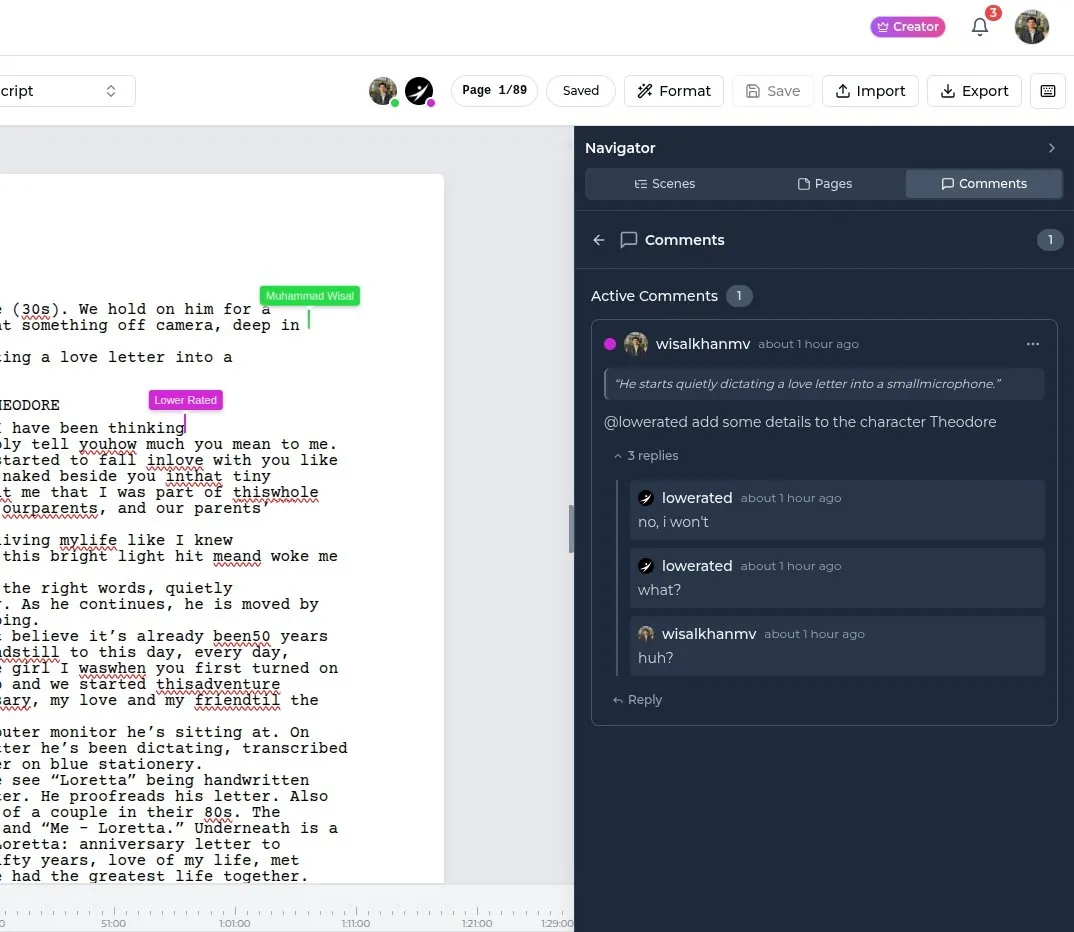
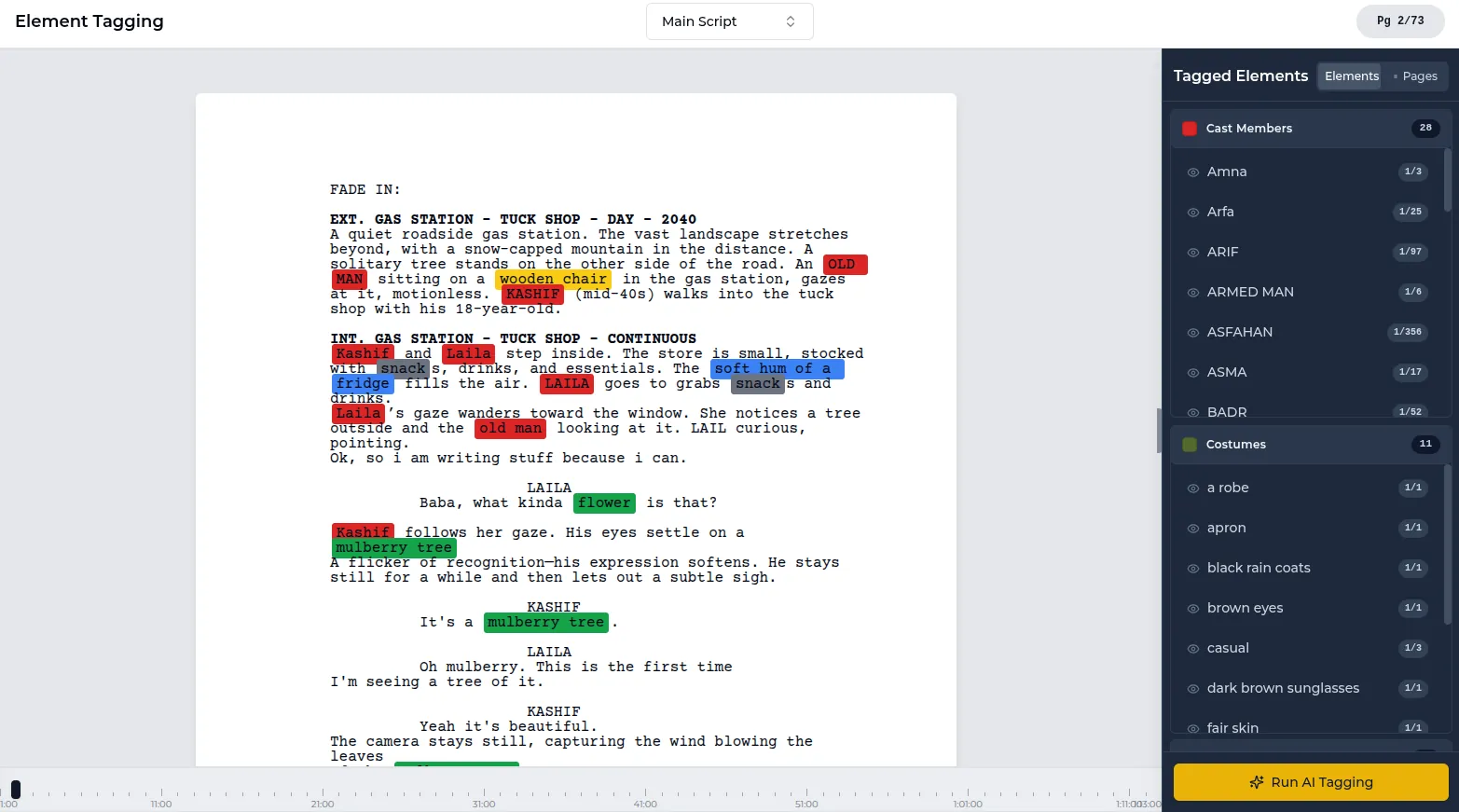
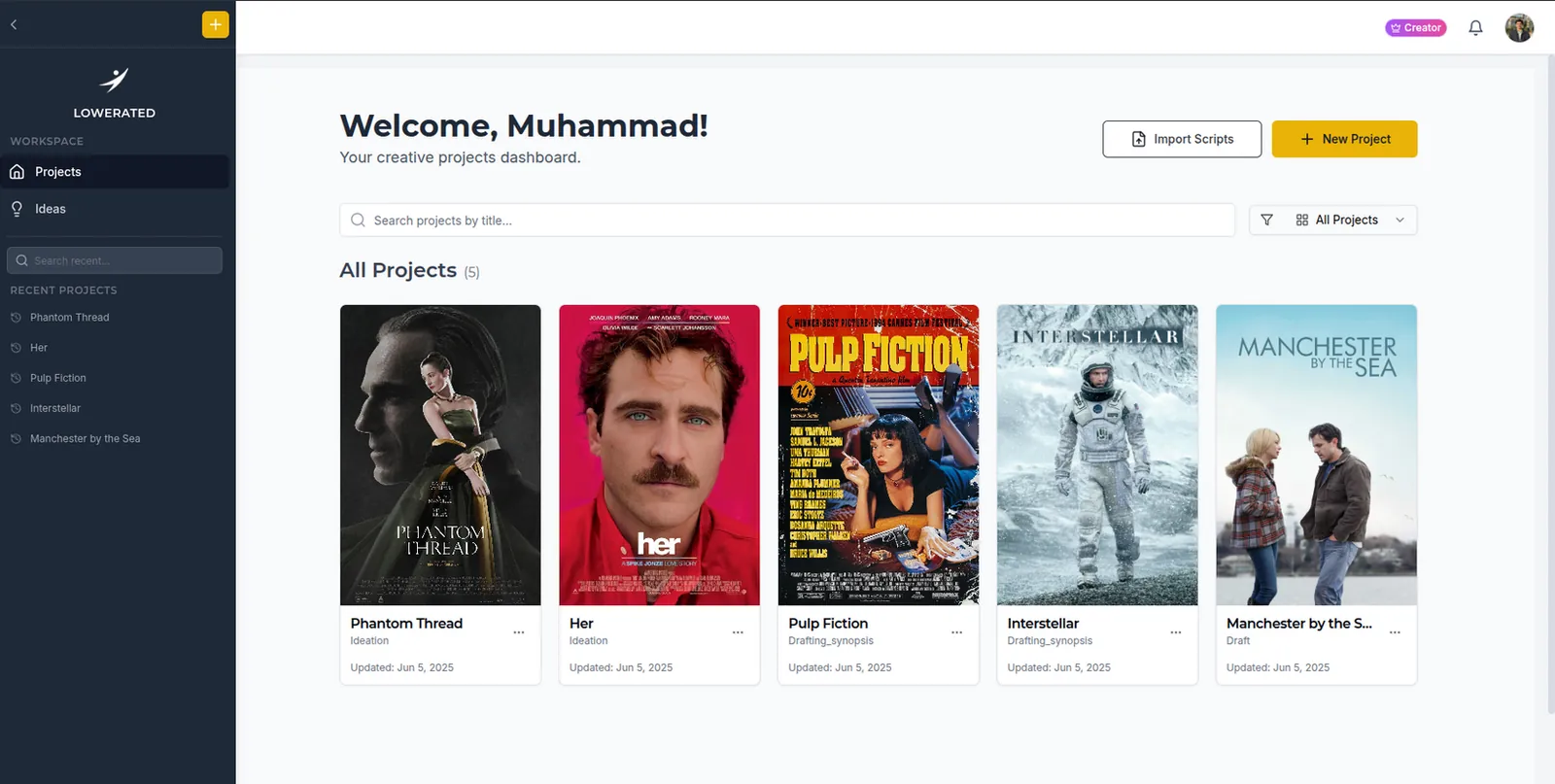
Lowerated keeps the screenplay, breakdown, stripboard, availability, one-line schedule, day out of days, shot lists, storyboards, mood boards, budgets, call sheets, casting, crew forms and online release forms in one project. The breakdown is built from the screenplay and the call sheets from the schedule. There is a free Basic plan; Scriptwriter is $10 a month, Producer $30 and both $40. Lowerated does not edit video or do color, sound or VFX, and if you rely on call sheet confirmation tracking by email and text, check that any alternative, Lowerated included, handles it the way you need. It suits writer-directors and small producing teams. The feature tour lists every tool.
A spreadsheet: for the smallest shoots
A shared spreadsheet with tabs for breakdown, schedule, contacts and call sheet costs nothing and works for a short with a handful of locations. It stops working when scenes move between days and every tab has to be updated by hand. See planner tool vs spreadsheet for where the line usually falls.
How do you choose the right alternative?
- List the documents you actually make. Script, breakdown, stripboard, DOOD, shot list, call sheet, budget. Ignore features you will not use.
- Count who needs to edit. Seats drive price on most tools. Viewers and commenters are often cheaper or free.
- Decide where the script lives. If you are still rewriting, a tool that connects the script to the breakdown saves retyping after each draft.
- Check what your crew expects. An experienced 1st AD may already work in a specific tool. Ask before you buy.
- Test on one real project. Import a script, schedule two days and make one call sheet during the trial or on the free plan.
- Check exports. Make sure you can get your data out in a format you can share or move later.
For a wider view of the software filmmakers use at this stage, see what tools filmmakers use for pre-production.
How do you switch from StudioBinder?
Switching is easiest between projects. Export your screenplay from StudioBinder and import it into the new tool, then rebuild the breakdown and schedule there, since breakdown data rarely moves cleanly between apps. Keep your contacts in a spreadsheet you can import. If you are mid-shoot, finish the project where it is.
In Lowerated you can import a Final Draft, Fountain, Celtx or PDF script, and the breakdown is built from it for you to review.
The clip gives an overview of Lowerated, from writing through pre-production.
FAQ
Is there a free alternative to StudioBinder?
Yes. Celtx, Saturation and Lowerated have free plans with limits, and a spreadsheet is free. StudioBinder also has its own free plan for one project.
What is the best StudioBinder alternative for screenwriters?
Celtx and Lowerated both combine a screenplay editor with production tools. Try each with your own script.
Which alternative is closest to StudioBinder?
Yamdu covers the widest range of production management features, and Celtx's Team plan covers a similar mix of writing and planning.
Can I use more than one tool?
Yes, many productions do: for example a budgeting tool for money and another tool for the script and schedule. The cost is keeping two systems in step.
Key takeaways
- StudioBinder is a strong tool; switch only when the fit, the seat count or a missing feature is the problem.
- Celtx and Lowerated combine writing with planning; Yamdu suits larger teams; Filmustage focuses on AI breakdown; Saturation on budgets.
- Prices and plans change often, so confirm them on each vendor's site.
- Test any tool on one real project: import, schedule two days, make one call sheet.
- Move tools between projects, not in the middle of a shoot.