What Is a Tech Scout in Film?


By Muhammad Wisal and Muhammad Ali / 6 min read

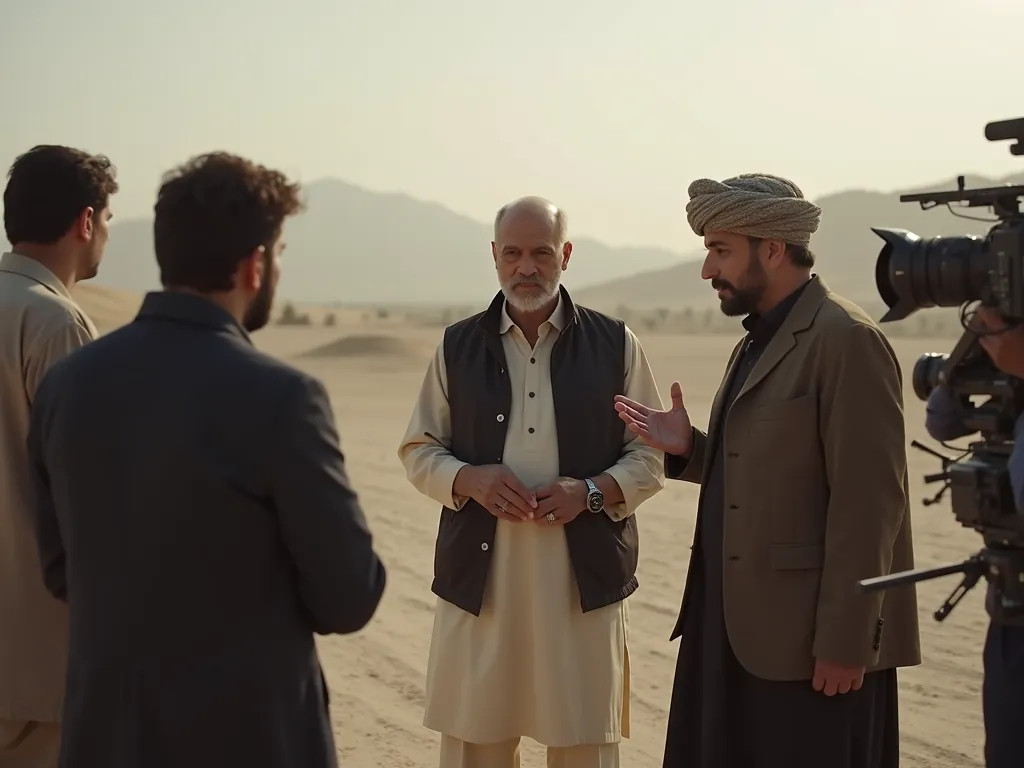
A tech scout is a visit to your chosen film locations with the heads of department, so each of them can plan exactly how they will light, rig, record, dress and run the shoot there. It happens after the locations are locked and before the shoot, usually in the last week or two of prep. The director and 1st AD lead it, and every department leaves with a list of what it needs to bring, build or solve.
What is a tech scout in film?
A tech scout (often called a technical recce in the UK) is a planning walk through of locations that have already been chosen. It is different from location scouting, which is the search for places to shoot. On a location scout you ask "will this place work for the story?" On a tech scout you ask "how do we shoot here?"
During the scout the director walks the team through each scene in the space: where actors enter, where the camera goes, which way it looks. Each department then checks the practical questions that come from those choices. For the earlier search stage, read location scouting: find a place to shoot.
Who goes on a tech scout?
The heads of department who will need to make decisions about the space. On an indie shoot the group is usually:
- Director, who explains the blocking and the shots for each scene.
- 1st AD, who runs the day, keeps time and thinks about scheduling and safety.
- Producer or line producer, who approves costs and location deals.
- Director of photography, gaffer and key grip, for camera positions, lighting, power and rigging.
- Production designer or art lead, for what has to be dressed, removed or built.
- Sound mixer, for noise problems.
- Location manager, who holds the contact with the owner and knows the rules of the property.
On larger shoots, costume, hair and makeup, transport, stunts, VFX and the safety officer may join for the locations that affect them. See film crew roles explained for what each job covers.
What do you check on a tech scout?
Each department checks its own list. This table shows the typical questions and example notes for one location.
| Department | What they check | Example note |
|---|---|---|
| Camera | Camera positions, lens choices, room for dolly or track, reflections | Need 18mm for wide in hallway; mirror at end reflects camera |
| Lighting and grip | Power, circuits, generator spot, window direction, rigging points | Two circuits in lounge, generator in rear lot, sun hits windows after 2 PM |
| Sound | Traffic, HVAC, fridges, flight paths, echo, neighbors | Air conditioning must be off during takes; school bell at 3:15 |
| Art department | What to remove, repaint, dress or protect | Remove family photos; replace red curtains with gray |
| Assistant directors | Shooting order, holding area, safety, timing between setups | Shoot kitchen first, hallway second; extras hold in garage |
| Locations and transport | Parking, unit base, load in route, restrooms, permits, neighbors | Load in through side gate; letter drop to neighbors 3 days before |
| Costume, hair and makeup | Changing space, mirrors, power for steamers and tools | Upstairs bedroom for makeup, needs extra lights |
Take photos and short video from the planned camera positions, and note compass direction for each window. These make the floor plan and lighting plan much easier to draw later. Floor plans and overhead diagrams shows how to turn scout notes into a blocking plan.
When does a tech scout happen?
A tech scout usually happens after the locations are confirmed and the script is close to locked, often in the final week or two of prep. It needs to come late enough that the director knows how scenes will be shot, but early enough that departments have time to order gear, book a generator, build set pieces or change the schedule. Try to visit at the time of day you plan to shoot, so you see the real light and hear the real noise.
How do you run a tech scout step by step?
- Plan the route. The 1st AD or location manager orders locations to keep driving short and books one vehicle for the group if possible.
- Send a scout schedule. List each location, address, arrival time, scenes to discuss and owner contact.
- Bring the right documents. Script pages, shot list, rough floor plans and the current schedule for each location.
- Walk each scene in order. The director stands where the camera goes and talks through blocking and shots.
- Let departments ask questions. The 1st AD keeps the group together and moves on when each scene is covered.
- Record decisions and owners. Someone, often the 2nd AD or a production assistant, writes down every action item and who owns it.
- Send notes the same day. One document per location with decisions, open questions and who is solving them.
What does a tech scout schedule look like?
Here is a sample scout day for "Signal Lost", a short about a radio host, Cormac Doyle, who receives a call from a missing friend. It has three locations and a crew of nine on the scout.
| Time | Location | Scenes | Main questions |
|---|---|---|---|
| 8:00 AM | Meet at production office | Hand out scout packs | |
| 8:45 AM | Community radio studio | 1, 3, 7, 12 | Power for practicals, glass reflections, sound booth noise |
| 10:45 AM | Cormac's apartment | 4, 9 | Night scenes: can windows be blacked out? Elevator access for gear |
| 12:15 PM | Lunch | ||
| 1:15 PM | Bus depot exterior | 10, 11 | Permit area, generator spot, depot traffic schedule |
| 3:00 PM | Return to office | Review action items with producer |
What are common tech scout mistakes?
- Bringing the whole crew instead of the decision makers, so the scout runs slowly.
- Scouting at a different time of day from the shoot and missing the real light or noise.
- Talking through ideas without writing down who owns each action item.
- Skipping the sound mixer, then finding the building's air system cannot be turned off.
- Forgetting to check parking, restrooms and holding, which affect every department.
- Not sharing notes, so departments plan from different versions of the decisions.
How does the tech scout connect to other documents?
The tech scout turns the script, shot list and schedule into location specific decisions. What you learn can change the schedule (a room only gets good light in the morning), the budget (you need a generator), and the call sheet (parking, load in and unit base). The decisions then go to the production meeting, where the whole team reviews the plan before the shoot.
Keeping scouted locations organized in Lowerated
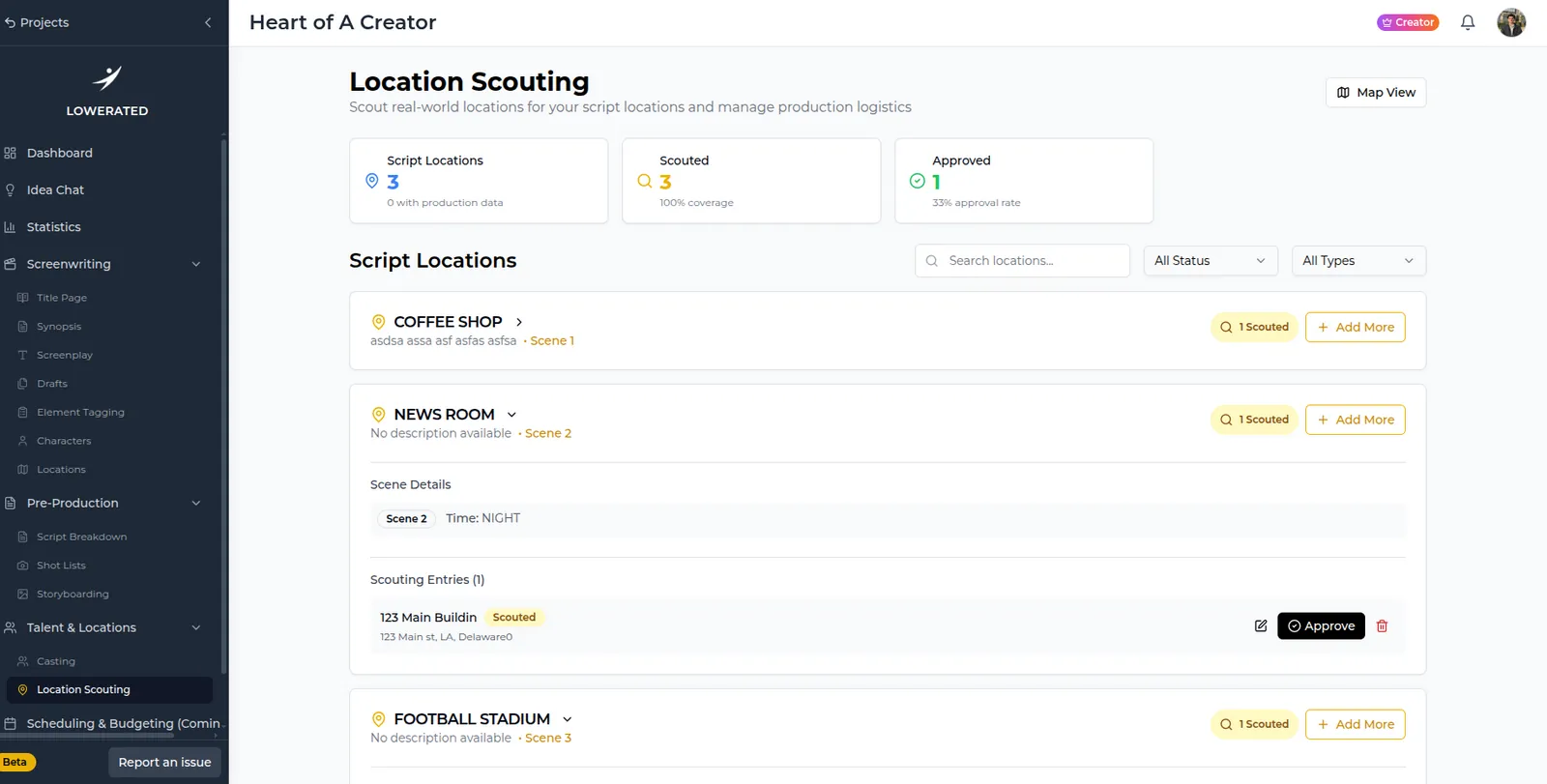
Lowerated's location scouting tracks each script location, the places you have scouted and the ones you have approved, on a map. Once the schedule is set, call sheets are built from it with the call times, locations and crew filled in, so the details from your scout reach the crew on each shoot day.
The clip shows a call sheet built from the schedule, with call times, locations and crew filled in, reviewed and sent the night before.
FAQ
What is the difference between a location scout and a tech scout?
A location scout finds and chooses places to shoot. A tech scout happens after the choice, with department heads planning how to shoot there.
How long does a tech scout take?
It depends on how many locations you have. One to two hours per location plus travel is a common estimate, so a big shoot may need more than one scout day.
Do small shoots need a tech scout?
Yes, even if it is just the director, DP and sound person walking the space for an hour. Problems found on the scout are cheap to fix; problems found on the shoot day are not.
Is a tech scout the same as a recce?
Recce is the British term for a scout. A technical recce is the same as a tech scout.
Key takeaways
- A tech scout plans how to shoot at locations you have already chosen.
- Bring the decision makers: director, 1st AD, producer, DP, gaffer, grip, design, sound and locations.
- Visit at the time of day you will shoot, and check power, sound, parking and holding.
- Write down every action item with an owner and send notes the same day.
- Feed scout decisions back into the schedule, budget and call sheets.