How to Run a Production Meeting for a Film


By Muhammad Wisal and Muhammad Ali / 6 min read
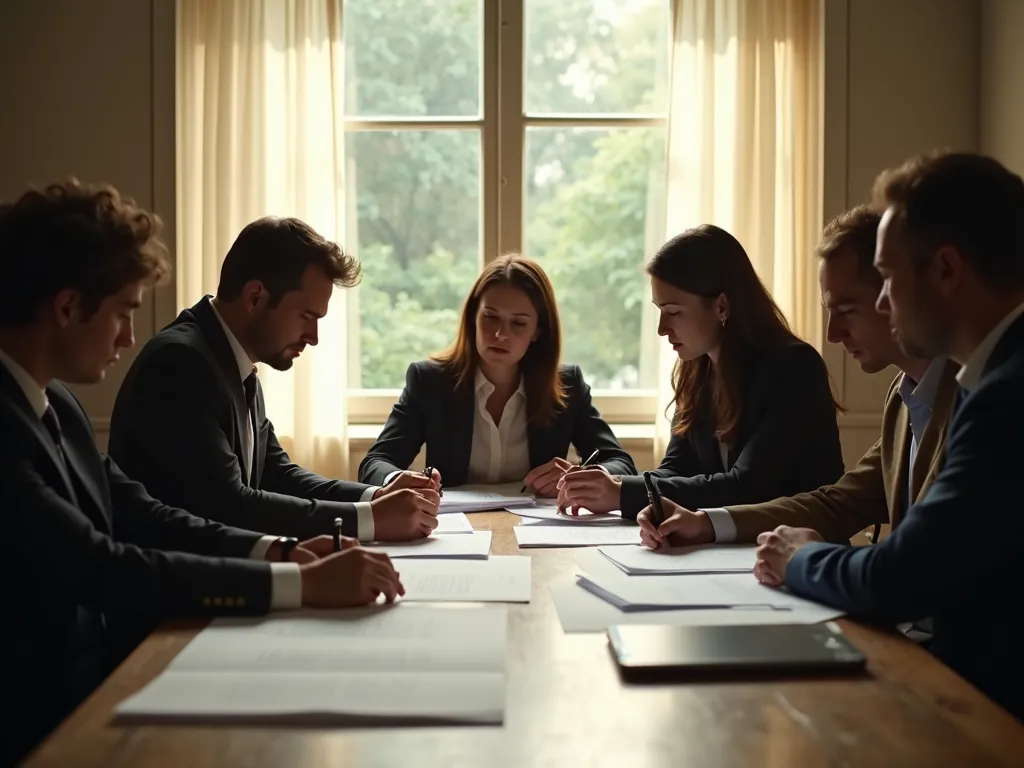
A production meeting is the final planning meeting before a shoot, where the director, producers, assistant directors and every head of department walk through the schedule together, day by day and scene by scene, so that everyone leaves with the same plan. To run one, send the latest script, schedule and agenda in advance, have the 1st AD lead a page by page walk through, let each department raise its questions on each scene, and record every decision with an owner and a deadline.
What is a production meeting in film?
A production meeting is a structured review of the whole shoot with all departments in the same room (or the same call). Most productions hold one main production meeting near the end of prep, usually a few days before the first shoot day, after the tech scout and before the call sheets go out. Longer shoots may also hold short weekly or daily production meetings during the shoot to look at the days ahead.
Its job is to catch conflicts while they are still cheap to fix. The art department learns that a scene was moved to day two. The sound mixer hears that a car will be running during dialogue. The producer sees a cost that nobody budgeted for.
Who attends a production meeting?
Everyone who leads a department or makes decisions that affect other departments. On an indie feature or short that usually means:
| Role | Why they are there |
|---|---|
| Director | Answers creative questions scene by scene |
| Producer and line producer or UPM | Approves money, time and changes |
| 1st AD | Runs the meeting and owns the schedule |
| 2nd AD | Takes notes and updates call sheet details |
| Director of photography, gaffer, key grip | Camera, lighting, power and rigging needs |
| Production designer, props, set dressing | Sets, props and dressing per scene |
| Costume, hair and makeup | Changes, continuity and special makeup |
| Sound mixer | Noise problems, playback, radio mics |
| Location manager and transport | Access, parking, permits, vehicles |
| Script supervisor | Continuity and story day questions |
| Stunts, VFX, safety, animals or children's handlers | Only if the shoot involves them |
On a small shoot one person may cover several roles, but keep the meeting. A crew of eight benefits from it as much as a crew of eighty. See film crew roles explained if any of these jobs are new to you.
What should you prepare before the production meeting?
Send the documents everyone will discuss at least a day or two before, so people arrive with questions instead of reading for the first time. The usual pack is:
- The current script with revision color and date.
- The shooting schedule or one-line schedule.
- The day out of days, so departments know who works when.
- Location list with addresses, plus notes from the tech scout.
- Contact list for cast and crew.
- The agenda, with a time for each section.
Ask each head of department to send their open questions in advance. The 1st AD can then group them by scene.
What is a good production meeting agenda?
A simple agenda that most productions follow, here for a 10 day shoot. A full walk through of a feature can take several hours, so set workable times and plan breaks.
| Time | Item | Led by |
|---|---|---|
| 10:00 | Introductions and goals of the meeting | Producer |
| 10:10 | Safety overview: stunts, vehicles, night work, weather, hospital routes | 1st AD |
| 10:25 | Overview of the schedule: shoot days, locations, days off | 1st AD |
| 10:40 | Day by day, scene by scene walk through, days 1 to 5 | 1st AD with director |
| 12:00 | Break | |
| 12:15 | Walk through, days 6 to 10 | 1st AD with director |
| 1:30 | Open questions by department | 1st AD |
| 1:50 | Review action items and deadlines | 2nd AD |
How do you run a production meeting step by step?
- Start on time and state the goal. Everyone should know the meeting ends with an agreed plan and a list of actions.
- Cover safety first. Every risky element (stunts, water, heights, weapons, vehicles, night driving) is named, with who is responsible.
- Walk the schedule in order. The 1st AD reads each scene: number, set, day or night, cast, and a one line description. For example: "Day 3, scene 22, INT. BAKERY - NIGHT. Hollis and Wren argue while closing. Cast 1 and 4. Flour explosion gag."
- Go around the departments on each scene. Each head says what they need or what worries them. If nothing, they say "nothing" so the room moves on.
- Park long discussions. If two departments need twenty minutes on one problem, note it as an action and schedule a separate meeting.
- Record every decision. The 2nd AD or a production coordinator writes the decision, the owner and the deadline.
- Read back the action items. End by reading the list aloud, then send it to everyone the same day.
What does a production meeting action list look like?
Here is a sample from "Proof", a short about two bakers, Hollis and Wren, preparing for a competition.
| Scene | Issue | Decision | Owner | Due |
|---|---|---|---|---|
| Sc. 22 | Flour explosion gag near camera | Test on prep day; camera in rain cover | Props and camera | Prep day 2 |
| Sc. 22 | Bakery fridges noisy | Owner agrees fridges off between 6 PM and 10 PM | Locations | Confirm by Friday |
| Sc. 30 | Wren's apron must show burn mark | Make two aprons, clean and burned | Costume | Day 4 |
| Day 6 | Street parking limited | Crew shuttle from church lot | Transport | Day 5 |
| Sc. 41 | Story day unclear | Story day 3, morning | Script supervisor | Today |
What are common production meeting mistakes?
- Holding it too late, so departments cannot act on the decisions before the shoot.
- Sending the schedule on the morning of the meeting.
- Letting it turn into a creative debate instead of a logistics check.
- Skipping departments on scenes that look simple. Simple scenes often hide problems, such as a practical light in shot.
- No note taker, so decisions are remembered differently by different people.
- Not updating the schedule and call sheets afterward, so the old plan reaches set.
From production meeting to call sheets in Lowerated
The decisions from the production meeting have to reach the crew on each shoot day. In Lowerated, call sheets are built from your schedule, with call times, locations and crew already filled in. After the meeting, update the schedule, review each call sheet, add the day's notes from your action list, and send it the night before.
The clip shows a call sheet built from the schedule, with call times, locations and crew filled in, reviewed and sent the night before.
For what goes on each call sheet, read how to make a call sheet.
FAQ
How long is a production meeting?
It depends on the length of the shoot. A short film may take one to two hours. A feature walk through can take most of a day.
When is the production meeting held?
Usually near the end of prep, a few days before the first shoot day, after the tech scout. That leaves time to act on the decisions.
Is a production meeting the same as a table read?
No. A table read is the cast reading the script aloud. A production meeting is the crew reviewing the logistics of the shoot.
Can a production meeting be held online?
Yes. Share the schedule on screen, keep the same scene by scene order, and make sure the note taker can see who is speaking.
Key takeaways
- The production meeting is the whole team's final review of the plan before the shoot.
- Send the script, schedule, day out of days and agenda in advance.
- The 1st AD leads a scene by scene walk through, and every department speaks on every scene.
- Record every decision with an owner and a deadline, and send the list the same day.
- Update the schedule and call sheets so the decisions reach set.