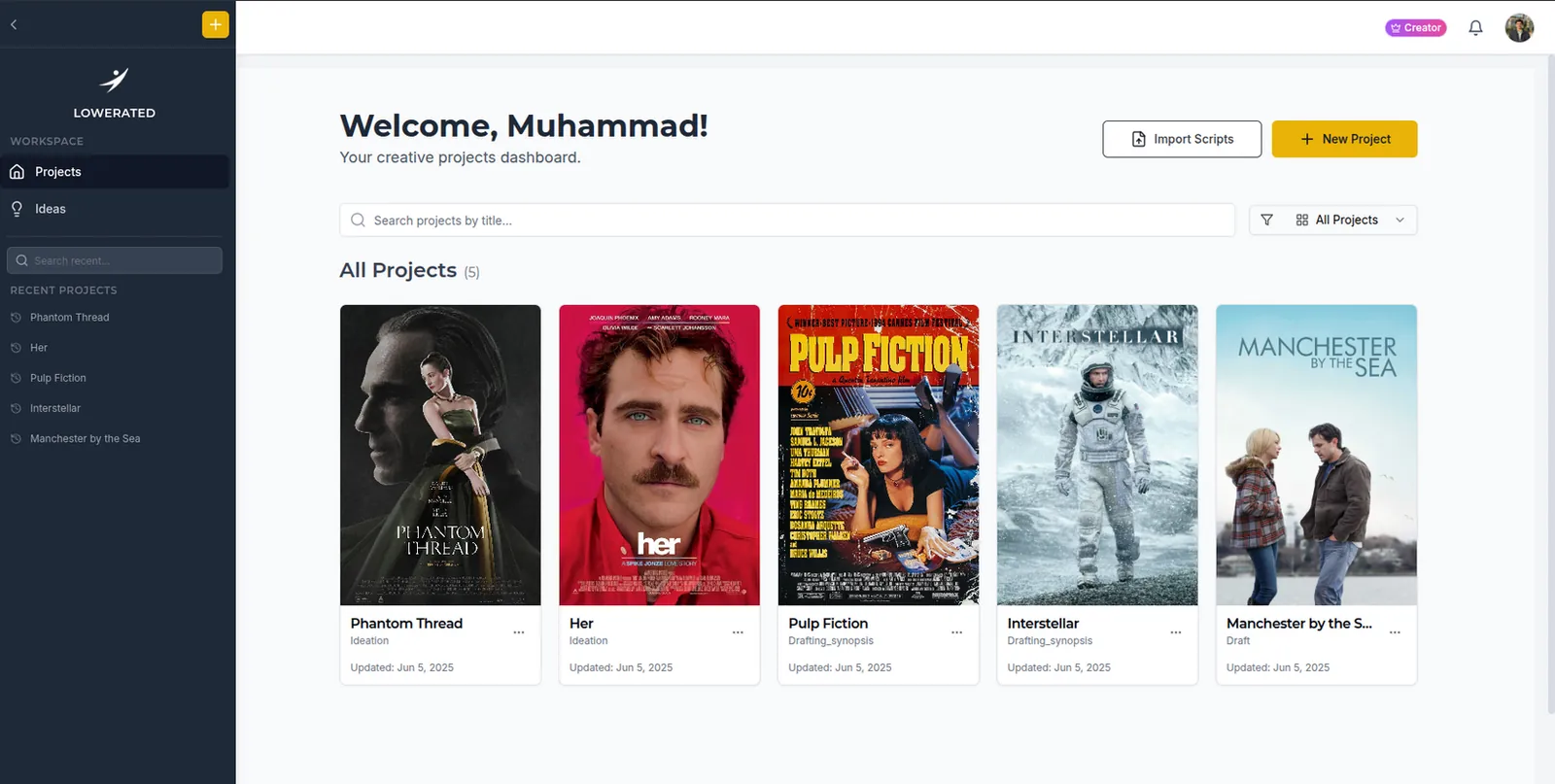
The Workspace Where Filmmakers Turn Ideas Into Finished Films; All-in-one filmmaking platform


By Muhammad Wisal and Muhammad Ali / 8 min read
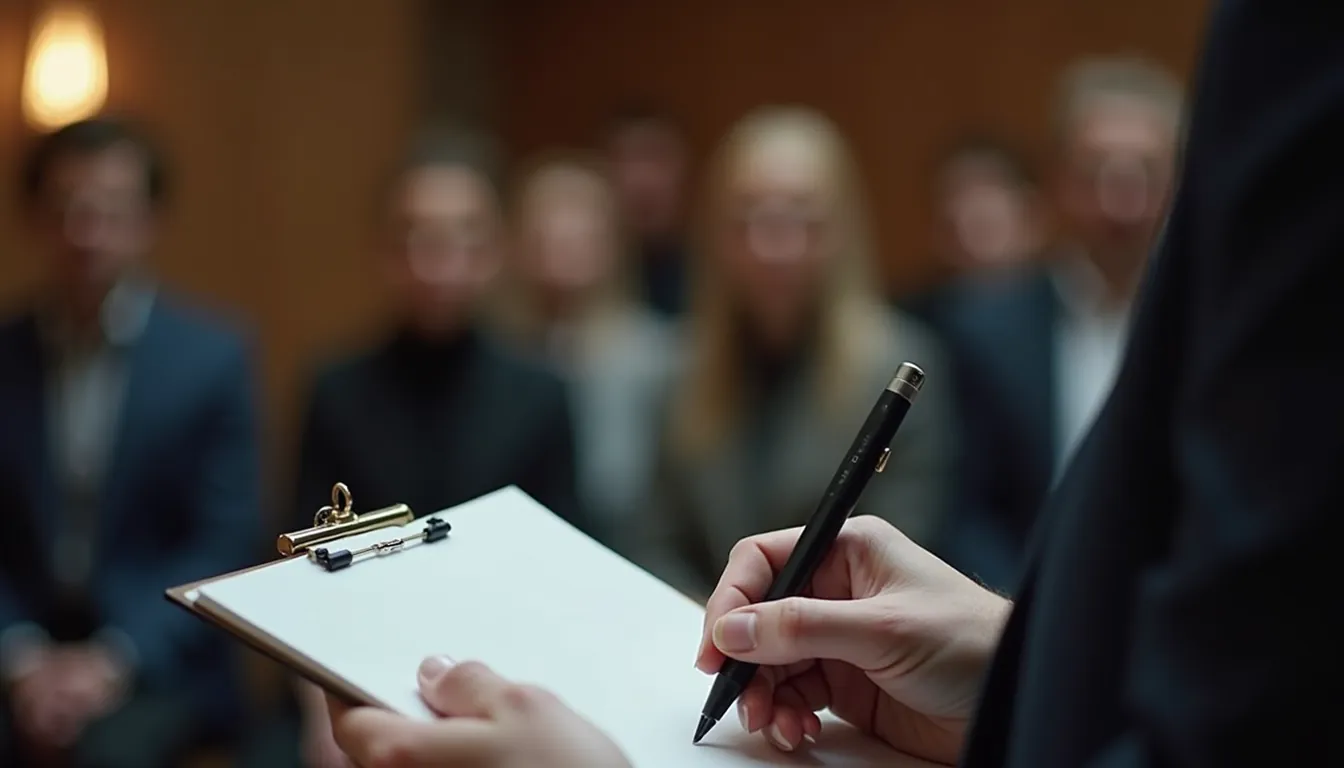
A film rarely fails because the original idea was bad. More often, the difficult part is turning that idea into something that can actually be written, planned, cast, produced, edited, and released.
A filmmaker may start with a strong concept in the morning and, within weeks, find the project spread across a screenplay editor, spreadsheets, messaging apps, cloud folders, casting notes, production calendars, and editing software. The creative idea remains the same, but the workflow becomes harder to manage.
That gap between having a film idea and finishing a film is the problem Lowerated is designed to address.
Lowerated is an All-in-one filmmaking platform that brings AI-assisted tools and filmmaking workflows together, helping creators move from idea generation and scriptwriting toward pre-production, production planning, collaboration, and eventually post-production and distribution.
The goal is not to replace filmmakers with AI. It is to reduce the friction around filmmaking so creators can spend more energy making creative decisions.
Why Filmmakers Struggle to Turn Ideas Into Finished Films
Film production is a chain of connected decisions. A change in one area can affect several others.
Change a character in the script, and the casting requirements may change. Change a location, and the shooting schedule may change. Add a scene, and the budget, crew requirements, props, and production days may need to be reconsidered.
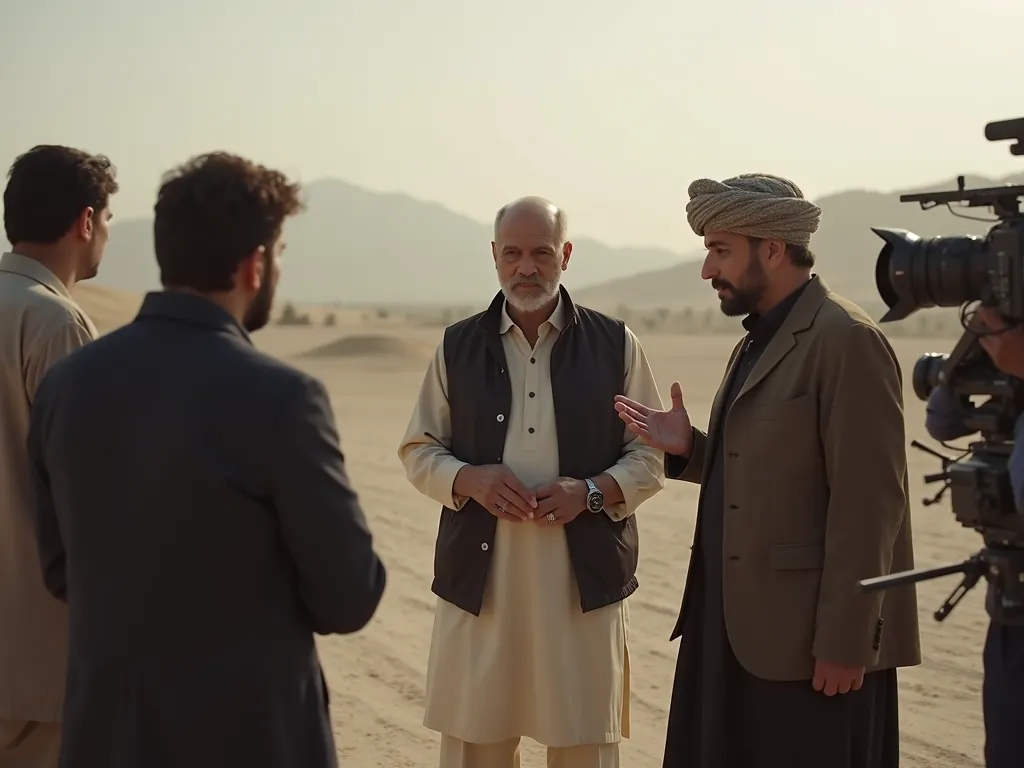
This is why filmmaking is not simply about writing a great screenplay.
A project also requires:
- Story development
- Scriptwriting
- Script breakdown
- Character and location planning
- Film casting
- Auditions
- Scheduling
- Budgeting
- Shot planning
- Storyboarding
- Team communication
- Editing
- Marketing and distribution
When these activities are managed in disconnected places, filmmakers spend valuable time moving information from one tool to another.
The better approach is to think of filmmaking as one connected workflow rather than a collection of unrelated tasks.
Pre-production Filmmaking: Where Good Ideas Become Practical Projects
The biggest difference between a film idea and a film project is preparation.

Pre-production Filmmaking transforms the screenplay into practical decisions. Instead of simply asking, "What is my movie about?", filmmakers begin asking:
- What scenes need to be shot?
- Which characters appear in each scene?
- Where will each scene take place?
- What props and costumes are required?
- Which actors are needed?
- How many shooting days are realistic?
- What should be filmed together?
- What will the production cost?
- What does the crew need before filming begins?
This is where many independent filmmakers encounter unnecessary complexity.
A screenplay might be finished, but the production is still not ready.
Turning a Script Into a Production Plan
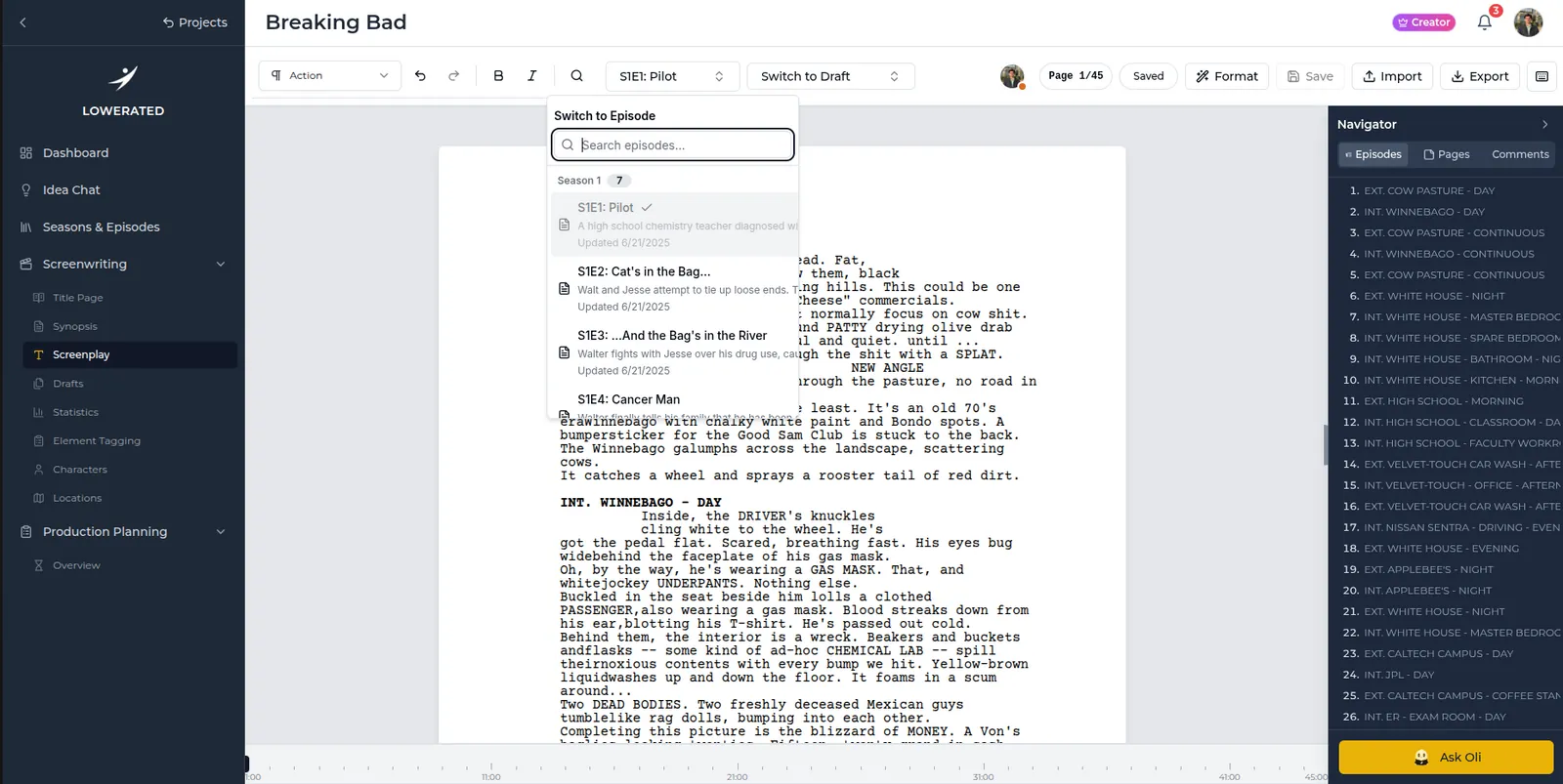
Lowerated's pre-production workflow is designed around this transition. Its planner includes script breakdowns, shot lists, storyboards, casting, location scouting, scheduling, and budgeting.
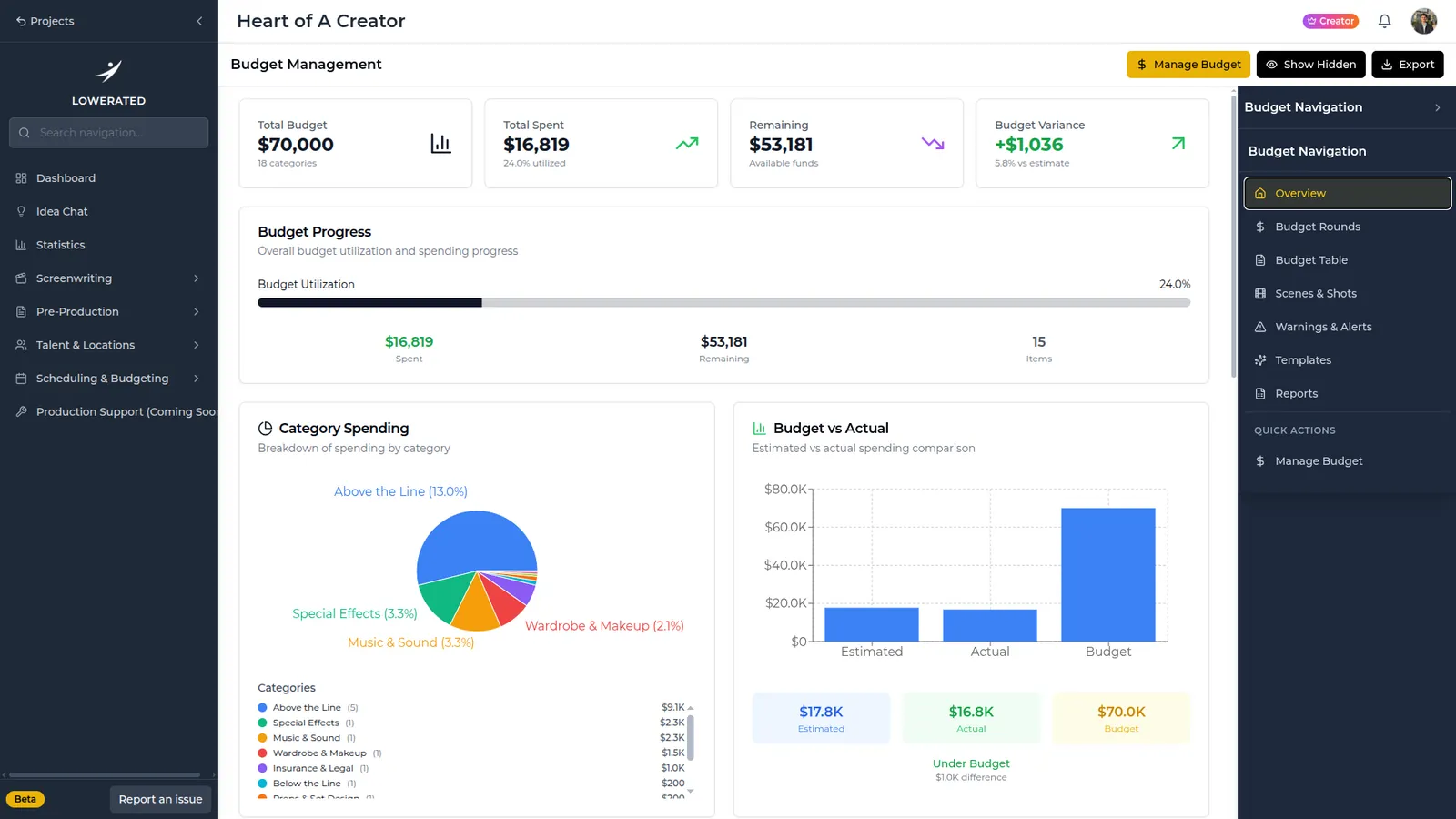
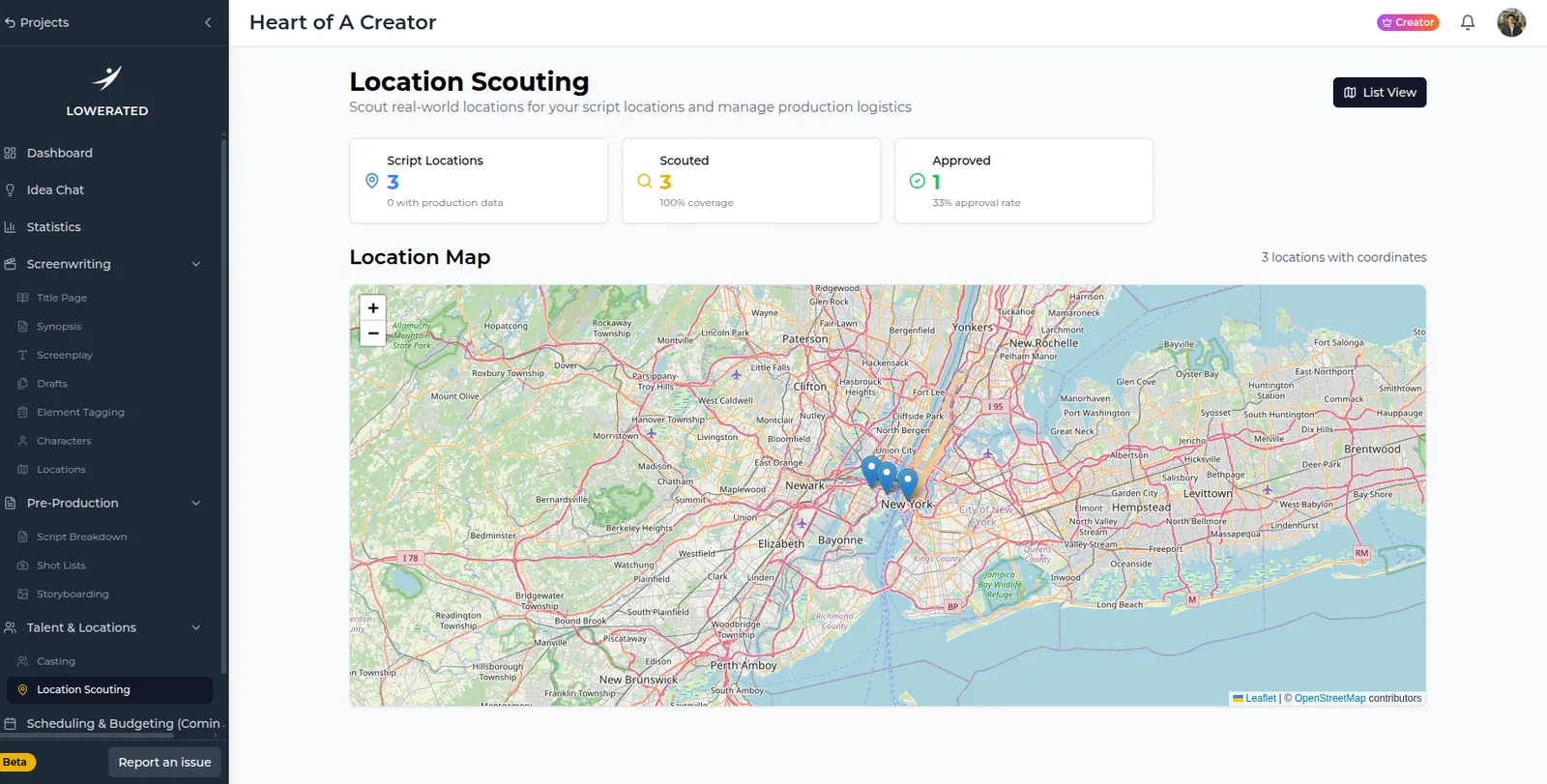
That matters because the information already exists in the screenplay.
For example, a scene can contain a character, location, prop, costume requirement, and specific production needs. A useful planning workflow should help filmmakers turn those details into actionable production information rather than forcing them to manually recreate everything in separate documents.
A Filmmaking Planner tool can therefore become more than a calendar. It can act as the bridge between the creative screenplay and the practical shoot.
AI Script Writer for Filmmakers: From Blank Page to Working Draft
Starting a screenplay can be one of the hardest moments in filmmaking.
You may have the concept, characters, or ending in your head, but turning those thoughts into properly structured scenes takes time.
An AI Script Writer for Filmmakers can help with parts of this process by assisting with story development, scenes, dialogue, and structure.
Lowerated's Script Writer is designed to help filmmakers write in industry-style screenplay formatting while providing AI assistance. It also supports features such as character development, scene writing, collaboration, version control, and screenplay-related production elements.
The important distinction is that AI should support the filmmaker's thinking rather than replace it.
A practical workflow might look like this:
- Start with the core film idea.
- Develop the premise and characters.
- Explore possible story directions.
- Build scenes and dialogue.
- Review and rewrite.
- Turn the screenplay into production information.
- Begin planning the actual shoot.
The filmmaker remains responsible for the story, tone, characters, themes, and creative decisions.
AI simply helps reduce some of the repetitive work around the process.
Film Casting and Film Audition and Casting Calls Without the Chaos
Once a screenplay becomes a production plan, another major challenge appears: finding the right people.
Film Casting is not simply about finding someone who looks right for a role. Directors and producers need to consider performance ability, character requirements, availability, chemistry, scheduling, and production constraints.
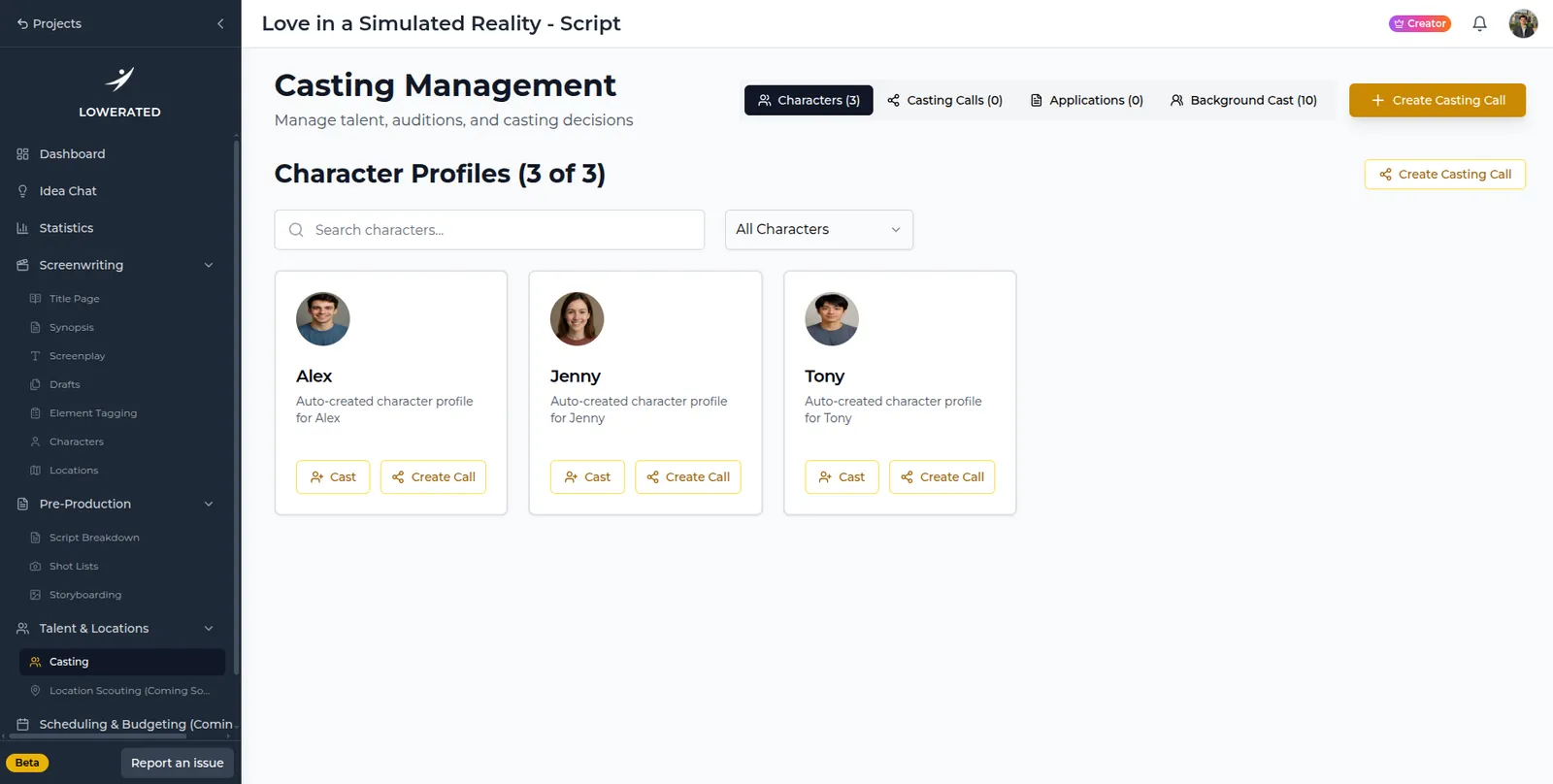
Traditional casting can quickly become difficult to manage when submissions, audition recordings, notes, callbacks, and schedules are scattered across different tools.
A more organized casting workflow can help filmmakers:
- Define roles directly from the script
- Create clear casting requirements
- Track potential actors
- Organize audition materials
- Schedule auditions
- Record notes
- Manage callbacks
- Coordinate casting decisions with production planning
This becomes particularly important for independent filmmakers who may not have a large production office handling these tasks.
The same applies to Film audition and casting calls. A casting call should not exist separately from the film's production workflow. The role requirements originate from the story, while the selected actor ultimately affects the schedule and production plan.
Connecting these stages reduces repeated work.
Filmmaker Collaboration Platform: Keeping Creative Teams Aligned
Movies are collaborative by nature.
A writer may revise a scene. A director may change the visual approach. A producer may adjust the schedule. A casting decision may affect availability. A cinematographer may suggest a different way to approach a sequence.
Without an organized system, important decisions can disappear inside long message threads or outdated documents.
This is where a Filmmaker Collaboration Platform becomes valuable.
The purpose is not simply to give filmmakers another place to communicate. It is to create a shared environment where the right people can access the right project information.
A useful collaboration workflow should make it easier to:
- Share screenplay revisions
- Discuss creative decisions
- Keep project information organized
- Track changes
- Coordinate production tasks
- Give team members access to relevant materials
- Reduce confusion over different versions
Lowerated's Script Writer includes collaboration features such as co-writing, comments, version control, and team exports.
That approach reflects an important reality of filmmaking: the best workflow is one that keeps creative decisions connected to the project itself.
Filmmakers Community Platform: Building Beyond One Project
Filmmakers do not only need software. They need people.
A writer needs directors. A director needs actors and producers. A cinematographer may need new projects. An emerging filmmaker may need feedback, collaboration opportunities, and a place to learn.
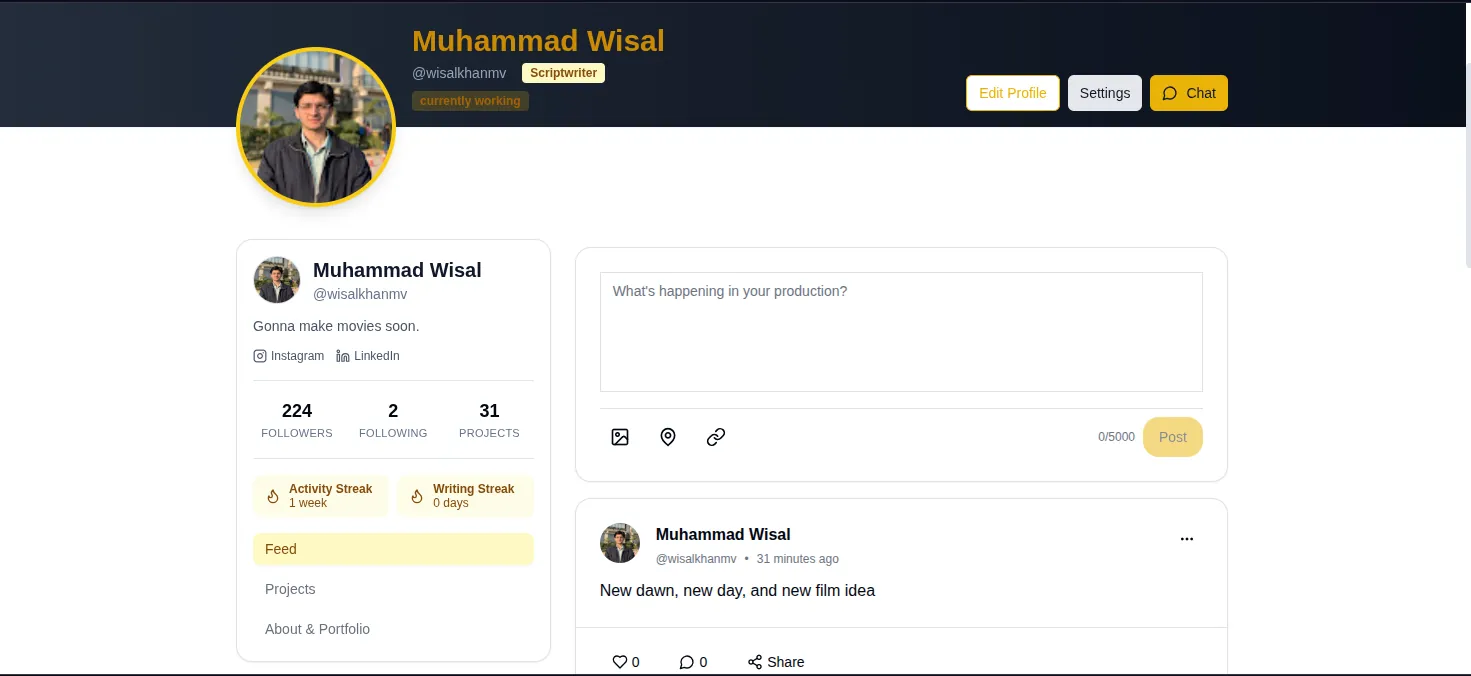
This is why a Filmmakers Community Platform can complement production tools.
Lowerated's community model is built around helping filmmakers learn, collaborate, and grow together.
A strong filmmaking community can help creators move beyond simply completing one project.
It can help them:
- Discover other creators
- Exchange ideas
- Find collaborators
- Learn from other filmmakers
- Share creative work
- Discover opportunities
- Build professional relationships
For emerging filmmakers especially, access to a network can be just as valuable as access to software.
Post-production Filmmaking: Finishing the Film Is Part of the Process
Getting to the final shooting day does not mean the film is finished.
The footage still needs to become a coherent final product.
Post-production Filmmaking can involve editing, sound, color, visual effects, subtitles, marketing assets, and preparation for release.
This stage can expose problems that were created much earlier.
Poor planning may result in missing shots. Weak production notes can make footage harder to organize. Unclear creative decisions can lead to unnecessary revisions.
That is why post-production should not be treated as something completely separate from the rest of filmmaking.
A connected workflow allows filmmakers to carry useful information forward instead of rebuilding the project from scratch after production ends.
What Makes the Best Filmmaking Platform Useful?
Calling something the Best filmmaking platform is easy. Building one that actually solves filmmakers' problems is much harder.
For a platform to be genuinely useful, it should reduce friction rather than add another layer of complexity.
Filmmakers should look for a platform that can help them:
- Develop ideas
- Write and revise scripts
- Break down production requirements
- Plan shots and storyboards
- Organize casting
- Manage locations
- Build schedules
- Track budgets
- Collaborate with teams
- Prepare for post-production
- Move toward distribution
The key question is not, "How many features does this platform have?"
The better question is:
"How much unnecessary work does this platform remove from my filmmaking process?"
That is the standard an effective filmmaking workspace should meet.
Why an All-in-one Filmmaking Platform Makes Sense
Using separate applications is not automatically bad. Specialized software can be excellent at individual tasks.
The problem occurs when filmmakers constantly have to transfer information between them.
An All-in-one filmmaking platform can reduce that fragmentation by keeping connected stages of the project within one environment.
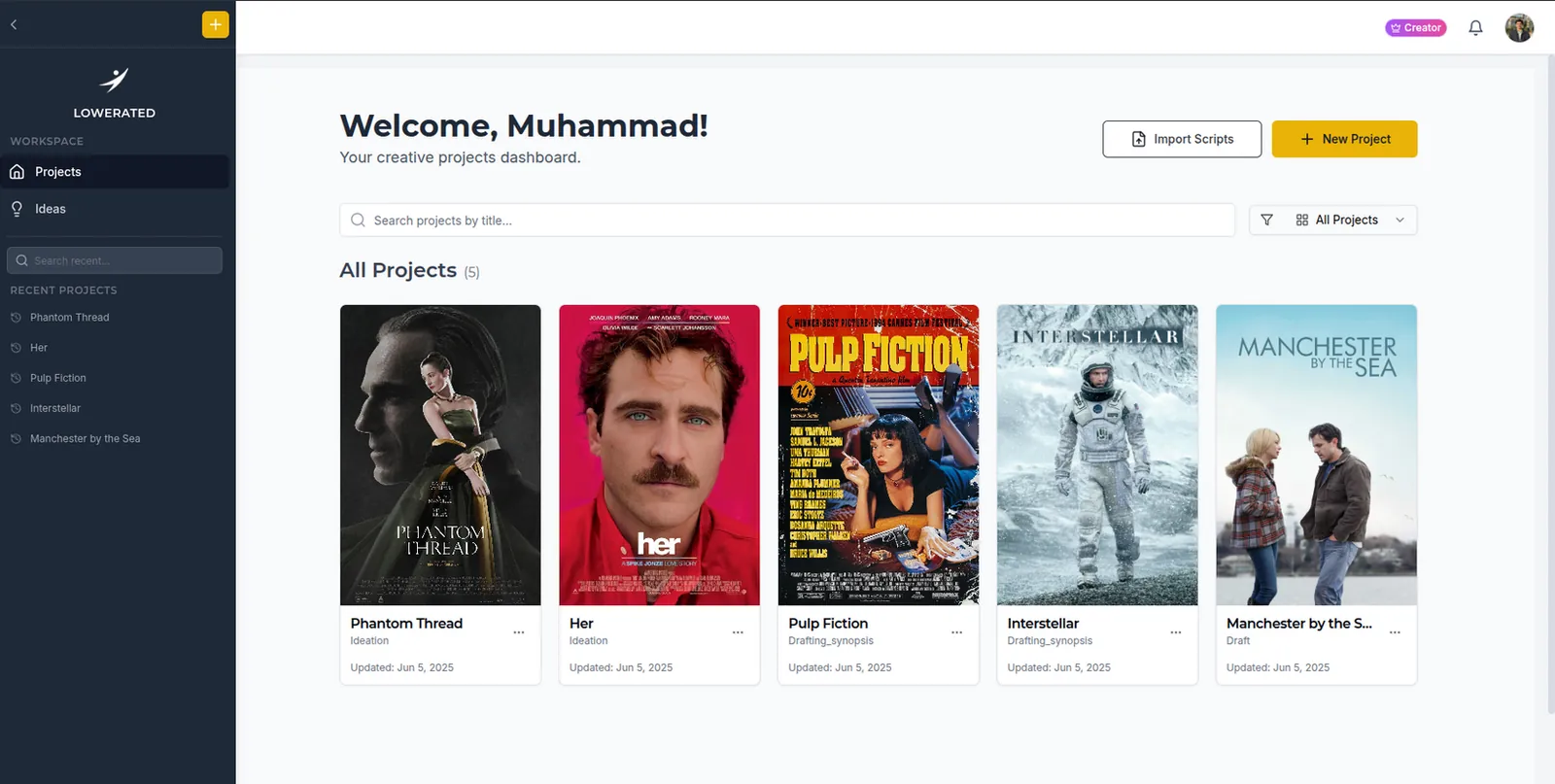
Lowerated's current workflow brings together idea generation, AI-assisted scriptwriting, pre-production planning, community features, and additional filmmaking capabilities within its broader platform vision.
For example, the journey can begin with:
Idea → Script → Breakdown → Casting → Schedule → Shoot → Post-production → Distribution
Instead of treating each step as an isolated project, filmmakers can think of it as one continuous production journey.
The Real Goal: Fewer Barriers, More Finished Films
Technology cannot make a bad story great.
It cannot replace a director's vision, an actor's performance, a writer's voice, or the human decisions that make a film meaningful.
What technology can do is remove unnecessary friction.
That is the philosophy behind Lowerated. The platform describes its mission as reducing barriers to filmmaking and helping creators conceive, write, plan, and launch cinematic stories within an integrated environment.
For an independent filmmaker, that can mean spending less time searching through files and spreadsheets and more time thinking about the actual movie.
For a production team, it can mean fewer disconnected workflows.
For a new creator, it can mean having a clearer path from an idea to a finished project.
And for the filmmaking community, it can mean easier collaboration between people who might otherwise never find one another.
Turn the Idea Into the Film
Every film starts somewhere: a sentence, an image, a character, a conversation, or an idea that refuses to go away.
The challenge is what happens next.
The idea needs a story.The story needs a script.The script needs a plan.The plan needs people.The production needs organization.And the finished footage needs to become a film.
That is the space Lowerated is trying to simplify.
Rather than giving filmmakers another disconnected tool, the goal is to create a workspace where the different parts of filmmaking can work together.
If you are looking for a place to develop an idea, write a screenplay, organize Pre-production Filmmaking, manage casting and collaboration, and move toward completing your project, explore Lowerated and see whether its workflow fits the way you create.
Your idea is only the beginning. The real work is turning it into something finished.