Theme in Screenwriting: How to Find Yours


By Muhammad Wisal and Muhammad Ali / 7 min read

Theme in screenwriting is what your story argues about a human question, shown through the choices your protagonist makes under pressure. To find yours, look at the hardest choice your main character faces at the climax, write the question that choice answers, and then make every major character a different answer to that question.
What is theme in a screenplay?
Theme is the idea underneath the plot: the question the story keeps asking and the answer it arrives at by the end. Plot is what happens. Theme is what it means that it happened. A heist film and a family drama can share a theme, such as whether you can buy your way out of guilt, even though nothing else about them is the same.
Screenwriting teachers use different names for the same thing. Lajos Egri called it the premise. Robert McKee calls it the controlling idea, a single sentence that links a value to its cause. Many writers simply call it the thematic question. Whatever you call it, the test is the same: can you say what the film believes in one line?
What is the difference between theme, topic and premise?
A topic is a subject, a premise is a setup, and a theme is an argument. Writers often mistake the first two for the third, which is why a script can be about grief and still have no theme.
| Term | What it is | Example |
|---|---|---|
| Topic | The subject area the story deals with | Workplace theft |
| Premise (story sense) | The situation that starts the story | A night supervisor finds out his oldest friend is stealing stock |
| Logline | One sentence pitching protagonist, goal and conflict | A warehouse supervisor has one week to decide whether to report the friend who got him his job |
| Thematic question | The open question the story tests | Is loyalty to one person worth more than honesty to everyone else? |
| Theme (the answer) | What the ending argues | Loyalty that requires lying to others turns into a debt you can never pay off |
| Moral | A rule for the audience to follow | "Always tell the truth." Usually too blunt for a film |
A good theme is specific enough to argue with. "Loyalty" is a topic. "Loyalty that requires lying turns into a debt" is a position someone could disagree with, and that disagreement is what drives scenes.
How do you find the theme of your screenplay?
You find theme by working backward from your protagonist's biggest choice, not by picking an abstract idea and building a plot around it. Most writers discover their theme in the first draft and sharpen it in the rewrite.
- Find the climax choice. Write down the moment near the end where your protagonist has to choose between two things they want. If there is no real choice there, fix that first.
- Turn the choice into a question. If the choice is between protecting a friend and protecting coworkers, the question is something like "What do you owe the people who helped you?"
- Decide what the ending answers. The protagonist's final action is the film's answer. A tragic ending and a hopeful ending to the same question are two different themes.
- Look at what you keep writing. Read your draft and note images, lines and situations that repeat. Repetition you did not plan often points to what the script is really about.
- Write one sentence. Phrase the theme as an argument with a cause: "X leads to Y." Keep it off the page. It is a tool for you, not a line of dialogue.
- Test every character against it. Ask how each major character would answer the thematic question. If a character has no answer, they may not belong in the story, or they need a sharper want.
How does theme show up on the page?
Theme shows up through action and contrast, almost never through speeches. Audiences feel it when characters with different answers to the same question collide.
- The protagonist's arc. The character starts with one answer to the question and, through the plot, either changes it or holds it at a cost. This is why theme and character arc are hard to separate.
- The antagonist as counterargument. The strongest antagonists believe the opposite answer and have good reasons for it. If the opposition is a strawman, the theme becomes a lecture.
- Mirror characters. Secondary characters show other answers to the same question, often what the protagonist could become.
- A stated question early on. Blake Snyder's beat sheet calls this "theme stated": someone, often not the hero, raises the question in passing in the first act. The hero does not understand it yet.
- Images and objects. A recurring object can carry the theme without anyone mentioning it.
What does theme look like in a worked example?
Take a 15 page short called "Inventory." Hector runs the night shift at a warehouse. He learns that Wendell, the friend who vouched for him when he got out of prison, is stealing boxes from the loading dock. Corporate starts drug testing and searching lockers, and the whole crew is under suspicion.
The climax choice: Hector can stay quiet and let the crew keep getting searched, or report Wendell and lose the one person who believed in him. The thematic question is "What do you owe the person who saved you?" The ending, where Hector tells Wendell to return the stock by Friday or he will report him, argues that real loyalty can include saying no.
| Character | Their answer to the question | How a scene shows it |
|---|---|---|
| Hector (protagonist) | Starts: you owe them everything. Ends: you owe them the truth | Covers for Wendell on a late clock-in in scene 3, confronts him in scene 11 |
| Wendell (opposition) | You owe me, so you keep quiet | Reminds Hector who wrote his reference, in front of the crew |
| Priya (coworker) | You owe your crew first | Gets her locker searched and asks Hector why he looks guilty |
| Hector's parole officer | You owe yourself a clean record | One line in scene 2: "Whose side are you on, Hector?" (theme stated) |
Nobody in "Inventory" says the word loyalty. The theme lives in the reference letter Wendell keeps bringing up and in what Hector does with the clipboard in the final scene.
What are common mistakes with theme?
- Stating it in dialogue. A character explaining the lesson in the last scene tells the audience you did not trust them.
- Picking a one word theme. "Family" or "identity" cannot guide a scene. A question or an argument can.
- Loading the dice. If every character who disagrees with the hero is stupid or cruel, there is no contest and no tension.
- Disconnecting theme from the climax. If the final choice is about something else, the theme feels pasted on.
- Running three themes at once. Subplots can explore variations, but they should orbit one central question.
- Forcing it before the draft exists. Starting with a strong hunch is fine. Locking a theme on day one often produces characters who behave like arguments instead of people.
Theme is often clearest during the rewrite. Once you know the question, you can cut scenes that do not touch it and sharpen the ones that do. It also helps when you write a logline: a logline whose conflict lines up with the theme is easier to remember.
Working out your theme in Lowerated
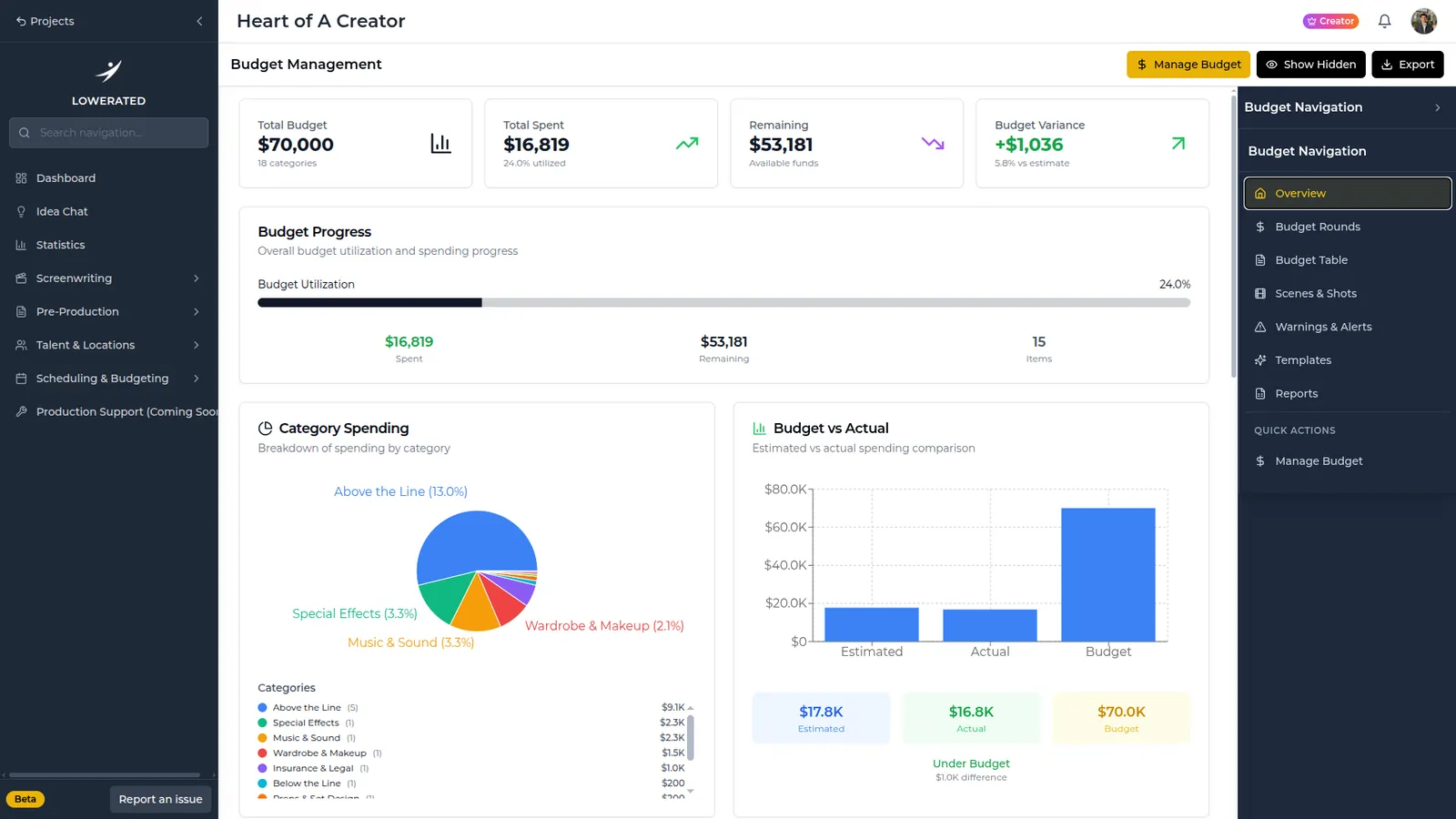
In Lowerated, two tools help with the thinking part. Idea Chat lets you type your idea as one sentence and talk it through with Oli, trying different directions until it turns into a story you want to write. That is a good place to test thematic questions before you outline: ask what the protagonist's hardest choice could be and see which version you care about. Ideas that come to you away from the desk can go in as voice notes, which land in your project as text.
The recording shows a voice note being added to a project and turned into text in Idea Chat.
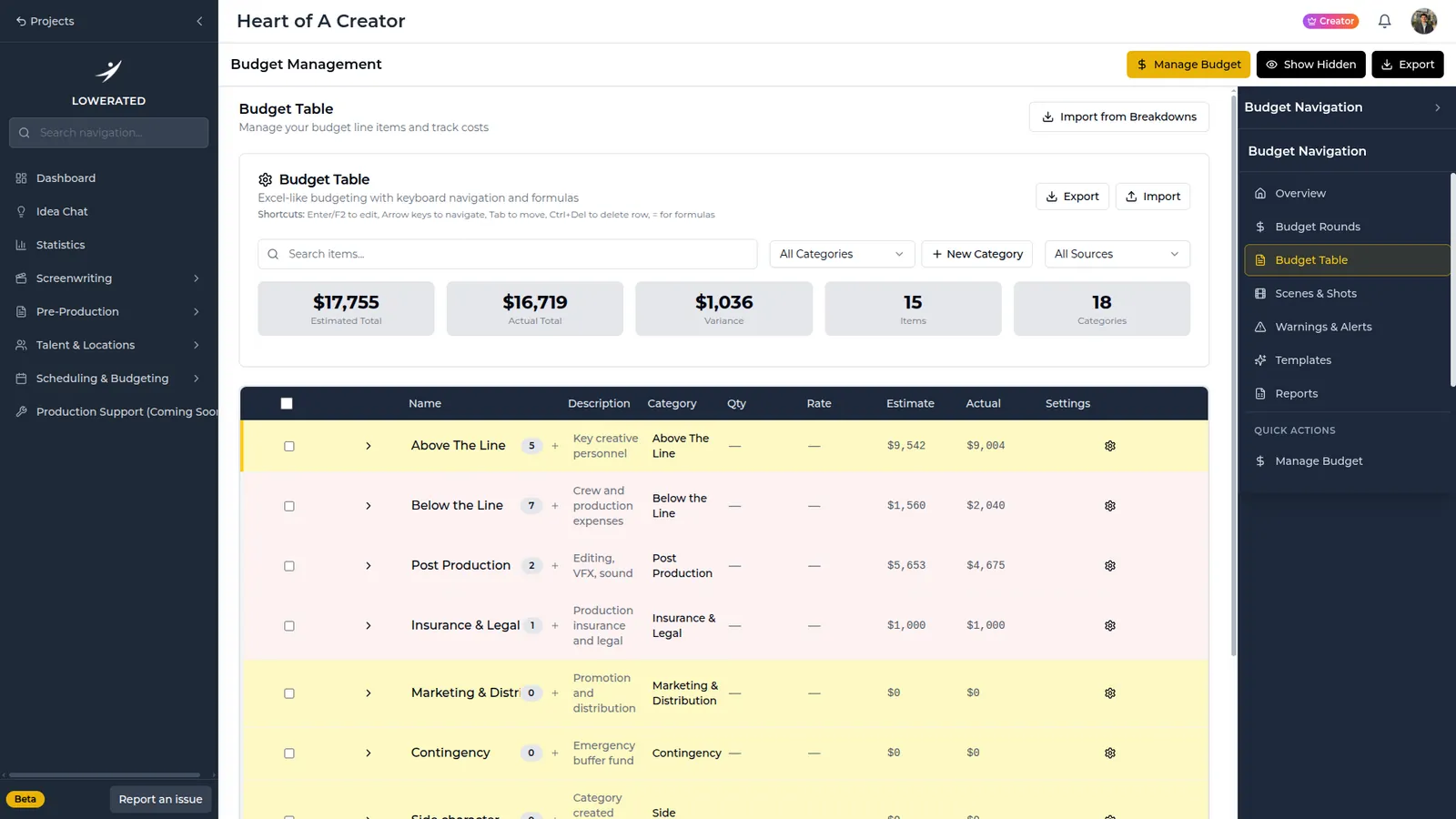
Once you are drafting, Oli is available inside the script editor. Oli knows your script, so you can ask about a character or a scene, for example whether a supporting character has a clear position on the central question, and get an answer that fits your story.
The clip shows a writer asking Oli about a character and a scene without leaving the script page.
For the character side of this work, see how to write brilliant characters.
FAQ
Do I need to know my theme before I start writing?
No. Many writers start with a character and a situation, then find the theme in the first draft. Having a working question early helps, but expect it to change.
Can a film have more than one theme?
A film usually has one central theme, with subplots exploring related ideas. If two themes compete for the climax, the ending tends to feel split.
Should a character say the theme out loud?
A brief line that raises the question early is common. A line that explains the answer at the end usually weakens it.
Is theme the same as the message of a film?
Close, but a message suggests a lesson for the audience. Theme works better as an honest question the story tests, with the ending as its answer.
Key takeaways
- Theme is the story's argument about a human question, shown through choices.
- Find it by working backward from the protagonist's hardest choice at the climax.
- Write it as one arguable sentence and keep it off the page.
- Give the opposition a real counterargument and let secondary characters show other answers.
- Use the rewrite to cut what does not touch the theme and sharpen what does.