How to Become a Script Writer: 10 Practical Steps


By Muhammad Wisal and Muhammad Ali / 5 min read

To become a script writer, you learn screenplay structure and format, write complete scripts regularly, get honest feedback, and build a small portfolio of polished work that you put in front of people who can hire you. There is no required degree or license. Most screenwriters get their first paid work through a mix of finished samples, contests, short films and relationships built over years.
What does a script writer do?
A script writer, or screenwriter, writes the screenplay a film, series or video is shot from: the scenes, action and dialogue. Early in a career that usually means writing "spec" scripts (unpaid scripts written to show your ability), short films, and work for small productions. Later it can mean paid assignments, rewrites, or a staff job in a TV writers' room.
How do you become a script writer? 10 practical steps
1. Learn how stories are built
Start with structure: what the main character wants, what stands in the way, and how the conflict escalates and resolves. Study the three-act structure (setup, confrontation, resolution) and a few beat models, then notice how real films bend them. Our guide on how to write a screenplay covers the basics.
2. Read scripts, a lot of them
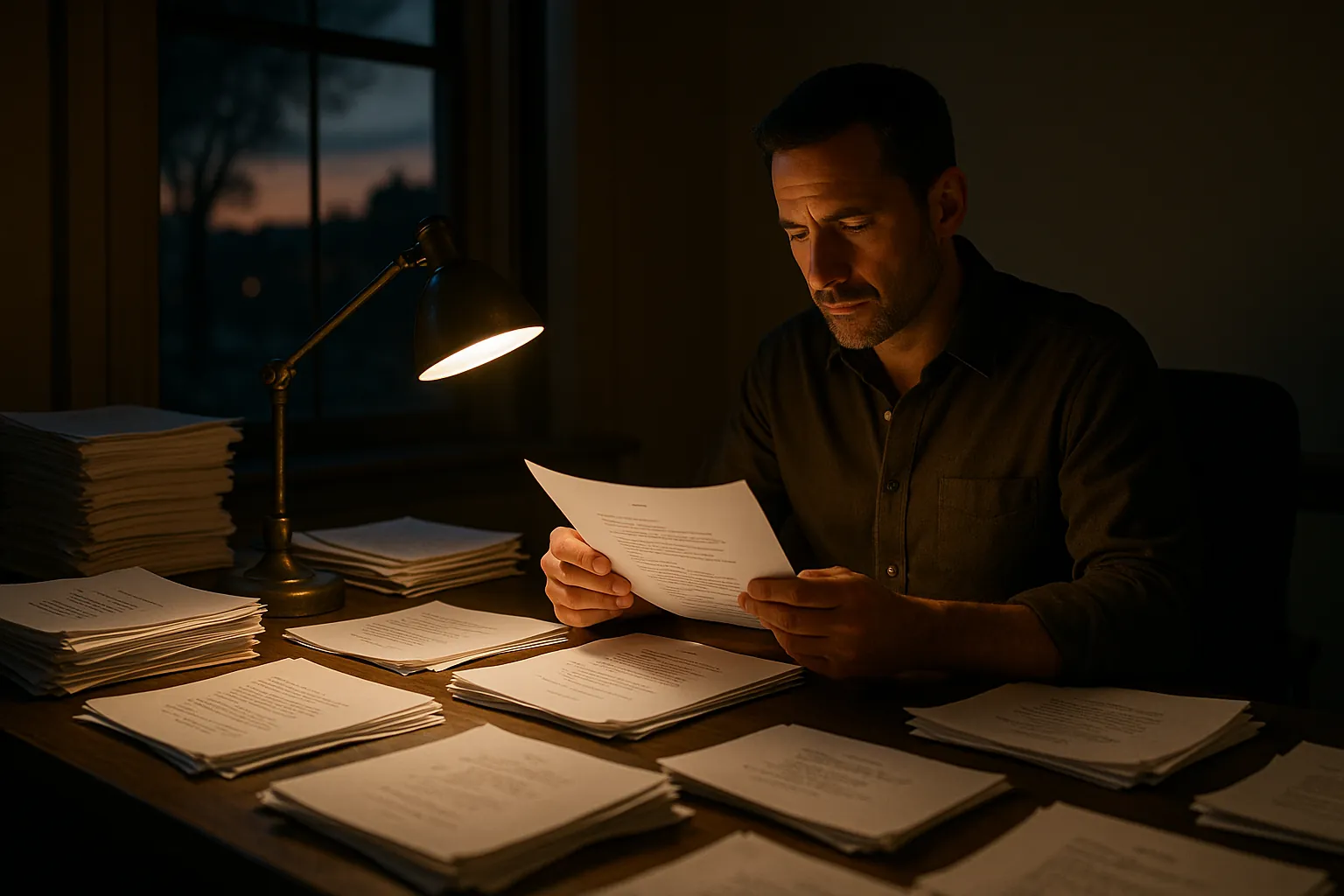
Reading produced screenplays teaches pacing and format faster than any book. Sites such as IMSDb and SimplyScripts host many scripts for free. As you read, ask: how does the writer open the story, how much action is on each page, and where does the main turn happen?
3. Learn screenplay format
Readers expect standard format, and a script that looks wrong often gets put down early. The essentials:
- Scene headings: INT. or EXT., location, and time of day (for example, EXT. JETTY. EARLY MORNING).
- Action lines in present tense, kept short.
- Character names in capitals above their dialogue.
- Roughly one page per minute of screen time: about 90 to 120 pages for a feature.
Screenwriting software handles the layout. Lowerated's Scriptwriter formats to industry standard as you type, and there is a free plan to start on. See elements of a screenplay for each element explained.
4. Write regularly and finish drafts
Finishing matters more than writing perfectly. One page a day gives you a feature draft in about four months. Set a fixed time, 30 to 60 minutes is enough, and keep going past the bad pages. You fix scripts in rewrites, and you can only rewrite what exists.
5. Start with short scripts
Short scripts let you practice a whole story, beginning to end, in days instead of months. Write a five-minute short with two characters and one location. It is also a script you could realistically shoot yourself.
6. Study films with the script in mind
Watch films the way a writer reads them. Pause after each scene and note what changed, what the character wanted, and what you now know that you didn't before. Rewriting a famous scene in your own words is a useful exercise to see why the original choices work.
7. Get feedback and learn to rewrite
Every professional script goes through many drafts. Share pages with a writing group or peers, collect notes, and look for patterns: if three readers are confused in the same place, the problem is real even if their suggested fixes are wrong. Keep earlier drafts so you can compare.
Writing with a partner is another way to learn fast. In Lowerated you can co-write live and leave comments on specific lines, which we describe in how screenwriters collaborate on a script.
The clip shows two writers editing the same script at the same time.
8. Build a portfolio of polished samples
You need two or three strong scripts before most people will read you seriously. A common mix is a feature and a short, or for TV, an original pilot plus a second sample. Range helps, but quality matters more than quantity: one excellent script beats five average ones.
9. Enter contests and fellowships
Well-known programs such as the Academy Nicholl Fellowships and the Sundance Screenwriters Lab can lead to meetings with producers and representatives. Even when you don't place, a deadline forces you to finish and polish. Check entry fees and the program's track record before you pay.
10. Make things and meet people
Many screenwriters get their first credits by making short films with friends or writing for local directors. Go to festivals, join writing groups, and work on other people's sets. Over time those relationships lead to introductions to producers, managers and agents.
Do you need a degree to become a screenwriter?
No, you don't need a degree to become a screenwriter. Producers and representatives judge your scripts. Film school or courses can help with structure, deadlines and contacts, but plenty of working writers learned by reading, writing and getting notes.
How long does it take to become a screenwriter?
It usually takes years. Writing a first feature often takes several months, and many writers finish a few complete scripts before one is strong enough to get attention. A realistic plan is to treat the first two or three years as training and portfolio building.
Can AI help you learn screenwriting?
AI can help with the mechanics, but it can't do the learning for you. Use it to check format, question your outline, or try a line a different way. In Lowerated, Oli rewrites only the line you select, and nothing changes until you accept it, so the voice you are developing stays yours. If you let AI write whole scenes, you skip the practice that makes you a writer.
FAQ
How do screenwriters get paid?
Screenwriters are paid by selling or optioning scripts, through writing assignments and rewrites, or through staff jobs in TV. Early on, many work for small fees or deferred pay on independent projects.
Do I need an agent to start?
No. Most new writers find work through contests, referrals and short films first. Managers and agents tend to come once you have strong samples and some momentum.
What software do screenwriters use?
Final Draft is the long-time industry standard. Fade In, WriterDuet, Celtx and Lowerated's Scriptwriter are common alternatives, and many can import and export each other's formats.
How long should my first screenplay be?
Start with a short of 5 to 15 pages. A first feature typically lands between 90 and 110 pages.
Key takeaways
- Learn structure and format, then read produced scripts constantly.
- Write on a schedule and finish drafts; quality comes in rewrites.
- Build two or three polished samples before you look for representation.
- Contests, short films and writing groups are the usual ways in.
- Screenwriting software handles the formatting so you can focus on the story. Start a free account.