Film Crew Roles Explained: Who Does What on Set


By Muhammad Wisal and Muhammad Ali / 6 min read
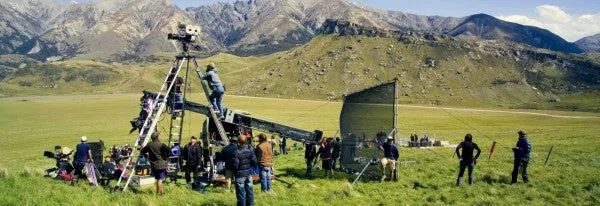
A film crew is organized into departments, each run by a head of department who answers to the director and the producers. The main ones are production, the assistant directors, camera, grip and electric, sound, art, wardrobe, hair and makeup, and the script supervisor, with post-production taking over after the shoot. This guide explains what each role does on set and which roles a small shoot actually needs.
How is a film crew structured?
A film crew is structured as a chain of departments that all report up to the director (creative decisions) and the producers (money, schedule, people). The 1st assistant director runs the set day to day, so most departments take their timing from the 1st AD.
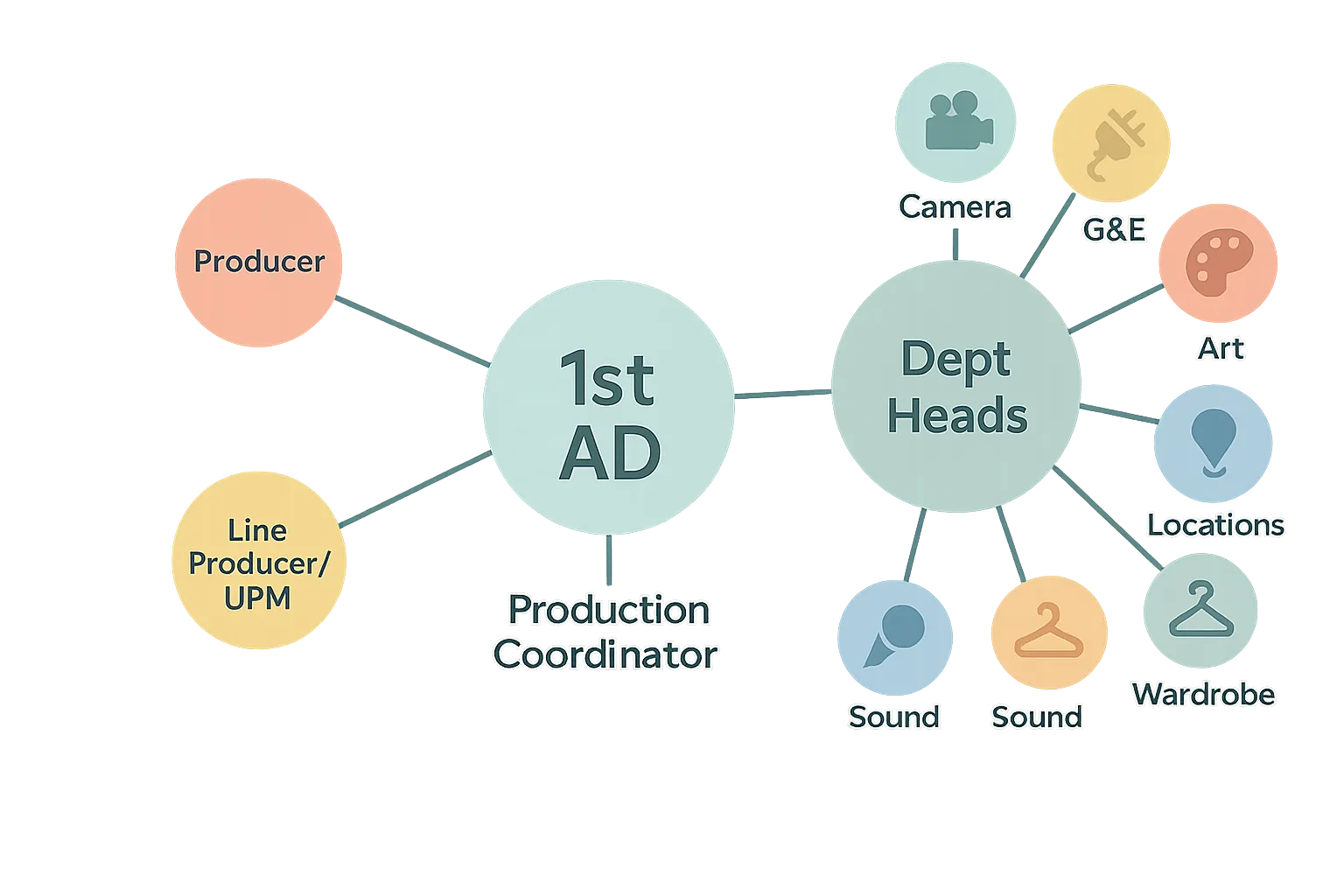
You will also hear the split between "above the line" and "below the line." Above the line usually means the writer, director, producers and principal cast. Below the line covers the rest of the crew and the technical costs. The split matters most when you build a budget; see above the line vs below the line costs.
Who does what on a film crew? Roles by department
Each department has a head and a team under them. Here are the core roles and what each one does on a shoot day.
| Department | Role | What they do |
|---|---|---|
| Production | Producer | Raises or manages the money, hires key crew, makes final calls on schedule and budget |
| Production | Line producer / UPM | Runs the budget and day-to-day production logistics |
| Production | Production coordinator and PAs | Paperwork, travel, deliveries, running errands, locking up set |
| Directing | Director | Makes the creative decisions: performance, shots, tone |
| Assistant directors | 1st AD | Builds the schedule, runs the set, keeps the day on time, calls safety meetings |
| Assistant directors | 2nd AD | Prepares call sheets, manages cast arrivals and background |
| Camera | Director of photography (DP) | Designs the look, chooses lenses and lighting with the director |
| Camera | Camera operator | Operates the camera during takes (often the DP on small shoots) |
| Camera | 1st AC (focus puller) | Keeps the shot in focus, builds and maintains the camera |
| Camera | 2nd AC (clapper loader) | Slates each take, logs camera reports, manages media |
| Camera | DIT | Backs up and checks footage on set, manages color settings |
| Electric | Gaffer and electricians | Set up and power the lights to the DP's plan |
| Grip | Key grip and grips | Rig and move non-electrical gear: stands, flags, dollies, cranes, mounts |
| Sound | Production sound mixer | Records dialogue and sound on set, sets levels |
| Sound | Boom operator | Places the microphone close to the actors without entering frame |
| Art | Production designer | Designs the look of sets and locations |
| Art | Art director, set decorator, props master | Build and dress sets, source and manage props |
| Wardrobe | Costume designer and wardrobe team | Design, source, fit and maintain costumes, track continuity |
| Hair and makeup | Hair and makeup artists | Prepare actors and keep their look consistent between takes |
| Script | Script supervisor | Tracks continuity, coverage and what was shot for the editor |
| Locations | Location manager | Finds and secures locations, handles permits and neighbors |
| Post-production | Editor, colorist, sound designer, composer | Turn the footage into the finished film after the shoot |
For deeper definitions of individual roles, see the glossary entries for the 1st AD and the gaffer.
What is the difference between a gaffer and a key grip?
The gaffer handles anything electrical, mainly the lights and the power to run them. The key grip handles the support and shaping gear around them: stands, flags that block light, diffusion frames, dollies and rigging. A simple rule many crews use: if it plugs in, it belongs to electric; if it holds, shapes or moves something, it belongs to grip. On small shoots one person may do both, but it helps to know which job they are doing at any moment.
What does a day look like for each department?
Here is one setup on a small shoot, to show how the roles connect. The film is a short called "Low Tide," and the scene is a bait shop owner, Teodor, arguing with his daughter Ines at the counter.
- Blocking. The director and actors walk the scene. The 1st AD watches, the DP and script supervisor take notes.
- Lighting and rigging. Actors go to hair, makeup and wardrobe. The gaffer's team sets lights. Grips flag the shop window so daylight does not spill onto Teodor's face.
- Sound check. The mixer asks for the fridge to be switched off and records room tone later.
- Rehearsal and takes. The 1st AD calls the roll. The 2nd AC slates. The 1st AC pulls focus as Ines moves from the door to the counter.
- Checking and moving on. The script supervisor notes which takes the director liked and where Teodor's coffee cup was. The DIT backs up the card. The 1st AD calls the next setup.
Every role in that list has a reason to be there. When one is missing, someone else has to cover it, and the day slows down.
Which crew roles do you need for a small shoot?
For a small short film, a workable core crew is often five to ten people, with several people covering more than one job. A typical lean setup:
- Director
- Producer, who may also act as 1st AD on a very small shoot
- DP / camera operator
- 1st AC, who also slates and handles media
- Gaffer, with one grip or electrician
- Sound mixer, ideally with a boom operator
- Art and wardrobe, often one person on a short
- Hair and makeup
- One or two PAs
The roles people most often skip, and later regret, are the dedicated sound mixer and the script supervisor. Bad sound is hard to fix, and missing continuity notes make the edit slower. If you are deciding who to bring on first, read how to hire a film crew on a small budget.
Common mistakes with crew roles
- Giving one person two jobs that happen at the same time, such as directing and operating sound.
- Not naming a 1st AD, so nobody owns the schedule and the day runs late.
- Assuming the DP will also light, rig and manage media alone.
- Leaving department heads off the early planning, so the art team learns about a key prop the day before.
- No clear chain of contact, so crew ask the director logistics questions mid-take.
Keeping your crew organized in Lowerated
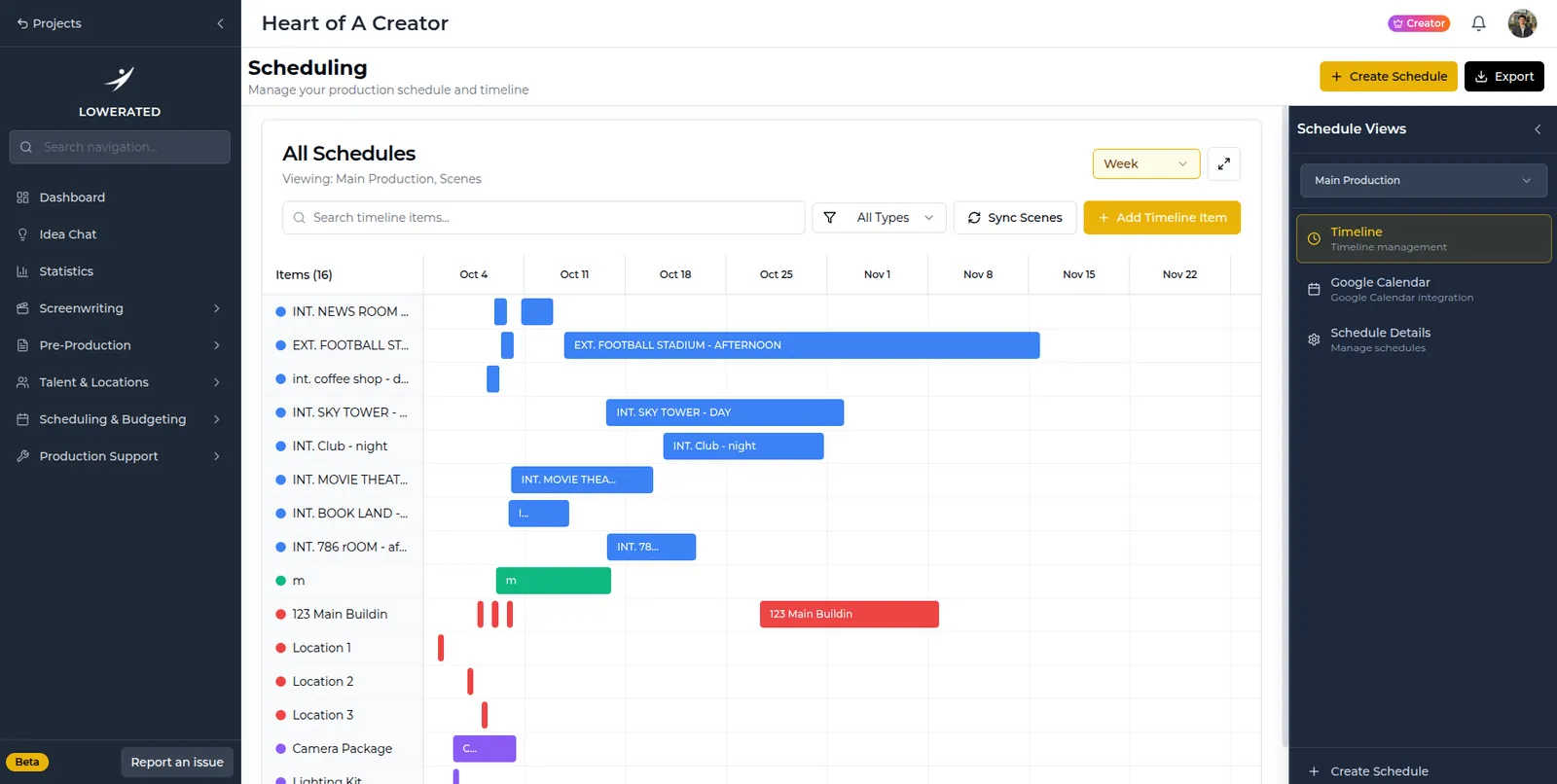
Once you know which roles you need, Lowerated keeps the crew in the same project as your script and schedule. You build a crew list, collect contact and personal details with cast and crew info forms, and mark the days people are free, out or on hold, so the schedule can warn you about clashes. Call sheets then pull crew from the schedule.
The clip shows crew management in Lowerated, with the crew kept alongside the rest of the production.
For more on keeping contacts and forms in order, see how to manage a film crew.
FAQ
Who is in charge on a film set?
The director leads the creative work and the producer leads the production. On set, the 1st AD runs the floor and keeps the day on schedule.
What does a PA do on a film set?
A production assistant supports whichever department needs help: locking up areas during takes, running errands, handing out walkie-talkies and helping with set-up and wrap.
Is the DP the same as the camera operator?
Not always. On larger films the DP designs the images and a separate operator runs the camera. On small shoots the DP often operates too.
What is a head of department?
The person in charge of one department, such as the DP for camera or the production designer for art. They hire and lead their team and report to the director and producers.
Key takeaways
- A film crew is organized into departments, each with a head who answers to the director and producers.
- The 1st AD runs the set and sets the timing for every department.
- Gaffers handle electric and lights; key grips handle rigging and the gear that shapes light.
- A small short can work with five to ten people if roles are combined carefully.
- Keep a dedicated sound mixer and someone tracking continuity, even on a lean crew.