How to Manage a Film Crew: Contacts, Info Forms and Availability


By Muhammad Wisal and Muhammad Ali / 6 min read
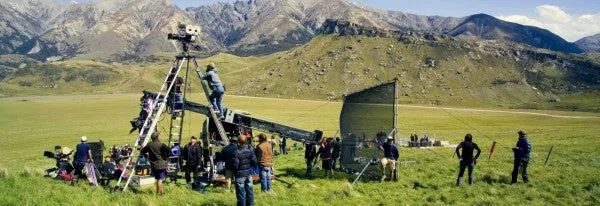
Film crew management means keeping one accurate crew list, collecting each person's details through an info form, tracking who is free on which shoot day, and getting the right information to the right people before every call. On a small production the producer or 1st AD usually owns it. Done well, nobody shows up on the wrong day and nobody has to search old messages for a phone number.
What does managing a film crew involve?
Managing a crew covers four jobs that run from hiring to wrap:
- The crew list: who is on the production, their role, department and contact details.
- Information and paperwork: emergency contacts, dietary needs, deal terms and any forms your production requires.
- Availability: which shoot days each person can work, and which they cannot.
- Communication: call sheets, schedule changes and department notes reaching everyone who needs them.
Hiring comes first and is a separate task. See how to hire a film crew on a small budget for finding people, and film crew roles explained for what each person does.
Who manages the crew on a film?
The producer or unit production manager usually owns the crew list, deal memos and budget side. The 1st AD manages the crew day to day on set, and the 2nd AD handles call times and paperwork for each day. Department heads (director of photography, gaffer, production designer) usually bring and manage their own teams. On a micro-budget short, one producer may do all of this, so it helps to keep everything in one place from the start.
What goes on a crew list?
A crew list is a contact sheet grouped by department, from the producers down. Here is a sample for a small short film, "Salt Flats", shooting four days.
| Department | Role | Name | Phone | Days | |
|---|---|---|---|---|---|
| Production | Producer | Ifeoma Clarke | (555) 014 2290 | ifeoma@example.com | 1 to 4 |
| Production | 1st AD | Gustavo Lind | (555) 014 3381 | gustavo@example.com | 1 to 4 |
| Camera | Director of photography | Hana Sato | (555) 014 7765 | hana@example.com | 1 to 4 |
| Camera | 1st AC | Brody Fenn | (555) 014 1102 | brody@example.com | 1 to 3 |
| Electric | Gaffer | Lucía Ferro | (555) 014 6604 | lucia@example.com | 1 to 4 |
| Sound | Sound mixer | Otto Brandt | (555) 014 9921 | otto@example.com | 1, 2, 4 |
| Art | Production designer | Rhea Moss | (555) 014 5530 | rhea@example.com | Prep, 1 to 2 |
Keep the list in one shared place and date each version. When someone joins or leaves, update it the same day.
What should a crew info form ask for?
A crew info form collects everything you need from each person once, so you are not chasing details the night before a shoot. Send it as soon as someone confirms.
| Field | Why you need it | Example |
|---|---|---|
| Full name and preferred name | Credits and call sheets | Lucía Ferro, "Lu" |
| Role and department | Crew list grouping | Gaffer, Electric |
| Phone and email | Call sheets and updates | (555) 014 6604 |
| Emergency contact | Safety on set | Partner, name and number |
| Dietary needs and allergies | Catering and safety | Vegetarian, nut allergy |
| Transport and parking | Unit base and parking plan | Own van, needs a space for gear |
| Kit they bring | Equipment list and kit fees | Own lighting kit, two LED panels |
| Credit spelling | End credits | Lucía Ferro |
| Unavailable dates | Scheduling | Not free on Day 3 |
Pay terms, tax forms and union paperwork vary by country and production. Agree terms in a deal memo and ask your accountant or a local production lawyer what paperwork you need. Personal details such as emergency contacts and allergies should only be visible to the people who need them; data protection rules vary by country.
How do you track crew availability?
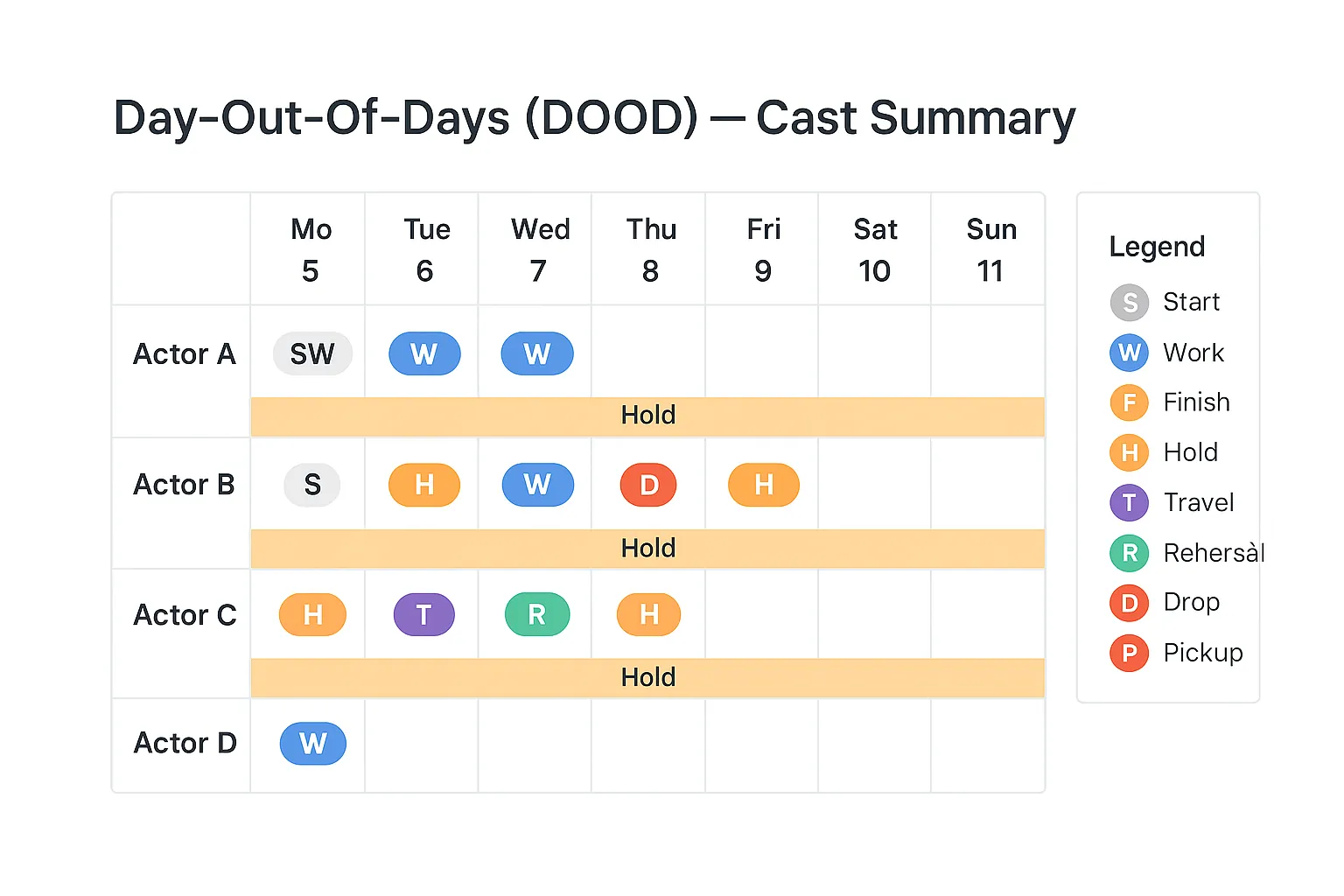
Track availability as a grid of people against shoot days, with three states: free, out and on hold. "On hold" means the person has penciled the day for you but has not confirmed. Check the grid every time the schedule changes.
| Crew member | Day 1 | Day 2 | Day 3 | Day 4 |
|---|---|---|---|---|
| Hana Sato (DP) | Free | Free | Free | Free |
| Brody Fenn (1st AC) | Free | Free | Free | Out |
| Otto Brandt (Sound) | Free | Free | Out | On hold |
| Rhea Moss (Art) | Free | On hold | Out | Out |
In this example the sound mixer is out on Day 3. The producer either books a replacement for that day or the 1st AD moves the dialogue-heavy scenes off Day 3. For cast, the same logic applies; see scheduling around actor availability.
How do you keep the crew informed?
Send one approved call sheet per shoot day, the evening before, and treat it as the single source of truth. Schedule changes go out as a new version with the date and time on it, never as a casual message to a few people. A department heads' channel for questions and a short production meeting before the shoot help, but the call sheet is what people act on. See how to make a call sheet.
What are common crew management mistakes?
- Keeping contact details in several places, so the call sheet has an old number.
- Asking for emergency contacts on the morning of Day 1.
- Scheduling a scene on a day a key crew member already said they could not work.
- Treating "on hold" as confirmed and finding out too late that the person took another job.
- Sending schedule changes to department heads only and assuming they pass it on.
- Forgetting to collect credit spellings until the end credits are being made.
How to manage your crew in Lowerated
In Lowerated the crew list, info forms, availability and call sheets live in the same project as the schedule, so details you collect once are reused.
- Add people to the crew list with their roles.
- Send cast and crew info forms so people fill in their own details.
- Mark availability for each shoot day as free, out or on hold.
- Build the schedule on the stripboard. If a scene lands on a day someone is out, Lowerated warns you.
- Send call sheets built from the schedule, with call times, locations and crew already filled in.
The clip shows how crew are managed in a Lowerated project.
The clip shows days marked as unavailable and the warning when a scene lands on a day someone is out.
These sit with the other pre-production tools.
FAQ
When should I send the crew info form?
As soon as someone confirms they are on the production. Aim to have every form back before the final production meeting.
What is the difference between a crew list and a call sheet?
The crew list covers the whole production and changes rarely. A call sheet covers one shoot day and lists only who is needed that day and when.
How many crew does a short film need?
It depends on the script and budget. Many low-budget shorts run with a crew of five to fifteen people, with some people covering more than one role.
Should I share the full crew list with everyone?
Share names, roles and work contact details with the crew. Keep emergency contacts, allergies and pay details limited to the producer and the people who need them.
Key takeaways
- Keep one dated crew list and update it the day anything changes.
- Collect contacts, emergency details, dietary needs and unavailable dates through an info form as soon as someone confirms.
- Track availability as free, out or on hold, and treat holds as unconfirmed.
- Check availability every time the schedule moves.
- Use the call sheet as the single source of truth for each day.