Film Stunt Safety: Planning Stunts for Indie Shoots


By Muhammad Wisal and Muhammad Ali / 6 min read
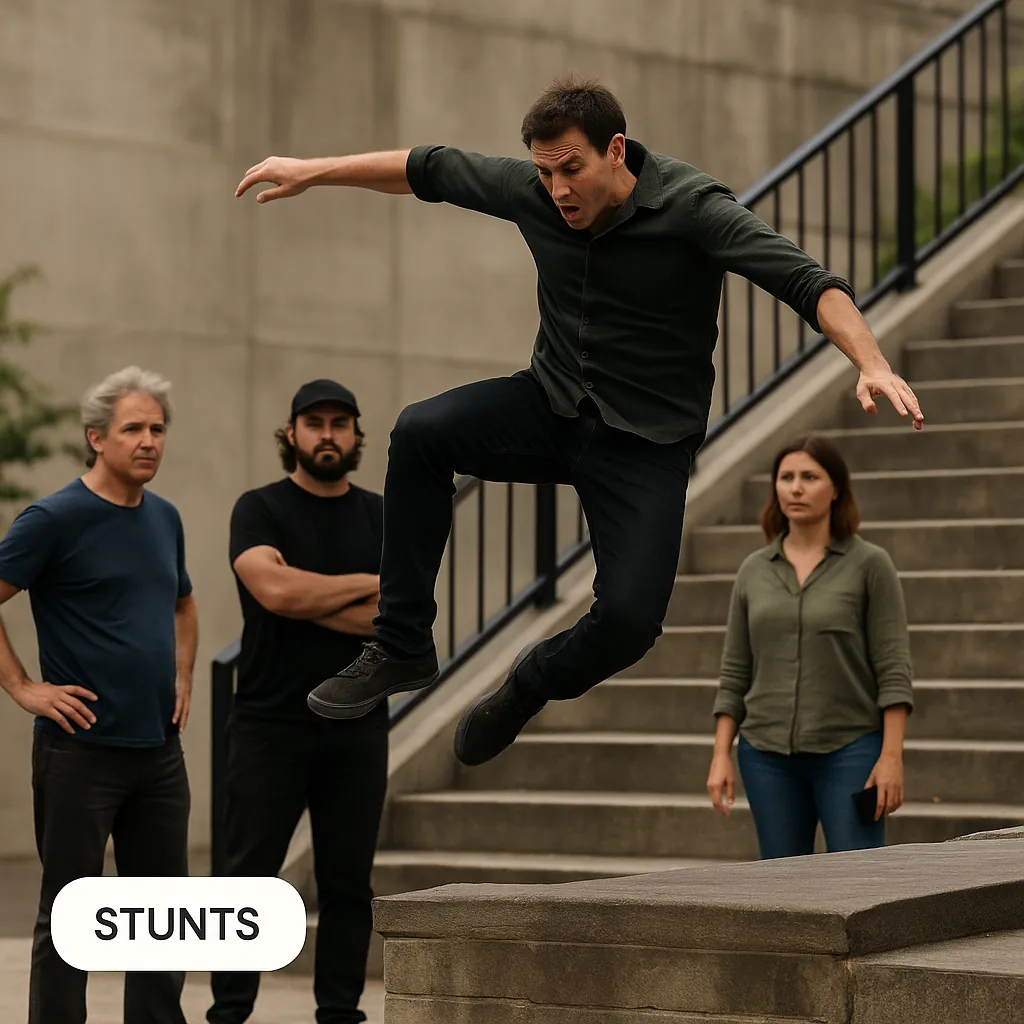
Film stunt safety starts in pre-production: flag every risky action in the script, hire a qualified stunt coordinator to design and run it, write a risk assessment, rehearse at walking pace, and brief the whole unit in a safety meeting before the camera rolls. On an indie shoot the simplest safe plan is often to cut the stunt down, shoot it in pieces, or leave it out.
What counts as a stunt on a film shoot?
A stunt is any action that carries a real risk of injury if it goes wrong, even if it looks small on the page. Falls, fights, car hits, running on uneven ground, climbing, work near water or heights, fire, and anything with weapons or vehicles all count. So does a slap, a shove into a wall or a trip down three steps.
A useful test: if an untrained actor doing it ten times in a row could get hurt, treat it as a stunt and plan it as one. Many injuries on small sets happen during "simple" moments that nobody planned.
Who is responsible for stunt safety?
The producer is responsible for a safe set overall. The stunt coordinator designs and runs the stunt. The 1st AD runs the safety meeting and controls the set during the stunt. Everyone on set has the right to stop a take if they see danger.
| Role | What they do for a stunt |
|---|---|
| Producer | Approves the plan and budget, checks insurance, makes sure the right people are hired |
| Stunt coordinator | Designs the action, picks the performers, chooses pads and rigging, rehearses, calls the go |
| Stunt performer | Performs or doubles the action, has a say in whether it is safe |
| 1st AD | Schedules rehearsal, runs the safety meeting, clears the area, controls the set |
| Set medic | On set for the stunt, with kit and a plan to reach the hospital |
| Armorer or SFX supervisor | Handles any weapons, pyrotechnics or effects in the scene |
| Director | Agrees the shots and changes the action if the coordinator says it is unsafe |
Unions, insurers and some countries have specific rules about who must be present and qualified. Check your agreements and your production insurance policy before you plan the day.
How do you plan a stunt step by step?
- Flag it in the breakdown. Mark every stunt, fight, vehicle action and weapon in the script breakdown, with the scene number and a short description.
- Bring in a coordinator early. Send them the pages before you lock the schedule or budget. They will tell you what it takes, and often suggest a simpler way to get the same moment on screen.
- Design the action for the camera. Decide the shots with the director and DP. Most stunts are built from short pieces: the run up, the impact on a pad, the reaction, the landing. Plan your coverage so no single take has to do everything.
- Write a risk assessment. List each hazard, who is at risk and what controls you will use: pads, rigging, distance, a double, a lower height, a slower speed.
- Decide who performs it. A stunt double or the actor, as the coordinator advises. Never pressure an actor into doing their own stunt.
- Rehearse. Walk it, then half speed, then full speed, in the real location or a matching space, with the camera position marked.
- Schedule enough time. Give the stunt its own block in the day with rehearsal, reset time and a meal break nowhere near the middle of it.
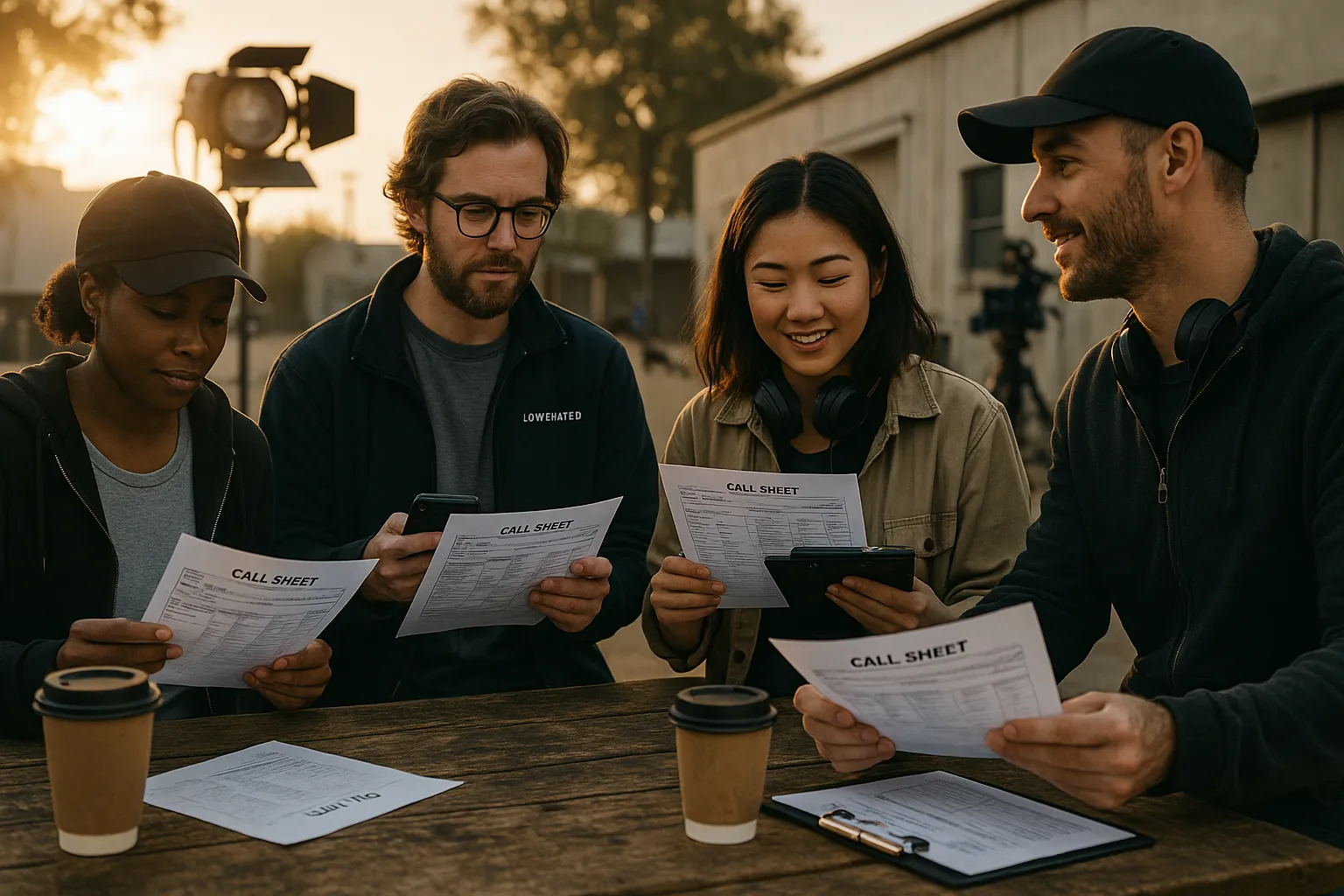
- Put it on the call sheet. Flag the scene, list the coordinator and medic, and give the hospital details.
What does a stunt risk assessment include?
A stunt risk assessment lists what could go wrong, how likely and serious it is, and what you are doing to prevent it. Here is a simple row from "Last Stop", a short where a courier named Wade is shoved down a short flight of stairs by a stranger.
| Item | Entry |
|---|---|
| Scene | Sc. 22, INT. STATION STAIRWELL - NIGHT |
| Action | Wade is pushed and falls down four steps, lands on the landing |
| Hazards | Head and back injury, edge of steps, hard floor, slippery surface |
| Who is at risk | Stunt double, actor playing the stranger, camera operator |
| Controls | Stunt double performs the fall. Pads hidden under the steps and on the landing. Push is a pull away, no real force. Camera on a long lens from the top |
| Rehearsal | Walk through at 7:00 PM, half speed at 7:30 PM, full speed only after coordinator approves |
| Medical | Set medic at the foot of the stairs. Nearest ER on call sheet |
| Stop rules | Anyone can call "cut" or "stop". Coordinator calls action for the fall |
The actor playing Wade shoots the lead up and the reaction close-up on the landing. The double does the fall itself.
What happens in a safety meeting?
A safety meeting is a short briefing for everyone on set, held right before the stunt is rehearsed or shot. The 1st AD usually runs it with the coordinator, and nobody skips it, including the director.
- What the stunt is and exactly what will happen.
- Where people must stand, and which areas are off limits.
- Who calls action, who can stop it, and the word or signal for stop.
- Where the medic and first aid kit are, and the route to the hospital.
- Any weapons, effects or vehicles in use, and who controls them.
- A chance for anyone to ask a question or raise a concern.
Hold a new meeting if the plan changes, if the stunt moves to a new location, or after a long break.
What should an indie production avoid?
Some things are too risky to attempt without specialists and proper budget, whatever the schedule pressure. Be honest about where your shoot sits.
- Real firearms on set. Use replicas or non-firing props and add flashes in post. Weapons of any kind need a qualified person in charge of them.
- Vehicles near people. Car hits, near misses and driving with actors on public roads need precision drivers, road control and permits.
- Fire, heights and water. Each needs specialist crew and equipment. Water scenes also need safety divers or swimmers.
- Stunts with no coordinator. A fight choreographed by the cast on the day is a common cause of injury.
Often the strongest version of the scene is the one you imply: a sound, a cut, a reaction, the aftermath. Rewrite early if you cannot do it safely.
What are common stunt safety mistakes?
- Treating small action, like a shove or a slap, as not worth planning.
- Calling in a coordinator after the schedule and budget are locked.
- Asking for "one more take" when the performer is tired.
- Skipping rehearsal because the light is going.
- Scheduling the stunt at the end of a long day.
- Leaving the nearest hospital off the call sheet, or listing one that is closed at night.
Putting stunt plans on the call sheet in Lowerated
In Lowerated the call sheet for each shoot day is built from your schedule, with call times, locations and crew already filled in. When you review it, add the stunt scene, the coordinator and medic, the safety meeting time and the hospital details, then send it to everyone the night before.
The clip shows a call sheet built from the schedule, with call times, locations and crew filled in, reviewed and sent the night before.
FAQ
Do I need a stunt coordinator for a simple fight?
Yes, if anyone could get hurt. Even a short fight needs choreography, rehearsal and someone whose only job is safety.
Can actors do their own stunts?
Sometimes, if the coordinator agrees they can do it safely and the actor is willing. Many productions use a double for the risky part and the actor for the rest.
When should the safety meeting happen?
Right before the stunt is rehearsed or shot, with everyone on set present. Repeat it if anything changes.
Does insurance cover stunts?
Not automatically. Tell your insurer about every stunt in advance and check what the policy requires.
Key takeaways
- Treat any action that could injure someone as a stunt, including small ones.
- Bring in a qualified stunt coordinator before you lock the schedule and budget.
- Break the stunt into short pieces, rehearse at walking pace, then half speed.
- Run a safety meeting with everyone right before the stunt.
- If you cannot do it safely, imply it, shoot it differently or rewrite it.