How to Write a Casting Call (With a Template)


By Muhammad Wisal and Muhammad Ali / 6 min read

A casting call tells actors what you are making, which roles are open, what the job involves and how to apply. To write one, give the project details and shoot dates, describe each role in two or three specific sentences, state the pay and any sensitive content plainly, and end with clear submission instructions and a deadline.
What is a casting call?
A casting call is the notice a production posts to find actors. It usually has two parts: a project summary (title, format, dates, location, pay) and a role breakdown (a short description of each character being cast). In the industry, the role descriptions on their own are often called a breakdown, and they go out to agents and casting sites. On an indie film, the director or producer usually writes the whole thing.
A good casting call does two jobs. It attracts the right actors, and it filters out the wrong ones before they spend time on a self-tape. Every line that is vague, such as "pay TBD" or "female, 20 to 50", brings in applications you will have to sort through later.
What should a casting call include?
| Field | What to write | Example |
|---|---|---|
| Project title | Working title | "Salt and Static" |
| Format | Short, feature, series, music video, student film | Narrative short, about 15 minutes |
| Logline | One or two sentences on the story | A radio host in a dying coastal town takes one last call that changes her mind about leaving |
| Key creatives | Director, producer, casting contact | Director and producer names with links to past work |
| Shoot dates | Exact dates or a firm window | Four days, 12 to 15 March |
| Location | City or region, and whether travel is covered | Coastal town two hours from the city; travel and lodging covered |
| Pay | Day rate, or what is offered instead | $200 per day, meals, credit and a copy of the film |
| Union status | Union agreement or non-union | Non-union |
| Roles | Name, playing age, size of role, description | See the role breakdown below |
| Sensitive content | Nudity, intimacy, stunts, smoking, weapons | One scene with a prop firearm; safety supervisor on set |
| How to apply | What to send, where, and in what format | Headshot, resume, reel link and a self-tape of the attached sides |
| Deadline | Date and time for submissions | Friday 21 February, 6:00 PM |
| Audition process | What happens after | Callbacks in person on 28 February |
How do you write a good role description?
A role description should tell an actor who the character is and what the part asks of them, in two or three sentences. Use these rules.
- Give a playing age range. "Playing 35 to 45" is clearer than an exact age, and it describes how the actor reads on screen.
- Describe the person, not only the look. Say what the character wants and how they behave. "Warm with strangers, sharp with family" helps an actor more than "attractive".
- Say the size of the role. Lead, supporting, or one scene. Note how many shoot days.
- List required skills. Driving, an instrument, an accent, swimming, a language.
- Only specify gender, ethnicity or body type when the story needs it. Otherwise say the role is open. It widens your pool and avoids excluding actors for no reason.
- Flag sensitive content in the role itself. If a role involves nudity, intimacy or stunts, say so in that role's description, not only in a footnote.
For more on writing open and fair calls, see audition and casting calls for first-time filmmakers.
What does a sample casting call look like?
Here is a full example you can adapt.
"Salt and Static", narrative short (about 15 minutes). Non-union.
A late-night radio host in a dying coastal town takes one last call that changes her mind about leaving.
Shoot: 12 to 15 March, coastal location two hours from the city. Travel, lodging and meals covered. Pay: $200 per day plus credit and a copy of the film.
MARISOL (lead, playing 35 to 45, all four days). The voice of the town's last radio station. Funny on air, tired off it. Has already packed. Comfortable carrying long single takes. Open to all ethnicities.
HARLAN (supporting, playing 60 to 75, one day, voice and one on-screen scene). A regular caller who has phoned in every night for years. Gentle, stubborn, hiding how lonely he is. A strong voice performance matters most.
KIT (supporting, playing 16 to 19, two days). Marisol's nephew, who runs the board at the station. Restless and blunt. Actors under 18 need a parent or guardian on set.
To apply: send a headshot, resume and reel link, plus a self-tape of the attached sides. Deadline: Friday 21 February, 6:00 PM. Callbacks in person on 28 February.
Attach sides for each role and clear self-tape instructions: framing, slate, file naming and how to send. Actors can then tape once, correctly.
Where should you post a casting call?
Post where the actors you need actually look. Common options include:
- Casting websites. In the US, Backstage and Actors Access are widely used. Other countries have their own services.
- Local theater companies, acting schools and university drama departments.
- Regional filmmaker and actor groups on social media.
- Agents, if your budget and union status suit them.
- Filmmaking platforms with a casting board.
Plan how long it will take. Allow time between posting, the deadline, callbacks and any chemistry reads. The guide on how long casting takes gives a sense of the timeline.
What are common casting call mistakes?
- "Pay TBD" or no pay line at all. Actors skip calls that hide the rate. If it is unpaid, say so and list what you do offer.
- Vague dates. "Sometime in spring" means you cannot check anyone's availability.
- Role descriptions that list only looks. Describe the character and what the role demands.
- Hiding sensitive content until the audition. State nudity, intimacy, stunts or weapons up front.
- Unclear submission rules. Without file names, a format and a deadline, applications arrive in every format through every channel.
- Asking for personal details too early. Collect home addresses, ID and emergency contacts only after you book someone.
- No reply plan. Decide how you will tell actors they were not cast.
How to post a casting call in Lowerated
In Lowerated, casting lives inside the film project, next to the script.
- Create the casting call. Give it a title and pick the characters from your project that you are casting.
- Post it so actors can apply directly. Actors find the role and send their details, links and self-tapes.
- Review applications in one place. Every application lands together, so you are not hunting through emails.
- Shortlist. Watch the self-tapes and shortlist the actors you like. Your team sees the same tapes and the same notes.
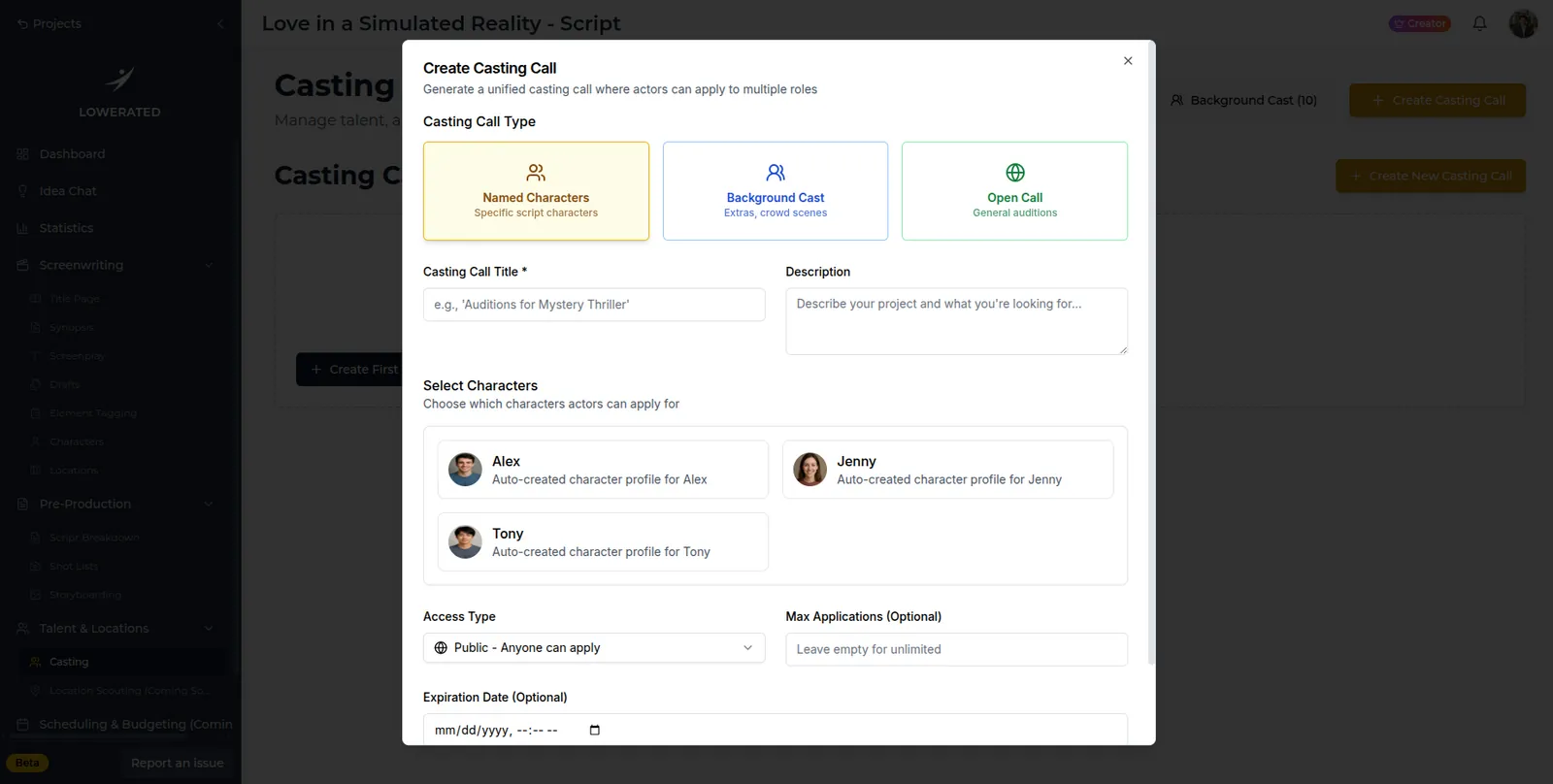
The clip shows a casting call posted so actors can apply with their details, links and self-tapes, with every application landing in one place.
The clip shows a casting call, self-tape review and a shortlist kept inside the film project.
FAQ
How long should a casting call be?
Usually one page. Keep the project summary short and give each role two or three sentences.
Should I include pay if the film is unpaid?
Yes. Say it is unpaid and list what you offer, such as meals, travel, credit and a copy of the film.
What is the difference between a casting call and a casting breakdown?
The breakdown is the list of role descriptions. The casting call is the full notice, which includes the breakdown plus project details, pay and how to apply.
Can I cast union actors on a non-union film?
Union members usually need the production to work under a union agreement. Rules vary by union and country, so check with the relevant union before you post.
Key takeaways
- Lead with the project, dates, location and pay, so actors can decide fast.
- Describe each role in two or three sentences: playing age, size of role, who the character is and what the part demands.
- Only specify gender, ethnicity or body type when the story needs it.
- State sensitive content up front, inside the relevant role.
- End with exact submission instructions, sides and a deadline.