How to Rehearse Actors Before the Shoot


By Muhammad Wisal and Muhammad Ali / 7 min read
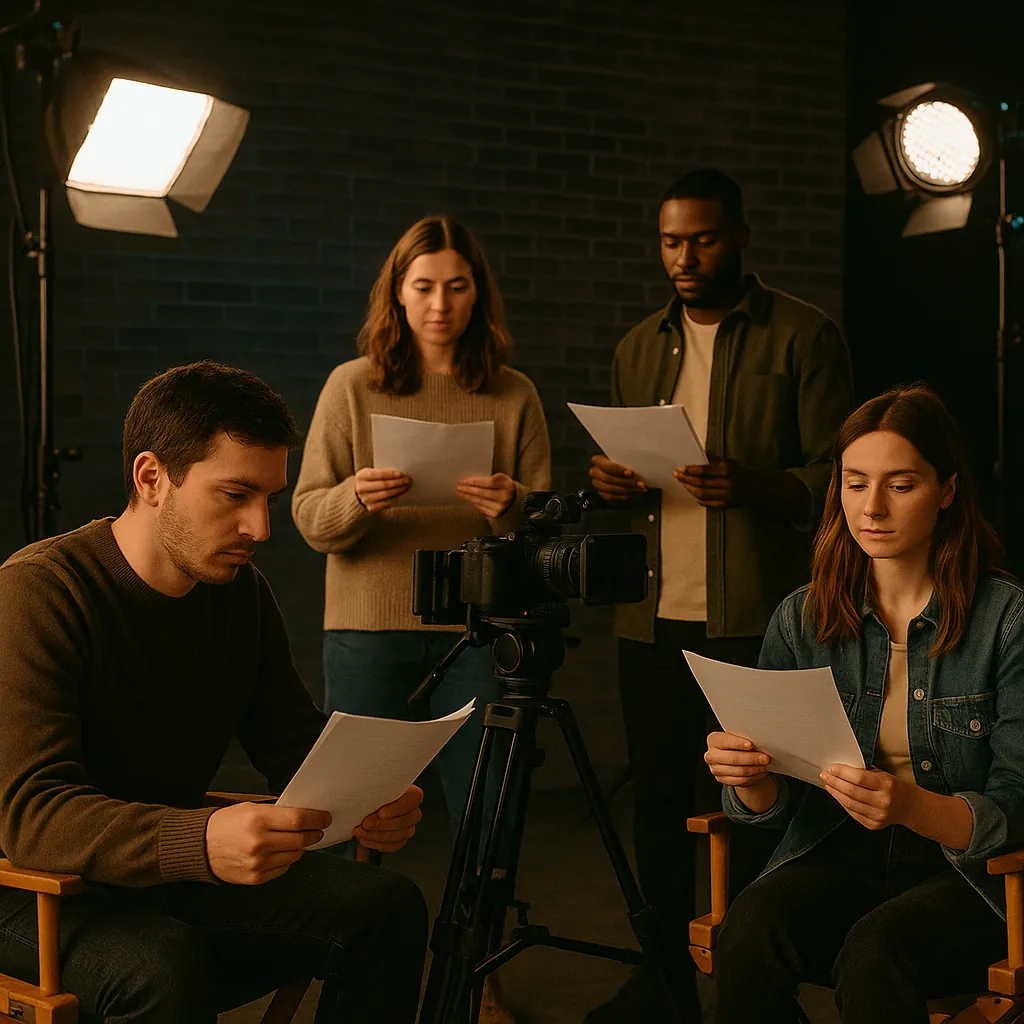
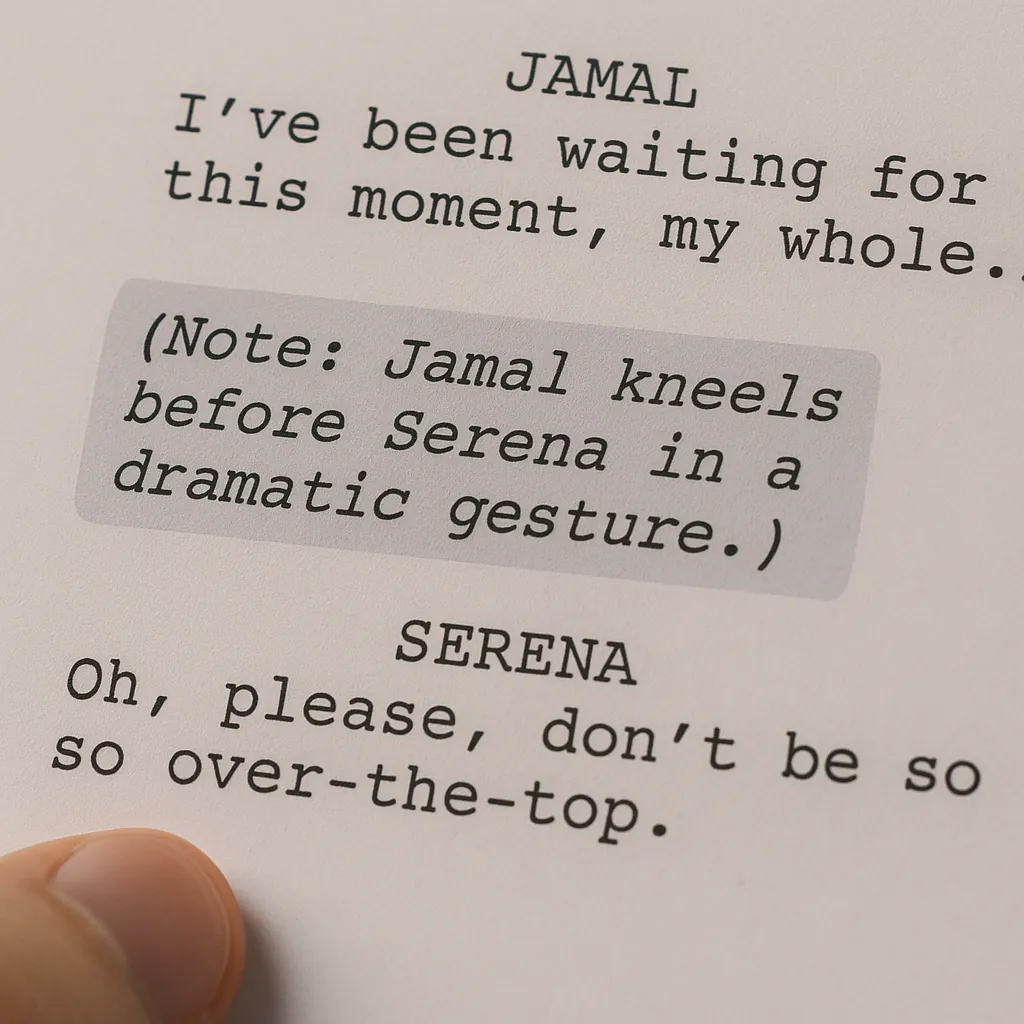
To rehearse actors before a shoot, pick the scenes that most need it, book a few focused sessions after casting and before day one, and work through them in order: a read-through, scene work at a table, then rehearsal on your feet in the real space if you can get it. The goal is to settle relationships, intentions and any physical business ahead of time, so the shoot day is spent capturing performances instead of discovering them.
Why rehearse actors before the shoot?
Rehearsal moves the slow, exploratory part of directing to a day when the camera is not running. On set, every minute spent working out what a scene is about costs crew time and light. In a rehearsal room it costs a few hours and some coffee.
It also gives you information. You hear which lines do not sit right in an actor's mouth, which beats are unclear, and where two actors read the relationship differently. Fixing those in pre-production is cheap. Finding them at 4 PM on a shoot day with the sun going is not.
Some directors and actors prefer to keep scenes fresh and rehearse very little. That is a valid choice, but make it on purpose, scene by scene, instead of skipping rehearsal because the schedule filled up.
What are the types of film rehearsal?
Film rehearsals usually fall into a few kinds, each with a different purpose.
| Type | When | What it is for |
|---|---|---|
| Table read | Early pre-production | Hear the whole script aloud once, check length, tone and story problems |
| Table work | After the table read | Sit with two or three actors and go through a scene beat by beat: what each character wants, what changes |
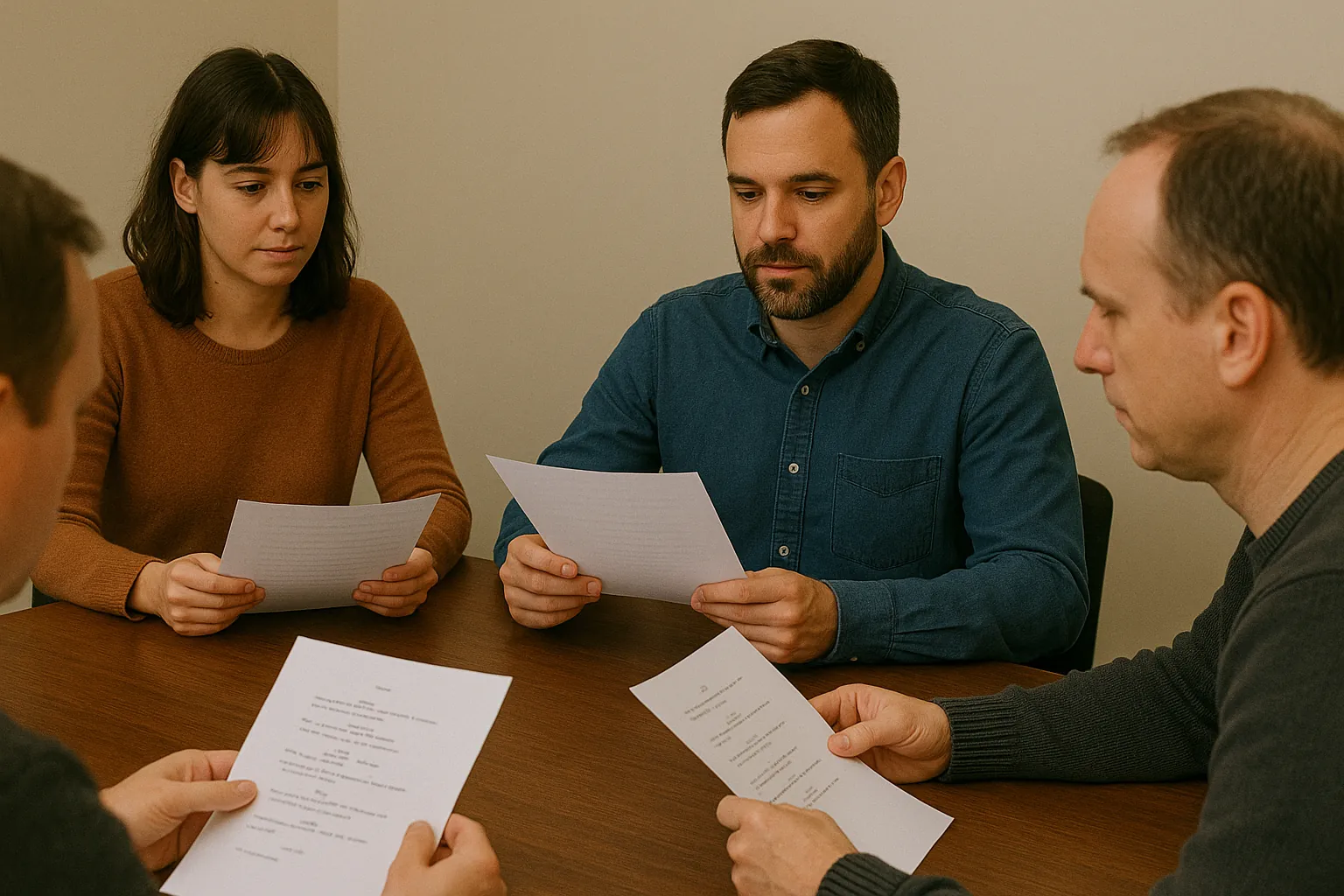
| On-your-feet rehearsal | Final weeks before the shoot | Move through the scene in a room or the real location, find rough positions and business |
| Specialist rehearsal | Before the scene is scheduled | Fights, dance, intimacy, accents, instruments, driving, with the right coordinator or coach |
| Rehearsal on the day | On set, before each setup | A private run for director and actors, then a marking run for the crew before lighting |
The table read is often the only rehearsal small films get. If you can add even one session of table work or on-your-feet rehearsal for your key scenes, the shoot gets easier.
Which scenes should you rehearse?
Rehearse the scenes where a mistake on the day would cost the most. With limited time, prioritize in this order:
- Scenes that carry the story. The turning points, the confrontation, the ending. If these do not work, nothing else matters.
- Scenes built on a relationship. Two actors who play siblings or a long marriage need time together before they can play history on camera.
- Physical or technical scenes. Fights, stunts, dance, handling weapons or props with tricky timing. These need a coordinator and repetition for safety as much as performance.
- Intimate scenes. These should be choreographed in advance, with consent agreed and, where possible, an intimacy coordinator present.
- Long dialogue scenes. Several pages in one location benefit from actors knowing the rhythm before coverage is shot in pieces.
Scenes of a single character walking, looking or reacting rarely need formal rehearsal. Talk them through instead.
How do you run a rehearsal step by step?
- Prepare your own notes first. For each scene, write one line on what it is about and what each character wants. Mark the beats where something shifts.
- Read the scene without stopping. Let the actors do it once their way. Listen more than you watch.
- Talk about the situation, not the line readings. Ask what the character wants from the other person and what is in the way. Avoid giving actors a tone to copy. Our notes on directing actors cover this in more depth.
- Work beat by beat. Run a section, give one or two notes, run it again. Keep notes short and playable: an action or an intention.
- Try an improvisation if a relationship feels thin. Play a scene that happens before the script starts, such as the last time these two people argued.
- Get on your feet. Use tape on the floor for walls and doors, or rehearse at the location. Rough positions now make blocking on the day faster.
- Write down what changed. Line changes, new business, prop needs, wardrobe notes. Share them with the script supervisor and department heads.
- Stop before the scene goes stale. Leave the emotional peak for the camera. Many directors rehearse the shape of a big scene and save the full intensity for the take.
What does a rehearsal schedule look like for a short film?
Here is an example for "Salt Road", a 15 minute short about a woman, Teodora, who drives her estranged brother, Kasim, to their father's funeral. Five shoot days, two leads, one supporting actor. The producer budgets three rehearsal sessions in the two weeks before the shoot.
| Session | Who | Length | Plan |
|---|---|---|---|
| Session 1 | Director, Teodora, Kasim, supporting actor | 3 hours | Table read of the full script, then table work on Sc. 4 and Sc. 9 (the two car arguments) |
| Session 2 | Director, Teodora, Kasim | 4 hours | Improvise a childhood memory the script refers to. On your feet for Sc. 12 at the gas station location |
| Session 3 | Director, leads, DP, stunt coordinator | 3 hours | Sc. 15, Kasim shoves Teodora against the car: choreograph and repeat at half speed. DP watches to plan coverage |
| Shoot days | Director and actors on set | 10 to 15 minutes per scene | Private rehearsal, then marking run for camera and sound |
Because most of "Salt Road" happens in a car, Session 2 also includes sitting in the actual picture car so the actors know how little room they have.
How do you fit rehearsal into the budget and schedule?
Treat rehearsal days as work days. On a day out of days report, rehearsal is usually marked with an R, so the cost and the actor's time are visible. Union agreements often have rules about paying for rehearsal; these vary by union and contract, so check with the union or your production lawyer. On non-union shorts, pay something or at least cover travel and food, and confirm the dates in writing.
Book rehearsals after casting is final and before costume fittings fill the calendar. Remember that availability problems show up here first: an actor who cannot make rehearsals may also be stretched during the shoot.
What are common rehearsal mistakes?
- Giving line readings. The actor copies your tone and the scene loses its life.
- Rehearsing everything to the same depth, so the key scenes get the same 20 minutes as minor ones.
- Over-rehearsing an emotional scene until the actors are performing a memory of it.
- Letting a fight or stunt be "worked out on the day" without a coordinator.
- Changing lines in rehearsal and not telling the script supervisor, so continuity and the shooting script disagree.
- Rehearsing in a space with no relation to the location, then discovering on set that the blocking does not fit.
Keeping casting and rehearsal notes with the script in Lowerated
Rehearsal builds on what you saw in auditions. In Lowerated, casting stays inside the film project, next to the script, so before the first session you and your producer can look at the same self-tapes and the same notes on each actor.
The clip shows a casting call created, self-tapes reviewed and actors shortlisted inside the film project.
When a line does not work in rehearsal, you can select it in the script and ask Oli for another take. Nothing changes in your script until you accept it, so you stay in control of what the actors receive.
FAQ
How long should you rehearse before a short film?
There is no fixed rule. Many shorts manage with a table read plus one or two sessions on the key scenes. Base it on how many difficult scenes you have, not on the runtime.
Should actors be off book at rehearsal?
Not for early table work, where reading keeps the focus on meaning. For on-your-feet rehearsal it helps if actors know the scene well enough to look at each other.
Can you rehearse over a video call?
Yes, for table work and character discussion. Physical scenes, fights and anything involving space need to happen in person.
Who should attend rehearsals?
The director and the actors in the scene. Add the DP, a coordinator or a coach when the scene needs them, and keep the room small.
Key takeaways
- Rehearse the scenes where mistakes are expensive: turning points, relationships, stunts and intimacy.
- Move from table read to table work to on-your-feet rehearsal, ideally in the real space.
- Give playable notes about intentions, not line readings, and save the emotional peak for the take.
- Schedule and budget rehearsal days like work days, and check union rules for pay.
- Record every change from rehearsal and pass it to the script supervisor and departments.