How to Plan a Music Video Shoot


By Muhammad Wisal and Muhammad Ali / 7 min read
a music video production plan turns a song and a concept into a schedule you can shoot. the core of it is a timed breakdown of the track, with a shot list built on top.
start from the song. it's your script.
map every section with timecodes and decide what the audience sees in each one. everything else comes from that map.
What goes into a music video production plan?
a music video plan has the same backbone as a short film plan, with the song in the place of the screenplay.
these are the documents most productions use:
| Document | What it does | Who usually owns it |
|---|---|---|
| Treatment | The pitch: concept, look, references, story beats | Director |
| Song breakdown | Each section of the track with timecodes and what happens on screen | Director |
| Shot list | Every setup, grouped by location and lighting | Director and DP |
| Budget | Crew, gear, locations, art, wardrobe, post and contingency | Producer |
| Schedule and call sheet | Setups in shooting order, with call times and playback notes | Producer or 1st AD |
| Releases and approvals | Talent and location releases, artist and label sign off | Producer |
if you need help with the pitch stage, how to write a film treatment covers the same skills a music video treatment uses.
How do you break down a song for a music video?
a song breakdown starts with the final mix and a timer. write down every section, when it starts and how hot it runs.
that list is your script. every later call comes from it, from how many setups you need to which scenes need the artist.
here's a worked example for "Low Tide", a 3 minute 40 second track by a made-up singer, Rosalind Achebe. the concept mixes performance on a pier with a short story about a ferry worker named Teodor.
| Section | Time | Energy | On screen |
|---|---|---|---|
| Intro | 0:00 to 0:18 | Low | Teodor ties up the ferry at dusk. Wide, no artist |
| Verse 1 | 0:18 to 0:52 | Building | Rosalind sings on the empty pier, slow push in |
| Chorus 1 | 0:52 to 1:20 | High | Handheld performance, intercut with Teodor running |
| Verse 2 | 1:20 to 1:54 | Medium | Story: Teodor finds a letter in the cabin |
| Chorus 2 | 1:54 to 2:22 | High | Performance, close ups, practical lights on pier |
| Bridge | 2:22 to 2:58 | Low | Slow motion: Rosalind and Teodor pass on the pier |
| Final chorus | 2:58 to 3:30 | Peak | All performance angles, fastest cutting |
| Outro | 3:30 to 3:40 | Fade | Ferry pulls away, hold on empty pier |
look at the table for ten seconds and you already know something.
the artist is needed for five sections, the story actor for five, and only the bridge needs both of them in the same shot.
How do you plan the shot list for a music video?
a music video shot list plans performance and story separately, then groups everything by location and light.
performance usually gets shot as full passes of the song from several setups (wide, medium, close, a moving shot). that gives the editor coverage for every line.
story shots get planned like a short film, one shot at a time.
- performance passes. decide how many setups you need and how many times you play the full song in each. three to five setups with two or three passes each is a common start for a simple performance video.
- story shots. list each beat from the song breakdown as its own shot, with size, movement and duration.
- inserts and texture. hands, instruments, props, bits of the location. they're cheap to shoot and they help the edit.
- slow motion shots. mark them clearly. they change the camera settings and the playback speed.
see turning storyboards into shot lists for the column layout most crews use.
How does playback work on a music video shoot?
playback means playing the track on set through a speaker so the artist can lip sync to it.
one person on the crew owns playback. they cue the song from the right timecode on each take and keep a clean copy of the final mix.
if playback isn't reliable, the edit won't sync. it's that simple.
for slow motion lip sync, the usual method is to play the track faster than normal and shoot at a matching higher frame rate.
say you shoot at 48 frames per second for a 24 frames per second timeline. you play the track at double speed. when the footage plays back at normal speed, the artist's lips match the song in slow motion.
agree the frame rate and playback speed with the DP and editor before the shoot, and make the sped-up track ahead of time.
playback can get stranger than that. for Coldplay's "The Scientist", directed by Jamie Thraves, the whole video runs in reverse. Chris Martin spent about a month learning to sing the song backwards, so he'd look like he was singing forwards once the footage was flipped.
a slate or timecode on each take also helps the editor find sync fast. read how to use a clapperboard for the basics.
How do you budget a music video?
a music video budget gets built from the shot list and schedule. then you hold it up against what the artist or label can spend.
music videos are often shot in one or two long days, so most costs are day rates. the usual lines:
- crew. the director and DP, then whoever the concept needs. don't forget the playback operator.
- camera and lighting. rental packages, plus a gimbal or dolly if you're moving.
- locations. fees and permits. and power, which people forget.
- art and wardrobe. set dressing, props and outfits for the artist and cast.
- cast. actors, dancers and extras for the story or the background.
- post. the edit and the color. VFX if there's any.
- contingency. a percentage held back for overruns.
the film budget template has a full line item layout you can trim down for a music video.
How do you schedule a music video shoot day?
a music video shoot day gets scheduled around two things: the artist's time and the light.
put the artist's performance setups in one block, so they aren't sitting around between story scenes. they'll thank you. shoot the story scenes with actors before or after that block.
exterior setups that need dusk or golden hour go when that light actually exists. interior and night setups come after.
for "Low Tide", a one day plan might go like this. story scenes in the ferry cabin in the morning. performance on the pier in the afternoon. the dusk intro and outro at sunset. then the night chorus setups under practical lights.
What are common mistakes when planning a music video?
- starting the shot list before the song breakdown, so some sections end up with no coverage.
- working from a demo mix that changes length before release, so the timecodes stop matching.
- planning slow motion and forgetting to make the sped-up playback track.
- booking the artist for the whole day when they're only needed for half.
- no signed releases from the dancers or the locations before the video goes online.
- skipping written approval of the treatment, then reshooting after the label sees a cut it didn't expect.
the song itself is usually cleared by the artist or label. any other music or third party footage you add needs its own clearance. if you're not sure, check with the label or a lawyer.
How to plan a music video in Lowerated
in Lowerated you can keep the budget and the shot list for the video in one project.
- start the budget from a template. the budget templates screen has a music video template you can adjust.
- track estimates against actuals. add line items for crew, gear and locations, and record what you actually spend.
- build the shot list. create the shots for each section of the song, then turn the key ones into storyboards if the team needs to see them.
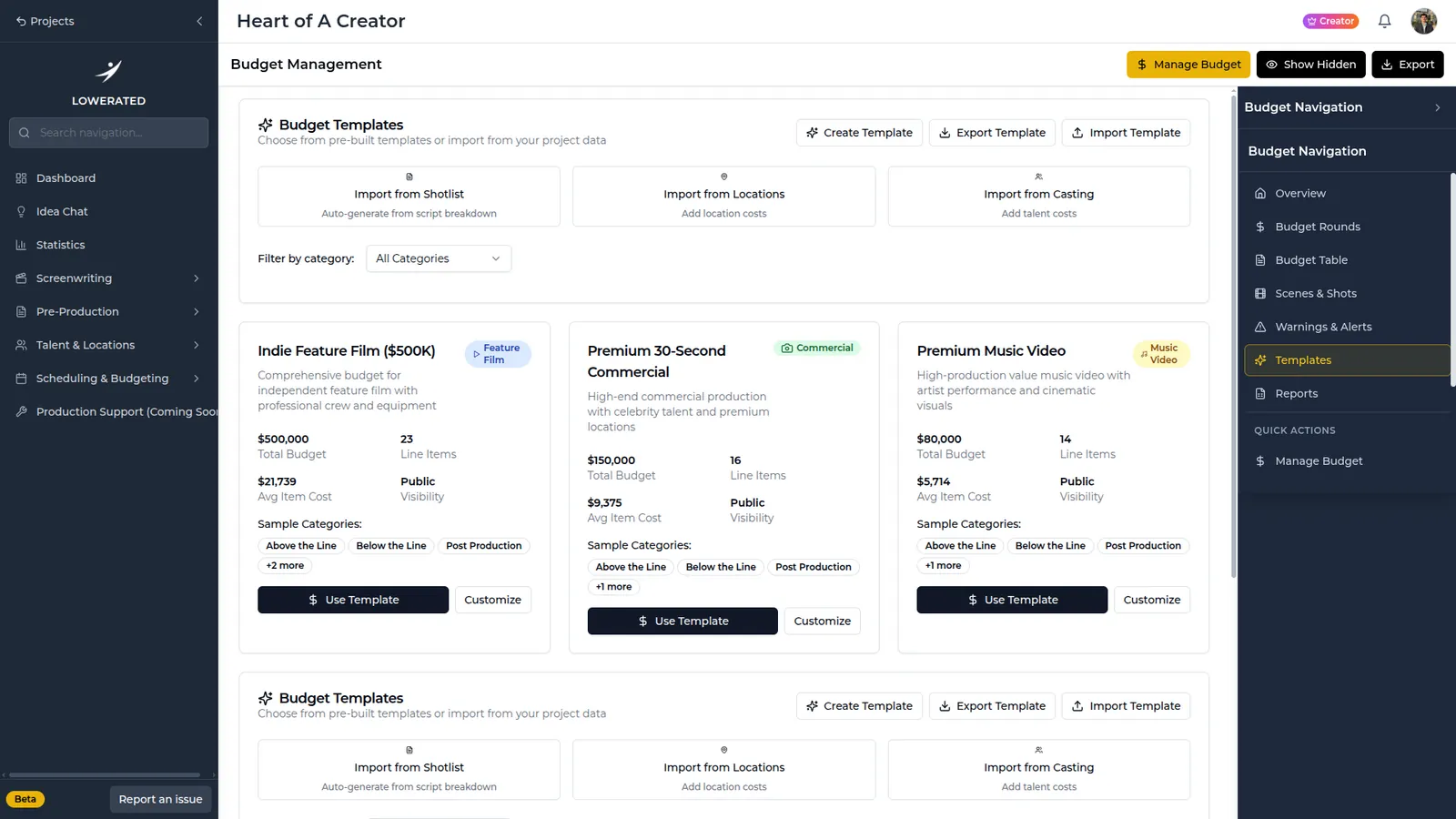
The clip shows budget line items with estimates tracked against actual spending, next to the plan they belong to.
The clip shows the shot list generator in Lowerated.
FAQ
How long does it take to shoot a music video?
lots of low budget music videos shoot in one or two days. bigger concepts with a lot of locations or VFX take longer.
Do I need a script for a music video?
usually not a screenplay. a treatment and a timed song breakdown do the job, with story beats written out for any narrative sections.
Who pays for a music video?
it varies. it's usually the artist or the label, sometimes a sponsor. agree the budget, deliverables and ownership in writing before prep starts.
What frame rate should I shoot a music video at?
match the delivery frame rate for normal speed shots. plan higher frame rates only for slow motion setups, with a matching playback track.
Key takeaways
- the song breakdown with timecodes is your script. build everything else from it.
- plan performance passes and story shots separately, then group by location and light.
- own playback: a clean final mix, the right cue points, and sped-up tracks for slow motion.
- schedule the artist in one block and put light-dependent setups at the right time of day.
- get the treatment approved and the releases signed before the shoot.
see you in the next one.