Film Budget Template: Top Sheet and Line Items


By Muhammad Wisal and Muhammad Ali / 6 min read
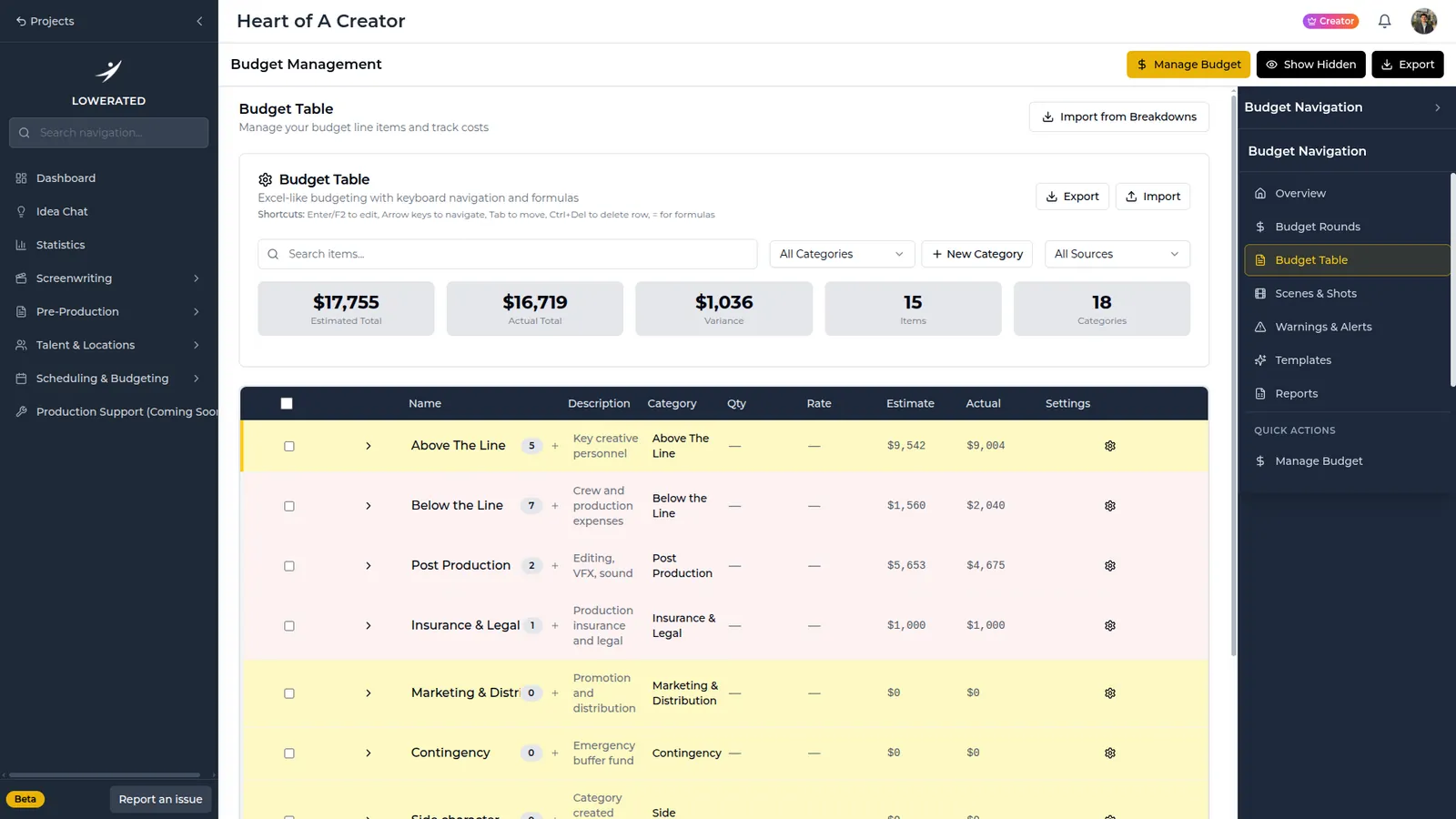
A film budget template has two parts: a top sheet that shows the totals for each category on one page, and detail pages that list every line item with its units, rate and total. The categories are usually above the line (story, producers, director, cast), below the line (crew, equipment, locations and other shoot costs), post-production, and other costs such as insurance and festivals, with a contingency on top. Below is a template you can copy, filled in for a five day short film.
What is a film budget top sheet?
The top sheet is the one page summary of the whole budget. It lists each account (category) with its total, then subtotals for above the line, below the line, post and other, then contingency and the grand total. Investors, financiers and producers read the top sheet first. The detail pages exist to prove each number on it.
"Above the line" and "below the line" come from the line drawn on traditional budget forms. Above it sit the creative people and rights that are often negotiated individually: the story and screenplay, producers, director and principal cast. Below it sit the costs of physically making the film: crew, equipment, locations, transport, food, and post-production.
Film budget template: the top sheet
Copy this table into a spreadsheet. The account numbers here are a simple scheme for a small film. Studio charts of accounts use their own numbering, which varies by company and software.
| Account | Category | Estimate | Actual |
|---|---|---|---|
| Above the line | |||
| 1100 | Story and rights | ||
| 1200 | Producers | ||
| 1300 | Director | ||
| 1400 | Cast | ||
| Below the line: production | |||
| 2000 | Production staff (ADs, production manager, PAs) | ||
| 2100 | Camera | ||
| 2200 | Grip and electric | ||
| 2300 | Production sound | ||
| 2400 | Art department and set dressing | ||
| 2500 | Wardrobe, hair and makeup | ||
| 2600 | Locations | ||
| 2700 | Transportation | ||
| 2800 | Catering and craft services | ||
| Below the line: post-production | |||
| 3100 | Editing | ||
| 3200 | Sound design and mix | ||
| 3300 | Color | ||
| 3400 | Music | ||
| 3500 | Visual effects and titles | ||
| Other | |||
| 4100 | Insurance | ||
| 4200 | Legal and clearances | ||
| 4300 | Festivals, marketing and publicity | ||
| Totals | Subtotal, contingency, grand total |
What does a filled-in budget look like?
Here is the top sheet for an example short, "Low Tide": five shoot days, a crew of about twelve, three actors, two locations on the coast. The figures are illustrative only. Real costs depend on your city, crew rates, union status and what you can borrow.
| Category | Estimate (USD) |
|---|---|
| Story and rights | 500 |
| Producers | 0 (deferred) |
| Director | 1,000 |
| Cast | 3,500 |
| Above the line total | 5,000 |
| Production staff | 1,500 |
| Camera | 2,500 |
| Grip and electric | 1,800 |
| Production sound | 900 |
| Art department | 1,200 |
| Wardrobe, hair and makeup | 700 |
| Locations | 1,000 |
| Transportation | 600 |
| Catering and craft services | 1,500 |
| Production total | 11,700 |
| Editing | 1,500 |
| Sound design and mix | 1,200 |
| Color | 600 |
| Music | 500 |
| Post-production total | 3,800 |
| Insurance | 800 |
| Festivals and marketing | 700 |
| Other total | 1,500 |
| Subtotal | 22,000 |
| Contingency (10%) | 2,200 |
| Grand total | 24,200 |
How do you write the line items?
Each top sheet number is the sum of line items on a detail page. A line item has a description, an amount, a unit, a multiplier and a rate. The total is amount times multiplier times rate. Here is the camera account from "Low Tide":
| Account | Description | Amount | Units | x | Rate | Total |
|---|---|---|---|---|---|---|
| 2101 | Camera package rental | 5 | Days | 1 | 300 | 1,500 |
| 2102 | Media and batteries | 1 | Flat | 1 | 250 | 250 |
| 2103 | 1st AC | 5 | Days | 1 | 150 | 750 |
| 2100 | Camera total | 2,500 |
Catering works the same way: 5 days x 15 people x $20 a head = $1,500. Using units makes the budget easy to change. If the shoot grows to six days, you change one number per line instead of guessing again.
Labor lines often carry fringes on top: payroll taxes, and pension and health contributions for union members. Fringe rates vary by country, state and union agreement, so ask a payroll company, accountant or the relevant union for current figures.
How do you build a film budget step by step?
- Break down the script. List cast, locations, props, wardrobe, vehicles and effects per scene. The script breakdown tells you what you are paying for.
- Schedule the shoot. The number of shoot days drives most below the line costs. A rough shooting schedule comes before a reliable budget.
- Set up the accounts. Start from the template above and delete what you do not need.
- Price each line. Get quotes from rental houses, crew and locations. Write the source next to the number.
- Add fringes and contingency. Many productions use a contingency of around 10 percent of the subtotal. Our guide to contingency in a film budget covers how to size it.
- Total the top sheet and review it. Compare it with the money you have. Cut by changing the plan (fewer days, fewer locations), not by deleting lines you will still need.
- Track actuals. Once you start spending, record what each line actually cost next to its estimate.
What are common film budget mistakes?
- Budgeting before scheduling, so the day count (and every daily rate) is a guess.
- Leaving out food, transport and parking, which add up fast on a small shoot.
- Putting nothing in post-production because "we will figure it out later".
- Forgetting insurance, music licensing or festival fees. Requirements and costs vary by country and festival, so check early.
- No contingency, or spending the contingency in pre-production.
- Never updating actuals, so you find out about an overspend after wrap.
For the wider planning picture, read budgeting in pre-production.
How to use a budget template in Lowerated
Lowerated's budgeting sits in the Producer plan, next to the schedule and breakdown for the same project.
- Start from a template. Pick a budget template as your starting point.
- Add line items. Enter each cost under its category with your estimate.
- Track actuals. As money goes out, record what you spent, and compare estimates against actuals.
- Keep it next to the plan. The budget sits in the same project as your breakdown and schedule, so the numbers stay with the plan they belong to.
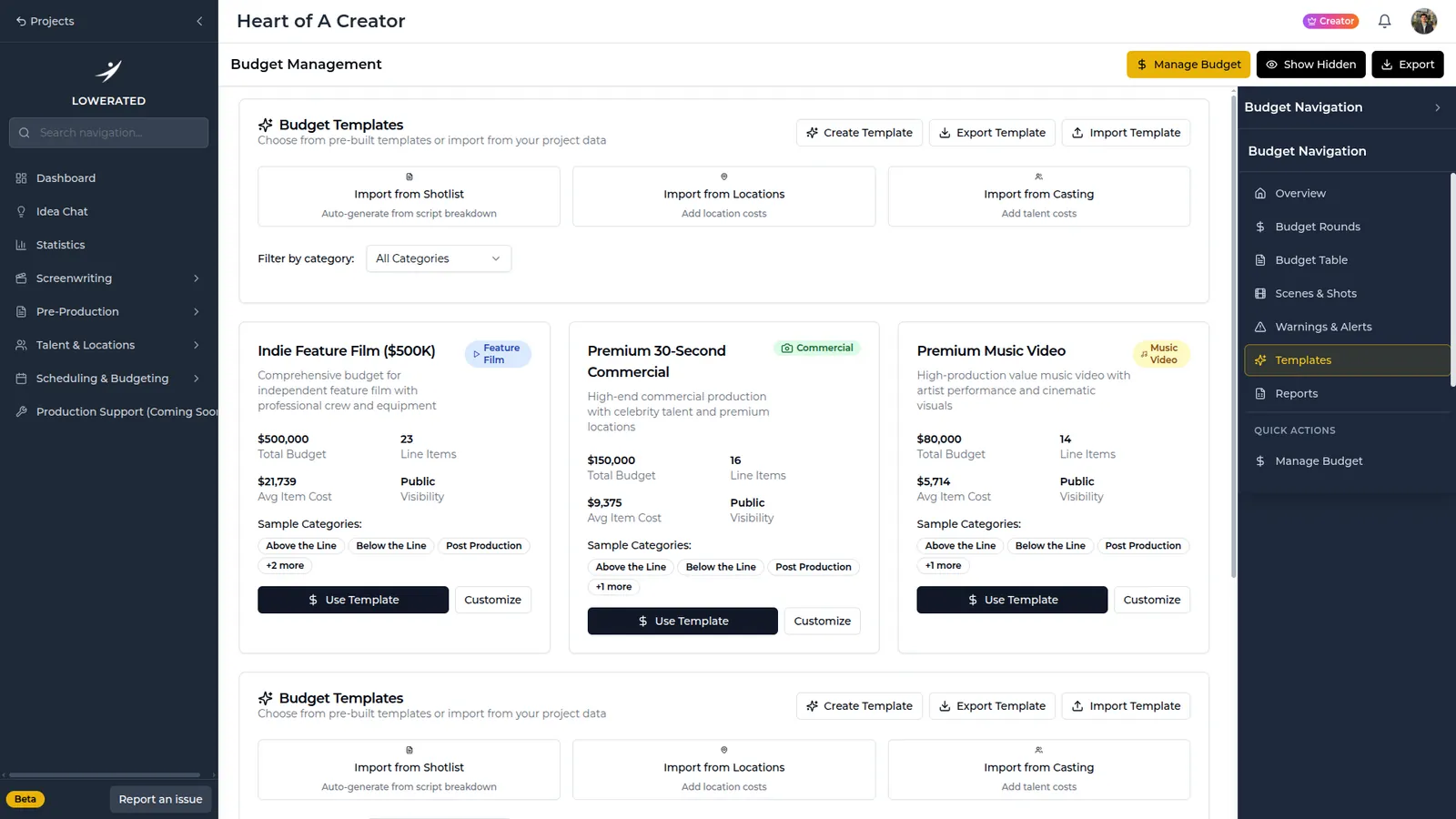
The clip shows line items being added and estimates tracked against actual spending, next to the plan they belong to.
Budgeting is one of the pre-production tools in Lowerated.
FAQ
What is the difference between above the line and below the line?
Above the line covers story rights, producers, director and principal cast. Below the line covers crew, equipment, locations, logistics and post-production.
How much contingency should a film budget have?
Around 10 percent of the subtotal is a common starting point. Financiers or completion bond companies may set their own requirement.
Can I make a film budget in Google Sheets or Excel?
Yes. Copy the top sheet and line item tables above into separate tabs and link each top sheet total to its detail tab.
Should deferred pay go in the budget?
Yes. List it as a line with zero cash and a note on the deferred amount, so everyone can see the real cost of the film.
Key takeaways
- A film budget is a one page top sheet backed by detail pages of line items.
- Write every line as amount x multiplier x rate, with a unit such as days, so changes to days or headcount are easy.
- Schedule before you budget, since shoot days drive most costs.
- Add fringes and a contingency, and track actuals against estimates once you spend.
- Fringes, insurance and licensing vary by place and union, so ask a professional.