How Many Pages Can You Shoot a Day?


By Muhammad Wisal and Muhammad Ali / 6 min read
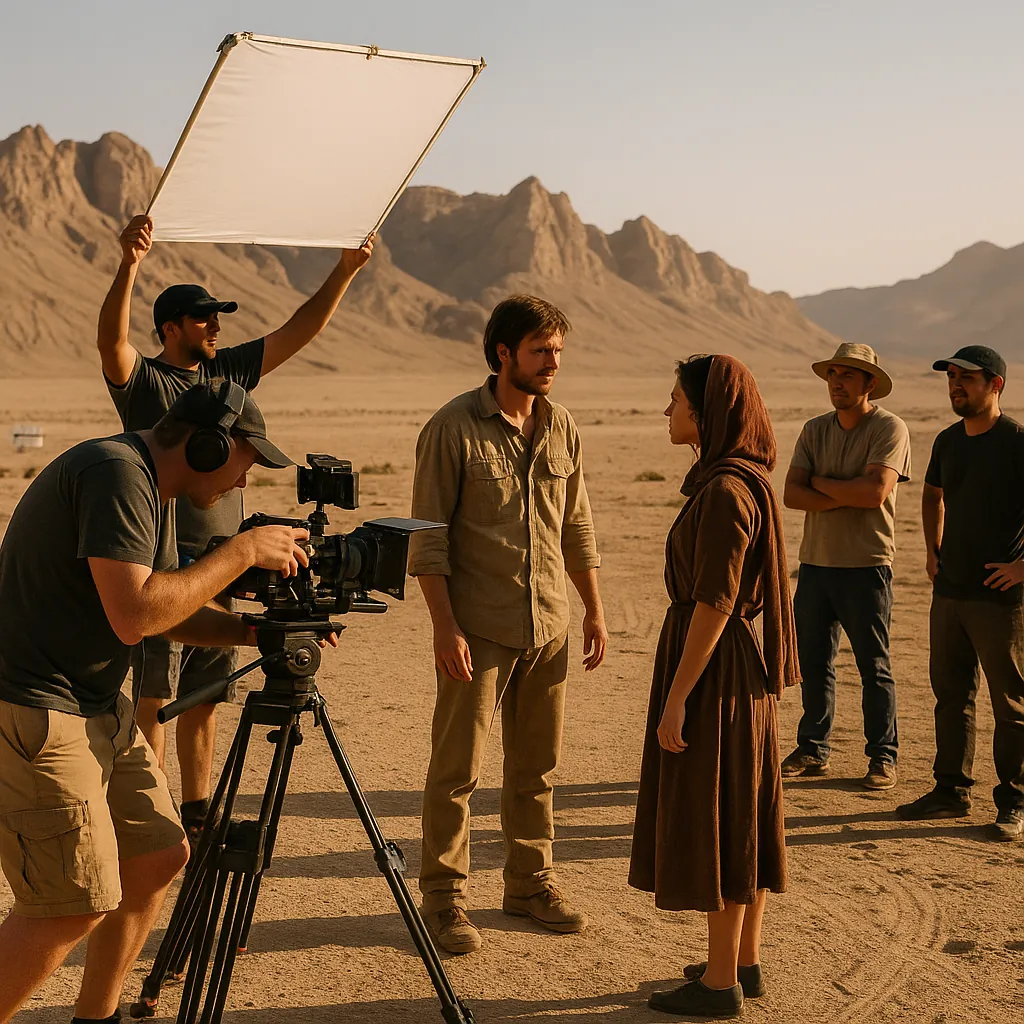
There is no fixed number. Large studio features often shoot around 2 to 3 pages a day, while independent features commonly aim for 4 to 6 and some low-budget shoots push past that. The right number for your film depends mostly on how many camera setups each scene needs, so set a target from the shot plan and test it against your crew's real speed.
How many script pages are shot per day on average?
The figures below are commonly cited ranges, not rules. They vary with budget, genre, crew size and how much coverage the director wants.
| Type of production | Typical pages per day | Why |
|---|---|---|
| Large studio feature | About 2 to 3 | Many setups per scene, complex lighting, stunts and VFX plates |
| Independent feature | About 4 to 6 | Shorter schedule forces simpler coverage and fewer setups |
| Micro-budget feature | 6 or more | Very short schedule, few locations, minimal coverage |
| One-hour TV drama | About 6 to 8 | Fixed episode schedule and experienced crews on standing sets |
| Multi-camera sitcom, daytime serial | Much higher | Several cameras record at once on lit stages |
| Short film, first-time crew | About 3 to 5 | Crew is still learning its pace; leave room for problems |
Page counts are measured in eighths. If you are new to that system, read how page counts in eighths work first.
Why does the page count alone not tell you how long a scene takes?
Shooting time is driven by setups, and pages only describe length on paper. A setup is each new camera position or lighting change. A two page dialogue scene in one room might need four setups. A one line action beat such as "Bram vaults the fence and runs for the tracks" might need eight, plus a stunt rehearsal.
So a day of 6 pages of talk can be easier than a day of 2 pages of action. Before you set a page target, decide roughly how you will cover each scene. The guide on planning coverage before the shoot walks through that.
What slows down pages per day?
These are the factors 1st ADs weigh when they decide how much fits in a day.
| Factor | Effect on the day |
|---|---|
| Number of setups | The biggest driver. More angles and lighting changes mean fewer pages. |
| Company moves | Moving the whole unit to a new location can take one to two hours or more. |
| Night and exteriors | Weather, light windows and longer lighting setups slow the pace. |
| Cast size | More actors in a scene usually means more coverage. |
| Stunts, effects, vehicles | Safety rehearsals and resets take time. |
| Children and animals | Limited working hours and unpredictable takes. |
| Extras | Background has to be placed, rehearsed and reset for each take. |
| Crew experience | A crew that has worked together moves faster. |
A company move is often the hidden cost. Two locations in one day can lose as much time as several setups.
How do you work out pages per day for your film?
- Get page counts for every scene. Measure each scene in eighths during the breakdown.
- Estimate setups per scene. Use a draft shot list. Count new camera positions and lighting changes, not individual shots.
- Estimate your time per setup. A quick test day or past shoots with the same crew are the best guide. Lighting-heavy setups take longer than resets.
- Work out your usable shooting time. Take the length of the shoot day and subtract the meal break, the time to light the first setup, and any company moves.
- Divide time by setups. That gives the number of setups you can expect to shoot.
- Fill the day with scenes until you reach that number. The page total is whatever those scenes add up to.
- Compare against the target. If the total is far above your normal pages per day, move a scene or simplify coverage.
What does a worked example look like?
Here is one day of a short thriller called "Low Tide Motel", following a night clerk named Odette and a guest named Bram. The crew has tested at about 30 minutes per new setup on average. That is an assumption for this crew, not a standard.
| Scene | Set | Pages | Setups |
|---|---|---|---|
| 5 | INT. MOTEL OFFICE - DAY | 1 2/8 | 6 |
| 6 | INT. MOTEL OFFICE - DAY | 3/8 | 2 |
| 9 | INT. ROOM 12 - DAY | 2 4/8 | 8 |
| 10 | INT. ROOM 12 - DAY | 6/8 | 3 |
| Total | 4 7/8 | 19 |
The day is 12 hours on set. Take off one hour for lunch and about one hour to light the first setup, which leaves roughly 10 hours, or 600 minutes. At 30 minutes a setup, that is about 20 setups. The four scenes need 19, so the day fits with a small cushion. Both sets are in the same building, so there is no company move.
If scene 14, an exterior parking lot scene of 1/8 page with 5 setups, were added to this day, the page total would barely change, but the setup total would jump to 24 and the day would run over. That is why the page count alone is a poor guide.
What are common mistakes when setting a page target?
- Using a studio number on an indie schedule, or the reverse. Pick a target that fits your budget and coverage plan.
- Ignoring setups. Equal page totals can hide very different workloads.
- Packing the first day. Crews start slower. Give day one a lighter load.
- Forgetting the move. Two locations in a day cost real time.
- No buffer. Leave some slack in the schedule for weather, technical problems and reshoots.
- Not tracking. Compare planned pages to shot pages each day, so you notice early when the shoot falls behind. See how to keep a shoot on schedule.
How do you balance pages across days in Lowerated?
Once you know your target, the day by day balancing happens on the stripboard. In Lowerated each scene from your breakdown is a strip, and you plan shoot days by dragging strips between them. Filter to night scenes, or any group you want to keep together, and move them as a block. Check each day against your page and setup targets as you go. The full method is in the guide on how to schedule a film shoot.
The clip shows scenes as strips on the board, filtered to night scenes, with one dragged onto day one.
FAQ
How many pages a day for a short film?
Many short film crews plan around 3 to 5 pages a day, then adjust for setups. A 10 page short often takes two to three shoot days.
How many pages do TV shows shoot per day?
One-hour dramas commonly shoot around 6 to 8 pages a day. Multi-camera shows shoot far more because several cameras record each take.
Is it better to plan by pages or by setups?
Plan by setups and check with pages. Setups tell you the real workload, and pages give you a quick way to compare days.
What happens if we fall behind on pages?
The 1st AD and director decide what to simplify, cut or move to a later day. Catching it early gives you more options.
Key takeaways
- Pages per day ranges from about 2 to 3 on large features to 4 to 6 or more on indies, and varies with every shoot.
- Setups, not pages, decide how long a day really takes.
- Work out usable time, divide by your time per setup, then fill the day with scenes.
- Company moves, night work, stunts and extras all lower your pages per day.
- Track pages shot against pages planned every day.