Weather Cover Sets: How to Plan One


By Muhammad Wisal and Muhammad Ali / 6 min read
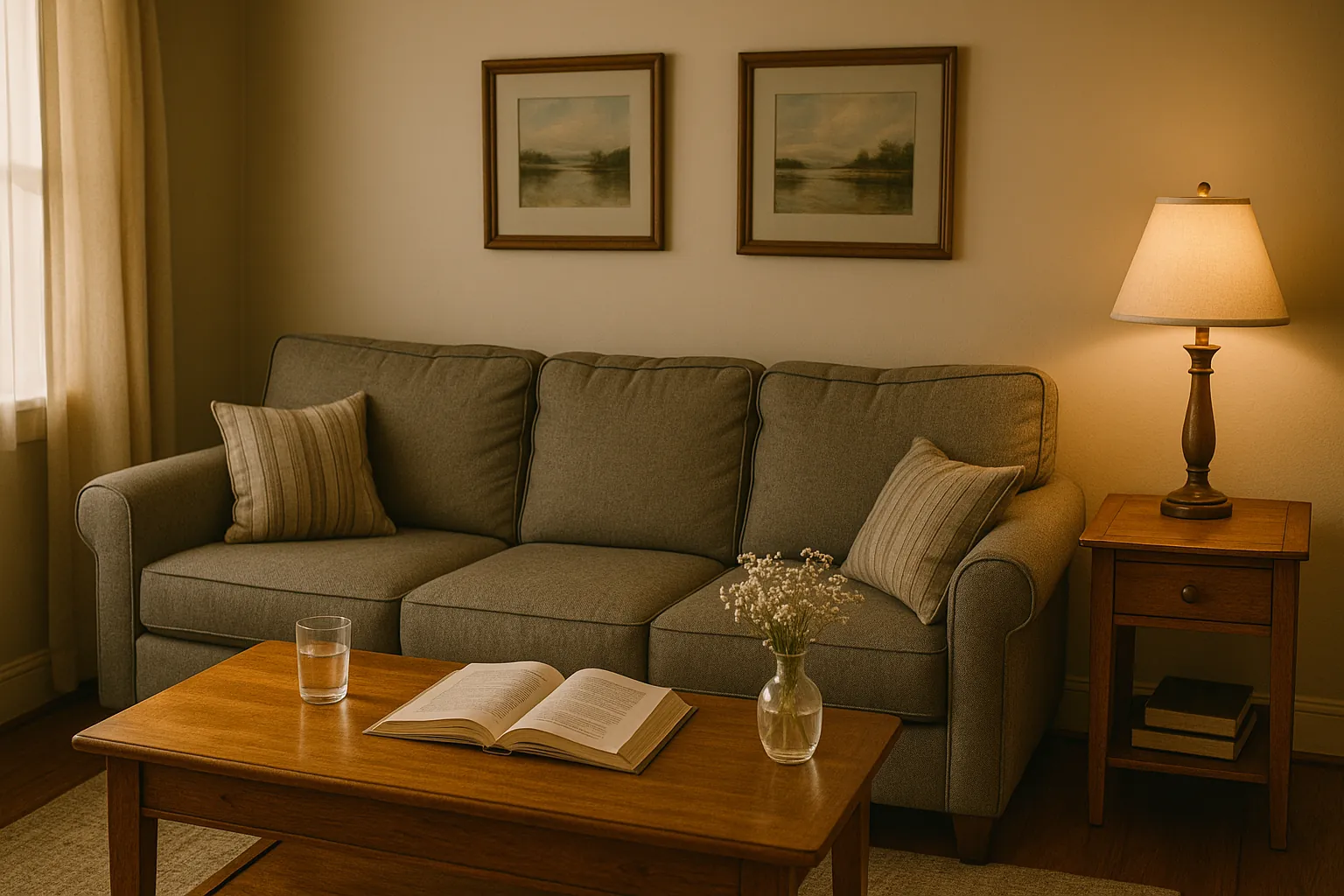
A weather cover set is a backup location, usually an interior, that you can switch to if the weather stops you shooting a planned exterior scene. To plan one, pick interior scenes that use the same or available cast, get that location ready and on hold for the exterior days, list it on the call sheet as cover, and agree in advance who decides to switch and by when. A cover set only works if it is fully prepared before the day you need it.
What is a weather cover set?
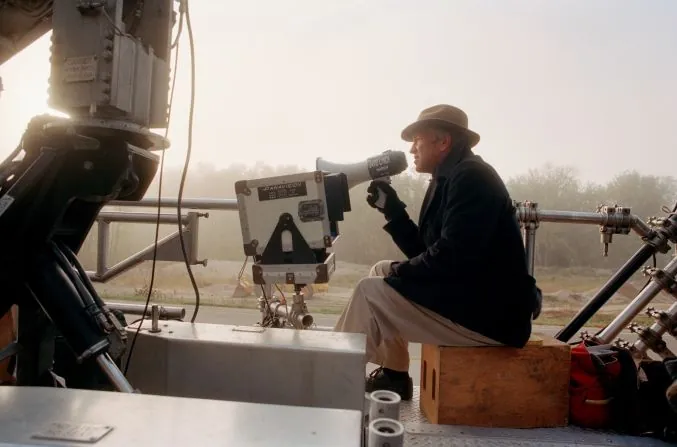
Exterior scenes depend on the weather: rain, wind, snow, storms, or even the wrong kind of sky for continuity. A cover set (also called weather cover or a cover scene) is a scene you could shoot instead, at a location where weather does not matter. When the forecast turns, the 1st AD and producer can "go to cover" and keep the crew shooting, instead of paying a full unit to wait. The term is related to the broader cover set, which can also cover other risks, such as a location falling through or an actor getting sick.
Cover usually means an interior, but it can also be an exterior where rain does not hurt the story, such as a covered parking garage or a scene already written as rainy.
When do you need weather cover?
You need it whenever an exterior day would be lost if the weather turned and there is no easy way to make it up. That includes:
- Exterior-heavy days in a season or region where the weather changes quickly.
- Scenes that must match shots already filmed in sun, or that need dry ground for continuity.
- Days with expensive cast or equipment you cannot easily rebook.
- Locations you only have for a limited window.
If an exterior day can slide to a later date at no cost, you may decide cover is not worth the expense. That is a producer's call, made in prep, not on the morning of the shoot.
How do you choose a cover set?
The best cover scene is one you would shoot anyway, that needs the same people, and that can move earlier in the schedule without breaking anything. Check each candidate against this list:
| Check | Question to ask | Good sign |
|---|---|---|
| Cast | Are the actors in the cover scene available that day? | Same cast as the exterior, or cast already on hold |
| Location | Can we get into the location on short notice? | Production-controlled space, or owner agrees to a hold |
| Set dressing | Is the set dressed and ready? | Art department prepped it in advance |
| Wardrobe and props | Are costumes and props for the cover scene on the truck? | Packed with the exterior day's gear |
| Story order | Does shooting it early cause continuity problems? | No hair, makeup or injury changes that depend on earlier scenes |
| Distance | How far is it from the exterior location? | Short drive, or same property |
| Page count | Does it fill most of a day? | Close to the pages you would lose |
A scene that passes most of these checks is real cover. A scene that needs a different cast, an undressed set and a long drive is a wish, and the crew will sit idle while you try to make it happen.
How do you plan weather cover step by step?
- Mark the weather-dependent days. Go through the schedule and flag every exterior day where weather would stop you.
- Pick a cover scene for each. Use the checklist above. One interior scene can cover several exterior days if it stays unshot.
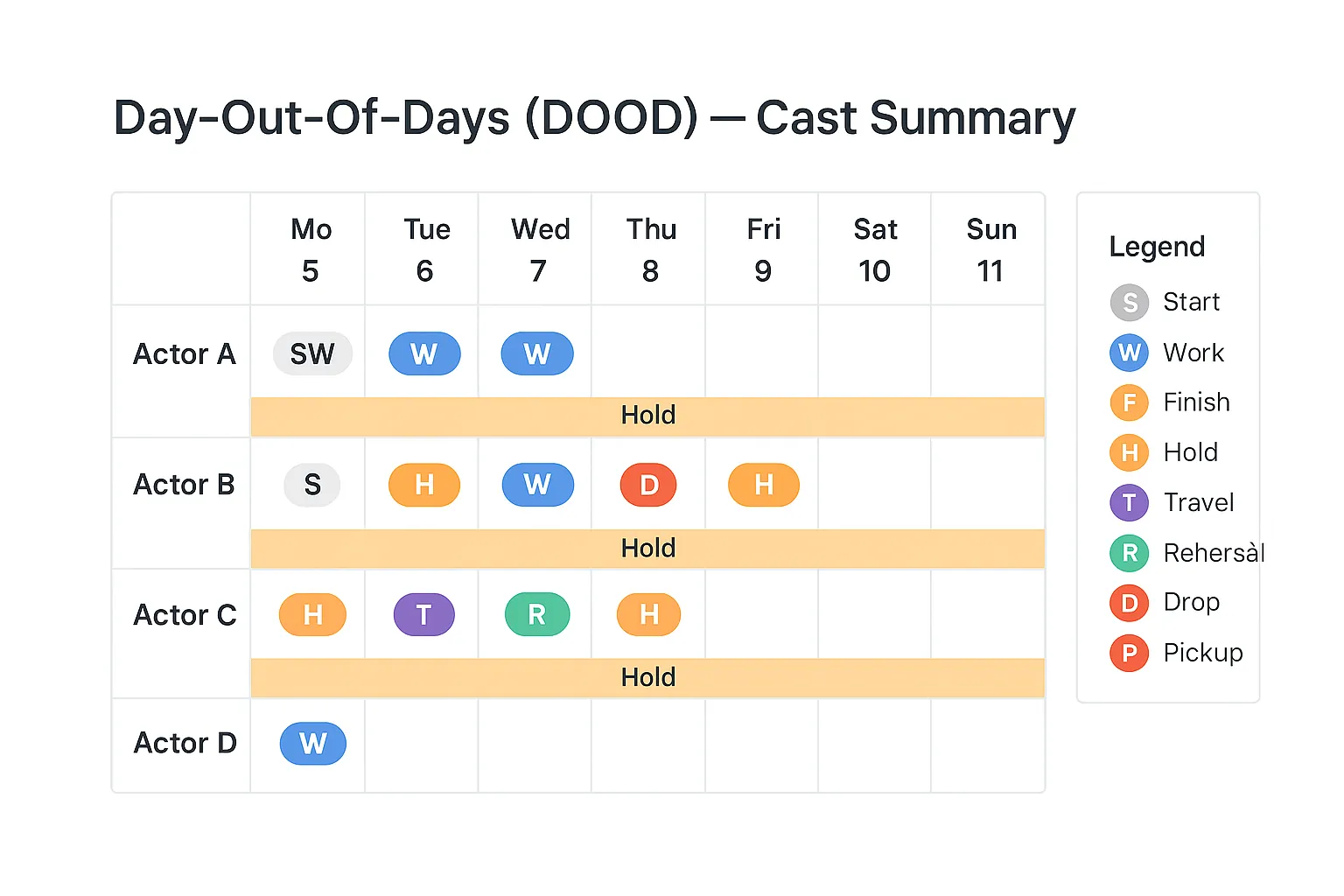
- Hold the cast. If cover scene actors are not already working that day, put them on hold. A hold costs money on paid shoots, so the producer should approve it. See scheduling around actor availability.
- Prepare the location. Secure access for the dates, and have the art department dress it before the first weather-dependent day.
- Put cover on the call sheet. List the cover scene, its location and any extra cast under a clear "weather cover" note, so everyone knows the plan B before they arrive. See how to make a call sheet.
- Set the decision time. Agree who decides (usually the producer with the 1st AD and director) and when: often the evening before for a forecast call, with a final check early on the shoot morning.
- Re-plan after you use it. Once a cover scene is shot, the exterior day is still owed. Reschedule it and choose new cover.
A worked example: a rainy week on a coastal short
"Gull Point" is a five-day short about a lighthouse keeper's last week. Days 2 and 3 are cliff-top exteriors with cast 1 and 2. The forecast for day 2 shows heavy rain.
| Day | Planned scenes | Weather cover |
|---|---|---|
| Day 2 | Sc. 3, 8, EXT. CLIFF PATH - DAY. Cast 1, 2. 3 5/8 pages | Sc. 15, 16, INT. LIGHTHOUSE KITCHEN - DAY. Cast 1, 2. 3 2/8 pages |
| Day 3 | Sc. 9, 11, EXT. CLIFF TOP - DAY. Cast 1, 2, 3. 2 7/8 pages | Sc. 15, 16 (if unused on Day 2) |
| Day 4 | Sc. 15, 16, 17, INT. LIGHTHOUSE - DAY | None needed, interior |
The kitchen is inside the lighthouse, five minutes' walk from the cliff path, already dressed for day 4 and using the same two actors. On the evening of day 1, the producer, director and 1st AD see the rain forecast and go to cover. The call sheet for day 2 is reissued with scenes 15 and 16 as the main work, and the cliff scenes move to day 4. Day 4 now holds exteriors, so it needs its own cover: scene 17, still an unshot interior, takes that role.
What are common weather cover mistakes?
- Naming a cover set on the call sheet that is not dressed, lit or available.
- Choosing a cover scene with actors who are not on hold, then finding they are booked elsewhere.
- Waiting until the crew is on set to make the decision, then losing half the day to the switch.
- Using the same cover scene twice. Once it is shot, it is no longer cover.
- Forgetting continuity. Shooting a scene early can break hair, wardrobe or injury progression.
- Assuming insurance will pay for lost weather days. Weather coverage, if available, varies by policy and country, so ask your broker. See production insurance.
How to plan weather cover in Lowerated
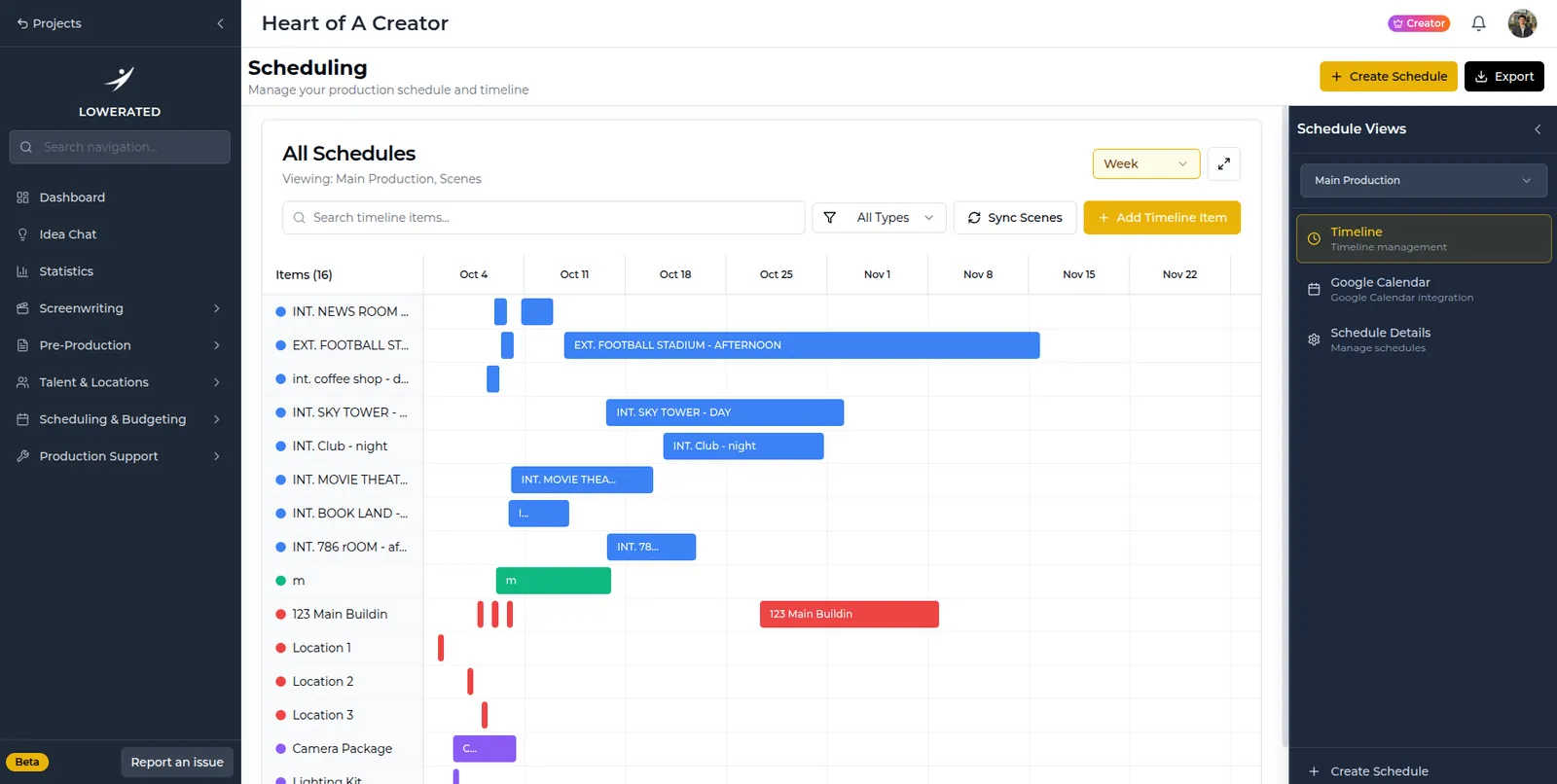
Weather cover is a scheduling job, and Lowerated's stripboard is where you plan it. Every scene is a strip, and you plan shoot days by moving strips around. Find the exterior strips that depend on weather, keep a few interior strips unscheduled that could cover them, and if the forecast turns, drag the cover scene onto the affected day. You can also filter strips, for example to night scenes. The schedule takes shape from your breakdown.
The recording shows the stripboard filtered to night scenes, with one scene dragged onto day one.
If you mark the days people cannot make, the stripboard warns you when a cover scene lands on a day an actor or crew member is out.
The clip shows days marked when people cannot make it, and a warning when a scene lands on one of those days.
FAQ
What does "go to cover" mean?
It means the production switches from the planned scenes to the weather cover scenes, usually because of rain, wind or another weather problem.
Can you shoot in the rain instead?
Sometimes. Light rain can work if continuity allows and the gear is protected. Heavy rain, wind and lightning are safety issues, and the 1st AD and key crew decide whether it is safe to continue.
Does every exterior day need cover?
No. It depends on the forecast, the cost of losing the day and whether the scenes can move. Producers usually decide which days need cover during prep.
What if there is no interior to use as cover?
Look for scenes that work in any weather, plan a shorter day you could shoot under cover, or build a weather day into the schedule instead.
Key takeaways
- A weather cover set is a ready-to-shoot backup scene for exterior days that bad weather could stop.
- Good cover uses available cast, a dressed location nearby, and does not break continuity.
- Put cover on the call sheet and agree who decides to switch and by when.
- Once cover is used, reschedule the exterior and pick new cover.
- Plan cover during prep, while you still have time to hold cast and dress the set.