Prop Lists and Hero Props: How to Make a Film Prop List


By Muhammad Wisal and Muhammad Ali / 7 min read
A prop list records every object the actors handle or the story depends on, scene by scene, with how many of each you need and where each one comes from. Hero props are the specific items the camera features or the plot turns on, so they get the most attention and usually have duplicates. The props master builds the list from the script breakdown and keeps it updated through the shoot.
What is a prop in film?
A prop is any object an actor handles or uses in a scene: a phone, a letter, a cup of coffee, a set of keys. Objects that stay in place to dress the set, such as furniture, pictures on the wall or books on a shelf, are set dressing. Clothing and accessories worn by actors are usually wardrobe. Where these overlap, for example a watch a character checks or a bag that gets opened, agree in pre-production which department owns it so nothing is missed or bought twice.
What is a hero prop?
A hero prop is the version of a prop made or chosen to be seen up close or to carry the story. If a ring is the reason the characters are fighting, the hero ring is the one in the insert shot, with the right engraving and the right wear. It is often more detailed or expensive than the copies used for wide shots, action or stunts.
Most hero props come with backups. A typical setup is the hero version, one or two identical spares in case of damage or loss, and sometimes a lighter or softer stunt version for action.
What types of props should a prop list cover?
- Hero props. Featured in close-ups or central to the plot.
- Background or utility props. Handled but not featured: a pen, a coffee mug, a shopping bag.
- Stunt props. Soft, rubber or breakaway versions of objects used in fights or falls.
- Working props. Objects that have to function on camera, such as a radio that plays or a lighter that lights.
- Consumables. Food, drinks and anything else that gets used up, take after take.
- Graphic props. Letters, newspapers, labels, ID cards and screens the camera can read.
- Weapons and replicas. Anything that looks like a weapon, which needs a separate safety plan.
What goes on a prop list?
A prop list has one row per prop, with the scenes, the character who uses it, the type, the quantity and the source. Here is a sample for "The Pawnbroker's Daughter", a short thriller where IRIS finds a stolen pocket watch in her late father's shop.
| # | Prop | Scenes | Character | Type | Qty | Source | Notes |
|---|---|---|---|---|---|---|---|
| 1 | Engraved gold pocket watch | 3, 7, 12, 18 | Iris | Hero | 1 hero, 2 spares | Buy and engrave | Engraving "For H, 1961" read in Sc. 7 insert. Stopped at 4:10 |
| 2 | Shop ledger | 3, 9 | Iris | Graphic, hero | 1 | Build | Handwritten entries on two pages, one torn out in Sc. 9 |
| 3 | Torn ledger page | 9, 15 | Iris | Graphic | 4 | Build | Tear must match the ledger stub |
| 4 | Jeweler's loupe | 3, 7 | Iris | Utility | 1 | Rent | |
| 5 | Tea in chipped mug | 5 | Mr. Halvorsen | Consumable | 2 mugs, tea for 10 takes | Buy | Mug level must match between takes |
| 6 | Shop keys on brass ring | 1, 5, 18 | Iris | Utility | 1, plus 1 spare | Buy | Dropped in Sc. 18 |
| 7 | Folded police notice | 14 | Officer Brandt | Graphic | 3 | Build | Fictional department name, no real logos |
The Notes column carries the continuity and design details the camera will see. The watch stopped at 4:10 has to show 4:10 in every scene, on every copy.
How do you make a prop list step by step?
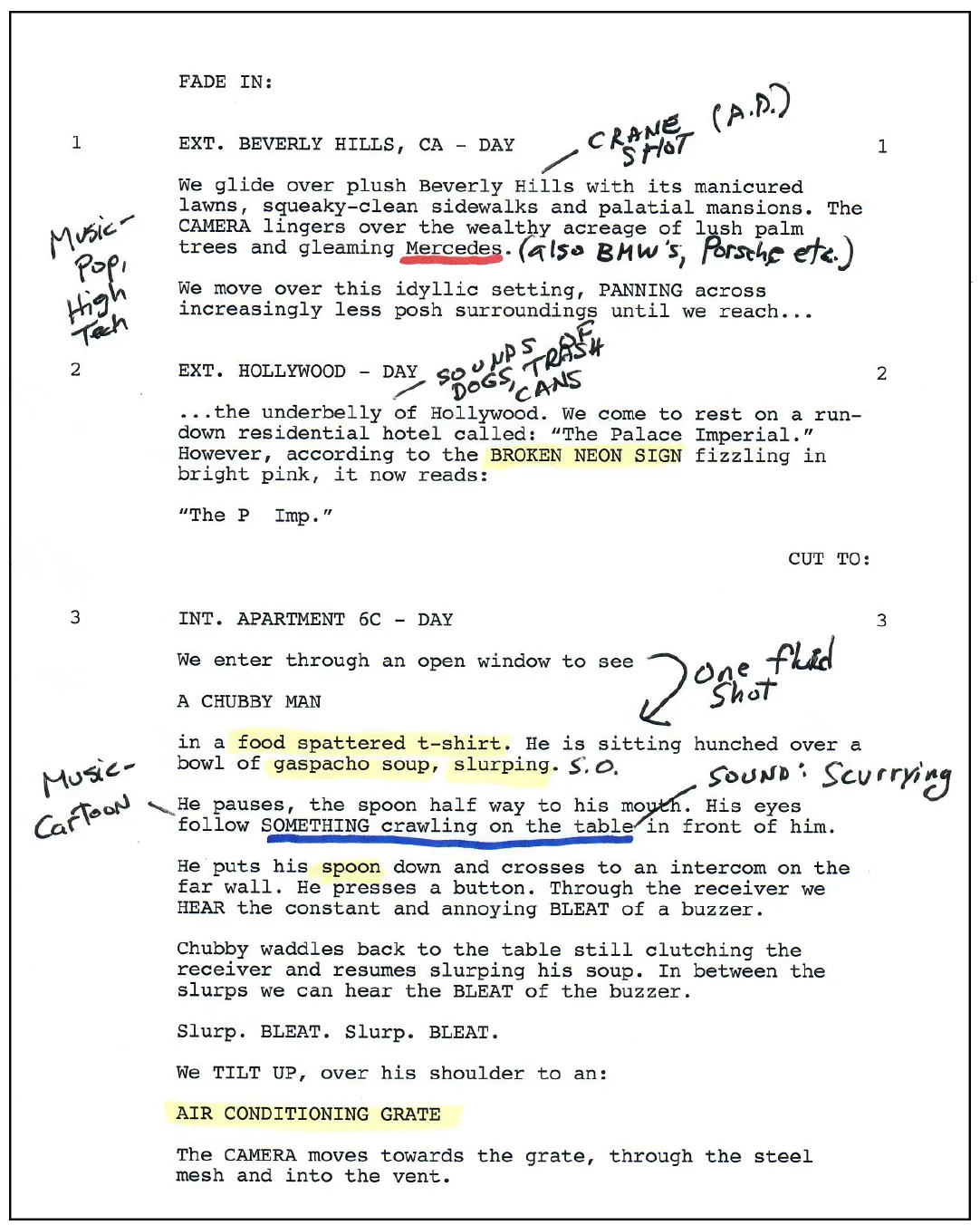
- Tag props in the script. Read each scene and tag every object an actor handles, plus anything the action implies. If a character "pours a drink", you need a bottle, a glass and a drink. See how to tag a script.
- Compile one list. Pull every tagged prop into a single list with the scenes where it appears. Merge duplicates, such as "the watch" and "Dad's watch".
- Mark the hero props. With the director, decide which props are featured or central to the story and need close-up quality.
- Set quantities. Add spares for hero props, multiples for anything that gets broken, eaten, spilled or torn, and stunt versions for action.
- Decide the source. Buy, rent, borrow, build or use something the location already has. Note the cost against the props line in the budget.
- Check graphics and brands. Real logos, artwork and readable text can raise clearance questions. Many productions use fictional brands. Ask a lawyer if you are unsure about a specific item.
- Review with the director. Show references or the actual hero props before the shoot so there are no surprises on the day.
- Tie it to the schedule. Sort the list by shoot day so the props team knows what to pack each day. The call sheet's props notes come from here.
How do you keep props in continuity?
Photograph each prop at the start and end of every scene, note which hand an actor used, and record levels of anything that changes, such as a drink or a candle. The props team and the script supervisor share this job. Scenes are shot out of order, so a cigarette that is half smoked at the end of scene 12 has to be half smoked when you shoot the start of scene 13 three days later. See how script supervisors keep scenes matching.
What about prop weapons?
Treat every prop weapon, including replicas and toys, as a safety item. Keep them under the control of one responsible person, ideally a qualified armorer for anything that looks real, and never leave them on set unattended. Rules on replica and real weapons, and on telling local police about a shoot, vary by country and city, so check with your permit office and local authorities. For planning action safely, see stunts and safety planning.
Common prop list mistakes
- Only listing what the script names. "She makes dinner" implies pans, food, plates and utensils.
- One copy of a hero prop. If it breaks or goes missing, the scene stops.
- Too little food. An actor eating in every take of a long scene goes through a lot. Check dietary needs, too.
- Unclear ownership. Props and wardrobe each assume the other is getting the watch. Settle it on the list.
- Graphics left to the last day. Letters, labels and screens take time to design and print.
- No return plan. Rented and borrowed props need a list of where each one goes back after wrap.
How to build a prop list from tags in Lowerated
In Lowerated, props come out of the script itself. Tagging has 21 element types plus custom ones, props among them. Tag a word once and every mention is tagged, and Oli can do a first tagging pass for you to check.
- Tag props in the script. Tag each object as a prop right in the script, and every other mention lights up.
- Generate the scene breakdown. Lowerated builds it from your screenplay, listing cast, props, wardrobe and locations for each scene.
- Review and adjust it. Add the props the action implies but the script never names, then use the list for sourcing.
The recording shows props and cast being tagged directly in a script.
The clip shows a scene breakdown of cast, props, wardrobe and locations built from the screenplay, then reviewed and adjusted.
For the full method, read turning a script into an executable plan.
FAQ
Who makes the prop list?
The props master, working from the script breakdown with the director and production designer. On small shoots, the production designer or producer often does it.
What is the difference between a prop and set dressing?
Actors handle props. Set dressing stays in place and makes the space look real, such as furniture, curtains and wall art.
How many copies of a hero prop do you need?
Usually the hero plus one or two spares. Add more if the prop gets damaged in the scene or is used in a stunt.
Can I use real brand products as props?
Many productions do, but logos and artwork can raise clearance questions. Using fictional brands avoids most of them. Check with a lawyer for anything prominent.
Key takeaways
- A prop list covers every object actors handle, scene by scene, with quantity, type and source.
- Hero props are the featured versions, and they need spares.
- List what the action implies, as well as what the script names.
- Track continuity with photos and notes, since scenes shoot out of order.
- Treat every prop weapon as a safety item and check local rules.