What Happens on a Film Shoot Day (Hour by Hour)


By Muhammad Wisal and Muhammad Ali / 6 min read
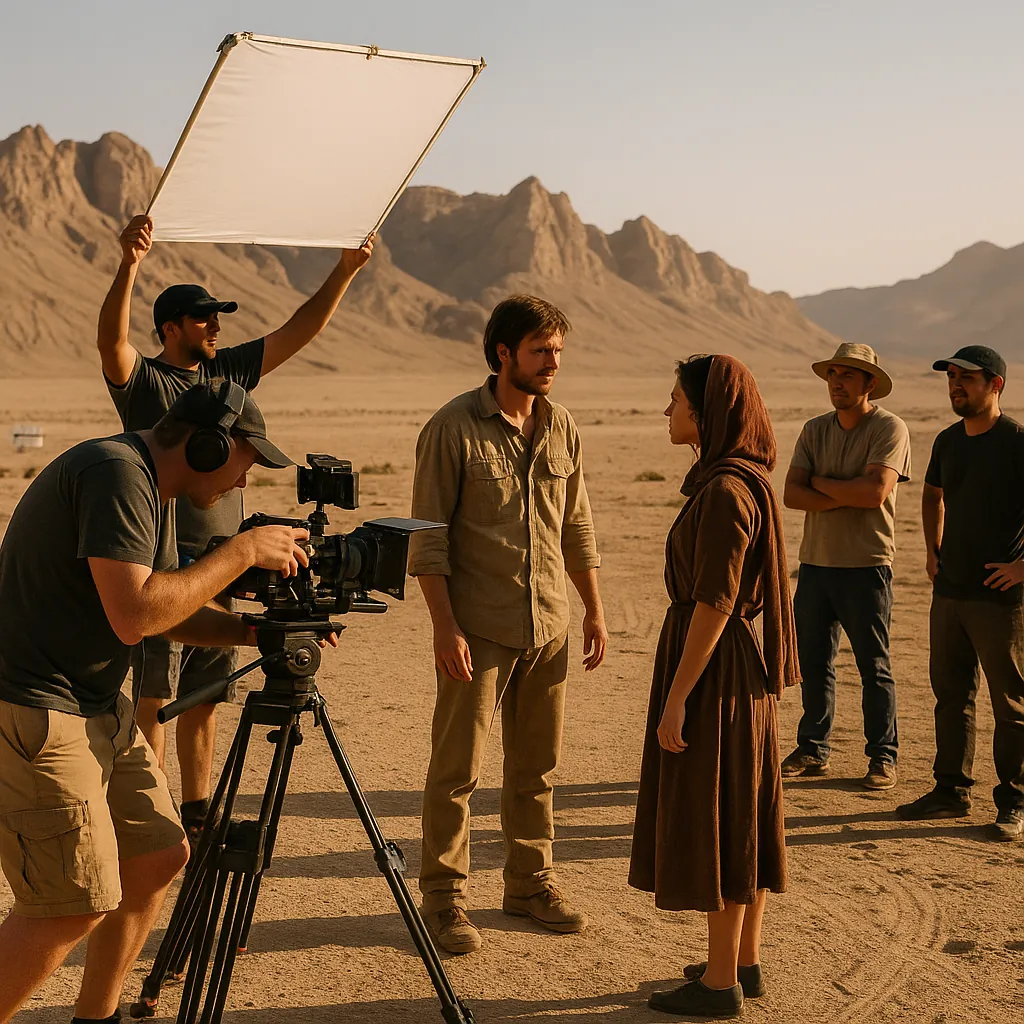
A typical film shoot day runs about 12 hours from crew call to wrap. The crew arrives and sets up, the cast goes through hair, makeup and wardrobe, and then each scene follows the same loop: block, light, rehearse, shoot, and move on to the next setup. There is a meal break around the middle of the day, and the day ends with wrap, a production report and the call sheet for tomorrow.
What does a film shoot day look like hour by hour?
Every production is different, but most day shoots follow the same shape. Here is a sample day on a fictional low-budget drama, "Second Harvest", shooting three scenes at a farmhouse location with a crew call of 7:00 AM.
| Time | What happens | Who is busiest |
|---|---|---|
| 6:00 AM | Unit base opens. Trucks park, catering sets up, power is run | Locations, transport, catering |
| 6:30 AM | Breakfast. First actors arrive for hair, makeup and wardrobe | Hair, makeup, wardrobe, 2nd AD |
| 7:00 AM | Crew call. 1st AD gives a short safety briefing and outlines the day | 1st AD, all departments |
| 7:15 AM | Blocking rehearsal for scene 18 with director and actors, crew watching | Director, actors, DP, 1st AD |
| 7:45 AM | Actors return to finish makeup. Camera, grip and electric light the set | DP, gaffer, key grip |
| 8:30 AM | Camera rehearsal, then first shot. The master for scene 18 | Everyone on set |
| 9:15 AM to 12:30 PM | Coverage for scene 18, then blocking and lighting for scene 19 | Camera, sound, script supervisor |
| 1:00 PM | Lunch. Usually called around six hours after crew call | Catering |
| 2:00 PM | Back on set. Finish scene 19 coverage | Camera, sound |
| 4:00 PM | Move to the barn for scene 22, an exterior that needs late light | Grip, electric, 1st AD |
| 6:15 PM | Last shot of the day, called the martini shot | Everyone |
| 6:30 PM | Wrap. Equipment packed, cards backed up, location cleaned | All departments, DIT or data wrangler |
| 7:00 PM | Production report filed. Tomorrow's call sheet finalized and sent | 2nd AD, producer |
Exact times shift with the schedule, the light and how complex the scenes are. Night shoots invert the pattern, with crew call in the afternoon or evening and wrap near dawn.
What happens before the camera rolls?
Before the first shot, three things happen in parallel: the set is prepared, the cast is prepared, and the plan is confirmed. The art department dresses the set. Grip and electric unload and stage equipment. Hair, makeup and wardrobe work through the actors in the order they are needed, which is why the call sheet staggers cast call times. The 1st AD walks the set, checks safety and confirms the order of work with the director and DP.
What is the block, light, rehearse, shoot cycle?
Block, light, rehearse, shoot is the loop every scene goes through on set. It repeats for every new scene, and in a smaller form for every new camera setup.
- Block. The director and actors work out where everyone moves and when, on the actual set. The DP and key crew watch. The 2nd AC places tape marks for actor positions. See blocking a scene with actors.
- Light. Actors leave for final touches while stand-ins take their marks. The DP, gaffer and key grip light the shot and set the camera.
- Rehearse. Actors return for a camera rehearsal so the operator, focus puller and boom operator can practice the moves.
- Shoot. The 1st AD calls the roll and the scene is filmed, take after take, until the director has what they need.
Once a setup is done, the crew moves to the next angle. Wide shots usually come first, then closer coverage, so the lighting changes in a logical order.
What are the calls you hear before a take?
Each take starts with a fixed sequence of calls, so everyone knows exactly when sound and picture are recording. The wording varies a little between crews and countries, but it usually goes like this.
| Call | Who says it | What it means |
|---|---|---|
| "Picture's up" or "Lock it up" | 1st AD | We are about to shoot. Quiet, and hold any foot traffic |
| "Roll sound" | 1st AD | Sound mixer starts recording |
| "Speed" or "Sound speed" | Sound mixer | Sound is recording |
| "Roll camera" | 1st AD | Camera starts recording |
| "Rolling" | Camera operator or 1st AC | Camera is recording |
| "Marker" or "Mark it" | 2nd AC | Slate is read and clapped. See how to use a clapperboard |
| "Background action" | 1st or 2nd AD | Extras start moving |
| "Action" | Director | The scene begins |
| "Cut" | Director | Stop the take |
| "Moving on" | 1st AD | The setup is finished; go to the next one |
Who does what during the shoot day?
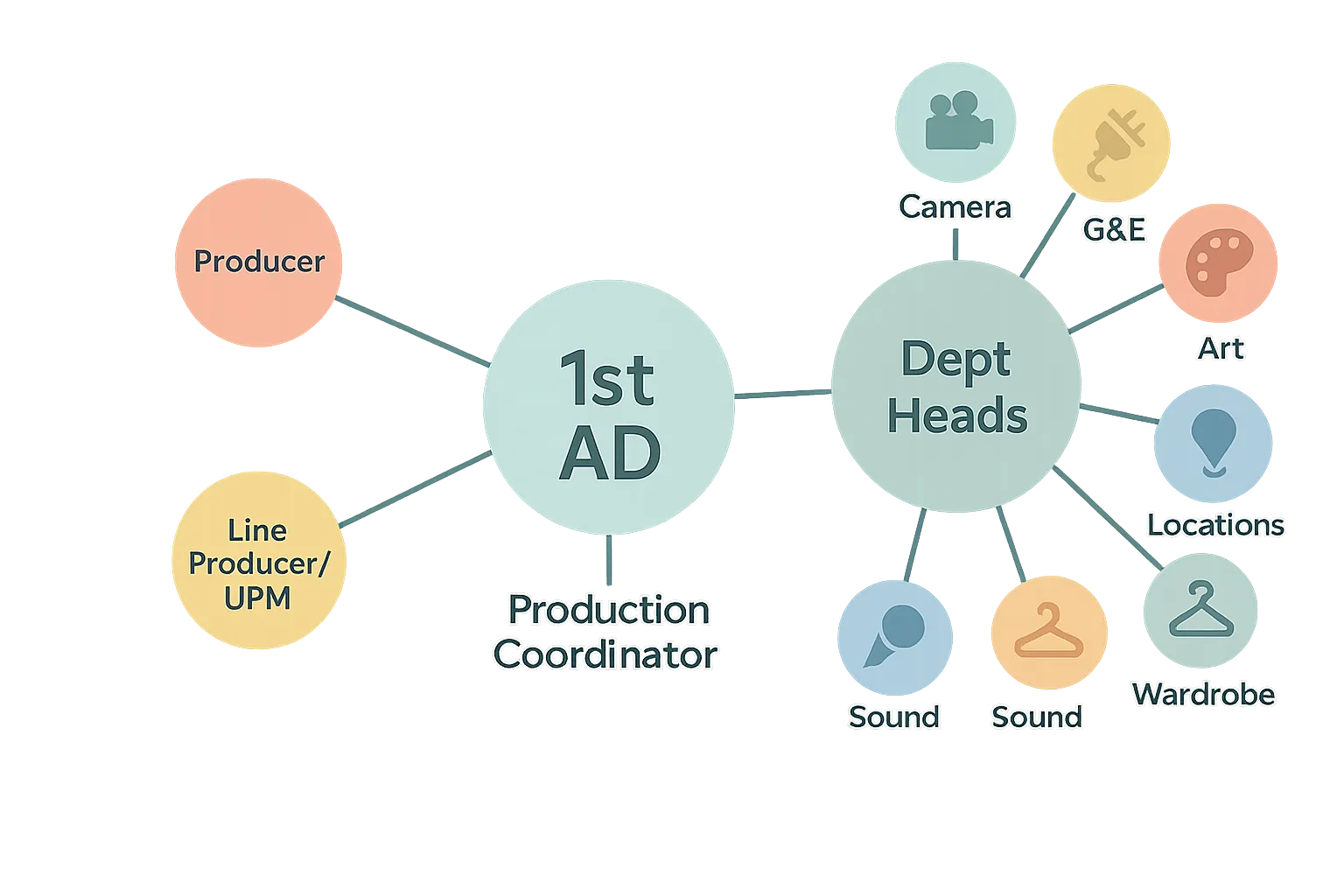
- 1st AD: runs the set and the clock, calls the roll, keeps the day on schedule.
- 2nd AD: manages cast flow from base to set, background, paperwork and tomorrow's call sheet.
- Director: works with actors and decides when a shot is good.
- DP: designs the shots and lighting with the gaffer and key grip.
- Script supervisor: tracks continuity, what was shot and the director's preferred takes.
- Sound mixer and boom operator: record dialogue, room tone and wild lines.
- Producer or UPM: watches cost and time, and solves problems off the set.
Small crews combine these roles, but the jobs still need doing. Our guide to film crew roles explains each department.
What happens at wrap?
Wrap is when the last shot is done and the 1st AD calls it, but the work continues for a while. Departments pack equipment in an order that gets everyone off site safely. The DIT or data wrangler makes at least two verified backups of the day's footage and sound before cards are cleared. The location is returned to how it was found. The 2nd AD collects times and notes for the production report, which records what was shot, start and end times, and any problems. The call sheet for the next day is updated with what moved and sent out.
Leave enough rest between wrap and the next call. The minimum turnaround depends on union agreements and local labor rules, so check the ones that apply to your production.
What usually goes wrong on a shoot day?
- The first shot starts late because lighting the first setup took longer than planned.
- Too many setups scheduled for the pages, so the last scene gets rushed or dropped.
- Actors called too early and kept waiting, or too late and holding up the set.
- A company move between locations planned without enough time for packing and travel.
- Lunch pushed back, which can mean meal penalties under some agreements and a tired crew.
- Footage cards reused before a second backup was checked.
Preparing the shoot day in Lowerated
The shoot day is only as good as the call sheet behind it. In Lowerated, call sheets are built from your schedule, with call times, locations and crew already filled in. You review the sheet, add the day's notes and send it to everyone the night before.
The clip shows a call sheet built from the schedule, with call times, locations and crew filled in, ready to review and send.
FAQ
How long is a typical film shoot day?
Many productions plan around 10 to 12 hours of work plus meal time. Limits depend on union agreements, local labor law and your budget.
What is the martini shot?
The last shot of the day. The shot before it is often called the Abby Singer, after an assistant director known for calling it.
When is lunch on a film set?
Lunch is usually called around six hours after crew call. Some agreements set a strict limit, so check yours.
How many pages do you shoot in a day?
It varies with the number of setups, locations and stunts. Our guide on pages per day covers how to estimate it.
Key takeaways
- A shoot day runs from setup and crew call through scenes, lunch, wrap and paperwork.
- Every scene follows block, light, rehearse, shoot.
- The roll calls (roll sound, speed, roll camera, marker, action) keep picture and sound in sync.
- Wrap includes footage backups, cleanup, the production report and tomorrow's call sheet.
- Most problems come from the plan: too many setups, poor cast calls, or tight company moves.