How to Get Feedback on Your Screenplay


By Muhammad Wisal and Muhammad Ali / 6 min read

To get useful feedback on your screenplay, finish a draft you are ready to change, choose a few readers who understand scripts, tell them exactly what you want to learn, and collect their notes in writing before you discuss them. Then look for patterns across readers instead of acting on every single note.
When is a screenplay ready for feedback?
A screenplay is ready for feedback when you have a complete draft and you can no longer see its problems yourself. That usually means you have finished the draft, put it away for a few days, and done at least one rewrite pass of your own. If you already know the second act sags, fix that first. Readers are a limited resource, and each one can only read a script for the first time once.
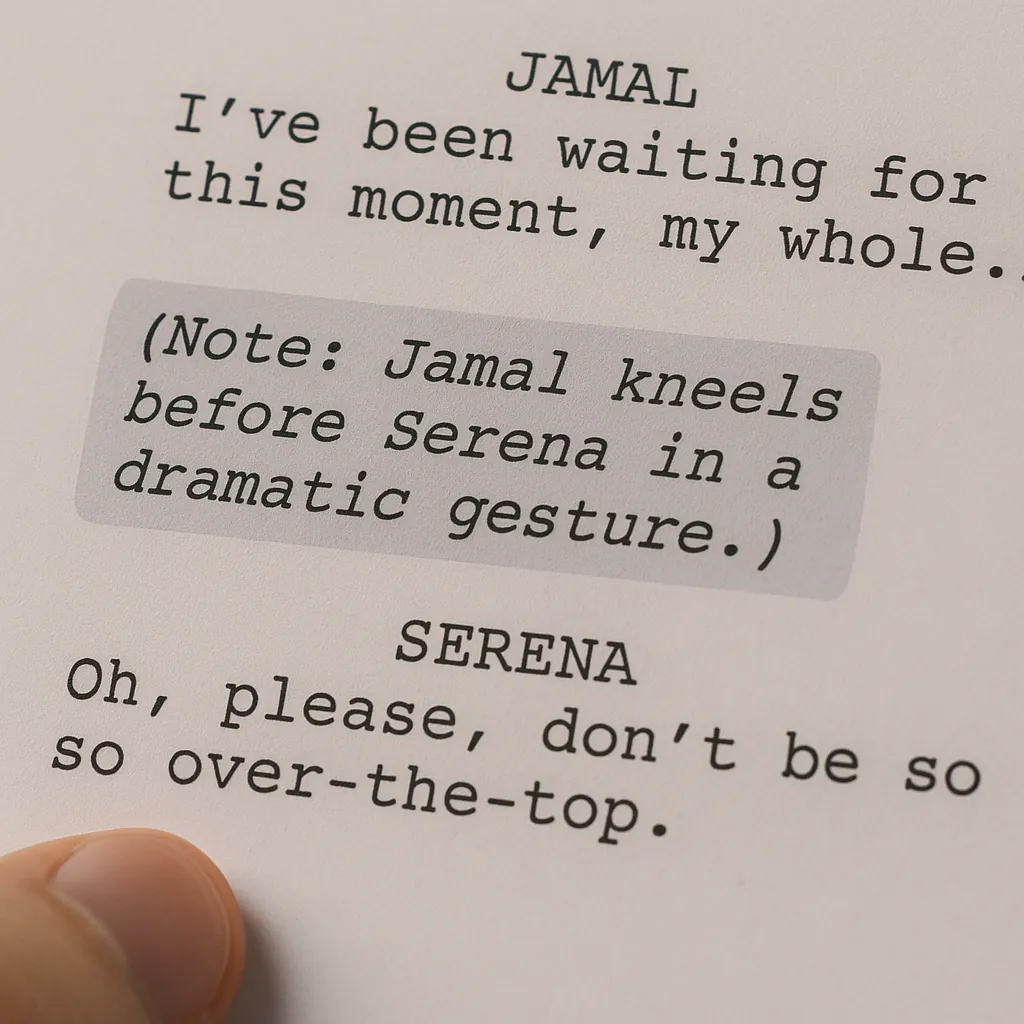
Before you send it, check the basics: correct screenplay format, a title page with your contact details, and a page count that fits the format. Formatting mistakes pull readers out of the story and fill their notes with things you could have caught.
Who should read your screenplay?
Different readers give you different kinds of notes. Most writers do best with a mix.
| Reader | What they are good for | Watch out for |
|---|---|---|
| Other screenwriters | Structure, scene craft, dialogue, specific fixes | Rewriting it as their own script |
| A writing group | Regular deadlines, several reactions at once | Group consensus that flattens unusual choices |
| Directors, producers, actors | Whether it is makeable, castable and playable | Notes driven by budget before the story works |
| General audience readers | Honest reactions: where they got bored or confused | Vague notes they cannot explain |
| Paid coverage or consultants | A trained reader's view, often with a written report | Prices and quality vary widely; ask who the readers are |
| Friends and family | Encouragement | Kindness that hides real problems |
Three to five readers per draft is a common range. Fewer than three and you cannot spot patterns. Many more and the notes start to contradict each other.
What should you ask readers?
Ask specific questions, because "What did you think?" gets polite, general answers. Send three to six questions with the script, and ask readers to answer them after their first read, before they talk to anyone else.
- Where did you lose interest, if anywhere? Give a page number.
- What did you think the main character wanted at the end of act one?
- Was anything confusing? Which scene?
- Which character did you care about most, and least?
- Did the ending feel earned?
- Tell me the story in two sentences.
The last question is the most revealing. If a reader's summary does not match what you meant, the script is not yet saying what you think it says. Compare it with your logline.
How do you run a feedback round step by step?
- Set a goal for the round. For example: "Does the twist on page 71 land?" or "Is Odile likable enough to follow?"
- Prepare the script. Proofread, check format, add a title page with draft number and date.
- Choose your readers. Mix at least one screenwriter with one reader who does not write.
- Send a short brief. Your questions, a deadline (two to three weeks is reasonable for a feature), and how you want notes back: in the margins, in a document, or in a call.
- Take notes without defending. In a notes call, listen, ask follow-up questions, and write everything down. Explaining your intent teaches the reader nothing and hides the problem.
- Sort the notes. Put every note into one table and mark how many readers raised each issue.
- Wait before rewriting. Give it a day or two, then decide what to change.
- Thank your readers. Offer to read their work in return.
How do you decide which notes to use?
Act on patterns, and treat single notes as information. If three of four readers lose interest around page 50, something is wrong around page 50, even if each reader names a different cause. That idea is often called "the note behind the note": readers are good at noticing where something feels off and less reliable at diagnosing why.
Here is a sample notes table for a feature called "The Ferry at Kell Point".
| Issue | Readers who raised it | Page or scene | Decision |
|---|---|---|---|
| Lost interest in the middle | 3 of 4 | Pages 48 to 60 | Cut Sc. 33 and 35, combine into one scene |
| Did not know what Odile wanted | 2 of 4 | Act one | Make her goal explicit in Sc. 9 |
| Brother's turn feels sudden | 2 of 4 | Sc. 61 | Plant his debt earlier, in Sc. 22 |
| Wants a happier ending | 1 of 4 | Final scene | Keep ending; it fits the theme |
| Ferry captain should be a woman | 1 of 4 | Throughout | Consider in casting, no script change |
The "happier ending" note is a preference. Recording it is still useful: if more readers say it on the next draft, it becomes a pattern.
What are common mistakes when getting script feedback?
- Sending a first draft you already know is broken.
- Using all your best readers on the same draft, leaving no fresh eyes for the rewrite.
- Arguing with notes during the call.
- Rewriting after every single note, so the script changes direction with each reader.
- Asking only friends, then being surprised when strangers react differently.
- Paying for coverage before the script has had free notes from peers.
If you want to know how professional readers judge a script, read what readers look for in coverage. Many writers also register their script with the US Copyright Office or a script registry before sharing it widely; rules and options vary by country, so check what applies to you.
Collecting feedback in Lowerated
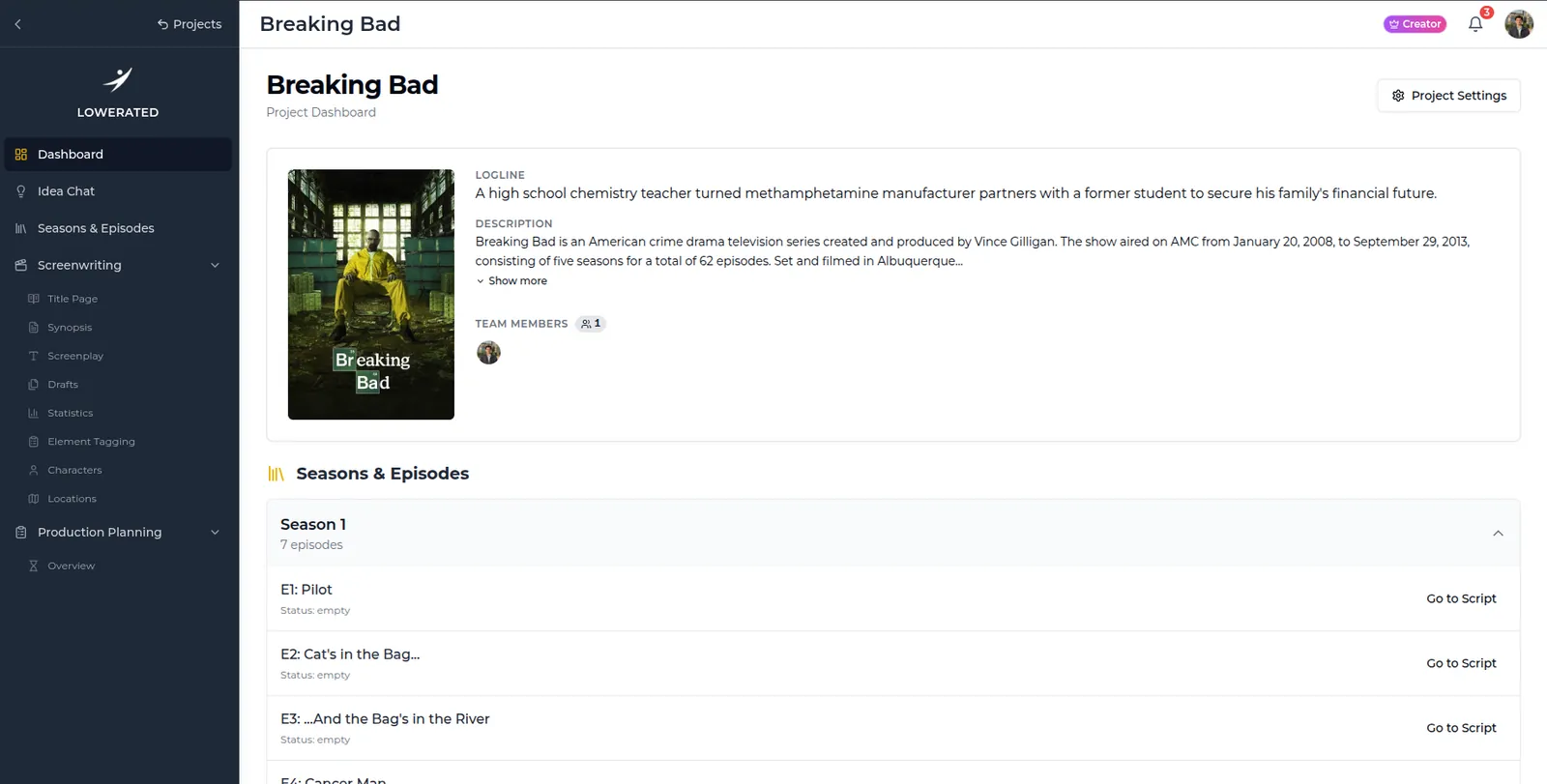
In Lowerated, readers or a co-writer can work in the same script and leave notes on scenes, so feedback sits next to the page it refers to instead of in separate emails.
- Invite your reader or writing partner into the script.
- They leave notes on the scenes they want to discuss.
- When you need a reader outside the project, export a clean PDF in standard screenplay format and send that.
The clip shows two writers in the same script at the same time, seeing each other's changes and leaving notes on scenes.
FAQ
How many people should read my screenplay?
Three to five readers per draft is a common range. It is enough to see patterns without drowning in contradictory notes.
Should I pay for screenplay feedback?
It can help once peers have read it and you want a trained reader's view. Prices and quality vary, so ask who does the reading and see a sample report first.
How long should I give readers?
Two to three weeks for a feature is reasonable. A short film script can be read in a few days.
What if two readers give opposite notes?
Look at the spot they both reacted to. Opposite fixes often point to the same underlying problem in that scene.
Key takeaways
- Send a draft you have already rewritten once and proofread.
- Mix readers who write with readers who do not.
- Ask specific questions, including "tell me the story in two sentences".
- Listen in notes sessions; do not defend.
- Act on patterns across readers, and record single notes for later.