Film Production Checklist by Department


By Muhammad Wisal and Muhammad Ali / 6 min read
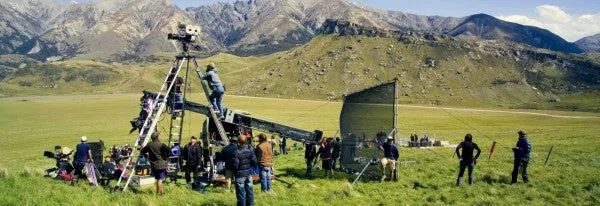
A film production checklist by department lists what each team must have done before the shoot, check every shoot day, and hand over at wrap. Split it by department (production, camera, grip and electric, sound, art, wardrobe, hair and makeup, locations, cast, data and safety) so each head of department owns their own list and the producer or 1st AD only has to check one line per team.
Why organize a production checklist by department?
A single long checklist tends to get ignored because nobody owns it. Splitting it by department gives every item an owner. The producer asks the sound mixer "is sound ready?" instead of reading forty lines aloud at the production meeting. It also makes gaps obvious: if your shoot has no one covering wardrobe, the wardrobe list is still there to remind you that someone has to.
This checklist covers the production period: final prep, shoot days and wrap. For the earlier planning stage (script, budget, casting, locations), use our pre-production filmmaking checklist. For who does what in each department, see film crew roles explained.
How do you use the checklist?
- Copy the tables below into a shared document. One tab or section per department.
- Assign an owner to each department. On a small shoot one person may own three lists. That is fine, as long as it is written down.
- Delete what does not apply and add what is missing. A two-person documentary needs a shorter list than a scripted short with a stunt.
- Review the "before" column at the final production meeting. Anything not done gets a name and a date.
- Use the "each day" column as a start and wrap check. The 1st AD can ask each head of department for a yes before rolling.
- Close the "wrap" column before anyone is released. Returns, data and paperwork are where small productions lose money.
Production and assistant directors checklist
| Before the shoot | Each shoot day | At wrap |
|---|---|---|
| Shooting schedule locked and shared | Call sheet sent the evening before, confirmations tracked | Daily production report filed |
| Cast and crew deal memos signed | Safety briefing at the start of the day | Next day's call sheet approved and sent |
| Insurance in place (check with a broker what your shoot needs) | Meal breaks and turnaround times tracked | Final cost report and receipts collected |
| Permits and location agreements confirmed where required | Schedule updated with what was shot and what moved | Thank-you notes and final payments scheduled |
| Emergency contacts and nearest hospital for each location | Petty cash and receipts logged | All signed paperwork filed in one place |
Permit and insurance rules vary by country, city and location, so ask your local film office and an insurance broker rather than relying on a general list. See our guides on film permits and production insurance for the basics.
Camera department checklist
| Before the shoot | Each shoot day | At wrap |
|---|---|---|
| Camera test done: lenses, settings, the chosen look | Camera built and checked before first setup | All cards handed to the DIT or data wrangler, logged |
| Shot list and storyboards reviewed with the director | Camera reports or notes kept per setup | Lenses cleaned and capped, kit counted |
| Enough cards and batteries for the longest day | Batteries rotated and charged at lunch | Rental gear checked against the rental list |
| Rental kit checked out and tested at the rental house | Slate used on every take | Damage or faults reported the same day |
Grip and electric checklist
| Before the shoot | Each shoot day | At wrap |
|---|---|---|
| Lighting plan agreed with the DP for each location | Power source checked, cables taped and covered in walkways | Lamps cooled before packing |
| Power needs checked: location circuits or generator | Stands sandbagged, especially outdoors | Gels, tape and expendables restocked or listed |
| Grip kit matches the shot list (dolly, slider, rigging) | Load-in and load-out paths kept clear | Location left as found, marks removed |
Sound department checklist
| Before the shoot | Each shoot day | At wrap |
|---|---|---|
| Location sound checked during the scout (traffic, fridges, air conditioning) | Timecode synced with camera, or slate on every take | Sound files backed up and logged with sound reports |
| Lav and boom kit tested, spare batteries packed | Room tone recorded at each location | Wireless packs collected from cast |
| Wardrobe consulted about lav placement and fabric noise | Wild lines recorded where needed | Notes for post on any problem takes |
For more on this department, read recording sound on set.
Art, props, wardrobe and makeup checklist
| Before the shoot | Each shoot day | At wrap |
|---|---|---|
| Art: sets dressed to the approved references | Art: set checked against continuity photos before each scene | Art: rented dressing returned, receipts kept |
| Props: hero props and spares ready, labeled by scene | Props: props reset between takes | Props: hero props stored safely if reshoots are possible |
| Wardrobe: fittings done, each costume labeled by character and scene | Wardrobe: continuity photos of every costume | Wardrobe: costumes cleaned, returned or bagged |
| Hair and makeup: looks tested, allergies and skin needs collected | Hair and makeup: checks before each take, continuity photos | Hair and makeup: kit cleaned, notes kept for reshoots |
Locations, cast and data checklist
| Before the shoot | Each shoot day | At wrap |
|---|---|---|
| Locations: agreements signed, access times confirmed, parking and toilets arranged | Locations: neighbors informed where needed, site protected | Locations: walk-through with the owner, damage noted |
| Cast: sides and schedule sent, rehearsals done | Cast: called at staggered times, looked after between scenes | Cast: released with next call confirmed |
| Cast: talent releases signed | Cast: any minors supervised per local rules | Cast: release forms checked for every person on camera |
| Data: backup plan agreed (how many copies, where) | Data: every card copied and checked before it is formatted | Data: drives labeled and stored in separate places |
What does a filled-in checklist look like?
Here is part of the production list for a fictional two-day short, "The Orchard Fence", about two neighbors, Wendell and Priya Anand, fighting over a fallen apple tree. The producer reviewed it at the final production meeting, three days out.
| Item | Owner | Status | Due |
|---|---|---|---|
| Location agreement, both gardens | Producer | Signed | Done |
| Generator for the night exterior | Gaffer | Quote received, not booked | Tomorrow |
| Hero apple tree branch and 2 spares | Props | 1 spare missing | Day before shoot |
| Talent release, neighbor who appears in background | 2nd AD | Not sent | Today |
| Data backup drives (2) | DIT | Ready | Done |
Three open items, each with a name and a date. That is the whole point of the checklist.
What are common checklist mistakes?
- Items without owners. "Book generator" with no name next to it does not get booked.
- Checking prep but not wrap. Late rental returns and lost data cost more than most prep mistakes.
- Treating permits and insurance as optional. Requirements vary, so confirm with the local film office or a broker.
- A checklist that never changes. Update it after each shoot day with what went wrong.
Keeping the plan behind the checklist in Lowerated
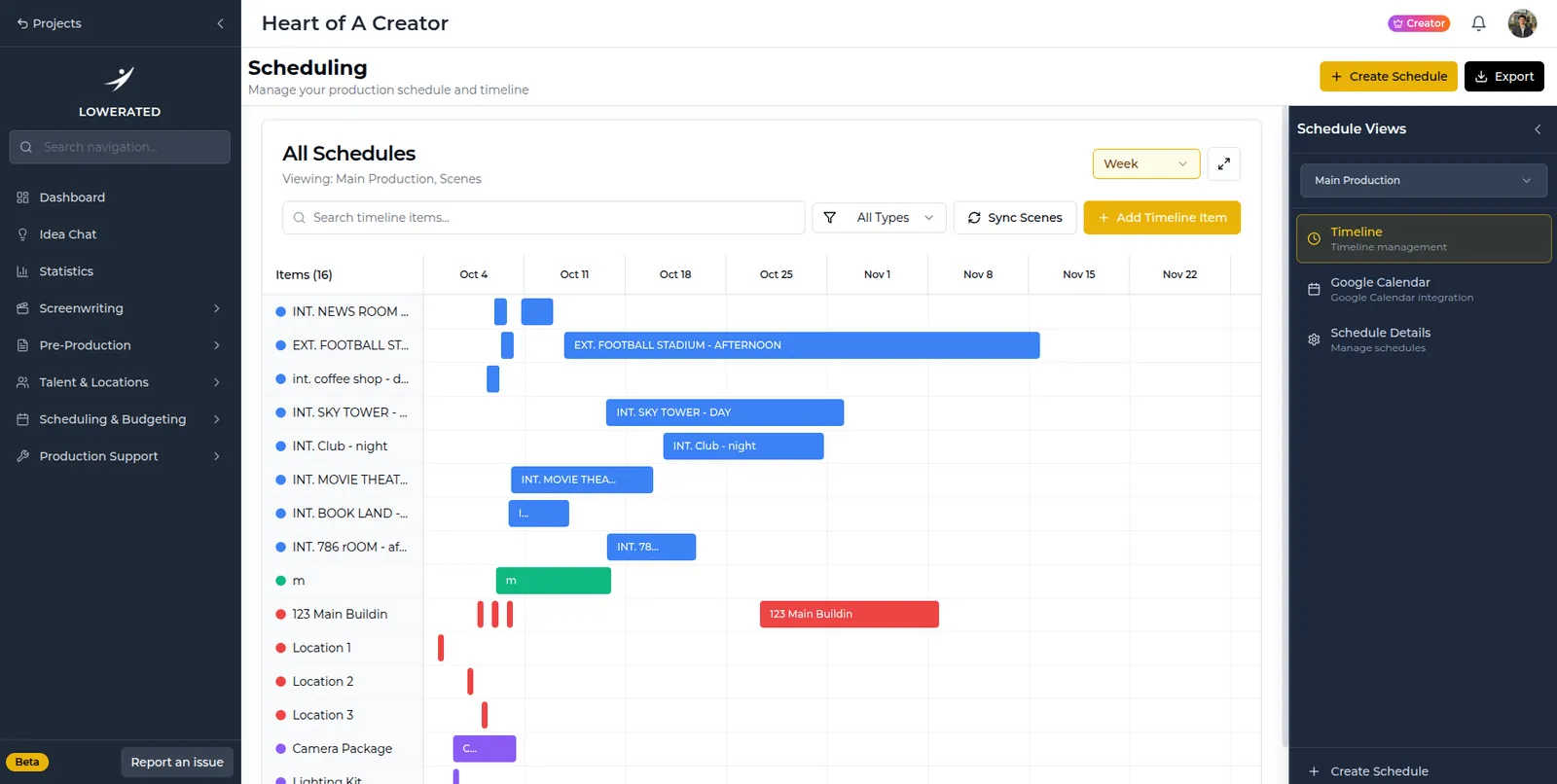
Many checklist items depend on the schedule: call sheets, cast availability, which location shoots when. In Lowerated, the stripboard schedule is built from your breakdown: every scene is a strip, and you plan shoot days by moving them around. Call sheets and the day out of days then come from that schedule, so the checklist and the plan stay in step.
The clip shows scenes as strips, filtered to night scenes, with one dragged onto day one of the schedule.
FAQ
Who owns the production checklist?
Each head of department owns their list. The producer or 1st AD owns the master view and chases open items.
When should the checklist be reviewed?
At the final production meeting before the shoot, then briefly at the start and end of each shoot day.
Do small shoots need a department checklist?
Yes, a shorter one. Even if one person covers camera, sound and data, the items still need doing.
Is this the same as a pre-production checklist?
No. Pre-production covers planning: script, budget, casting and locations. This list covers the final prep, the shoot days and wrap.
Key takeaways
- Split the checklist by department so every item has an owner.
- Use three columns: before the shoot, each shoot day, and wrap.
- Give every open item a name and a date.
- Do not skip wrap: returns, data backups and paperwork.
- Check permit, insurance and release rules locally; they vary.