Screenwriting Contests Worth Entering


By Muhammad Wisal and Muhammad Ali / 6 min read
The screenwriting contests most worth entering are the ones whose wins and placements lead somewhere: reads by managers, producers and executives, fellowships, or development support. As of 2026, that short list includes the Academy Nicholl Fellowships, the Austin Film Festival script competition, the Sundance Institute's Screenwriters Lab, Final Draft's Big Break, BlueCat and Script Pipeline. Pick two or three that fit your script and budget, polish the draft first, and enter early.
Are screenwriting contests worth it?
Some are, for some scripts. A contest is worth entering when a strong placement gets your script read by people who can option it, hire you or sign you. It is not worth entering when the only prize is a certificate, a laurel image and a discount on the next contest.
Contests suit writers without representation who need a way to stand out. They are less useful if your script is not ready: entry fees add up, and a weak draft placing nowhere tells you little. Get notes before you spend money. Our guide to getting feedback on your screenplay covers how.
Which screenwriting contests are worth entering in 2026?
The table below covers established programs with a track record. Details change every cycle, so check each official site before you submit. Fees, dates and rules here reflect the 2026 cycle.
| Contest or program | What it is | Formats | What a win can lead to |
|---|---|---|---|
| Academy Nicholl Fellowships | The Academy's program for non-professional screenwriters. From 2026, public entries go through The Black List or the Writers Guild Foundation portal, each with an entry cap, and those partners recommend scripts to Academy readers | Feature screenplays | Up to five fellowships with financial support, mentoring from Academy members and industry events |
| Austin Film Festival Screenplay and Teleplay Competition | Long-running contest tied to the festival's writers conference | Features, shorts, teleplays, plus fiction podcast and playwriting categories | The bronze typewriter award, panels and networking at the conference. Opt-in reader comments |
| Sundance Institute Development Track | An application, not a contest, with a fee per script. A completed draft is required | Fiction features | Selection for the Screenwriters Lab (first or second time feature writers) or the online Screenwriters Intensive |
| Final Draft Big Break | Contest run by the screenwriting software company. You do not need to use Final Draft to enter | Features by genre, half-hour and hour pilots, shorts | Cash grand prizes, meetings with managers and executives, software and coaching |
| BlueCat Screenplay Competition | Contest known for giving a written analysis with every entry | Features and short scripts | Cash prizes, plus feedback whatever your placement |
| Script Pipeline | Development company that runs screenwriting, TV and pitch contests | Features, TV, pitches (logline, synopsis and sample) | Development work with in-house executives, then circulation to producers and reps |
Entry fees for a feature at the contests above were roughly $45 to $95 in 2026, rising as deadlines pass, with more for optional feedback. Sundance charges an application fee per project, and Nicholl entries go through the partner portals, so check those pages for their current costs.
Coverfly, which many writers used to track contests and placements, has closed. Many contests now take entries through FilmFreeway or their own sites.
How do you tell if a screenwriting contest is legitimate?
A contest is worth your fee when you can see who reads the scripts, what past winners did next, and what the prize actually includes. Check these before you pay:
- Named judges and readers. Final rounds should be read by working producers, managers or executives, and the contest should say who they are.
- Alumni results. Look for past winners and finalists who were signed, staffed or had scripts optioned. Search their names, not the contest's own claims.
- Clear rules on rights. You should keep all rights to your script. Be wary of any contest that takes an option or a share just for entering.
- A prize that leads to reads. Meetings, circulation and fellowships matter more than software bundles.
- Published dates. Quarterfinal, semifinal and final announcement dates should be posted in advance and kept.
- Fees that match the contest's reach. A small contest charging what the big ones charge is a warning sign.
How do you prepare a script for a contest?
Treat a contest entry the same way you would treat a submission to a producer. First readers often go through many scripts quickly, and formatting problems or a slow opening can end a read early.
- Finish and rewrite. Enter a draft that has had at least one round of outside notes.
- Read the rules for your category. Check page limits (shorts and pilots have them), genre categories and whether adaptations need proof of rights.
- Check the title page rules. Some contests read blind and ask you to remove your name and contact details. Others want them. Follow each one.
- Fix the format. Use standard screenplay format, 12 point Courier, and page numbers. Scan the first ten pages for typos.
- Write the logline and short synopsis. Many entry forms ask for both. A clear logline also helps you see whether the script delivers its premise.
- Export a clean PDF. Check that the file opens, page breaks fall in the right places and the file name is plain, for example "Salt-Season.pdf".
- Enter by the early deadline. Fees are lower, and you are not uploading in a rush on the last night.
- Keep a submission log. Track contest, draft date, fee, deadline and announcement date in one sheet.
What should you do after you place?
Use the placement within weeks, while it is current. A quarterfinal or semifinal placement in a respected contest is a line you can put in query letters to managers and producers, for example: "Semifinalist, Austin Film Festival Screenplay Competition, 2026." Finalists and winners often get contacted directly, so make sure the contact details you entered are current.
Placing in the early rounds of many small contests is worth less than one strong result in a respected one. If a script places nowhere across several good contests, take that as a note and rewrite before entering again.
What are common mistakes with screenwriting contests?
- Entering too early. A first draft spends money you could have used on notes.
- Entering everything. Ten contests at $60 or more each is a real budget. Pick the few that fit your script.
- Ignoring category rules. A 45 page short in a 20 page category is usually disqualified.
- Uploading the wrong draft. Name your files with a date or version so you know which one you sent.
- Treating a rejection as a verdict. Contest reading is subjective. Look for patterns across results and notes, not one outcome.
Preparing a contest PDF in Lowerated
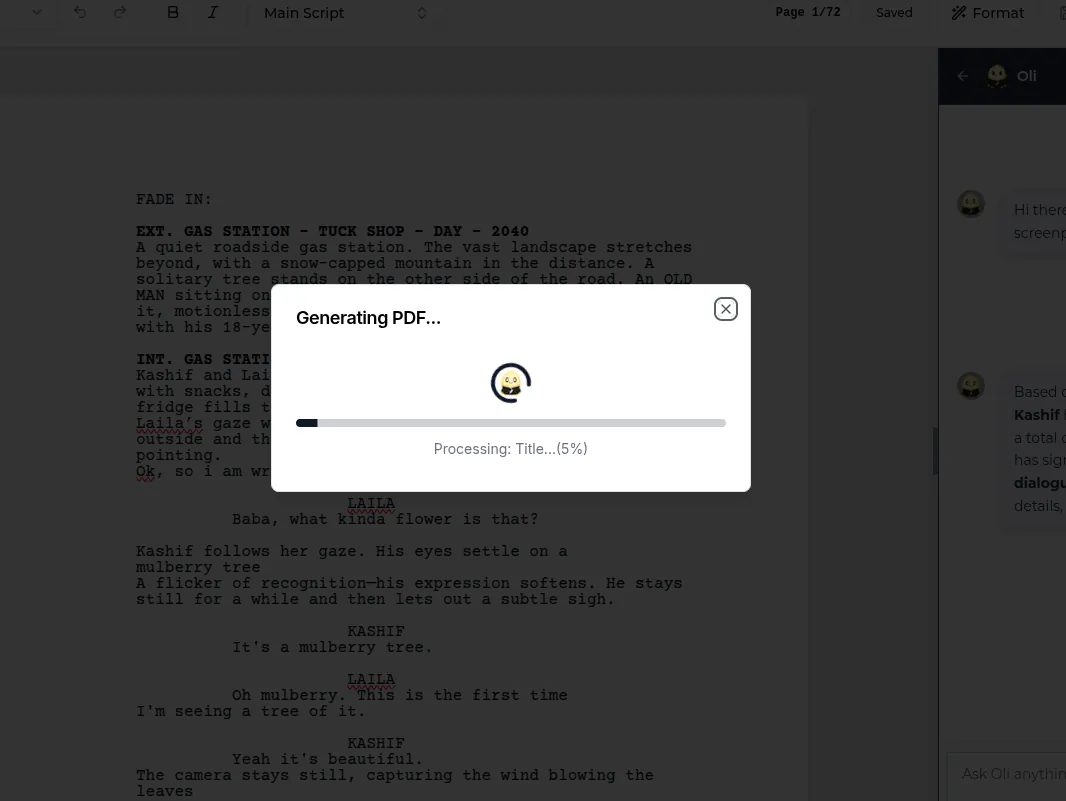
Lowerated does not submit to contests or offer agency services, but it covers the file you send. Set your title, credit and contact details once on the title page and they come out right on every export. If a contest reads blind, check its title page rule before you export. Save drafts as you revise, so you always know which draft went to which contest, then export a clean PDF in standard screenplay format and choose what to include.
The clip shows a script exported as a clean PDF in standard screenplay format, ready to send to producers, readers or festivals.
If you are writing for TV, see how to write a TV pilot before you enter a pilot category.
FAQ
Which screenwriting contest is the most prestigious?
The Academy Nicholl Fellowships are widely considered the most prestigious for features. Austin Film Festival is also highly regarded, partly because of its conference.
Are free screenwriting contests worth entering?
Some free programs are good, such as certain studio and network writing programs. Check who reads the scripts and what alumni went on to do, the same as with paid contests.
Can I enter the same script in several contests?
Usually yes. Most contests allow simultaneous entries. Check the rules on submitting revised drafts, since some charge a fee to replace a file.
Is paid feedback from a contest worth it?
It can be useful if you have no other readers. Treat it as one opinion and look for notes that repeat across readers.
Key takeaways
- Enter contests whose placements lead to reads, meetings or fellowships.
- Check judges, alumni results and rights terms before paying.
- Rewrite and get notes before entering, then enter at the early deadline.
- Follow each contest's title page and page limit rules exactly.
- Use a strong placement quickly in query letters, and log every submission.