Film Set Catering: How to Plan Meals for a Shoot


By Muhammad Wisal and Muhammad Ali / 6 min read
To plan catering for a film shoot, count everyone who will be on set each day, collect dietary needs and allergies, decide which meals you will serve and when, then book a caterer or a meal plan that fits your budget and location. Put meal times and the eating area on the call sheet, and keep a craft services table stocked between meals.
What is the difference between catering and craft services?
Catering is the main meals, and craft services (often called crafty) is the snacks and drinks available all day. On larger productions they are separate teams. On an indie shoot one person, often a production assistant, may run crafty while an outside caterer or local restaurant handles the main meal.
| Type | What it covers | When | Example |
|---|---|---|---|
| Breakfast | A light meal at call, so people can start work fed | Before or at crew call | Eggs, oatmeal, fruit, coffee at unit base |
| Main meal | A proper sit-down meal mid-shift, usually hot | About halfway through the day | Rice, chicken, a vegetarian main, salad, bread |
| Second meal | A further meal if the day runs long | Several hours after the main meal | Sandwiches, soup or pizza |
| Craft services | Snacks, water, coffee and tea all day | From call to wrap | Fruit, nuts, granola bars, water, coffee urn |
On a night shoot the same pattern shifts: the main meal is still about halfway through, even if that means midnight.
How do you work out how much food you need?
Start from a headcount for each shoot day, not one number for the whole shoot, because cast and background change daily. Your schedule and the day out of days tell you which cast work on each day.
Here is the headcount for one day of "Saltwater", a short about two estranged brothers, Corwin and Teddy, fixing up their late father's beach house.
| Group | Count | Notes |
|---|---|---|
| Crew | 18 | Includes 2 production assistants |
| Cast | 3 | Corwin, Teddy, and the neighbor (cast 5) |
| Background | 6 | Beach walkers, morning only, breakfast only |
| Visitors | 2 | Producer and location owner |
| Buffer | 3 | For extra hands and late additions |
| Main meal total | 26 | Background released before lunch |
| Breakfast total | 32 | Everyone at call |
Give the caterer the final number the day before, and update it if the schedule changes.
When should meals happen on a shoot day?
The main meal usually falls around the middle of the working day, and many productions aim to serve it within about six hours of call. Many union agreements set a maximum time before the meal break, with penalties if it runs late. If you work under any agreement, check its meal rules and plan to them.
A few practical points:
- Schedule the meal around a natural break. Plan to break after finishing a scene or a setup, not in the middle of a big lighting change.
- Feed cast and crew together where you can. Separate rushed meals for different groups waste time and split the unit.
- Allow a real break. People need time to sit down, eat and rest before work starts again.
- Plan a second meal for long days. If the day may run long, decide in advance what you will serve and when.
How do you choose a caterer for a small shoot?
Choose the option that can deliver hot, safe food to your location, on time, for the right number of people, every day of the shoot. For small crews the usual options are:
- A film or event caterer. They are used to shifting times, remote locations and dietary lists, and may bring their own tables and serving gear.
- A local restaurant. Often good value for a few days near one location. Confirm delivery times, packaging and how hot food will stay hot.
- A crew member or volunteer who cooks. Can work for very small shoots, but they need time, equipment and safe food handling, and they cannot also work on set.
Ask each option for a per-head quote, what is included (serving, plates, cleanup, drinks), how much notice they need for changes, and how they handle allergies. Put catering in its own line in the budget, with crafty as a separate line.
How do you handle dietary needs and allergies?
Collect dietary needs and allergies from every cast and crew member before the shoot, and pass the list to the caterer at the time of booking. Common requests include vegetarian, vegan, halal, kosher, gluten-free and dairy-free, plus allergies to nuts, shellfish and other foods.
- Ask on your crew and cast forms, then confirm the list a week before the shoot.
- Ask the caterer to label every dish and to keep allergy-safe meals separate and named.
- Make sure each dietary group gets a full main dish as well as sides.
- Keep allergy information with the set medic or first aider as well.
What does a good craft services table need?
A good crafty table has water, hot drinks and a mix of healthy and filling snacks that last through the day. Keep it near set but out of the shot and away from equipment.
- Plenty of water, with refills or a large dispenser to cut down on plastic.
- Coffee and tea, with options for those who skip caffeine.
- Fruit, nuts, crackers, granola bars and something savory.
- Labeled snacks for allergies and dietary needs.
- Warm drinks and soup for cold or night shoots, more water and shade for hot ones.
- Napkins, cups, trash and recycling bins.
Where should people eat on location?
People should eat in a covered, clean area close to set and unit base, with tables, chairs, handwashing or sanitizer, and trash bins. Agree the eating area with the location owner during the tech scout, and check whether you can use their kitchen, power or water. Keep food out of the location's rooms unless the owner agrees.
What are common catering mistakes?
- Ordering from one headcount for the whole shoot, so some days run short.
- Collecting dietary needs too late for the caterer to plan.
- Serving cold sandwiches every day of a long shoot.
- Letting the main meal slide late while trying to finish a setup.
- Forgetting crafty for the night block or the company move day.
- No plan for trash, so the location is left dirty.
Adding meals and catering costs in Lowerated
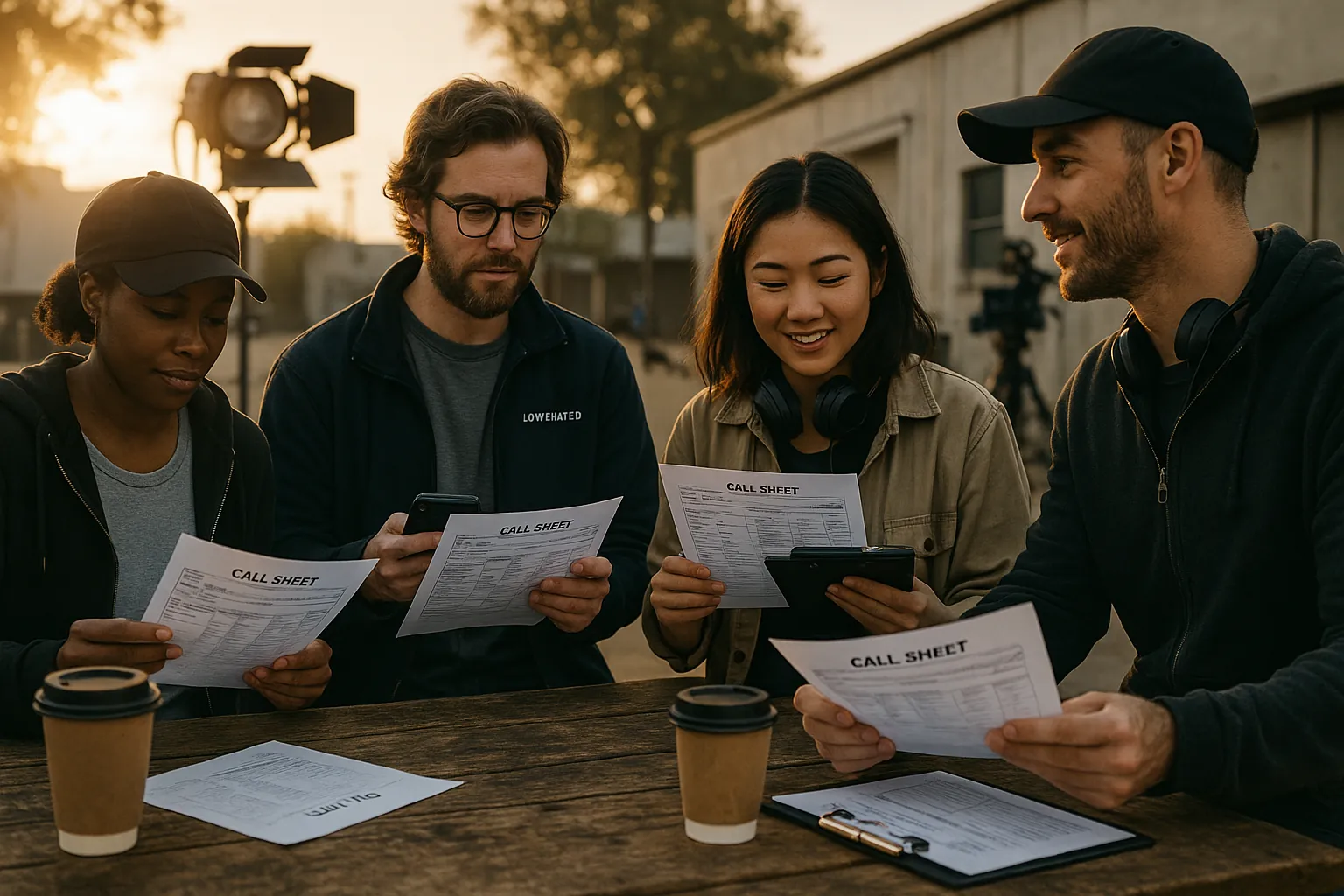
In Lowerated the call sheet for each shoot day is built from your schedule, with call times, locations and crew filled in. When you review it, add breakfast and meal times and where the unit eats, then send it out the night before.
The clip shows a call sheet built from the schedule, with call times, locations and crew filled in, reviewed and sent the night before.
Catering and crafty can sit as line items in the budget, next to your schedule, where you track estimates against what you actually spend.
The clip shows budget line items added next to the schedule, with estimates tracked against actual spending.
FAQ
Do I have to feed cast and crew on an unpaid short film?
You should. Good food is one of the main things you can offer people who work for little or no pay, and hungry crews work slower and less safely.
How often should I feed the crew?
Plan for breakfast at call, a main meal around the middle of the day, crafty throughout, and a second meal if the day runs long.
Can I just order pizza?
For one day, maybe. Over several days, people need proper meals, and pizza rarely covers every dietary need.
Who is in charge of catering on set?
Usually the production manager or a production coordinator books it, and a production assistant runs crafty and meets the caterer on the day.
Key takeaways
- Work out a headcount for each shoot day, with a small buffer.
- Collect dietary needs and allergies early and pass them to the caterer.
- Serve the main meal around the middle of the day and check any union meal rules.
- Keep a stocked crafty table from call to wrap.
- Put meal times and the eating area on every call sheet.